Get in touch with Zejiang Paper Machinery Company


The purchase decision for a calender roll manufacturer requires separating an obvious replacement for a worn roll from possible changes in paper quality or variations in machine performance. For changed speed or thermal duty, include operating-condition geometry; for acceptance, check that measurement uncertainty suits the specified limits. A low price for a calender roll is attractive, only if the roll fits the job.
Start with the purchase decision: a repeat spare needs manufacturing consistency; a worn roll needs a repairability assessment; a recurring defect needs diagnosis. Use the Duty-to-Supplier Fit Matrix below to decide which capability deserves the most weight before you request quotations.
Build a shortlist around the job your roll must do
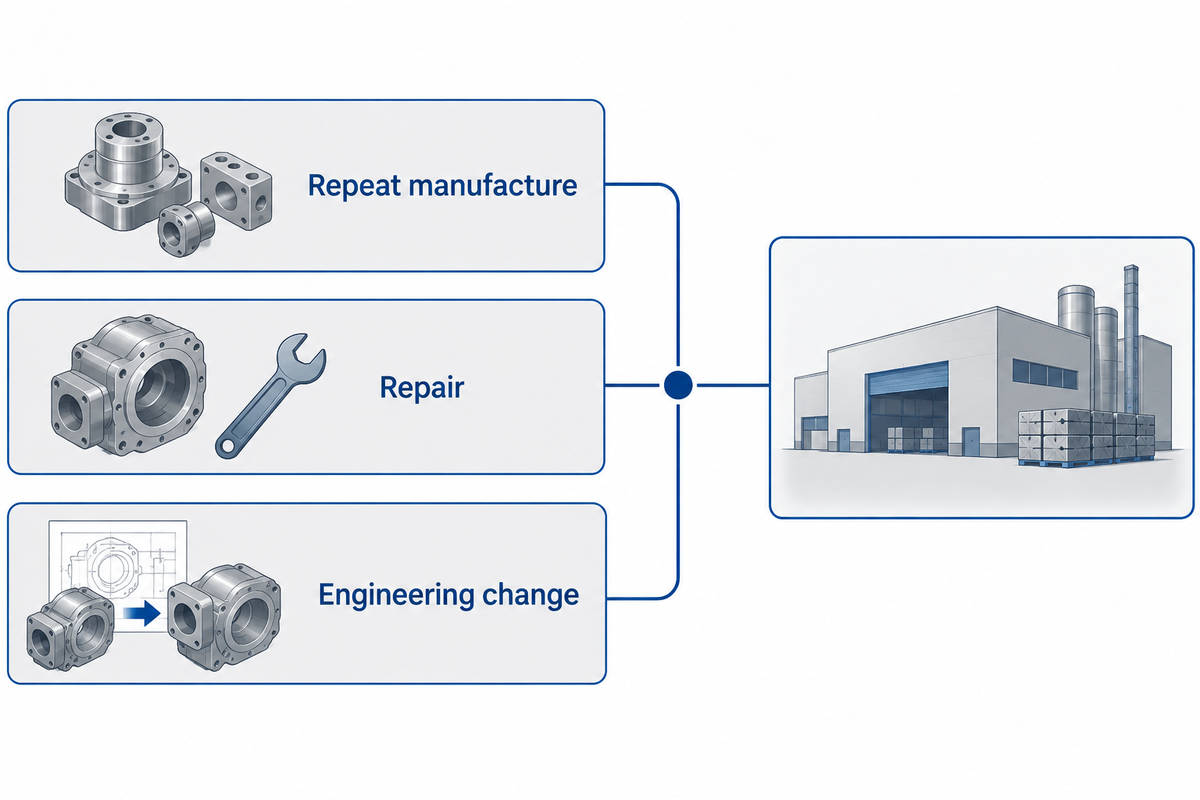
Selecting the right calender roll supplier begins with the work the mill requires: repeat manufacture, repair or restoration of an existing roll, or engineering for a change in duty. Separate these types of work before assessing equipment. Manufacturing a dimensionally correct spare and solving a recurring paper defect require different types of evidence.
Our Duty-to-Supplier Fit Matrix provides the next most likely step to consider and connects the purchase trigger to a capability. Select the row that most closely applies to your case, using the calendering roller service scope as a comparison point. If several rows apply, keep all these responsibilities in the inquiry; a supplier may perform some of the work through a named specialist.
| Purchase situation | Capability to prioritize | Ask for this before selection |
|---|---|---|
| Repeat spare for a stable paper grade | Repeatable manufacture to the approved drawing | Comparable roll inspection report and drawing review |
| Worn hard roll with sound service history | Condition assessment and precision regrinding | Proposed finished diameter and remaining material assessment |
| Damaged soft cover on a reusable core | Cover removal, core inspection and recovering | Core disposition and cover selection for the stated duty |
| Recurring barring after surface work | Roll and machine diagnostic support | Investigation scope covering operating conditions and support |
| Higher planned production speed | Dynamic behaviour assessment | Explanation of the proposed speed envelope and measurement method |
| Different paper smoothness or bulk target | Process and roll-surface engineering | Proposed nip arrangement and paper-quality acceptance conditions |
| Uneven results on a heated roll | Thermal design and inspection | Heating-medium, flow-path and temperature-distribution review |
| Legacy machine without a reliable drawing | Measurement and replacement engineering | Responsibility for the replacement drawing and mating interfaces |
| Shutdown-critical replacement | Coordinated production and field support | Dated plan from drawing approval through site readiness |
Think of a mill replacing a roll that has run on the same grade for years. The purchasing team has the approved drawing, recent grinding records and a spare bearing arrangement. What they want now is a roll that reproduces the working specification. Now let’s consider a mill purchasing a roll because bands keep returning after regrinding. Before either supplier quotes corrective work, the mill has to explain when the bands appear, what operating changes affect them and what corrective work, if any, was done on the bands and what effect it had. These are illustrative buying situations: the first supports a manufacturing comparison; the second needs an investigation owner and a manufacturer.
Match the calender roll to the material and process
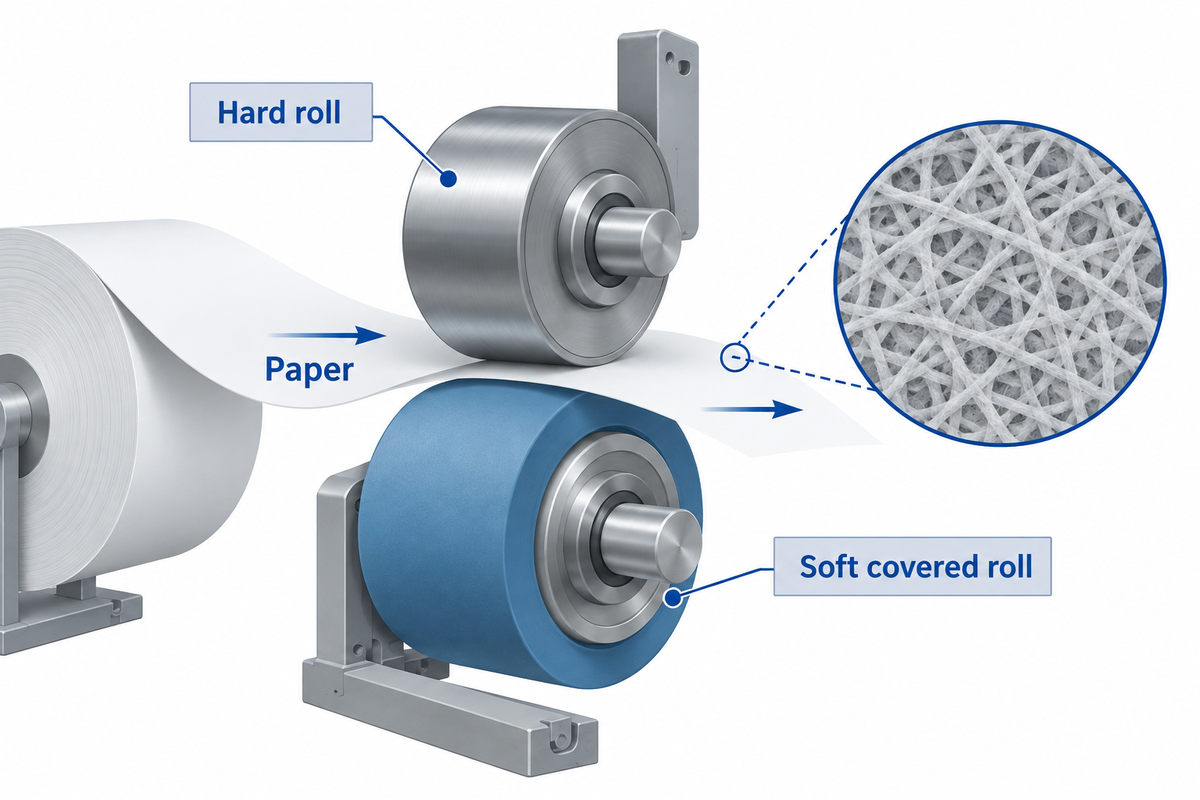
Paper-machine calender rolls should be selected around the desired sheet properties, roll position and nip arrangement. Paper finishing, nonwoven bonding and textile processing use some similar terms but pursue different goals. Establish the material and process first so that a supplier can suggest a relevant construction and surface.
What is a calender roll?
A calender roll is a working roll that acts on a material that passes through a loaded contact zone. In papermaking, calender rolls help control sheet thickness, smoothness and gloss. The roll can work against another hard surface or a softer covered roll, with heating included where the process requires it.
Chilled cast iron rolls, composite rolls and soft covered rolls perform different functions. Surface hardness influences contact behavior. Wear resistance and heat transfer affect the service cycle. A mill seeking uniform thickness must also define the paper grade, loading arrangement and temperature and pressure conditions. Start with the calender roll options for paper machines, then match the construction to the required surface finish.
How Do I Choose the Right Calender Roller for Spunbond Nonwoven Production?
Choose the right calender roller for spunbond nonwoven production around the polymer, fabric basis weight, bonding pattern and required fabric properties. Unlike paper smoothing, this process can use an engraved surface to create bond points. Identify the polymer before deciding on the bonding conditions. Fabric weight and the customer’s quality targets help determine the required roller configuration.
If a customer needs a specific pattern, custom engraving may be necessary. Pattern geometry determines where the filament web contacts the patterned surface; maintaining the original fabric characteristics is a different job from adjusting paper gloss. If inconsistent fabric quality is the problem, define the desired finished-fabric properties before modifying the pattern. A supplier should connect the fabric characteristics to the required contact conditions. Do not transfer its preferred surface pattern or emboss design to a paper calender just because both products are called industrial rollers.
Define the paper-machine roll specification before requesting prices
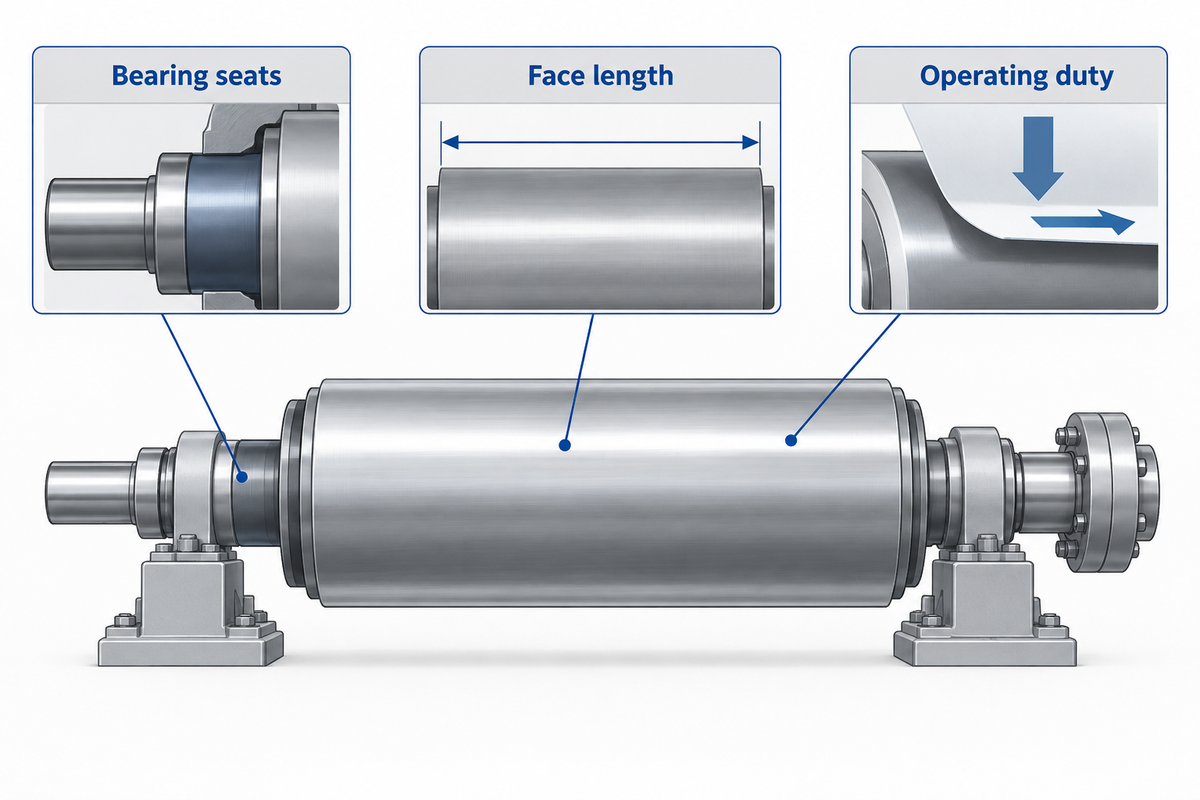
A useful calender-roll specification combines the approved geometry with the operating duty and the interfaces that must fit to existing equipment. Give every bidder the same revision. Mark unknown values for engineering resolution before manufacture, especially in cases where either roll has been worn down or repaired.
Include face length, body diameter, total length, journals, bearing seats, coupling or gear interfaces and roll position. Give paper grade and width, production line speed, loading arrangement, nip pressure, operating temperature and the heating medium if any. Separate the line’s design speed from the line’s normal production speed. For surface requirements, specify the material or covering, hardness scale, finish and profile, instead of writing “high-performance roller.”
State parameters consistently; dimensions in mm or inches, roughness in µm with the required parameter, and hardness with its scale. A pressure reading from a loading circuit and a nip load expressed per unit width denote two different quantities. Have the machine engineer identify which quantity the drawing requires before a supplier converts or reinterprets it.
Let’s say the only available reference for an older paper machine is a worn roll. Its body has been reground, one journal has been repaired, and the original gear will be reused. Copying every measured dimension could preserve wear instead of the intended fit. To replace an existing roller, the drawing has to identify the measured conditions and design dimensions and show which interfaces will remain unchanged. Provide the manufacturer with the bearing and gear information, instead of just a picture of the roll end. Agree which party resolves the unaccounted for fits and approves the solution. The same drawing is then used for machining, inspection and the mill’s next replacement order.
Use the calender roll specification sheet builder to organize the request. Attach recent drawings and service records to the completed sheet.
Check manufacturing capability against your actual roll
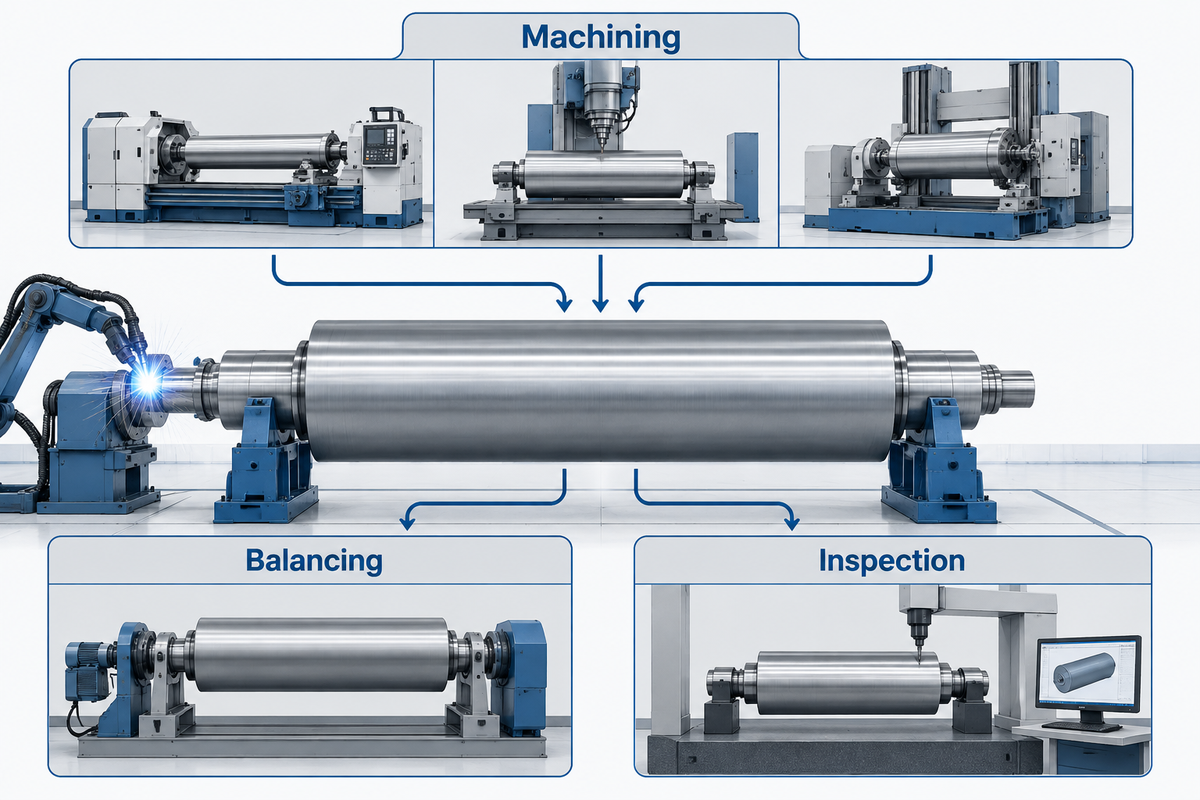
Determine the capabilities of a supplier to manufacture your roll, handle and inspect it. Check the processes against those requirements. A factory tour becomes more useful if it follows the route your order will take from raw material receipt to final inspection.
At Henan Zejiang, our paper machinery manufacturing workshop uses machining centres, large lathes, milling and boring machines, welding and forming equipment, dynamic balancing and inspection instruments. Discuss the roll drawing so the proposed process identifies the relevant equipment, inspection and work.
During a technical meeting, have the supplier describe how he or she identified the material, how the roll was supported during machining, how the surface was finished, and what measurements were recorded. If an outside specialist is in control of a process, determine who controls the specification and accepts the result. Ownership of the equipment is less important than identifying who’s in charge of the completed roll.
Look beyond static shop measurements
Temperature uniformity on a hot roll is important, along with cold geometry. A slow shop measurement and a hot, fast-running roll describe different conditions. Aalto University’s rotor geometry research describes separating centre motion from roundness measurements in large flexible rotors, including paper-machine rolls. Its work also addresses measurement at operating speed on the roll’s own bearings.
For a speed increase or recurring thermal problem, compare the roll’s geometry under cold, slow shop measurement conditions with its geometry under hot, fast-running conditions. Selecting a roller for unchanged duty may mean repeatability to an existing specification, and changing duty may require additional engineering. The appropriate diameter depends on the machine design and loading, while roller deflection and the roller’s deflection-control arrangement belong in the same engineering discussion.
Agree how geometry and surface condition will be measured
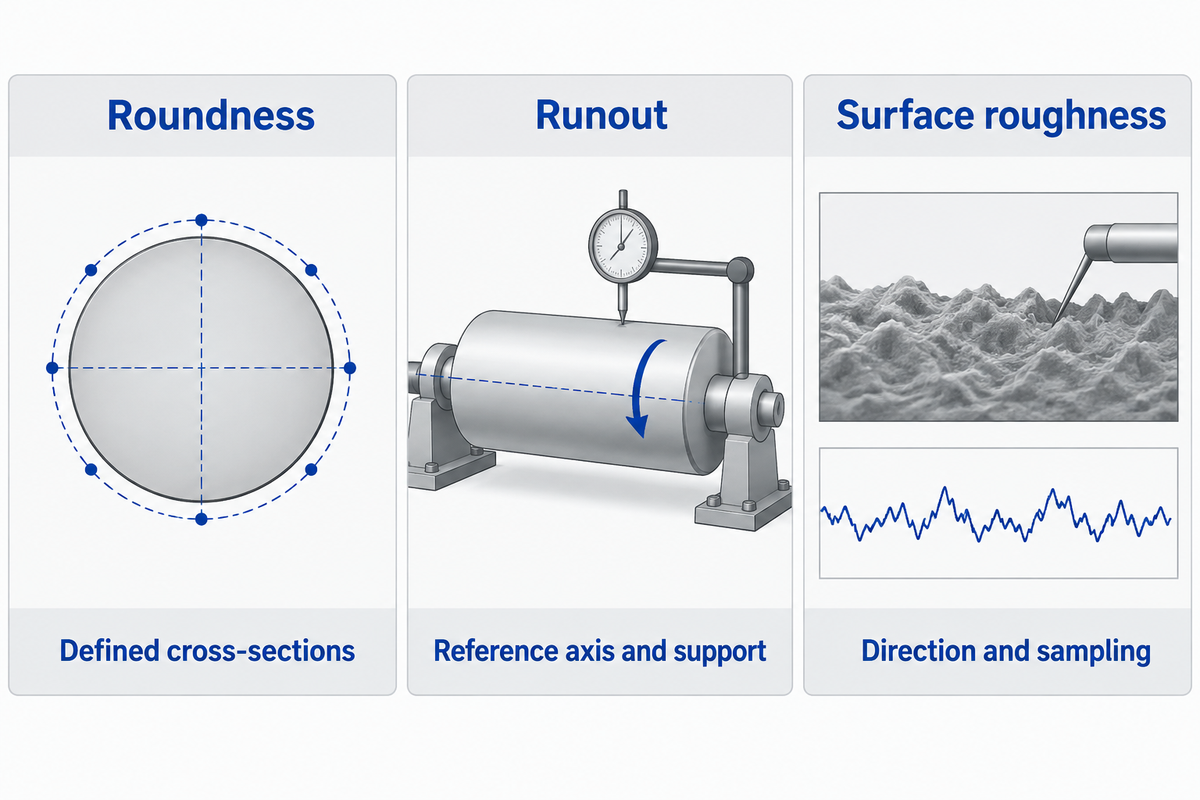
Agree on a measurement plan before selecting a final offer. For each dimensional or surface acceptance characteristic, identify the drawing requirement, the method of measurement, support conditions and the form of report. Roundness, runout, crown, roughness and balance are different properties. Lumping them under a single “precision” claim makes competing offers difficult to compare.
| Characteristic | Define with the supplier | Record to request |
|---|---|---|
| Body diameter and face length | Drawing revision, units and measurement locations | Actual dimensions against specified limits |
| Journal and bearing-seat dimensions | Mating fits and surfaces to preserve | Identified journal inspection results |
| Roundness | Cross-sections, method and separation of support motion | Profile or measurement results at defined locations |
| Runout | Reference axis and how the roll is supported | Results tied to the stated datum and setup |
| Crown or axial profile | Target curve and axial measurement stations | Measured profile compared with the target |
| Surface roughness | Parameter, measurement direction and sampling conditions | Roughness readings with the method identified |
| Surface hardness | Material, scale and test positions | Hardness map or specified point readings |
| Balance | Rotor behaviour, applicable procedure and acceptance requirement | Balance report for the defined assembly |
| Heated-roll behaviour | Temperature, support and operating-condition assessment | Agreed thermal inspection or engineering assessment |
| Measurement suitability | Traceability and uncertainty relative to the tolerance | Measurement-system details supporting the decision |
An example is the difference in a roundness profile result versus a runout result. Accepting one doesn’t imply acceptance of the other. Include the arrangement of the bearing or journal support in the plan, to ensure the mill and manufacturer interpret the report in the same way.
“traceability alone does not signify or guarantee fitness for purpose”
The practical consequence is to ask whether measurement uncertainty is small enough for the acceptance decision, alongside the calibration record.
For balance, the public scope of ISO 21940-11:2016, with its 2022 amendment, concerns rotors with rigid behaviour. Flexible-behaviour rotors are addressed separately in ISO 21940-12:2016. The latter states that it is not an acceptance specification for any rotor, and excludes structural resonances. The supplier and mill engineer should therefore agree the roll-specific requirement and the separate conditions for installation and running acceptance.
Technical specifications matter when two offers both promise precision but define different measurement setups. Address this difference first and then consider the quoted inspection scope as equivalent. Maintain the actual measurement reports, identification of the roll and approved drawing.
Compare new manufacture with regrinding or recovering
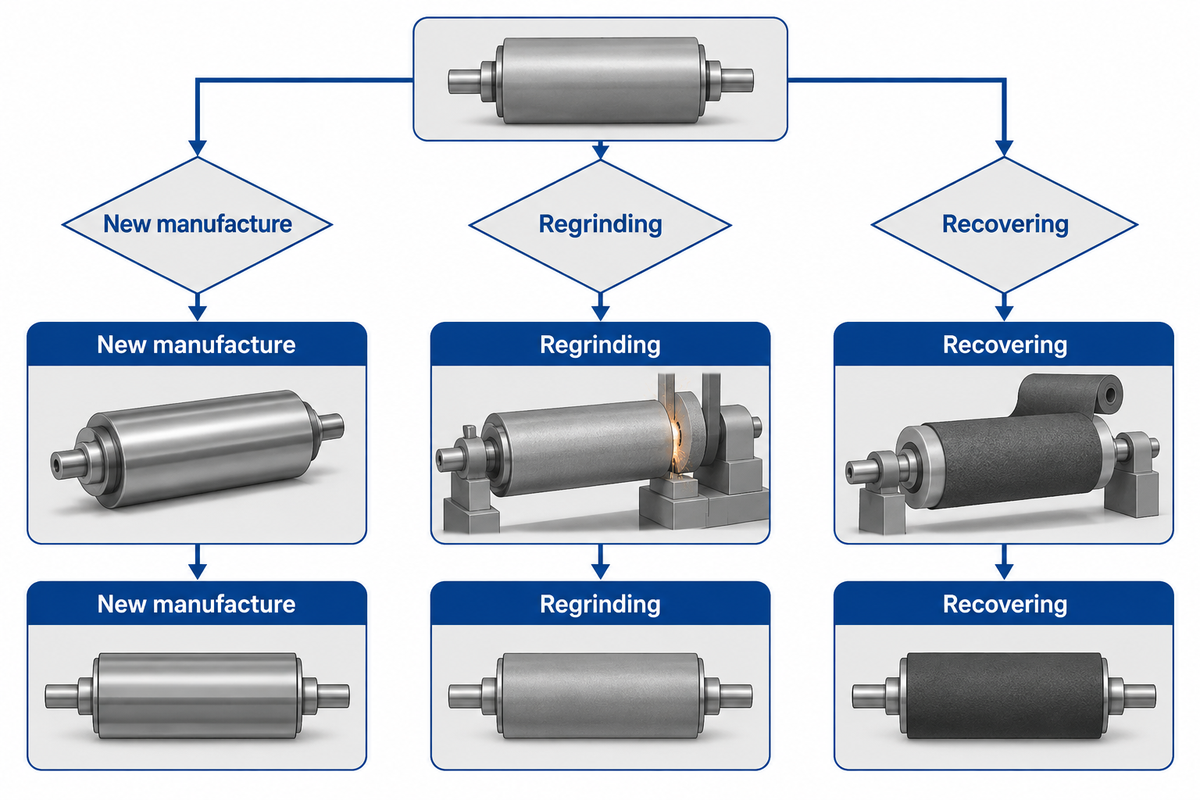
If the existing roll can meet the required finished condition after the work, choose regrinding or recovering. Compare manufacture when there are changes in dimensions, condition, or duty which make refurbishment unsuitable. Establish the reason for the work first; a fresh surface alone doesn’t mean that an operating problem has been resolved.
Begin with an inspection disposition: reusable as proposed, repair required, further examination required, or replacement recommended. The repair route should identify finished diameter, material to be removed, the condition of journals and interfaces, and any cover or coating work. The basis for the remaining life should be investigated rather than accepting a ‘ballpark’ figure for the number of future regrinds.
Research gives helpful distinctions. Thomas Widmaier’s 2012 Aalto University thesis abstract indicates improved static geometry of filled calender rolls by measurement and compensation machining. The same abstract mentions problems with thermal runout compensation experiments on calender thermo rolls.
For further evaluation of a recurring roll failure, include the repair history and operating observations, along with the current surface condition. A sample, profile or marking from a wrinkle or periodic unevenness may help initiate the investigation, but doesn’t specifically identify the failed element. The supplier proposing the corrective action should assess and describe what will be assessed and how the mill will evaluate the result.
Both paths should be assessed against the same final duty and service-return requirement. Recovering may keep the existing core but still require inspection and specialist processing. New manufacture may remove some uncertainty concerning repair, but may also add drawing, material and production-scheduling work.
Compare quotations on total scope and delivery milestones
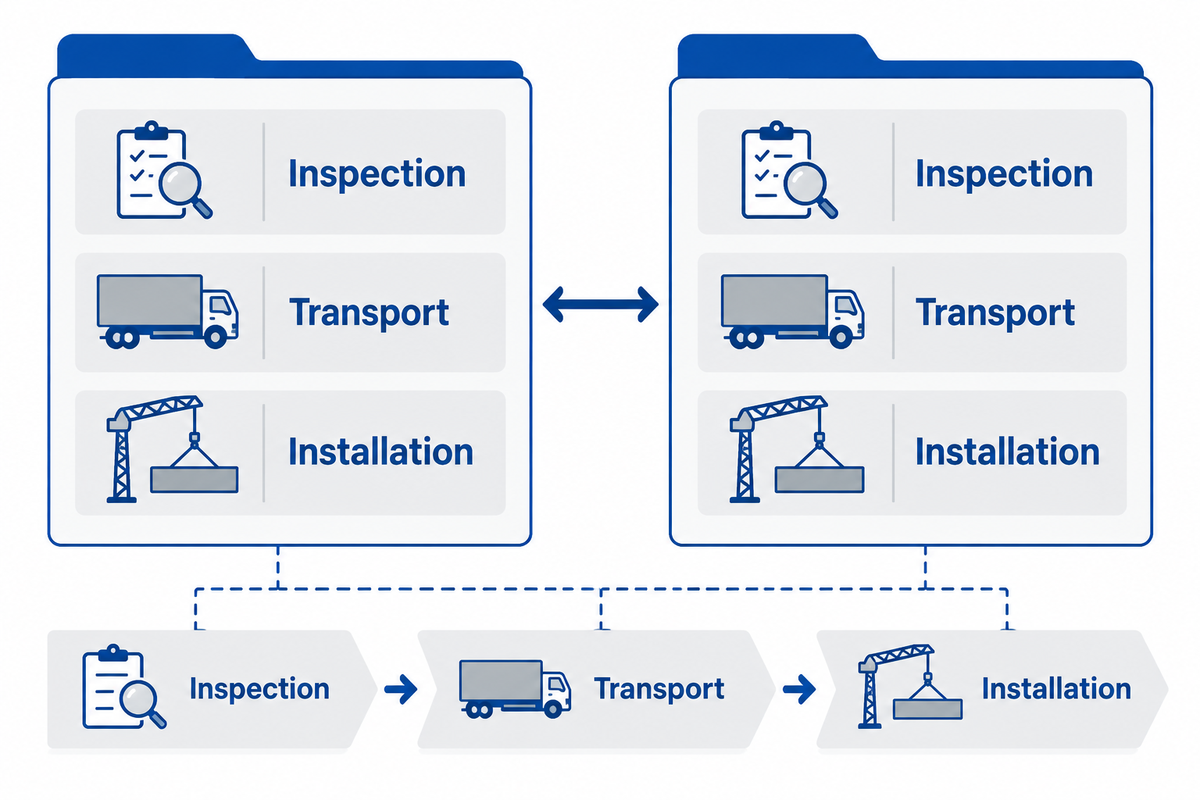
Break down calender-roll quotations line by line against the same scope before ranking prices. Include the finished roll, inspection, auxiliary parts, packing, transport and site support. Separate completion of manufacturing from delivery and/or installation readiness. These distinctions uncover costs and schedule uncertainties that may be masked by a single total and delivery period.
Hypothetical quote comparison: Say two suppliers provide a replacement for the same approved drawing. Offer A includes a finished roll and completion date at the factory. Offer B includes the roll, an inspection package, transport to the mill and assistance with installation. The lower total in A may still be the better purchase if the mill already has those services arranged. Procurement can’t come to that conclusion with just the totals. It needs the prices of the missing items and confirmation that they can be ready within the shutdown window. Finance compares the total cost for the acquisition and installation. Maintenance checks the sequencing. Quality checks that both offers specify the same acceptance criteria.
| Hidden gap | What to settle in the offer | Buyer owner |
|---|---|---|
| Drawing work starts after the quoted lead time begins | Define the approved-drawing milestone and production start | Engineering + procurement |
| Inspection reports cost extra or arrive after dispatch | List required records and review timing | Quality |
| Bearings, seals or couplings are excluded | Identify reused parts and separately supplied parts | Maintenance |
| “Delivery” means ready at the factory | Name the destination and transport responsibility | Procurement |
| Unloading and lifting equipment are unassigned | Confirm handling arrangements and site readiness | Plant manager |
| Installation support is available after the shutdown | Reserve the support window and define included work | Maintenance + supplier |
| A fault appears only during production | Agree test conditions, responsibilities and response route | Quality + production |
| Repair scope expands after stripping the old cover | Set the inspection decision point and variation process | Engineering + finance |
| Warranty wording omits associated work | Clarify coverage, claim process and responsibility for logistics | Procurement + finance |
Ask each bidder to give an itemized list of exclusions next to the price, not in a separate email. For the schedule, request the sequence from the approval of the drawing to the availability of the material, machining, inspection, transport, and installation. An urgent replacement deserves an early discussion of missing information and available production capacity; an optimistic date does not remove either constraint.
A custom paper calender roll is priced and scheduled through a written quotation for the specified roll. Send suppliers the same drawing and duty, request a quotation with currency and delivery terms, and request dated milestones for drawing approval, material procurement, manufacture, inspection, and dispatch. Budget and schedule this replacement from those quotations rather than from publicly listed prices for a different roll or a complete machine.
Resolve installation and service responsibilities before ordering
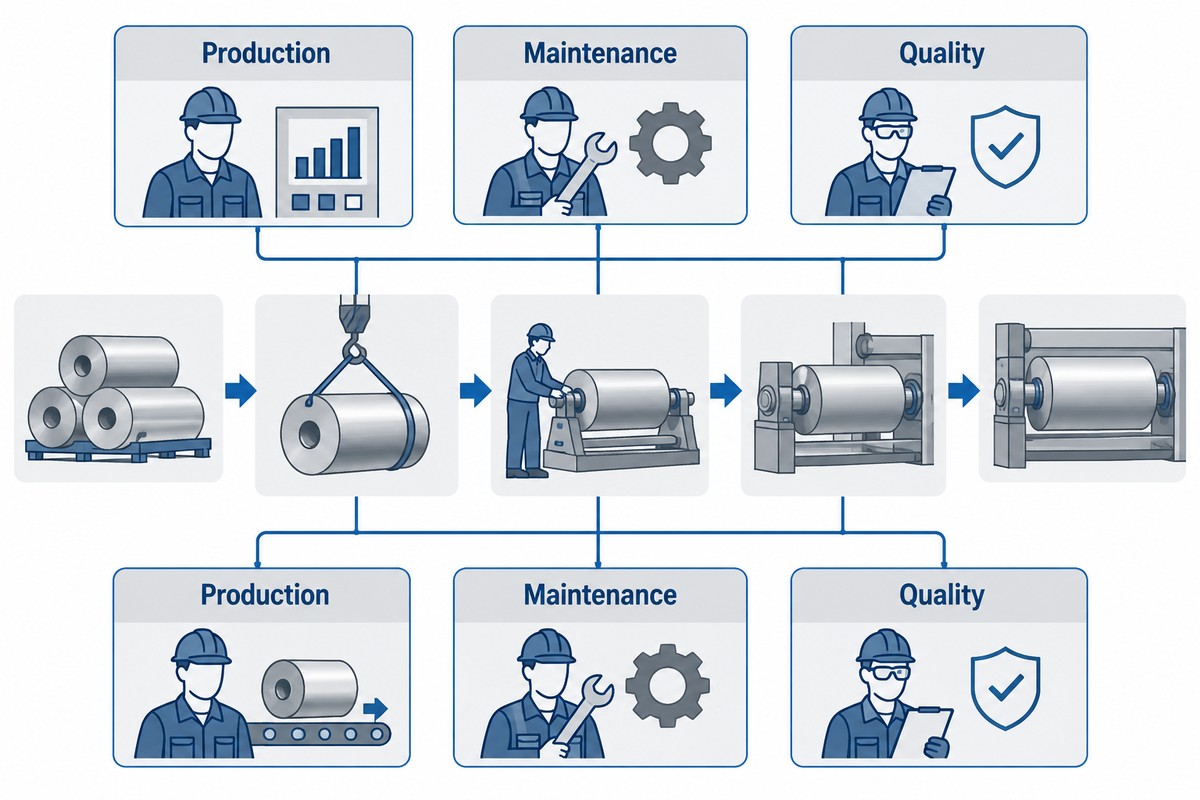
A replacement calender roll is ready for installation when the roll and mating components are ready, along with the arrangements and people responsible for its handling. Set these interfaces before ordering the roll. Otherwise, a roll that passes shop inspection can still wait at the mill while missing parts, lifting arrangements or service availability are resolved.
Briefly review paper grade and operating conditions with Production; confirm mating parts and installation arrangements with Maintenance; understand inspection records and decisions with Quality; and coordinate dates, exclusions and routes to resolve nonconformance with Procurement.
Shop acceptance and running acceptance should be separated in the order. Shop acceptance inspects the delivered roll against its manufacturing requirements. Running acceptance inspects against the installed conditions. When an order is meant to resolve unplanned production downtime, identify the person responsible to inspect the before-and-after operating evidence.
Send Zejiang the latest drawing, roll position, and operating conditions, and the reason for replacing the roll. The information would be useful to manufacture a roll according to requirements. Indicate the shutdown date, and identify the parts in the existing roll that you plan to reuse.
Discuss your calender roll requirement
Frequently asked questions
What is the purpose of calendering?
Calendering changes a sheet’s surface and thickness as it passes through loaded rolls.
In papermaking, the intended result may be smoother paper, a more even caliper or a different gloss level. The mill must state which properties matter for its grade before choosing the roll design. A roll that suits one finishing duty doesn’t automatically suit another material, nip arrangement or production target.
What is the difference between calendaring and calendering?
Calendering is the manufacturing term for processing material between rolls, while calendaring usually refers to scheduling dates.
The spellings are sometimes mixed up in product listings. When requesting an industrial roll, include the machine type, roll position and material being processed. Those details help keep a quotation focused on machinery rather than printed calendars or unrelated paper products.
What is the price of a calender machine?
Price a complete calender machine as a package that may include the frame, loading system, drive, controls and installation support, separately from a replacement calender roll.
A machine offer may include the frame, loading system, drive, controls and installation support; a roll offer may include only the finished body. Ask suppliers to identify every included component and give comparable offers against the same operating requirements before using price to shortlist them.
When Should Industrial Rollers Be Repaired, Refurbished, or Replaced?
After a qualified condition assessment, choose regrinding or recovering when the existing roll can meet the required finished condition; compare new manufacture when remaining dimensions, core condition or changed duty make refurbishment unsuitable.
Surface wear may permit grinding or recovering; insufficient remaining material, unresolved structural damage or a changed operating duty can require a different solution. Compare the finished specification and support scope, not just the repair price.
Can a manufacturer quote a replacement roll without the original drawing?
A supplier may provide an initial estimate from photographs and basic dimensions, but a production quotation needs a controlled technical definition.
If the original drawing is missing, agree who will measure the existing roll, inspect the machine interfaces and approve the replacement drawing. Separate measured dimensions from design decisions: a worn surface or previously repaired journal may no longer represent the intended geometry. Include bearing and coupling details, roll position, operating conditions and the mill’s required sheet properties. Ask the supplier to list every assumption that affects fit, performance or price, and resolve those assumptions before manufacturing begins. Reverse engineering should therefore be a defined part of the purchase scope, with an accountable engineering owner, rather than an informal promise that the new roll will match whatever arrives at the workshop. The mill should retain the approved drawing for future maintenance and replacement purchases.
Related Articles
References & Sources
- Rotor geometry measurement and manufacturing methods Aalto University, 2020.
- Metrological Traceability: Frequently Asked Questions and NIST Policy National Institute of Standards and Technology.
- ISO 21940-11:2016, Procedures and tolerances for rotors with rigid behaviour International Organization for Standardization; public record including Amendment 1:2022.
- ISO 21940-12:2016, Procedures and tolerances for rotors with flexible behaviour International Organization for Standardization; public abstract.
- Optimisation of the roll geometry for production conditions Thomas Widmaier, Aalto University, 2012; doctoral thesis abstract.