Get in touch with Zejiang Paper Machinery Company

Paper Machine Headbox
— Hydraulic, Air Cushion & Open Type Headboxes
Headboxes are custom-engineered by Henan Zejiang Paper Machinery to provide excellent uniform formation, precise CD basis weight profiles and stable jet delivery at the full machine width.
Get a Quote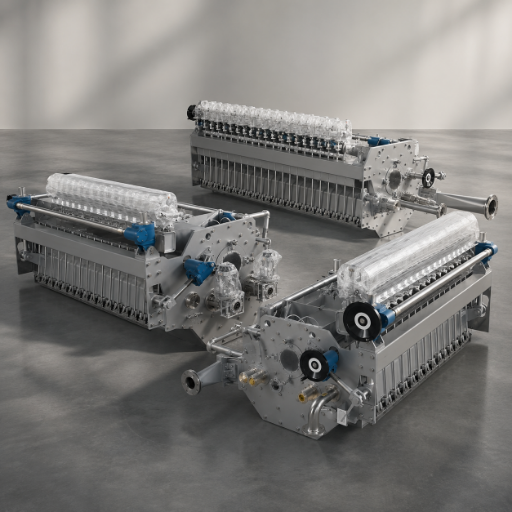
Zejiang Headbox Specifications
-
Headbox Types
Hydraulic · Air Cushion · Open -
Machine Speed Served
Low to high-speed -
Headbox Width
Built to machine width -
CD Control
Automatic dilution profiling -
Construction
Stainless steel -
Service
New builds & rebuilds
Headbox Operation Overview
Your headbox is the only machine component responsible for controlling the formation, fiber orientation and cross-direction (CD) basis weight profile of your sheet. Any disturbance inside the headbox—a pressure pulse, an imperfectly formed jet, an intact fiber floc—travels to the forming fabric and manifests as a visible defect in the final reel. We engineer, build, and reconfigure hydraulic, air cushion and open type headboxes precisely matched to your machine speed and paper grade.
Why the Headbox Decides Your Paper Formation
A headbox is a pressure vessel designed to take a dilute stock solution from the approach flow system and distribute it across the full width of a forming fabric in a thin, uniform, high-speed jet of pulp slurry. Its three concurrent responsibilities: evenly distributing the stock across the machine width, establishing a jet velocity relative to the forming fabric, and generating turbulence within the jet to keep fiber flocs broken.
When any of the three drifts, the cost lands on your reel. Uneven distribution produces streaks and edge-to-edge basis weight variation. The wrong jet-to-wire speed skews fiber orientation and MD/CD strength. Too little turbulence lets flocs survive to the wire, producing cloudy formation. Paper mill teams feel this as customer complaints on weight tolerance, higher broke, and web breaks that steal production hours — and often the root cause is a headbox that no longer matches the machine's speed or grade mix.
A properly selected headbox for your machine line will take these variables out of the equation: a stable jet, a tight CD basis weight profile, and predictable formation from initial startup onward. Good headbox design takes that variable out of paper production: whatever the jet sends to the wire is what the press and dryer sections must live with, and downstream suction boxes only remove water — they cannot fix a bad profile.
Zejiang Headbox Types: Hydraulic, Air Cushion & Open
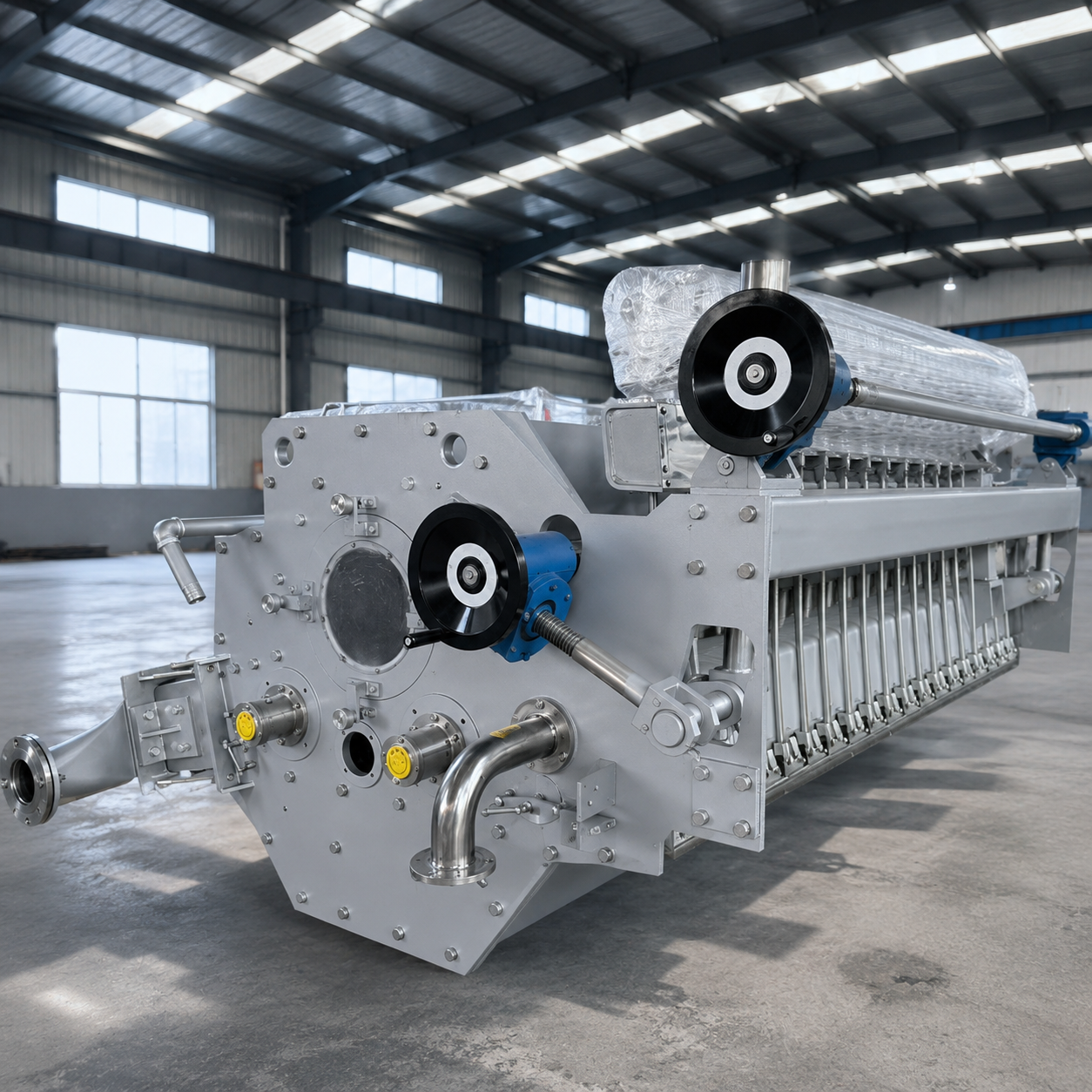
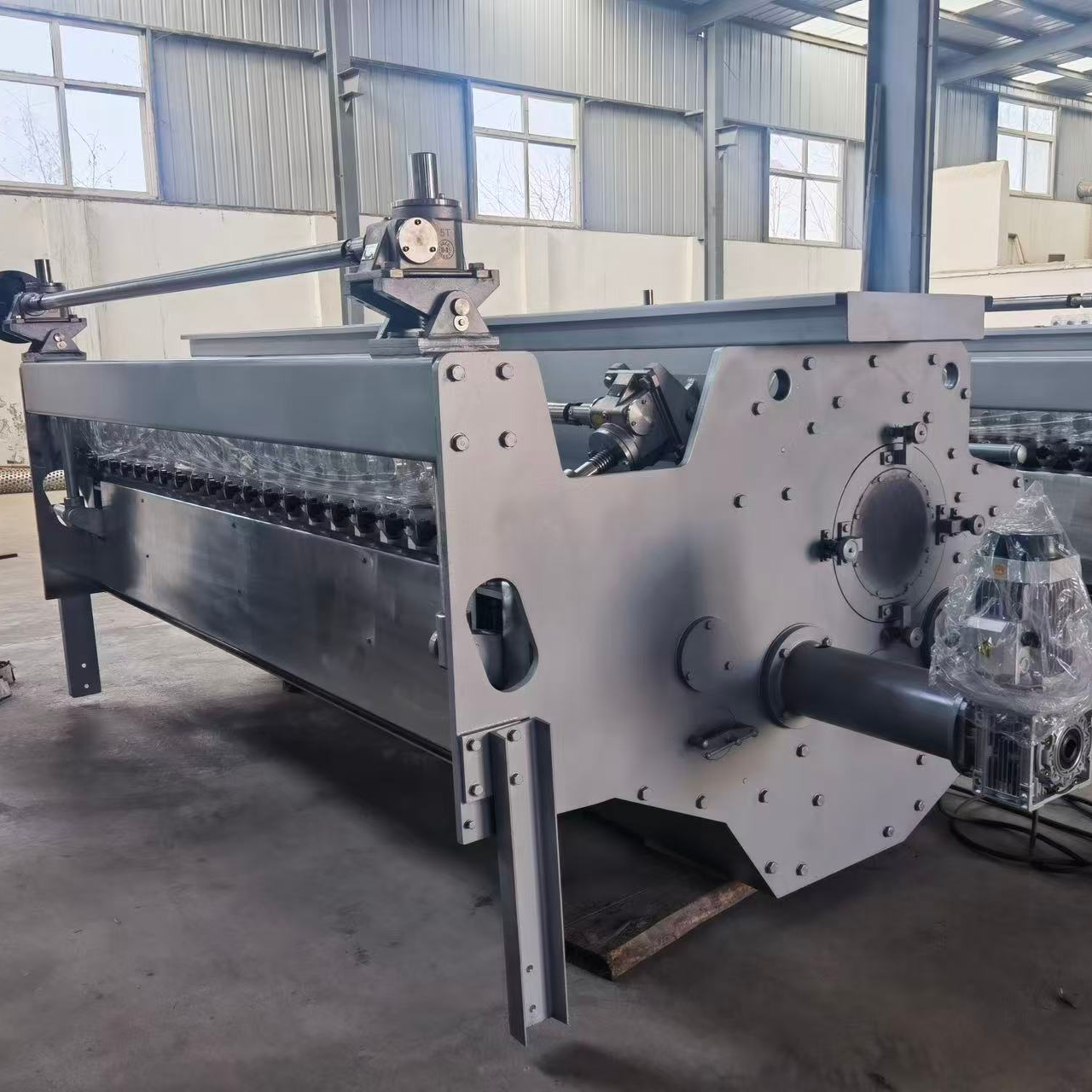
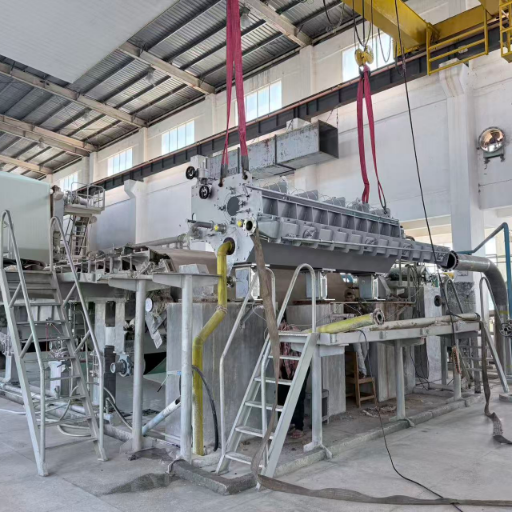
Specifying the right headbox starts with determining the speed of your machine, then the grades you plan to run. We manufacture all three mainstream types, so the right headbox is specified for your line-not for the product we have on the shelf. The photographs below show hydraulic and open type headboxes we built and assembled in our own workshop.
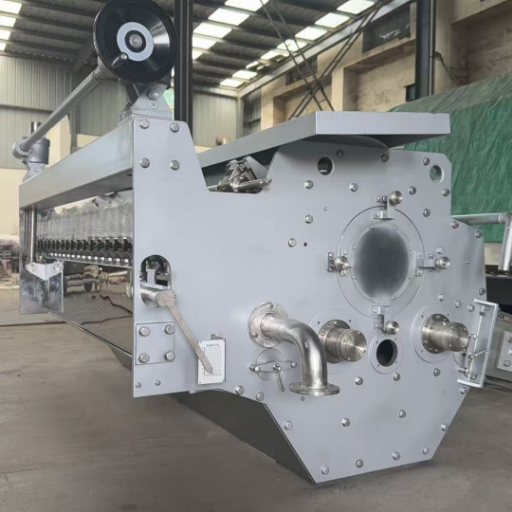
Hydraulic Headbox
Hydraulic Headbox
High-speed · fully flooded
- The machine is run full of stock with the pressure head supplied by the fan pump
- Automatic dilution control for CD basis weight profiling
- Offers best formation at higher speeds for Kraft, packaging, board and fine grades
- Typically the choice for the fastest machines (~500–1,800 m/min)
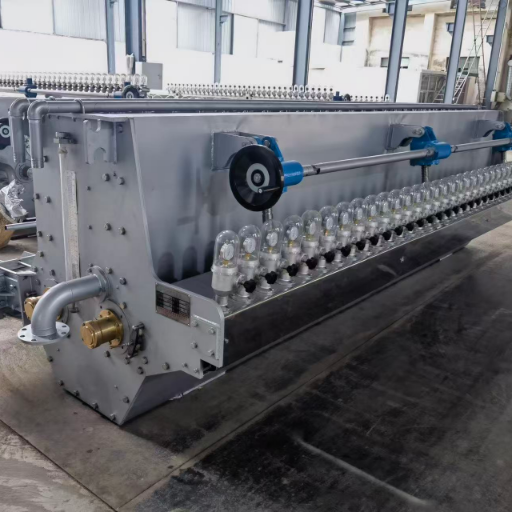
Air Cushion Headbox
Air Cushion Headbox
Medium–high speed · pressurized
- Pressure pulses are dampened in the air cushion above the stock to provide a pulsation-free jet
- Air-pad pressure enables smooth speed changes and flexible operation
- Spray and overflow control stabilize the stock surface
- Suited to fine, printing and tissue grades (~350–1,500 m/min)
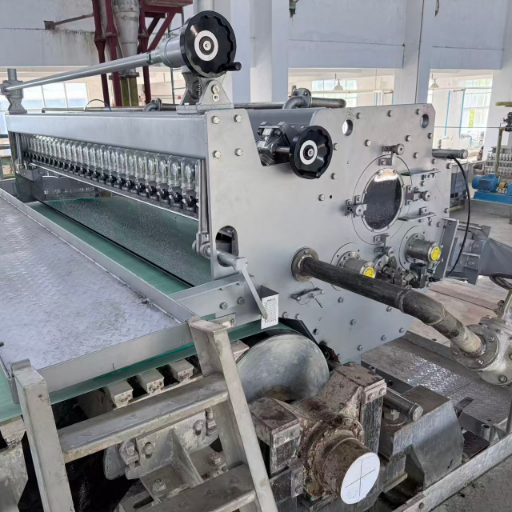
Open Type Headbox
Open Type Headbox
Low-speed · level-controlled
- Jet velocity is determined by the stock level (head) within the open box
- Simplest construction, lowest capital cost, easy to operate
- Well suited for lower-speed packaging and board applications
- Practical range (up to ~200 m/min)
“When we quote a headbox, our starting point is the speed and grade of the customer’s machine, not a model number. A slice geometry that nails formation at 300m/min on a board machine, but would be inappropriate on a fast fine-paper machine, is the reason we specify the type, turbulence generation device and dilution zones appropriate to the line,” — Zejiang Paper Machinery Engineering Team
Not sure which type fits your line?
Get a Type Recommendation — tell us your machine speed →
Hydraulic vs Air Cushion vs Open — Headbox Type Comparison
Selecting the right headbox type is the one headbox replacement decision mills get most wrong. Machine speed and paper grade-and the resulting formation requirements-along with budget will typically narrow the choice of headbox types to two. These speed ranges are generally accepted industry standards and are variable depending on the design of individual machines and manufacturers, but will help you make a first-pass selection.
Headbox Type Selection Matrix — typical figures; confirm against your machine specification.
| Parameter | Open Type | Air Cushion | Hydraulic |
|---|---|---|---|
| Typical speed | up to ~200 m/min | ~350–1,500 m/min | ~500–1,800 m/min |
| Jet-speed control | Stock level (head) | Air cushion pressure | Fan-pump pressure, fully flooded |
| Pulsation control | Basic | Air cushion damping | Integrated pulsation dampening |
| Formation quality | Good at low speed | High | Highest at speed |
| CD profiling | Slice lip | Slice lip + dilution option | Automatic dilution control |
| Best grades | Board, packaging | Fine, printing, tissue | Kraft, packaging, board, fine |
| Relative cost | Lowest | Medium | Highest |
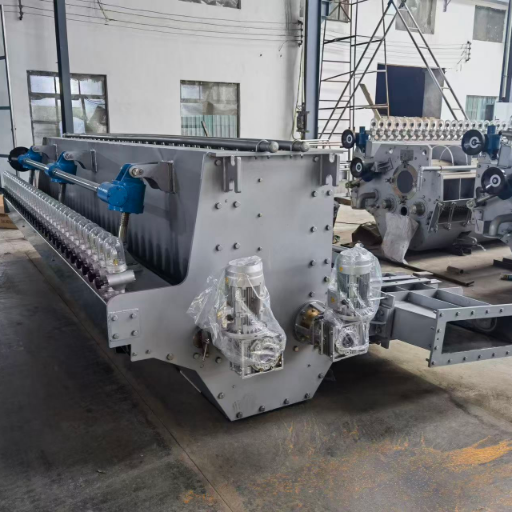
Inside the Headbox: Components & Engineering
Formation quality is a part-by-part construction. Stock flows through the headbox in a particular sequence, and each part has a specific job: to remove one particular problem before the stock hits the wire.
Pulsation Dampening
Absorbs pressure fluctuations from the fan pump and approach piping. Without it, pressure pulses print as rhythmic thick/thin bands in the machine direction.
Header / Manifold
A tapered cross-machine distribution tube that equalizes pressure edge to edge, so stock exits uniformly across the full width.
Dilution Control System
Adds metered dilution water at multiple zones to trim local consistency — the mechanism behind a tight CD basis weight (grammage) profile and even cross profiles, closed-loop with DCS/QCS scanner feedback.
Turbulence Generator
A tube-bank or channel array that creates controlled micro-turbulence to break fiber flocs, deflocculating the fiber suspension so individual fibers land randomly and sheet formation stays clean.
Nozzle & Slice Lip
Converges the flow into a thin, high-speed jet. Its adjustable slice lip — with coarse and fine settings and edge feed control — sets jet thickness and edge quality.
Rectifier & Diffuser
Rectifier rolls and diffuser boxes further condition the flow in pressurized designs, dampening large-scale turbulence while preserving the fine micro-turbulence that helps formation.
Jet-to-Wire Ratio: the lever behind fiber orientation
The Jet to Wire (J/W) Ratio-stock jet velocity divided by forming wire speed-is how a headbox regulates fibre orientation and MD/CD strength. It is the clearest proof that geometry, not luck, controls sheet properties.
Jet-to-wire ratio and its effect on the sheet. Source: pulp & paper engineering practice.
| J/W ratio | Condition | Effect on paper |
|---|---|---|
| = 1.0 | Jet speed equals wire speed | Random fiber orientation — balanced MD/CD strength |
| > 1.0 (rush) | Jet faster than the wire | Fibers align in machine direction — higher MD strength (common on packaging) |
| < 1.0 (drag) | Jet slower than the wire | Fibers align in cross-direction — higher CD strength |
Incoming stock typically has a consistency between 0.5% to 1.2% depending on the grade. It is how these components - Consistency, Turbulence and J/W Ratio - work together that distinguishes a headbox that runs from one that maintains a clean profile from shift to shift.
Applications & Paper Grades
Since Zejiang builds all three types of headboxes and complete paper machines, we specify the headbox for the grade you actually make - we do not fit a grade to an existing design. The principles that apply below are the same.
Kraft
High-strength packaging and sack grades
Corrugated
Fluting and medium for containerboard
Testliner
Recycled linerboard surfaces
Duplex Board
Multi-ply coated and uncoated board
Tissue
Toilet, facial and towel grades
Cultural
Writing and printing papers
Specialty
Niche and technical grades
Recycled
Mixed-furnish recovered-fiber lines
Materials, Precision & Quality Control
A headbox spends all of its operating time in close contact with stock and white water. Build quality here is more than cosmetics - it is about operating life and profile clean time.
Paper Machine Headbox — FAQ
What is a headbox in a paper machine?
The headbox is the wet-end component that takes prepared stock from the approach flow system inlet and delivers it as a uniform jet of pulp slurry onto the forming fabric. It sets the cross-direction basis weight profile, fiber orientation and formation of the sheet.
What are the different types of headbox?
The three mainstream types are the open type headbox (low speed, level-controlled), the air cushion / pressurized headbox (medium–high speed, air-damped), and the hydraulic headbox (high speed, fully flooded with automatic dilution control). Zejiang builds all three.
How do I select the right headbox for my machine speed?
Match type to speed first, then grade. As a guide, open type suits speeds up to roughly 200 m/min, air cushion serves the medium–high range, and hydraulic covers the fastest machines. Tell us your machine speed, width and grade and we will recommend the type and configuration.
Can an old headbox be rebuilt instead of replaced?
Yes. A rebuild typically includes new top and bottom slice lips, a new cross-direction tank, a new diffuser box and updated micro-adjustment — restoring modern performance without replacing the entire paper machine, at significantly lower cost than a full new unit.
How does the headbox affect paper quality?
It controls three things at once: even stock distribution (CD basis weight), jet-to-wire speed ratio (fiber orientation and MD/CD strength) and turbulence (formation). Problems in any one show up directly as basis weight variation, orientation issues or cloudy formation.
Are high-speed hydraulic headboxes suitable for all paper grades?
Hydraulic headboxes are versatile and cover most grades at speed, but the best fit still depends on your line. For genuinely low-speed board or packaging machines, an open or air cushion headbox can deliver the required quality at lower cost.
How often should a headbox be maintained?
Headboxes are long-life assets, but slice lips, dilution valves and internal surfaces benefit from a scheduled inspection routine matched to running hours and furnish. Recovered-fiber lines generally need closer attention to deposits and hang-ups.
![Refiner Plates & Screen Baskets [Complete Guide]](https://zjpapermachine.com/wp-content/uploads/2026/07/refiner-plates-screen-baskets-guide-featured-150x150.png)
![Doctor Blade: Types, Materials & How It Works [Guide]](https://zjpapermachine.com/wp-content/uploads/2026/07/doctor-blade-guide-featured-1-150x150.png)
![Pulping Equipment: How Paper Pulping Works [Guide]](https://zjpapermachine.com/wp-content/uploads/2026/07/pulping-equipment-guide-featured-150x150.png)