Precision Engineering
ISO Quality Certified

Doctor Blade

Paper Machine Doctor Blade

paper machine doctor blades guard your rolls, your sheet quality, and your uptime-but only when your blade material, bevel angle, and loading pressure precisely match your machine position. We stock carbon steel, ceramic-tipped and composite doctor blades as well as fixed and adjustable holders and Yankee dryer creping blades for your press, dryer, calender or tissue machine positions rather than as generic stock parts.

  • 4 Blade material families

    (carbon steel / stainless / ceramic-tipped / composite fiber)
  • Machine positions covered

    Press / Dryer / Calender / Yankee
Request a Quote
Micro-Tolerance: ±0.01mm
Paper Machine Doctor Blade Configuration
1.5–3.2mm
Blade thickness range
10°–30°
Bevel angle range by position
50–700N/m
Loading pressure range
Up to 50%
Documented doctoring-cost reduction in published industry optimization case studies*

Roll Damage, Sheet Breaks & Machine Downtime, How the Right Doctor Blade Protects Your Paper Machine

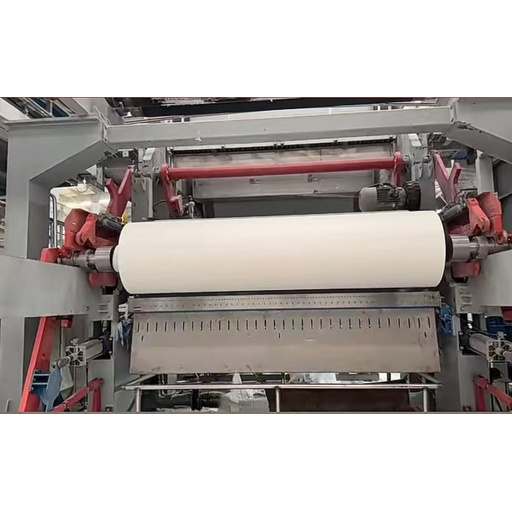
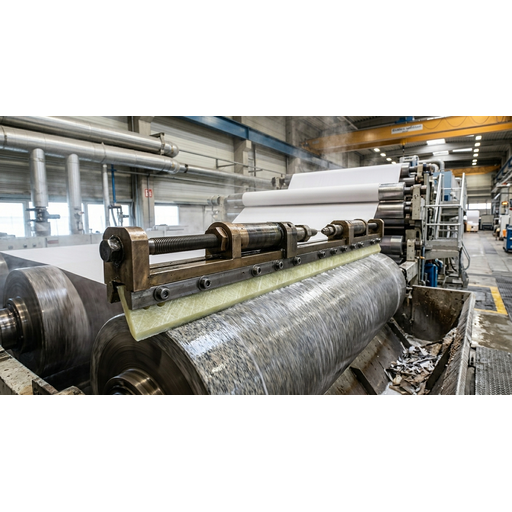
A doctor blade is a thin metal or composite strip held in a holder and loaded against a rotating roll or cylinder that removes contaminants, lifts the sheet during a break and control surface conditioning at specified points along your paper machine.

Failure of the blade material, bevel angle or loading pressure when mismatched with the roll and application follows a predictable and progressive path.

“A worn or mismatched blade first vibrates against the roll,” explains one manufacturer doctoring-training reference. “Then the edge begins to chip, increasing friction and allowing water or fiber to pass beneath it; eventually, the blade delaminates and, in the worst case, the holder come into contact with the roll surface.”

“Doctor blade failure has a direct impact on equipment damage and production costs and efficiency,” notes the same reference-an impact many maintenance teams may underestimate.

Peer-reviewed tribology studies link friction at doctor blades, seals, and fabric contact points to approximately a third of all paper machine friction losses, from an overall friction bill that can approach 15-25% of a mill’s total energy consumption. Layer-by-layer wear behavior documented in US Patent 9,551,109 B2 (Kadant Inc.) shows why this progression happens even in well-specified composite blades, not just cheap ones.

“When a customer sends us a roll diameter and tells us which section it’s running in, we’re not guessing at a bevel angle, press-section water-removal blades and dryer-section cleaning blades see completely different loading and heat conditions, and the material choice has to follow the position, not the catalog page.”

— Zejiang Application Engineering Team

Henan Zejiang engineers doctor blades and holders to match the exact position on your press, dryer, calender or Yankee section. We use the material families identified in the Machine-Position Material Matrix below to protect the roll from becoming your next failure point.

Zejiang Doctor Blade Materials, Selection by Machine Position

Blade material selection is a function of three interacting variables: roll surface hardness, temperature at the contact line, and loading pressure applied by the doctoring system. While many “durable” claim to be long-lasting, we rely on published patent data for doctor blade construction (documented through USPTO filings) for objective ranges. We call this chart the Machine-Position Material Matrix because the specific machine position-not an arbitrary marketing category-should be what determines the blade material.

Zejiang Doctor Blade Materials
Machine Position Recommended Material Blade Thickness Bevel Angle Loading Pressure Primary Function
Press section (suction/press rolls, soft covers) Composite fiber (carbon/glass) or UHMW-PE 1.5–3.2mm 10–15° 50–175 N/m Water removal, gentle on soft roll covers
Dryer section (steel dryer cylinders) Carbon steel or ceramic-tipped composite 2.0–3.2mm 25–30° 175–440 N/m High-temperature cleaning, scale & fiber removal
Calender rolls Ceramic-coated or carbon-fiber composite 1.5–2.5mm 20–27° 90–350 N/m Low-friction surface conditioning
Yankee dryer (tissue) Ceramic-tipped or steel creping blade see Creping Blades section set by crepe ratio target holder-dependent, see Creping Blades Creping, controlled sheet detachment

Engineering Note, Material Science Behind the Numbers

Resin-matrix composite blades are typically 50-75% fiber by weight, with resin glass-transition temperatures (Tg) designed 20°C or higher above the expected interface temperature – a buffer which makes a difference when roll speeds reach about 1,400 m/min and interface friction temperatures rise along with them (US Patent 6,643,890 B2; US Patent 6,758,944 B2). Thermosetting carbon-fiber blades have demonstrated wear rates below 0.5mm per hour of continuous doctoring, and two-layer asymmetric designs-in which a softer glass fiber body carries a harder carbon fiber or ceramic-coated edge-have been patented for increased life over single-material designs (WO2008037850A1).

Ceramic coatings based on the Al₂O₃-ZrO₂ family have been reported at hardness of 850-950 HV in doctor-blade coating service, compared to approximately 600 HV for an all-steel doctor blade in the same 25-year-old-but-still-cited patent application (not new research). In the patent’s seven-hour trial of flexographic anilox-roll doctoring, compared with an actual paper web calendering operation, edge wear on the ceramic-tipped blade was 0.2mm versus 3.8-4.0mm for two brands of steel blades used under identical load and speed conditions-19-20 times less wear on that specific negative-blade test in the trial where it was directly measured. Again, we provide this as material-science background from a single documented test rather than a guarantee for any specific paper-machine operation, because the test involved a different roll material and an older generation of blades. A related patent from an established paper-machine equipment maker (US Patent 9,551,109 B2, Kadant Inc.) documents that the glass layer in a composite blade wears through before the carbon layer does, which is part of why layer sequencing matters as much as raw material choice.

Blade life is shaped by installation position as much as by material: a blade at an oscillating position-either a trailing press doctor or some dryer-section stations that use back-and-forth oscillation across the roll face instead of sitting fixed in one place-wears differently than a stationary doctor, and abrasive-grade blades are generally reserved for these oscillating cleaning jobs rather than general roll conditioning. Composite blade bodies are normally epoxy resin systems reinforced with carbon or glass fibre layers, and on dryer-section positions the doctor work alongside a cleaning shower to remove debris between passes.

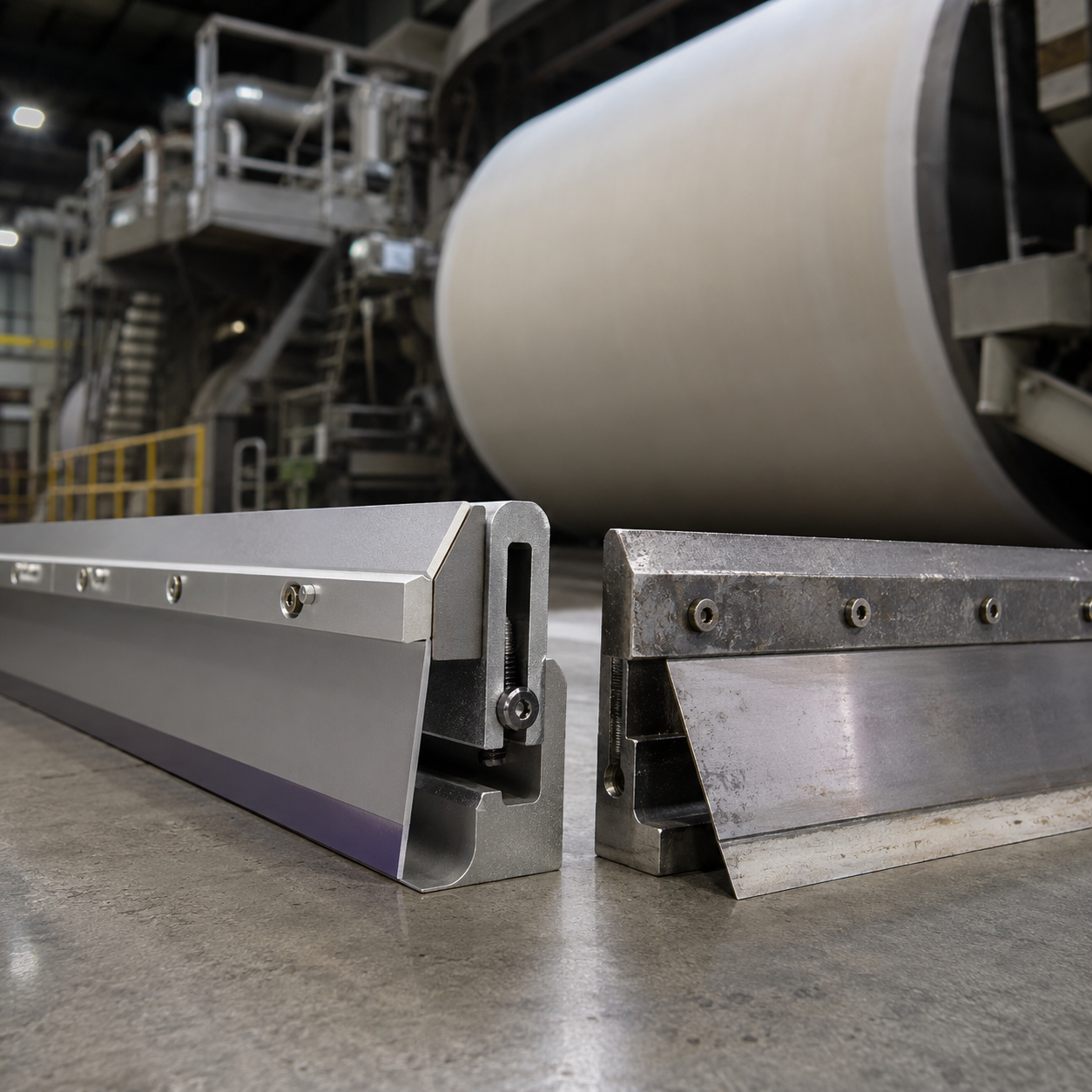
Zejiang cuts and bevels each of these families-carbon steel, stainless steel, ceramic tipped, and carbon/glass fibre composite-to your specified angle, thickness and length, depending on your roll diameter and holder. They offer standard part numbers rather than a list of stock catalog items, but provide a spec sheet upon request detailing tolerance and drawing requirements for all four families.

Zj-Db

Doctor Blade Holders, Fixed & Adjustable Mounting Systems

The holder is the component that support the blade, permits accommodation for roll surface imperfections, and enables replacement without dismantling the entire doctoring beam-it comes in two designs from Zejiang, both engineered to reduce uneven loading across the roll face:

Custom Solutions

While most catalog manufacturers offer standard off-the-shelf holders, Zejiang designs and quotes holders to your specific drawing; simply send us your roll diameter and beam profile for a custom holder drawing and cost estimate, confirmed by our engineering team.

01

Fixed Holders

Fixed holders place the blade at a fixed angle and position in the holders, ideal for applications where the roll geometry and loading requirement don’t change-like dryer and calender applications under constant operating conditions.

02

Adjustable Holders

Adjustable holders allow you to fine-tune loading pressure (and in some models, blade angle) in the field; adjustable holders are generally the more popular choice for applications where the contact geometry may change over the holder’s life due to roll wear or product changeovers.

All holders are manufactured to fit your specific roll diameter and doctoring beam, ensuring the blade sit at the optimal tangent angle from the outset. This isn’t just about a good first fit; getting it right prevents damage to the doctor blade and avoids one of the most common causes of the uneven wear patterns you’ll find in the ordering guide below. These are high-precision parts-not universal brackets-with an in-house manufacturing capability that maintains tight tolerances on both the mounting face and the pressure arm, so you get even loading pressure across the full face of the roll. In contrast, a loosely manufactured holder can show up later as a hot spot in the wear pattern with no obvious explanation – the blade dimensional tolerances documented in US Patent 6,643,890 B2 (thickness, width, bevel angle) only hold up in practice if the holder that carries the blade is machined to match.

Creping Blades for Tissue Machines & Yankee Dryers

Unlike a standard doctor blade used for surface cleaning, a creping blade perform a much more intricate function: it not only scrapes debris off the Yankee dryer cylinder, but it folds the wet tissue web away from the cylinder to build bulk, stretch, and the desired softness requested by tissue converters.

Zejiang provides creping blades with steel or ceramic tips, matched to your Yankee cylinder diameter and the specific blade holder used in your tissue machine, which can be either a fixed-angle holder or a more sophisticated, pressure-adjustable holder for the higher loading pressure needs on wider machines. If you are still specifying the forming platform itself, see our tissue paper machine line for the cylinder mould and crescent former options these blades are matched to.
When considering productivity over the long term, wear resistance becomes the primary driver of consistent tissue quality. If the blade dulls inconsistently over its run, the crepe pattern change mid-reel, leading to variations in bulk and softness. On larger machines with wide-diameter Yankee cylinders, the costs associated with more frequent changeovers across a longer surface area will eventually outweigh the initial price advantage of a steel blade – the same wear-rate-below-0.5mm-per-hour asymmetric-layer construction covered in WO2008037850A1 is the engineering basis for that tradeoff.

Zejiang Doctor Blades vs Standard Imported Alternatives, Performance & Cost

Most major western OEMs maintain large catalogs spanning steel, composite, and coated-ceramic blades. The material technology is well established industry-wide and documented in the same patent literature cited above (US6,431,066 B1), and Zejiang uses the same classes of materials listed above. What actually separates ordering from the OEMs and ordering from Zejiang is how the product get configured and priced.

Zejiang Doctor Blades Comparison
Factor Typical Imported OEM Program Zejiang Direct Factory
Minimum order quantity Often bundled into a service/maintenance contract Custom quantities from a single blade set
Custom bevel/thickness spec Available through regional distributor, added lead time Quoted directly from factory drawing
Pricing structure Quote-only, frequently bundled with holder service Itemized by material, thickness, and length
Material families offered Carbon steel / composite fiber / ceramic-coated Carbon steel / stainless / ceramic-tipped / composite fiber

Here’s one factor that buyers should keep in mind when comparing any doctor blade supplier – whether it’s imported or a domestic option: blade sticker price is the easiest number to compare, but it’s rarely the most significant contributor to the overall cost of the system. Things like wear rates, compatibility with the rolls and holder assembly, and overall suitability of the blade for the user’s specific loading machine all influence total cost more than a per-piece price will – that’s precisely why the material-to-position matrix we provide (instead of one single “best” material) is a good starting point for any comparison.

Whether your interest is in sourcing doctor blades for paper industry applications broadly, comparing Valmet doctor blades or a Kadant doctor blade holder against a domestic option, or simply getting an accurate quote for a paper mill doctor blade replacement program, the fundamental choice remains the same: match the blade material to the application and then choose based on lead time, customization capabilities, and total cost – rather than simply by brand name alone.

Customer Results Doctoring Module – Premium Design

Customer Results: Doctoring Cost & Reliability Improvements

As a relatively new player serving paper mills in Asia, Africa, the Middle East, and South America, we’re actively compiling our own performance data as installations go live—the honest version of where we stand today, not a polished claim we can’t back up. However, the argument for selecting doctor blades based on proper analysis is well-established throughout the paper industry:

$200K → $65K

Annual doctoring cost reduction (−50%) reported in a published paper-machine doctor blade optimization program

Industry-Wide Potential

Source: Valmet Doctoring Services Agreement customer results, published 2020 (third-party, not a Zejiang result — see References). Individual results vary by machine, roll condition, and grade mix.

This figure is just one of six different de-identified customer reports published by Valmet through their Doctoring Services Agreement program; in five additional reports they mention improvements such as extending blade lifetime by 8 to 14 days while also achieving a 50% reduction in blade costs, a 30% decrease in dryer-section breaks, and roughly $335K in combined annual savings across two separately reported mills.

While these results represent the potential achieved through good practice with blades and holders industry-wide, rather than specific Zejiang products, they highlight the significant gains that can be realized by an appropriate doctoring solution matched to the material science covered in US Patent 6,758,944 B2.

Global Service Footprint

Our areas of service include kraft, testliner, corrugated board, tissue paper and culture paper—segments in which global paper production is continuing to grow; for example, India is responsible for nearly 5% of the world’s paper production, and in its most recent reported year, Brazil produced 11.3 million tonnes of paper, making it the world’s 7th largest producer.

South Africa also publishes production statistics on an annual basis via its national association, and our export business is centered on these regions.

Quality Control & Industry Standards

Blade specifications and holder selection for paper machines are specifically addressed in Technical Association of the Pulp and Paper Industry (Tappi) technical guidance documents. Tappi Tip 0404-67, Paper machine doctor recommendations, addresses general doctoring principles for solid, grooved, blind-drilled, and suction rolls, while Tappi Tip 0425-06 sets out maintenance procedures and inspection for creping doctors designed to minimize the risk of Yankee dryer surface damage. Our process for blade and holder specification development is informed by this technical knowledge.
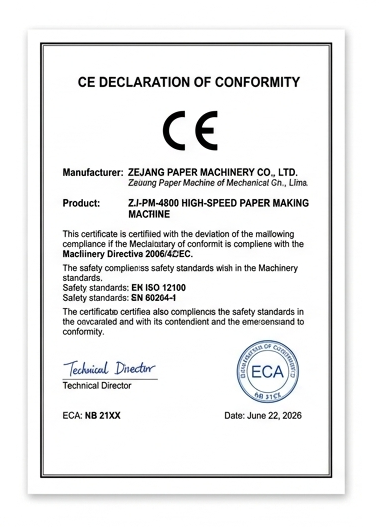
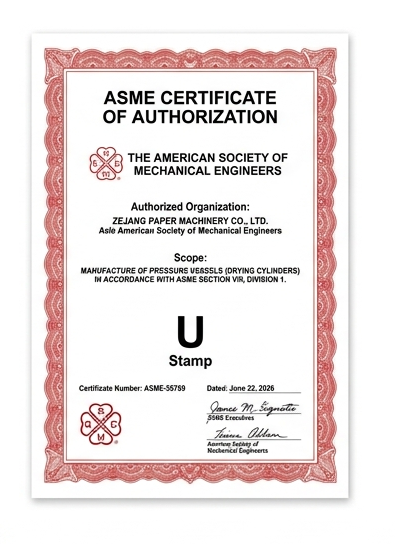
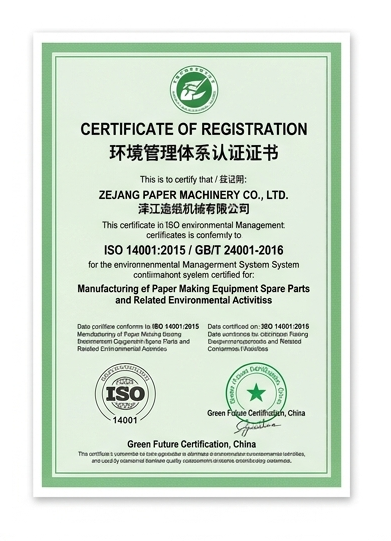
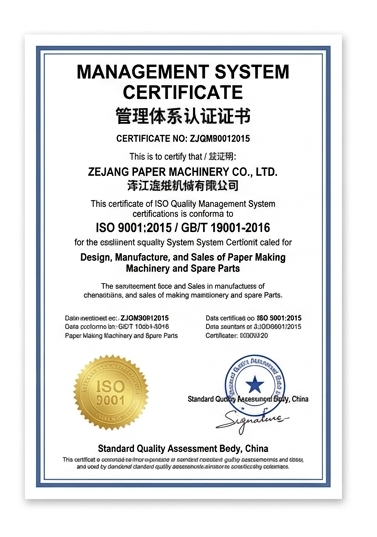
Every blade shipped to a customer – from a single sample for trials, to a multiyear contract to supply a corrugating board mill – receives dimensional validation to the engineering drawing (thickness, bevel, length) before it is packaged in our Henan, China factory. This page will not publish an Iso certification number unless that certification has been verified by an independent auditor. Running a quality-controlled manufacturing process aligned with the principles set out in Iso 9001:2015 is different from stating that we possess a certified quality management system, and the precision with which we identify what is true of us matters more to us than a more polished-sounding sentence. This is the trade-off of being a relatively new entrant in this market space: we will not claim certifications that we do not hold. What we can do, however, is provide you with verification of dimensional accuracy for every batch we ship.

Tappi Tip 0404-67

Doctor recommendations reference

Tappi Tip 0425-06

Creping doctor maintenance reference

Dimensional Qc

Per-batch drawing verification

Export Documentation

Complete verified compliance

Export Global Logistical Reach

Asia / Middle East / Africa / South America
Doctor Blade Engineering Matrix Detail
Doctor Blade Manufacturing Verification
Paper Machine Structural Blade Configurations
Industrial Manufacturing Quality Management Assessment
Enlarged Detail View

Ordering & Replacement Guide

Because our blades and holders vary across many independent factors, there’s no simple price list. Below are the primary drivers that influence our quotes:

01

Material Family

Carbon steel has the lowest cost of entry; in applications for which extended service life is critical, composite fiber and ceramic-tipped blades will command a higher unit price.

02

Dimensions

The length of the blade is matched to the width of your roll face, and the thickness and bevel angle are cut according to your drawing specifications, within the ranges documented in US Patent 6,643,890 B2 for your material family.

03

Order Volume

As the size of an order batch increase, the per-piece cost of blades will decrease. That being said, Zejiang provides quotes on single-blade sets for emergency orders or to test product performance.

04

Holder Type

Pressure-adjustable holders will carry a higher unit cost than fixed holders, as they’re more complex to manufacture.

DB

Custom Specs, MOQ & Lead Time

Please contact us for a quotation based on the position in your paper machine, roll diameter, material of choice and beam type. Before submitting our quote, we’ll confirm blade specifications with you to ensure compatibility with your existing holder geometry.

If you’re comparing Essco doctor blades, Btg doctor blades, or composite doctor blades from the major western manufacturers, then ordering from us will involve the same logic: if you require a quote for a paper machine doctor blade holder, then you’ll need to specify roll diameter, beam type, and loading pressure prior to discussion of price.

Buyer Advisory, When to Replace, Not Just Reorder

It’s considered good practice to replace a blade when it reaches approximately 15 percent width loss due to wear rather than waiting for failure; to wait longer is to invite the risk of vibration leading to a delamination failure as described earlier on this page. Never lower a doctor onto a turning or soft press or calender roll, and give granite, ceramic, or cast-iron roll surfaces an appropriate run-in period before operating blades at their full loading pressure rating.

Advanced Doctor Blade Engineering & Diagnostic Tools

01

Doctor Blade Material & Position Selector

Select your machine position to see the material family, thickness range, bevel angle, and loading pressure typically specified for that position — based on published patent data for doctor blade construction.

Access Tool
02

Blade Wear & Replacement Urgency Check

Industry best practice is to replace a doctor blade before it reaches roughly 15% width loss from wear, rather than running it to failure. Estimate your blade’s width loss and check for the early warning signs below.

Access Tool
03

Blade Material Property Quick Reference

Compare key properties across the four doctor blade material families Zejiang supplies, based on published patent data for doctor blade construction.

Access Tool

FAQ, Doctor Blade Selection & Maintenance

What is a doctor blade in a paper machine?

A doctor blade is a thin blade in a holder, held in pressure against a rotating roll or cylinder on a paper machine. Its functions are to remove contaminates from the roll surface, shed the paper sheet into the broke chute during a break, dewater suction rolls, and, in tissue manufacture, fold the sheet off the Yankee dryer in creping.

How often should a doctor blade be replaced?

There’s no magic bullet here – it’s machine speed, the roll surface material and blade material all affect frequency, from days (some composite blades under heavy, continuous doctoring) to weeks. In practice, most mills go by condition: change the blade once it has lost about 15% of its width or, better, if you see the symptoms below.

What are the signs of a worn doctor blade?

Chipping, a dull rather than sharp bevel, a ringing noise as it contacts the roll, or fiber or water escaping beneath the blade are the early warning signs. Left unaddressed, worn blades progress to delamination and, eventually, roll contact.

What is a creping blade?

A creping blade is a special type of doctor blade that’s used against the Yankee dryer to fold the drying sheet of tissue off the roll in a patterned way that develops the softness, stretch and bulk of the tissue product. Typically ceramic and carbide tips are used in tissue creping for finer, more consistent crepe structure than simple steel.

How does a Yankee dryer work?

A Yankee dryer is a large steam-heated steel roll that dries the tissue by heat transfer while a flow of heated air is directed across the paper surface. The wet web of paper is laid down and adhered to the heated roll surface, where it dries as the roll turn, before it’s peeled off the roll by the creping blade at an angle that imparts structure.

Carbon steel or ceramic-tipped, which doctor blade material should I choose?

The low cost/high stiffness of carbon steel make it the preferred option in non-corrosive sections and in applications where a very stiff blade is needed. It’s also the easiest material to keep in stock and install quickly for an emergency machine shutdown, a significant cost savings if you can’t afford any downtime while waiting on parts. Ceramic tipped blades, although costing more up front, have significantly longer service life under high-friction or abrasive conditions and can make a lower total cost-of-ownership proposition through fewer blade changes. Whether a fixed-tip steel, a wear-resistant composite, or an extra-hard tipped ceramic blade is best will depend on machine section, roll cover material, and your tolerance for lost production cost when the blade need changing out of cycle. The material-selection guide on this page give basic guidelines; use our engineering team for specifics on applications between categories or when dealing with new or unconventional rolls.

Do you supply custom doctor blade holders, or only blades?

Both – a fixed holder and an adjustable holder for your specific roll diameter.