Get in touch with Zejiang Paper Machinery Company

Paper Mill Solutions
Turnkey Paper Mill Projects & Solutions, Stock Preparation to Pope Reel, Built by One Manufacturer
A turnkey paper mill project is win or lose long before the pope reel turn – it’s won or lost at the interfaces where a Chinese paper machinery supplier, your civil contractor and your utilities have to interlock. Henan Zejiang designs, manufactures, installs and commissions complete paper machine lines as one accountable party – kraft, testliner, corrugated, duplex, tissue, cultural and specialty grades – so the paper mill turnkey solutions you buy arrives as one warranty, not four.
What a Turnkey Paper Mill Project Actually Covers, and Why “Manufacturer, Not Trader” Decides the Outcome
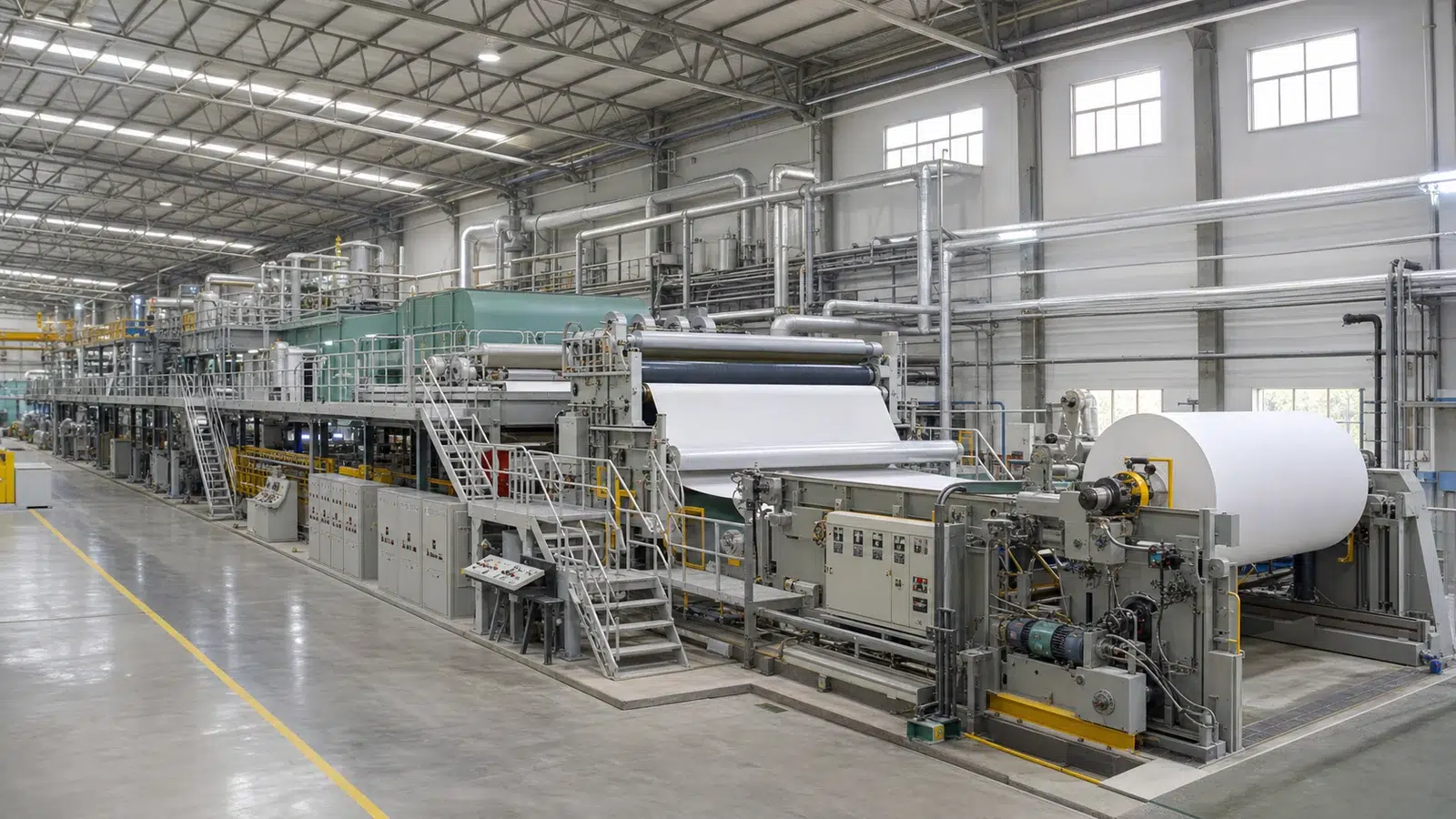
01 / Process
A turnkey paper mill project covers the full chain from pulp to reel: stock preparation, approach flow, the headbox, the forming section (fourdrinier or crescent former), the press section, the dryer section with its dryer cylinders or yankee dryer, the size press where starch is applied, the calender, and the pope reel and winder – plus the pulping line that feeds it, the boiler and utilities that power it, the electrical and instrumentation that run it and the effluent treatment that keeps it compliant. “turnkey” means that one party owns the engineering that makes these stages agree with one another so that the machine reaches its rated production capacity at commissioning rather than at the buyer’s expense.
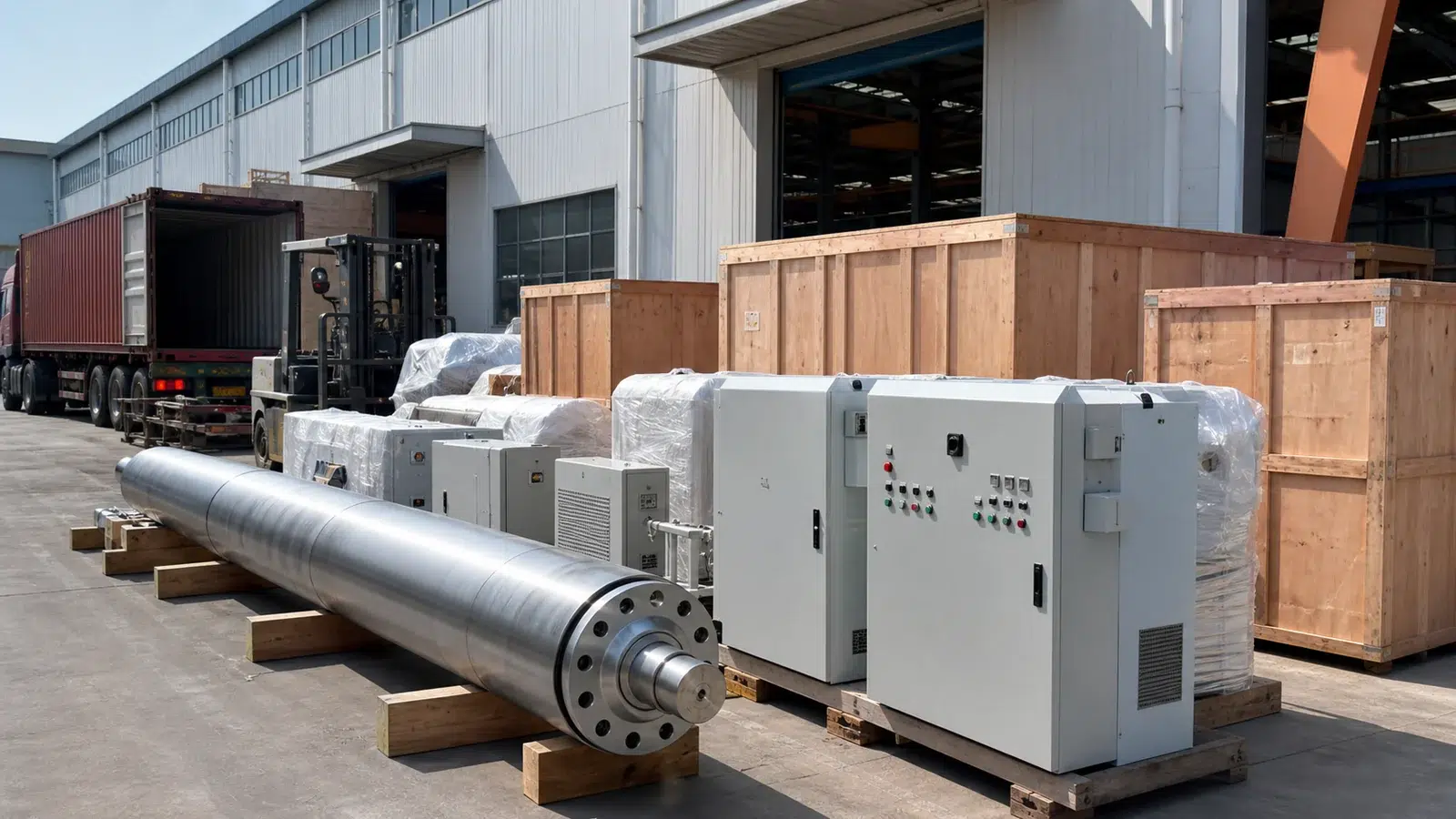
02 / Capabilities
As a single solution provider and paper mill project partner, Zejiang can set up a new paper mill or supply one section of a complete paper making line. Zejiang undertakes turnkey paper mill projects — full paper turnkey projects and turnkey solutions for pulp and paper — across our wide range of paper products, grades of paper and paper production lines, backed by our own paper and pulp machinery and paper making machinery. That work spans project planning, project execution, pipe and duct routing, manufacture, installation and after-sales support for paper mills across India, Southeast Asia and Africa. Our engineers employ hydraulic headbox designs, dismantle and re-erect used machine lines, and size boiler and power demand in MW to the grade.
Why this difference is valuable to you
A buyer who contracts a line to four different equipment suppliers loses 4-6 weeks to interface debugging during the commissioning stage, since there’s no one individual with ownership of the point at which the foundation, the base frame, and the drive components meet. An actual manufacturer will shoulder the runnability risk of what it has engineered. This one characteristic alone – not price – is the first test of a discerning buyer.
Need to confirm we build rather than resell?
Request our proof
Four Delivery Models: Turnkey Line, Installation & Commissioning, Rebuild/Speed Increase, and Waste Paper Recycling Line EngineerProcurement
Buyers’ needs aren’t uniform: a greenfield investor may require a full turnkey paper mill project; a buyer with an existing structure and services need only installation and commissioning services; a mill that already has a machine but requires speed upgrades and retrofitting; or a buyer wishing to migrate to recycled materials needs a waste paper recycling line. We deliver all four types of projects; please use the decision tree below to find the appropriate selection prior to requesting a quote.
Turnkey Paper Mill Project
- Complete line, pulp to reel
- Stock preparation + approach flow
- Headbox, forming, press, dryer, pope reel
- Utilities, electrical, instrumentation
Installation & Commissioning
- You have the building; we make it run
- Mechanical erection + alignment
- Wet-end and dry-end commissioning
- Trial run to performance acceptance
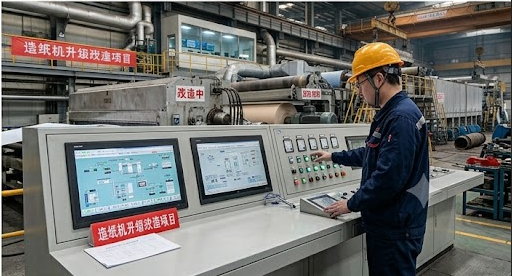
Rebuild, Upgrade & Speed Increase
- More speed or a new grade from your existing machine
- Press / dryer / forming section rebuild
- Grade conversion + speed increase
- Bottleneck removal, reduced downtime
Waste Paper Recycling Line
- Recovered fibre to finished paper
- Pulper, screening, cleaning, refining
- De-inking / flotation for cultural grades
- Old corrugated (OCC) to testliner/fluting
Decision matrix, pick your delivery model by your starting point, not by catalog order
| Your situation | Right delivery model | What Zejiang supplies | What stays on your side | Typical grades |
|---|---|---|---|---|
| Greenfield investor, empty site | Turnkey paper mill project | Full line design, manufacture, erection, commissioning | Land, civil works, external utilities connection | Kraft, testliner, tissue, cultural |
| Have building + utilities, bought machine elsewhere | Installation & commissioning | Erection, alignment, trial run to acceptance | Machine supply, building, power/steam | Any grade the machine is built for |
| Running an old / slow machine | Rebuild, upgrade & speed increase | Section rebuild, new headbox/press, controls | Existing machine frame, planned shutdown window | Grade conversion incl. recycled linerboard |
| Switching to recovered / OCC fibre | Waste paper recycling line | Pulper, screening, cleaning, refining, de-inking | Recovered paper supply, water treatment site | Testliner, fluting, duplex, newsprint |
| Need spares / a relocated used machine | Used machinery + spare parts | Refurbished machine, dryer cylinders, rolls, felts | Site readiness for a relocated line | Existing grade of the used machine |
Expert Routing Recommendation
Not sure which model fits your starting point?
Delivery Scope & Interface Ownership
Who Owns What When the Foundation Bolts Meet the Base Frame
It isn’t a mechanical failure, but a dispute over interfaces that leads to the costliest mistakes in cross-border paper mill projects. After the civil contractor has laid the concrete foundation and the mechanical contractor has arrived for erection, it turns out the anchor bolts don’t align with the machine’s base plate. Nobody wrote down who was responsible for that dimension. A written specification and an interface-ownership matrix is the single document to avoid such problems. No one other than Zejiang provides it.
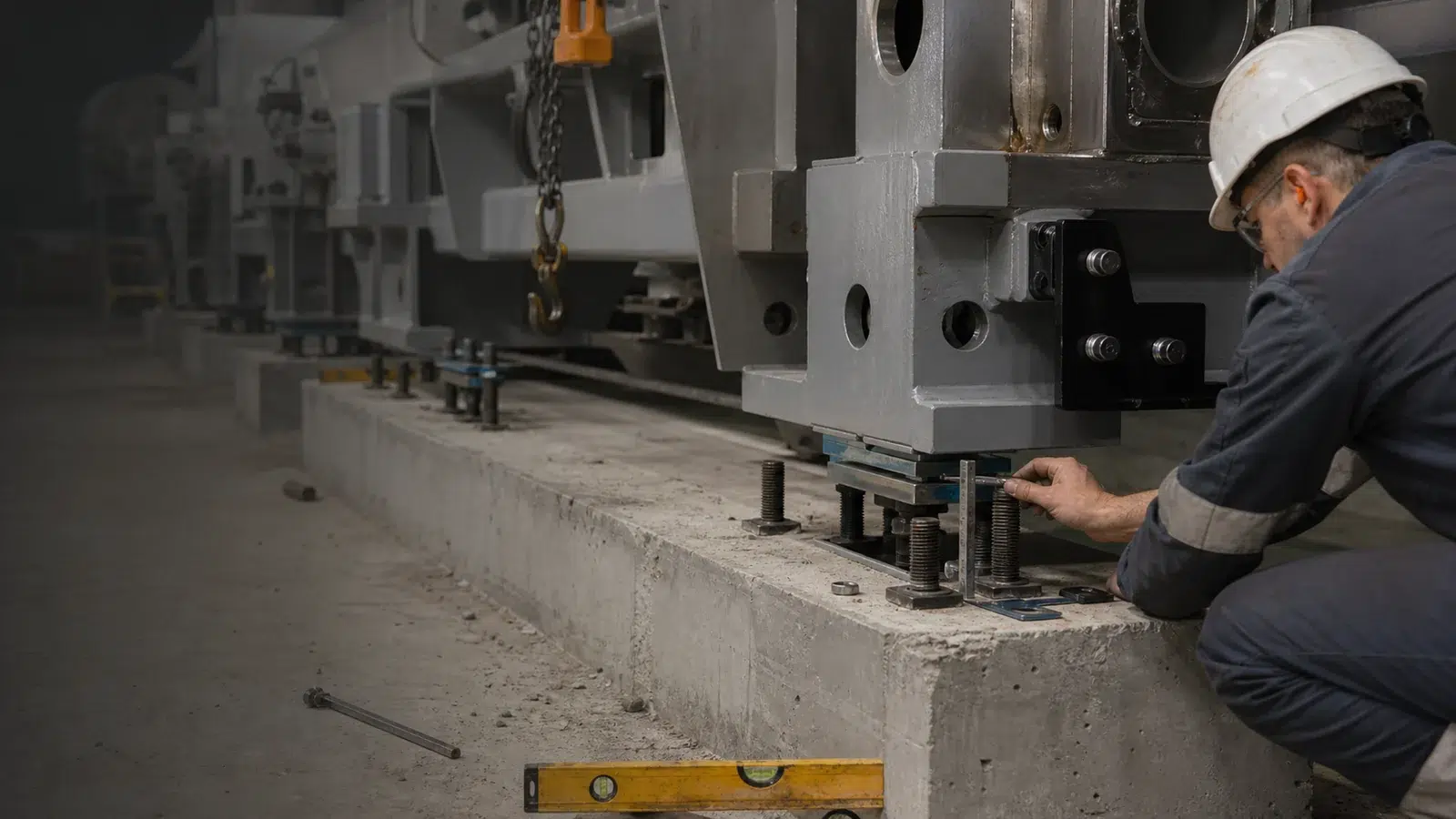
Scope-of-supply / interface responsibility matrix
| Interface | Zejiang (manufacturer) | Buyer / local contractor | Shared / defined at contract |
|---|---|---|---|
| General arrangement & foundation loading drawings | Issues GA + load/anchor-bolt drawings | Executes civil design to those loads | Foundation tolerance sign-off before shipment |
| Civil works & building | — | Full scope (floor, pits, drainage) | Machine-room clear-height & crane check |
| Machine manufacture & factory acceptance test | Full scope, buyer-witnessed FAT | Witnesses / nominates inspector | Acceptance criteria fixed in contract |
| Shipping & customs | Sea-fastened crating, FOB/CIF as agreed | Import clearance, inland haulage | Incoterms & documentation set |
| Mechanical erection & alignment | Supervises or executes erection | Rigging crew, cranage, local labor | Erection manpower split defined per project |
| Electrical, instrumentation & controls | Supplies drive & control package | Cabling, power supply to panel | Voltage/frequency (380V/50Hz vs 440V/60Hz) |
| Utilities: steam, water, compressed air | Specifies demand & connection points | Boiler, water treatment, air supply | Effluent treatment scope per grade |
| Commissioning & trial run | Wet-end + dry-end commissioning team | Operators for training, raw furnish | Performance acceptance test & sign-off |
Named phased schedule, real phases, honest about the calendar
In a greenfield paper machine project, we follow this general procedure: A signed contract with a firm specification-this freezes the General Arrangement and engineering of all interfaces; A machine shipped on-site, a witnessed factory acceptance test performed in our shop; Civil interfaces in place; Mechanical erection, alignment, and startup; commissioning of the wet and dry ends; Trial runs and performance acceptance tests based on recognized methods; Acceptance sampling using the framework defined in TAPPI T 400, with the reliability of your chosen methods demonstrated through documents from research.fs.usda.gov, where a third party inspector can verify and sign off. Notice we publish the phases of the project, not an arbitrary headline number for months of construction. The honest duration depends on machine width, grade of product being made, on-site civil readiness by the customer and distance of the shipping voyage. Only the marketing departments of our competitors will print a fixed monthly schedule as fact.
What Drives the Cost of a Paper Mill Project, a Cost-Factor Framework, Not a Fake Sticker Price Procurement
Buyers are hit for paper mill economics not by the machine price tag but the items surrounding it; many concentrate on the equipment price, but ignore installation, energy, spares, utilities and training. Any firm quoting one total cost for paper mill before seeing the installation site and product quality is just guessing; we reveal the structure. You fill in the cost when your capacity, grade and location are established.
Buyers get burned when a headline machine price quietly hides the installation, utilities, spare parts and operator training that follow it — and unlike a sticker-price seller, we publish the cost structure so that trap is visible before you sign, not after.
Ready to model cost against your grade, capacity and country?
Request a Configured Cost Breakdown →Procurement Reality
Demand for this topic is mostly shaped by cost, buyer would query the turnkey paper mill project cost, paper machine rebuild cost, paper machine installation cost and waste paper recycling line cost. in India specifically, would google paper manufacturing plant cost in India and mini paper mill project cost. All will be served with the same frank response – the cost structure not the fairy-tale figure as usually a whole paper making production line for sale for a round number of cash isn’t including the installation, utilities and spare parts that come with it.
Capital Cost Structure
Land and site preparation; structures and civil works; plant machinery and equipment; erection and supervision; and pre-production and working capital — these are the internationally recognized categories for dividing an industrial plant investment. AsUNIDO’s own guidance indicates, structures and civil works must represent significantly less than plant machinery and equipment for a well-conceived project – this is a concept not a number, and we’ll refrain from attributing a purely imaginary “20-30%” percentage because, as best we could confirm, none of the non-competitor agencies with information available could allocate that figure to your grade and country.
Operating Cost Drivers
Operating costs over five years: energy, fibre furnish, chemicals, labour and spare parts Energy, which can be verified to U.S. government standards (6-9 MMBtu per ton for integrated papermaking; 4.2 MMBtu steam per ton for pulp drying, based on U.S. EPA’s ENERGY STAR pulp & paper energy guide, energystar.gov) drives long-run costs for a paper line – dryers not the sticker price. Even energy savings can justify a rebuild improving dewatering, as detailed in the following section.
Bronze Tier
Evidence-Graded ROI Framework
Overall Cost of Ownership Energy is key to a paper line’s overall cost, as is the amount of water removed in the press section prior to the dryers. Zejiang offers verified engineering relationships, detailed below. We avoid issuing a project-level payback calculation because the key metrics required – specific capital-cost percentage and a fixed commissioning time frame in months – lack independent, non-competitor validation. Thus, this fact card is rated Bronze rather than Silver or Gold.
Rebuild ROI lever (verified)
1pp → 3–5%
A 1-point gain in press dewatering permits a 3–5% speed increase or equal steam cut — IPPTA
Integrated energy baseline
6–9 MMBtu/t
Integrated papermaking energy — ENERGY STAR / U.S. EPA
Pulp drying steam
~4.2 MMBtu/t
Steam per ton of pulp dried — ENERGY STAR guide
Machine efficiency band
67–93%
Observed runnability range, good ≈ 88% — NC State review
Project capital-cost %
Not published
No non-competitor authority verifies a fixed %
Commissioning timeframe
Not published
Only competitor pages state a number; quoted per project
Bronze Tier Explained
Why is this fact card Bronze? Zejiang possesses verified engineering relationships for dewatering-to-speed, energy-per-ton and efficiency band, but it doesn’t share client-specific, independently validated capital cost or timeline data. To get a configured price and timeline estimate tailored to your grade, capacity, and country, please request a quote – details of the assumptions behind these figures will accompany it.
De-Risking an Overseas Manufacturer, the Risk-Transfer Stack That Caps Your Downside
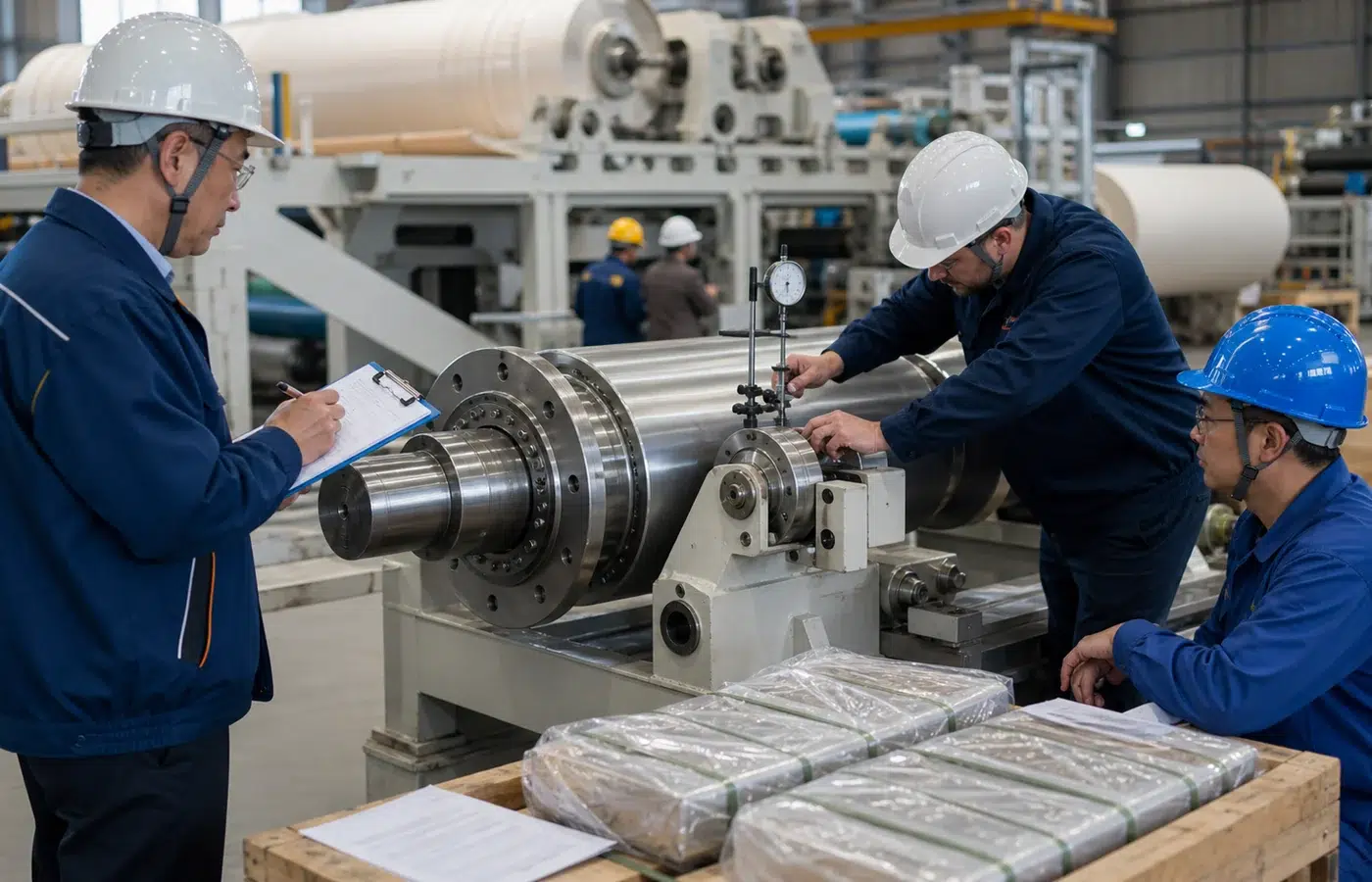
The Main Concern with Chinese Paper Machines is Transactional Quality control can slip between sample and production. “It’s not every factory, but it’s the vast majority” is what potential buyers say concerns them most about sourcing from a manufacturer they haven’t met. While content can’t mitigate this fear, contractual assurances can. We structure risk-transfer clauses like those in the diagram below to shield buyers without relying on project lists. Because a buyer-witnessed FAT plus third-party inspection catches a defect before shipment rather than after a cross-ocean voyage, the downside moves off the buyer — unlike competitors who offer a single high-friction “contact us” and no acceptance mechanism at all.
Buyer-witnessed FAT
You (or your inspector) sign off the factory acceptance test before shipment
Third-party inspection
SGS / BV / TÜV / Intertek pre-shipment inspection on request
Milestone payments
Balance tied to on-site commissioning acceptance, not to shipment alone
Written performance guarantee
Rated capacity & grade committed in the contract
Risk Transfer Explained Each clause maps to established acceptance criteria: The pre-shipment inspection and the commissioning sign-off both rely on standardized test methods with high interlaboratory reproducibility, a standard established by the U.S. Forest Service (research.fs.usda.gov). This ensures that an independent inspector, not just the seller, can verify your line’s adherence to specifications.
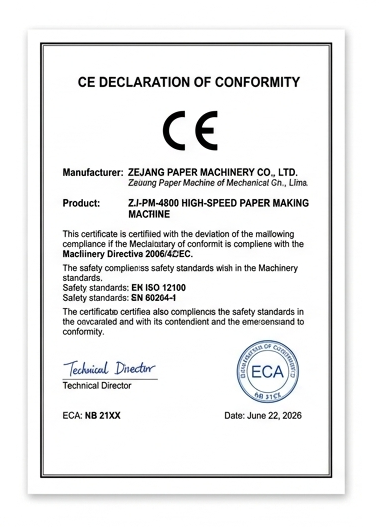
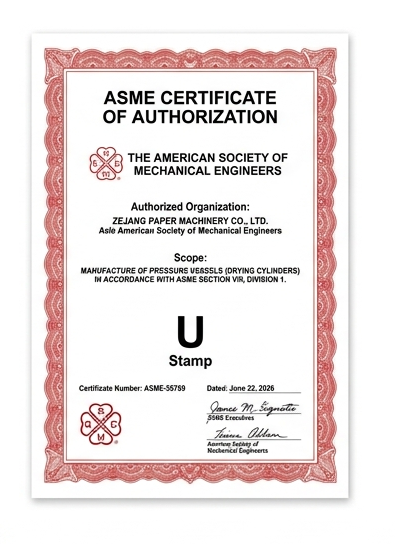
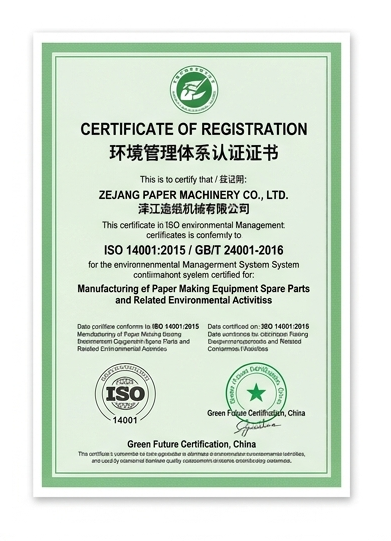
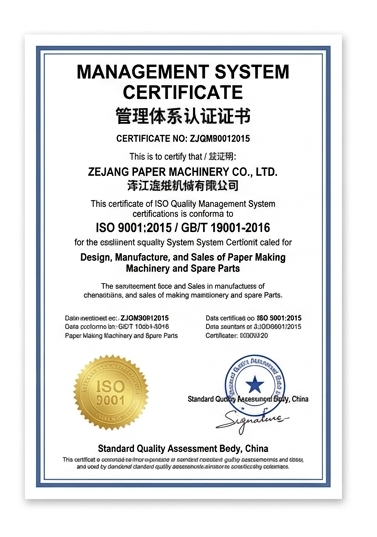
Manufacturer transparency, what we publish and what you verify
In-house
Design & manufacture
Stock prep, rolls, dryer cylinders, headboxes built in house
Registered business scope = production (verify on the registry)
Engineering documents delivered with the line
Verify us
Buyer-side checks we invite
National Enterprise Credit registry, business scope
Video factory tour + live running-line footage on request
Reference-project details shared at RFQ under NDA
On request
Factory facts to publish once confirmed
Zejiang Manufacturing Facilities
Machines built per year, engineering headcount
Warranty period & spare-parts lead time
Real installation sites, described exactly as they are
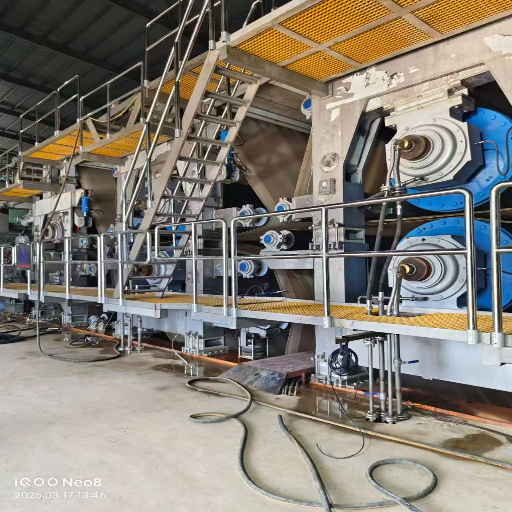
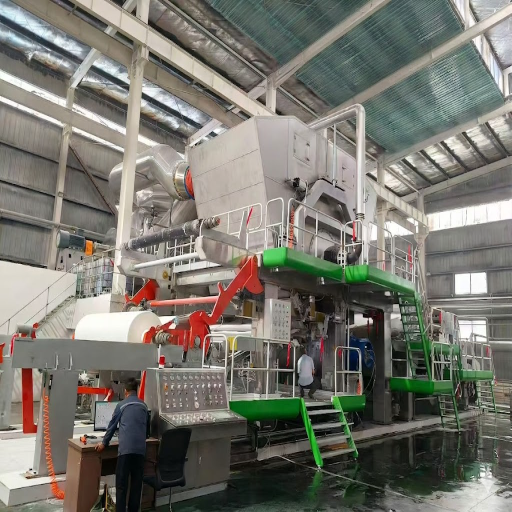
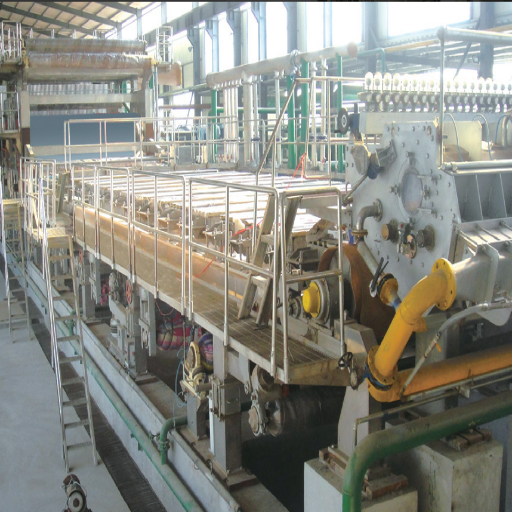
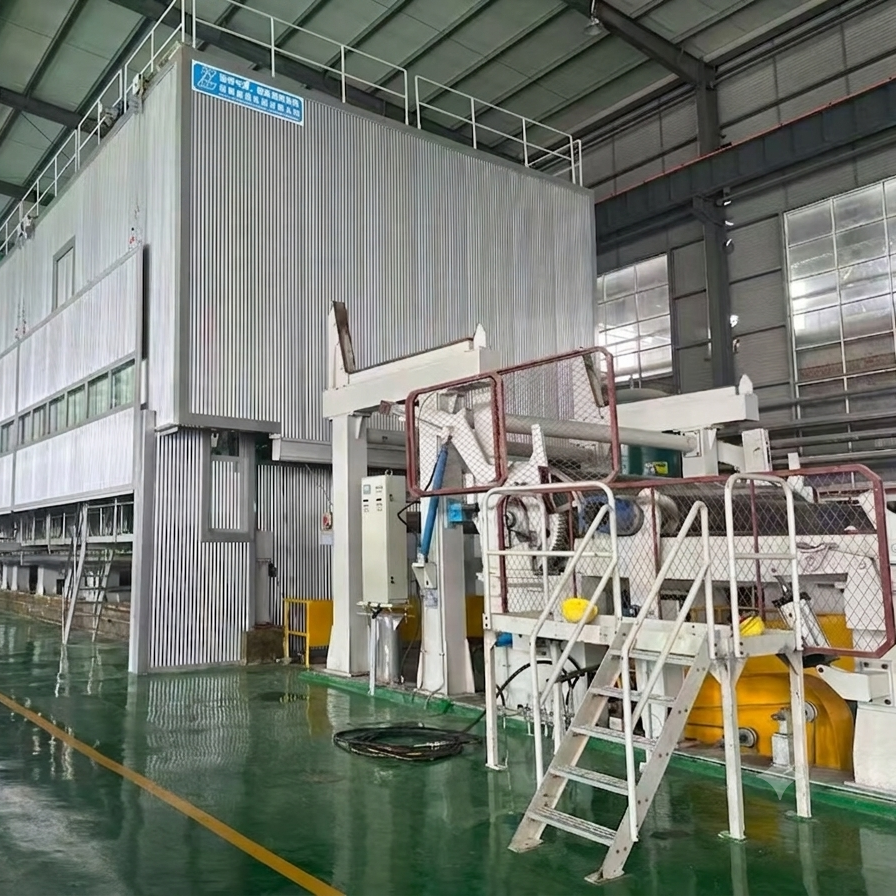
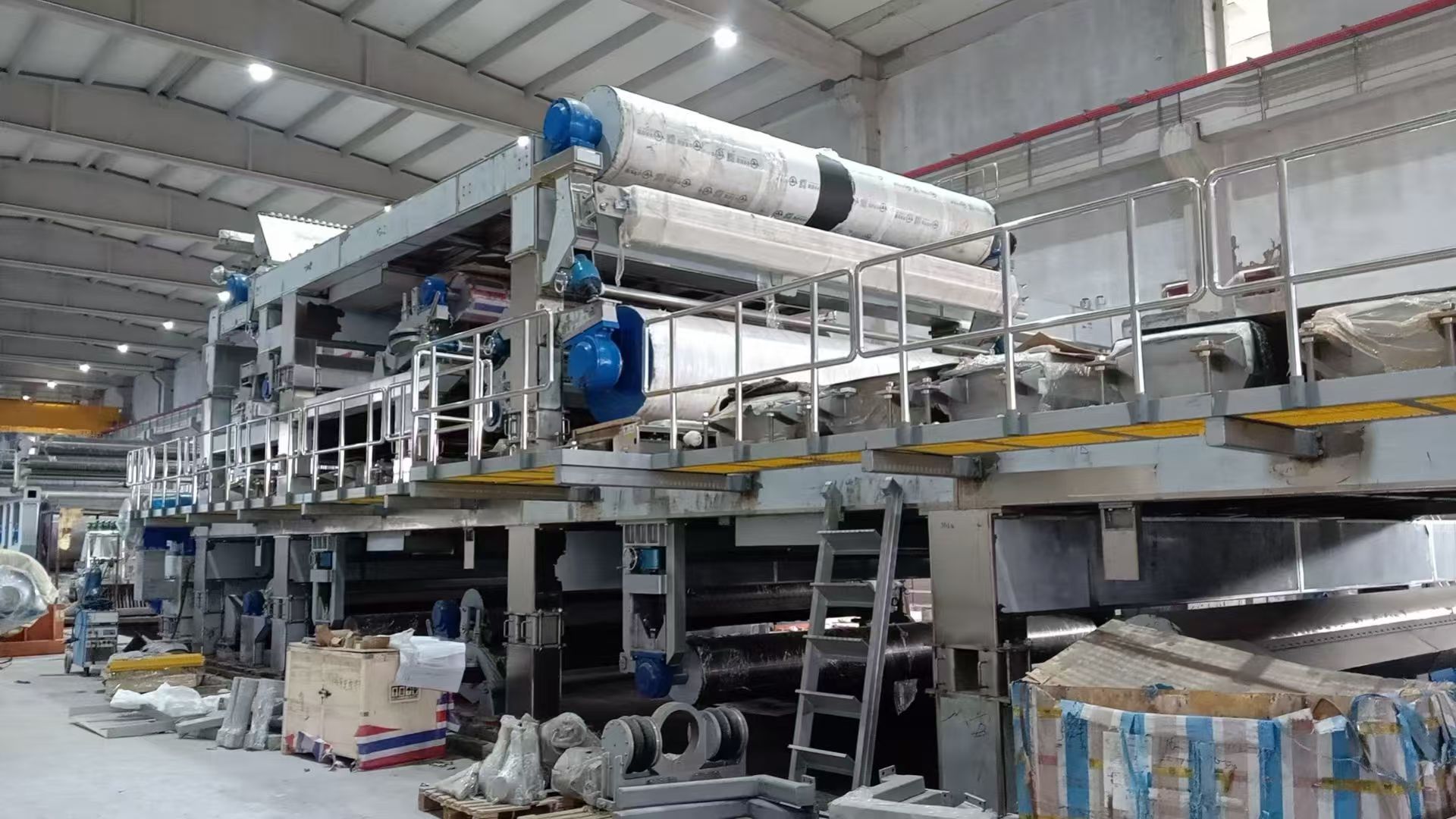
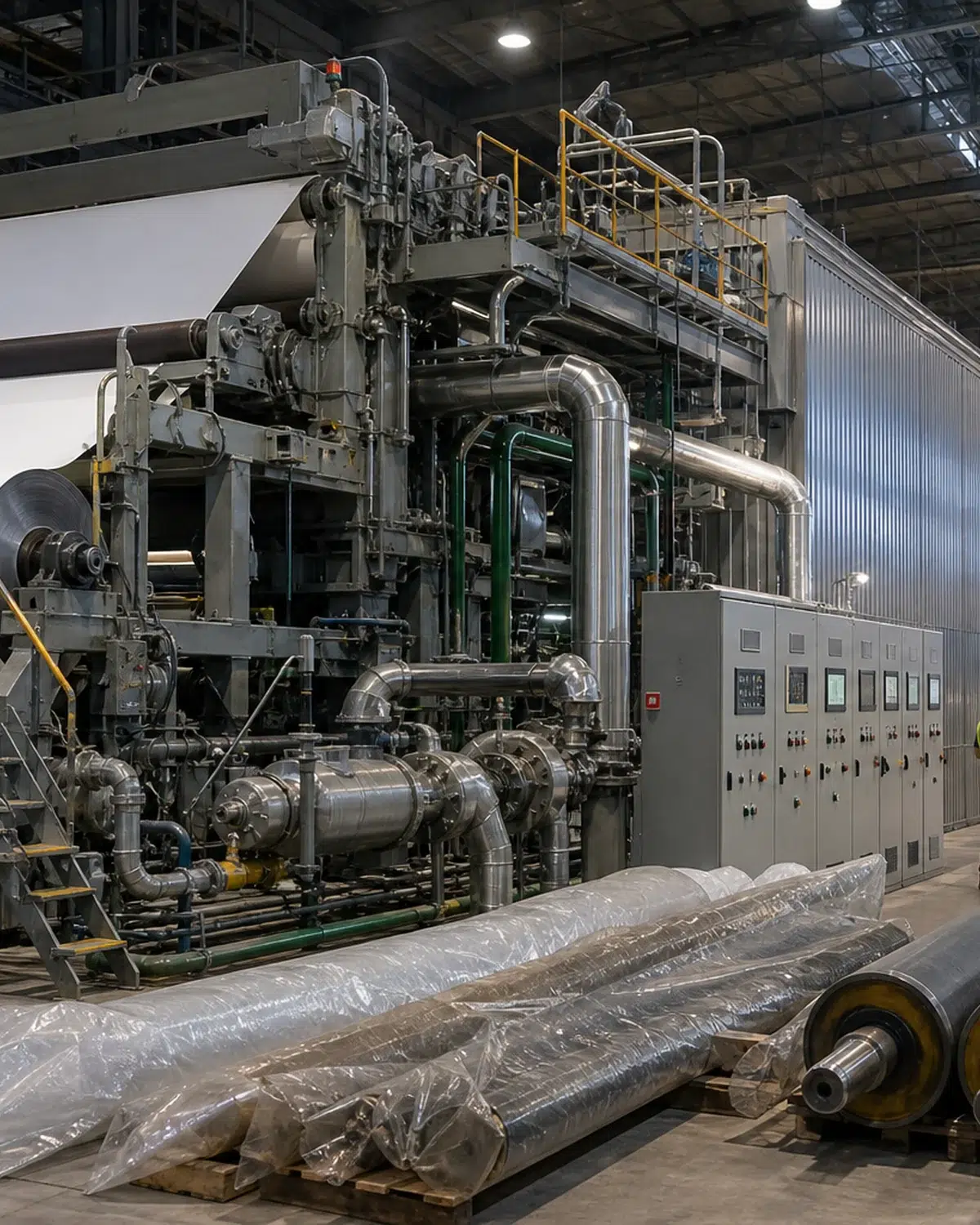
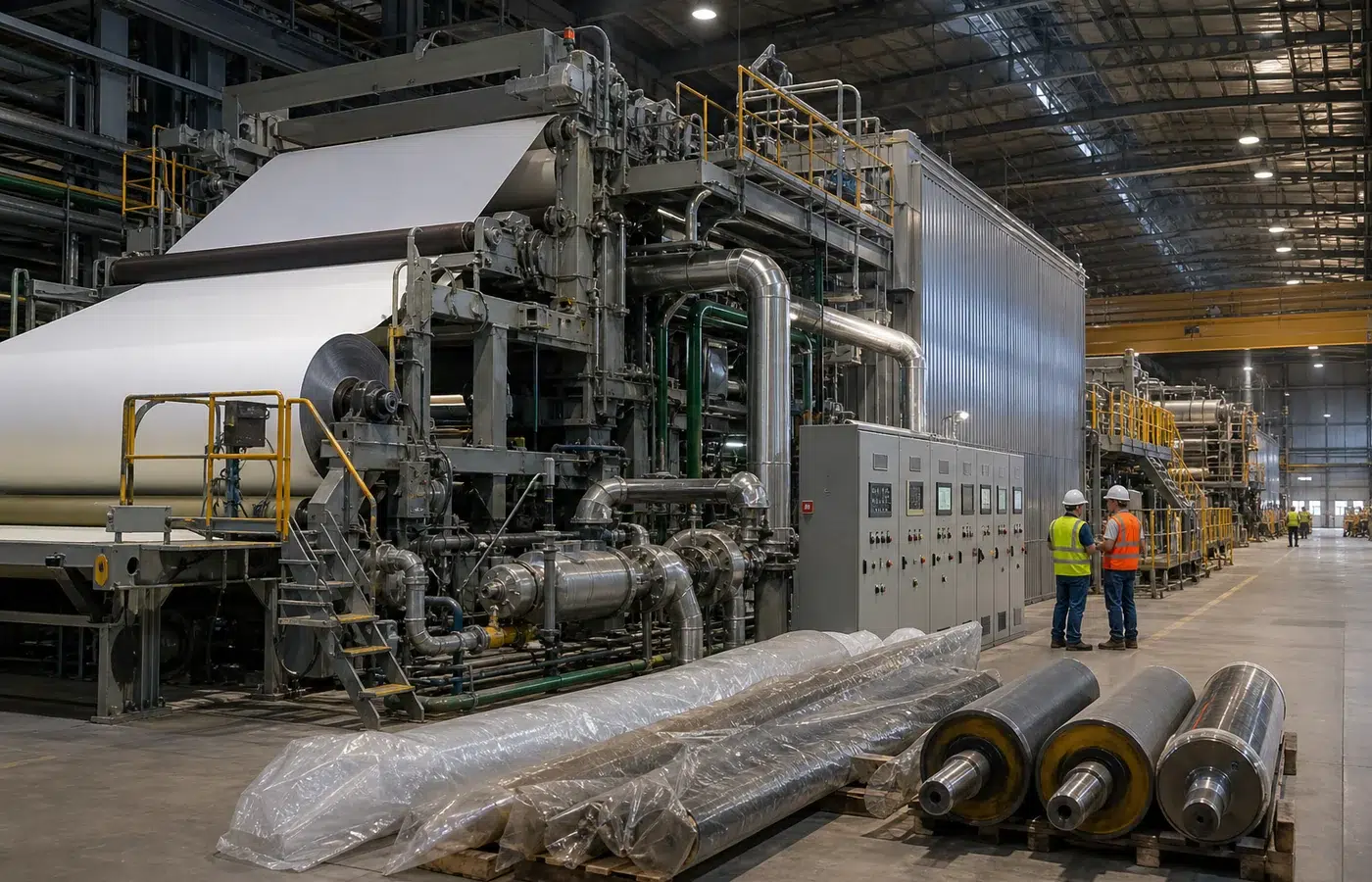
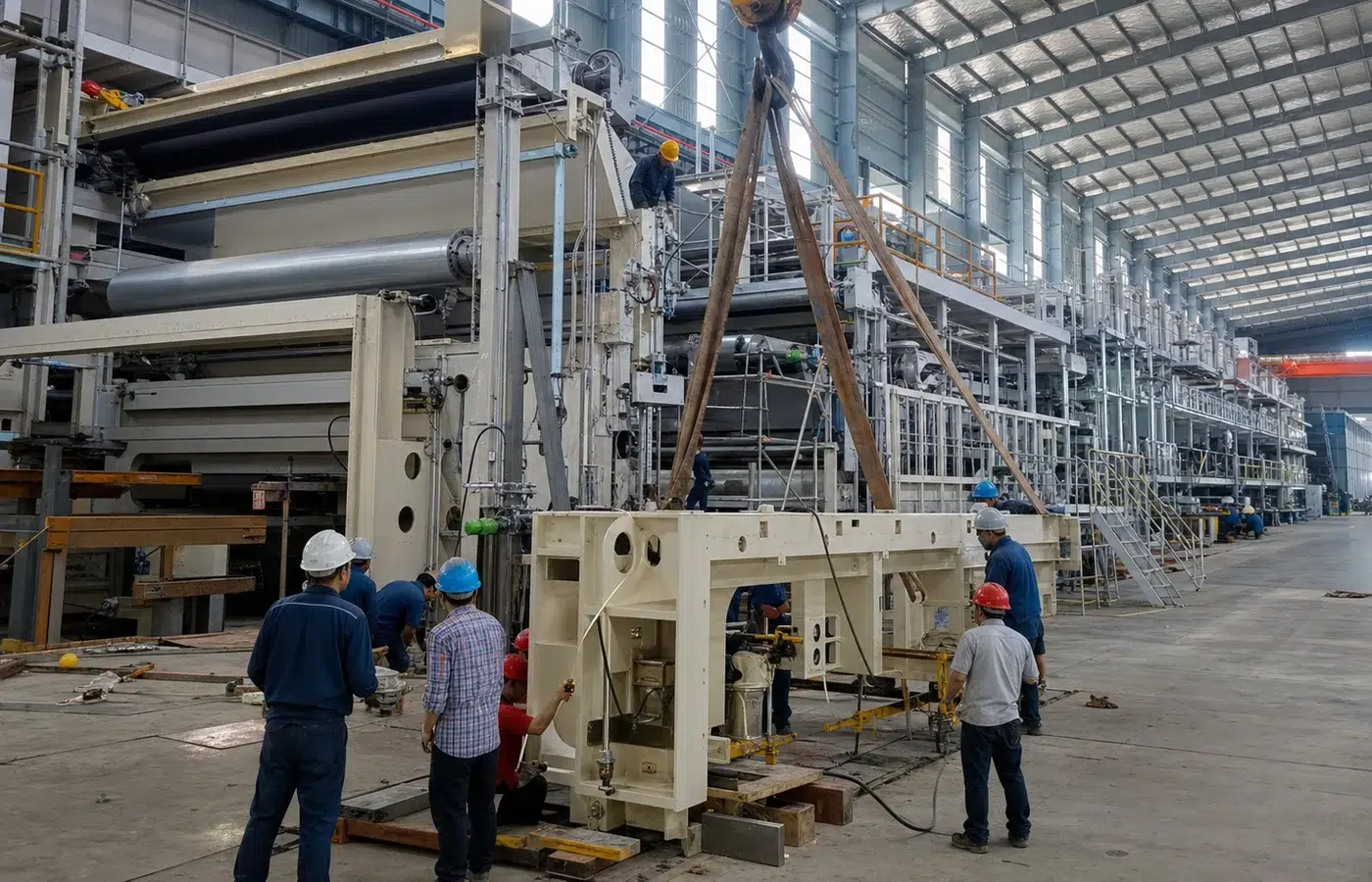
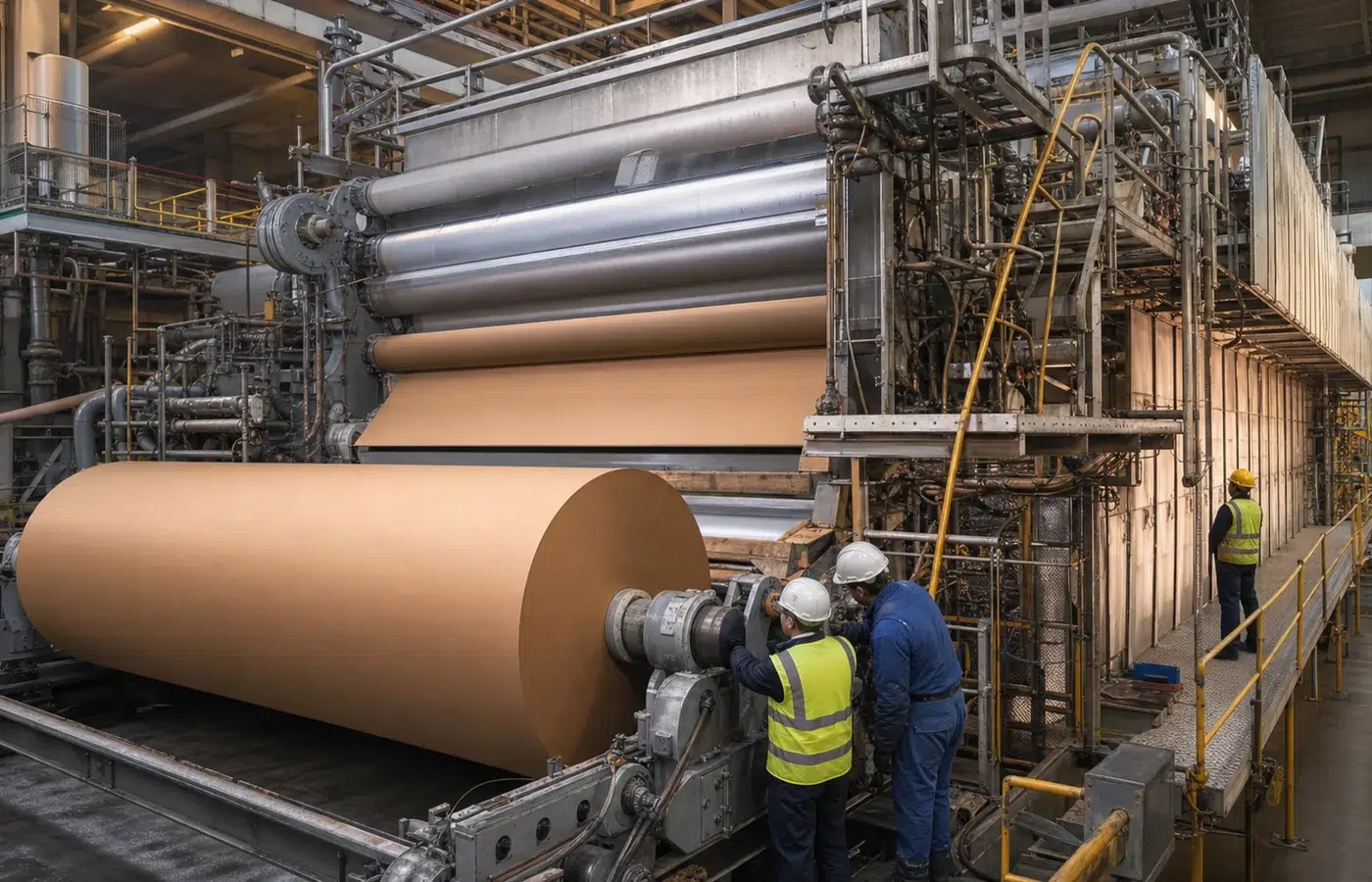
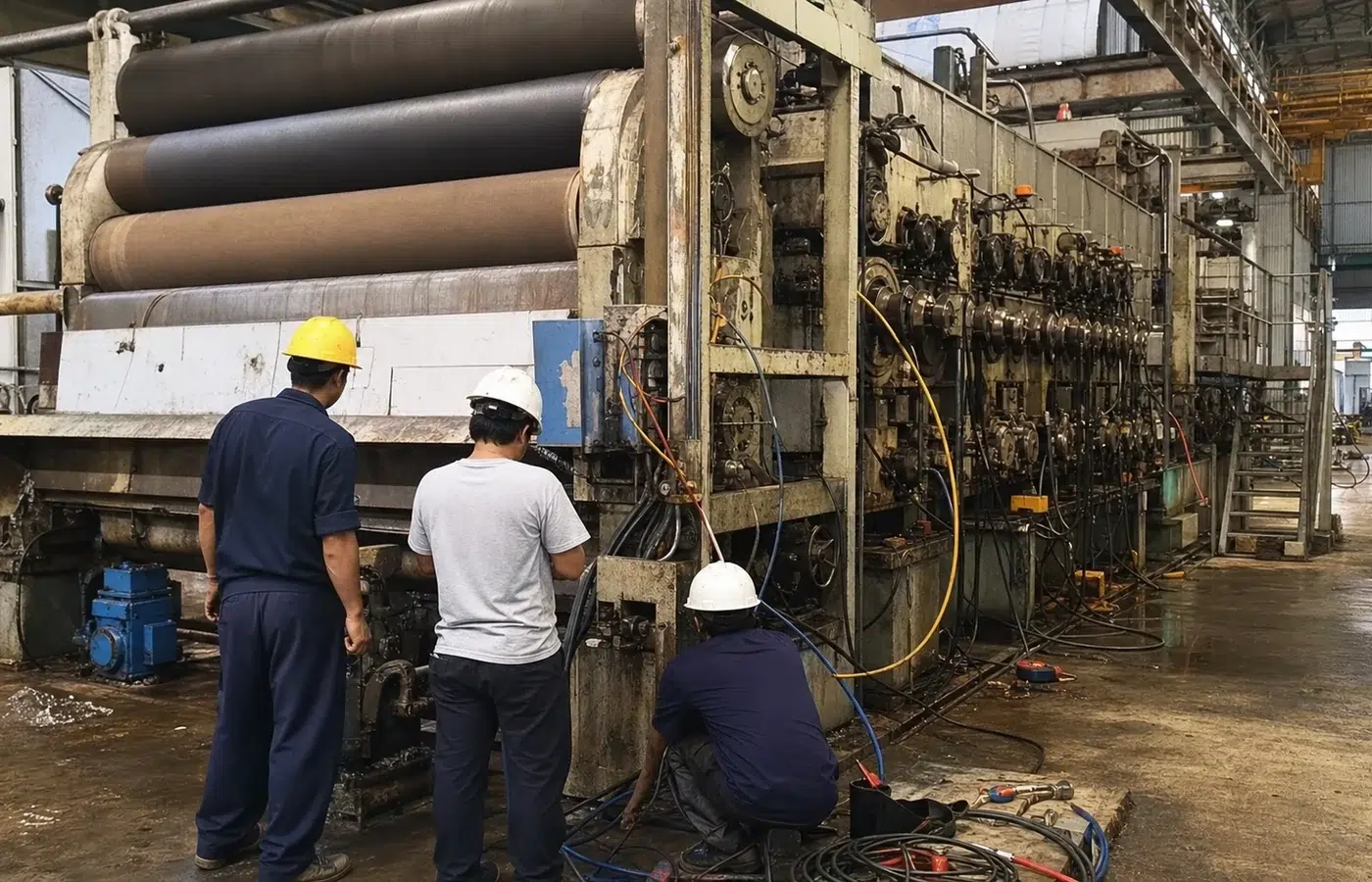
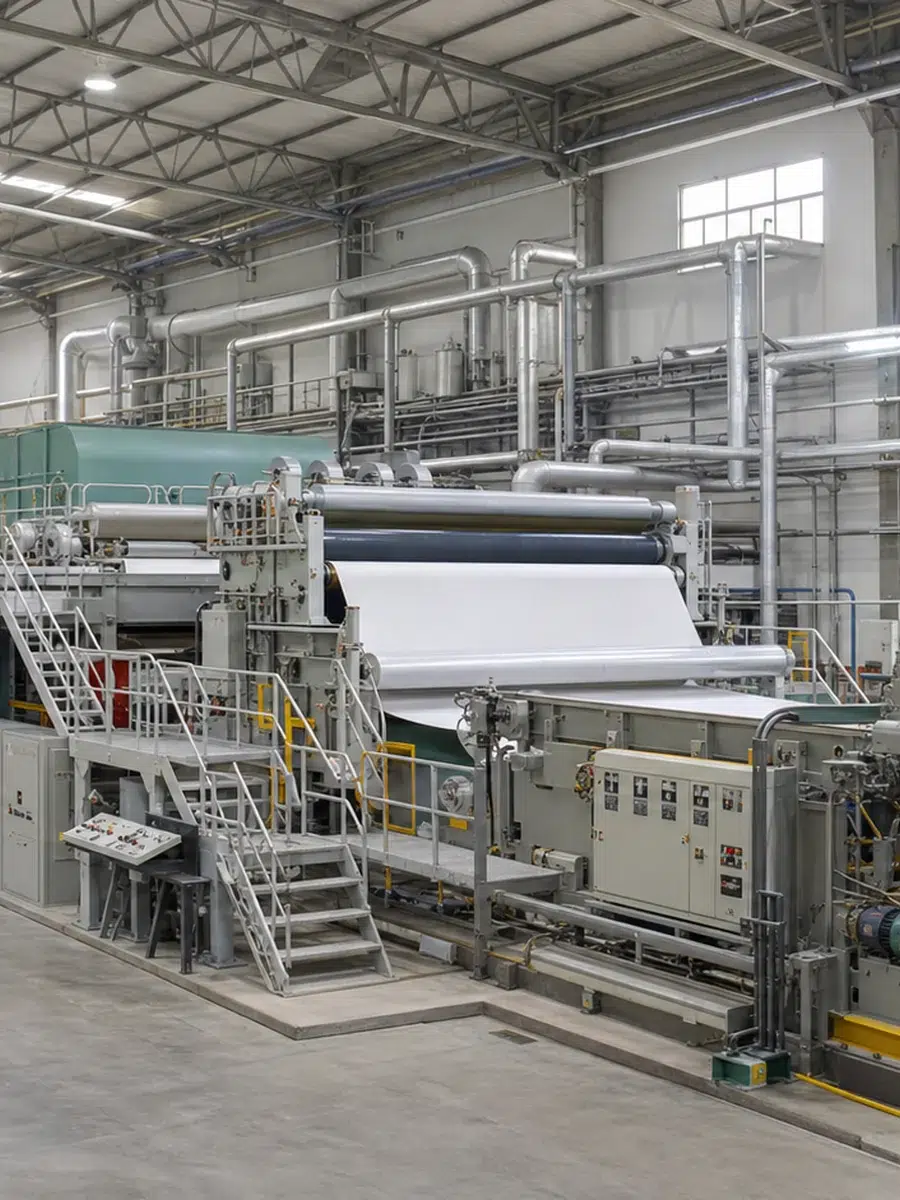
We’re Showing You Real Zejiang installation sites, without the fluff: a coated white-board paper machine, a kraft paper machine, and a rebuilt, second-hand kraft paper machine moved to Vietnam. No imaginary tonnages, no vague client names, no dates on these photos; the detailed project story comes with your RFQ, once your grade and capacity align with a reference.
×
![Enlarged view]()
Rebuild vs New, When Each Wins, Including the Cases Where a Rebuild Is the Wrong Call
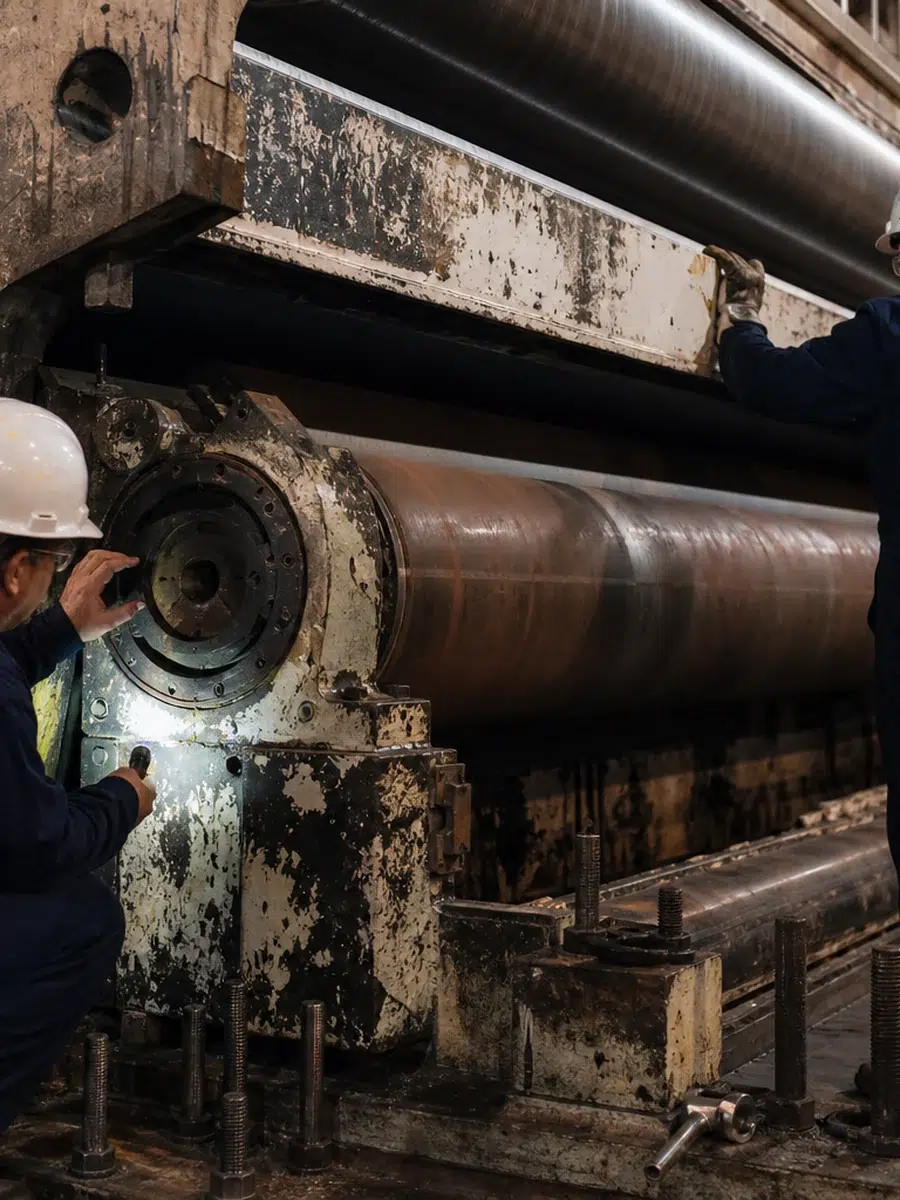
A paper machine rebuild may well be the highest-return investment a mill can make-since the press section is where the action is. “A 1 percent improvement in press dewatering, which allows a 3-5 percent increase in machine speed, or an equivalent steam reduction is well-documented in the IPPTA cost-effective-rebuild literature.”
“The rebuild question we get asked is always ‘how much faster.’ The question we ask back is ‘what does your press section dewater today’ — because if the sheet leaves the press wetter than it should, the dryers are carrying the loss, and that is where a one-point gain becomes a 3–5% speed increase. If the frame can’t take the load, we say so and quote a new machine instead.”
01 — Zejiang Engineering TeamBut a rebuild is not always the right answer, the honest cases where you should buy new
As both industry professionals and a recent peer-reviewed technical study have emphasized, faster machines don’t always translate to higher productivity, and there are situations when a rebuild simply isn’t feasible. Factors that may limit rebuild possibilities and drive toward a new machine include machine frames that can’t handle higher press loads, obsolete drive components that lack available spare parts, a target grade that requires a former not supportable by the existing wet end, or the age of the base machine where virtually every section would require attention.
Click Stack to Advance Polymer Chain
Ready to scope your paper mill project?
Provide us with your desired grade, capacity and status of the site – whether it’s greenfield, existing building or old machine for rebuild – and we give back delivery-model recommendation, scope of supply border and configured quotation including the engineering assumptions.
Request a Project Quote![Refiner Plates & Screen Baskets [Complete Guide]](https://zjpapermachine.com/wp-content/uploads/2026/07/refiner-plates-screen-baskets-guide-featured-150x150.png)
![Doctor Blade: Types, Materials & How It Works [Guide]](https://zjpapermachine.com/wp-content/uploads/2026/07/doctor-blade-guide-featured-1-150x150.png)
![Pulping Equipment: How Paper Pulping Works [Guide]](https://zjpapermachine.com/wp-content/uploads/2026/07/pulping-equipment-guide-featured-150x150.png)