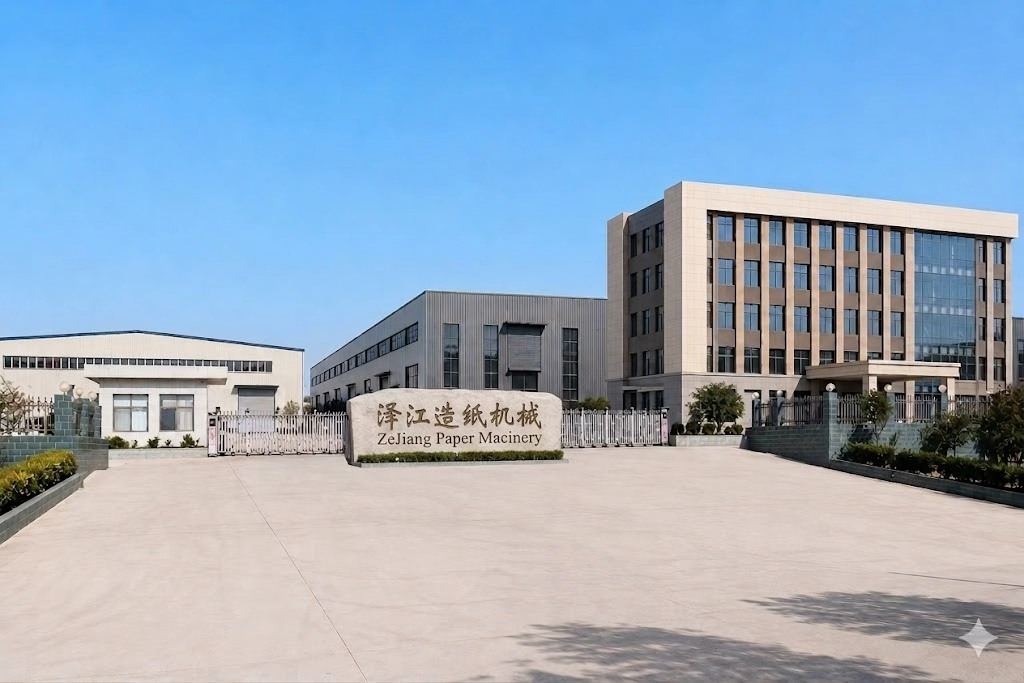
Get in touch with Zejiang Paper Machinery Company

Paper Machine Rebuild, Upgrade & Speed Increase
paper machine rebuild projects bring your existing lines up to modern machine performance, quality, and efficiency, without the upfront capital of replacing the entire machine. Zejiang’s experienced engineering team scopes, plans, and implements the rebuilds section upgrades, upgrades control systems, and speed/capacity enhancements for your paper, board, and tissue lines currently running anywhere, any brand – even on your existing mill-Zejiang machinery.
FORMING·PRESS·DRYER
Sections Rebuilt
PLC·DRIVE·QCS
Automation Upgrades
ANY MAKE
Machines Serviced
ON-SITE
Engineering Assessment
KRAFT·TISSUE·BOARD
Grades Covered
PHASED
Rebuild Scheduling
When to Rebuild vs Replace
Every mill with a vintage paper machine eventually hits a point where management asks the question, “Should we rebuild the machine or replace it?” Usually, three factors are pushing the decision: The output is lagging the target grades your customers are now demanding; quality problems can be attributed to failing or outmoded sections of the machine; or the existing control system is so old that troubleshooting itself eats up production time, while a new system would seamlessly correct such deviations.
A new machine addresses all three issues at once, but it also sends the capital investment and startup timeline back to zero. In reality, the bottleneck on a majority of underperforming lines is located in one or two key sections-not the entire machine.
Every paper machine rebuild inquiry we receive begins with the same fundamental question customers ask us: ‘rebuild, upgrade, or replace?’ The proper answer depends on the machine’s structural condition and the specific performance goal – never on a cookie-cutter approach. In fact, anyone who gives you a ‘hard and fast’ answer via email without having seen your operation clearly hasn’t seen your operation.
Rebuild Readiness, Factors, Not Fixed Rules
01
Structural condition
Frame, rolls, and wire/felt sections — fatigue vs. sound structure
Sound frame → rebuild;
visible structural fatigue → new-build discussion
visible structural fatigue → new-build discussion
02
Production gap
Current output/quality vs. what your order book actually needs
Gap closable at 1-2 sections → rebuild;
gap needs a different platform entirely → new machine
gap needs a different platform entirely → new machine
03
Downtime window
Shutdown days you can realistically afford this year
Short window → phased section-by-section rebuild;
longer window → single-stage rebuild
longer window → single-stage rebuild
04
Budget
Capital available vs. a full new-line quotation
Rebuild budgets typically land well under a new-line price — confirm against your own quotes
05
Control system age
Analog/legacy controls vs. current PLC, drive, and QCS standards
Legacy controls → an automation upgrade is often worth doing before any mechanical rebuild
SYSTEM DIAGNOSTIC // SCANNING
How a Rebuild Project Starts
Our engineers examine your existing data rather than just a standardized specification sheet. The speed-cost trade-off of a machine rebuild only comes into focus when a competent engineer has analyzed the machine’s individual metrics. Typically, this involves three discrete steps, and the single most common error made by mill customers when comparing a paper machine rebuild cost to a new-machine bid is skipping step one:
-
01
Share your machine data. Along with the grade being run, capacity, machine age and what problems you want to resolve, provide photos and drawings of the relevant sections. This allows our factory engineering team to quickly estimate project scope and cost.
-
02
Our engineering staff will then evaluate your information, and, where necessary, will visit the site or connect via video call to walk through your machine, and review the key sections in detail, prior to developing a proposal.
-
03
We’ll then submit a complete, detailed scope document outlining the sections we propose to rebuild, estimated downtime, and delivery schedule-no surprises and no obligation.
Not sure which path fits your machine?
A paper machine rebuild price is always proposal-based after this assessment, never a published rate card.
Speed Increase & Capacity Expansion
Plant Engineer · Mill Owner (Output)
The majority of paper machine speed increases and capacity expansions stem from the same root cause: a critical, physical bottleneck such as insufficient draining capacity at higher speeds in the forming section; excessive moisture at the press exit in the press section; or reduced consistency at high tonnage in the headbox. Left uncorrected, these individual bottlenecks reveal themselves as a proliferation of rejected reels rather than a full line shutdown. The key to a long-lasting paper machine rebuild project-and the difference between a solution and a problem displaced-is addressing the actual bottleneck, rather than simply trying to run existing components beyond their design limits.
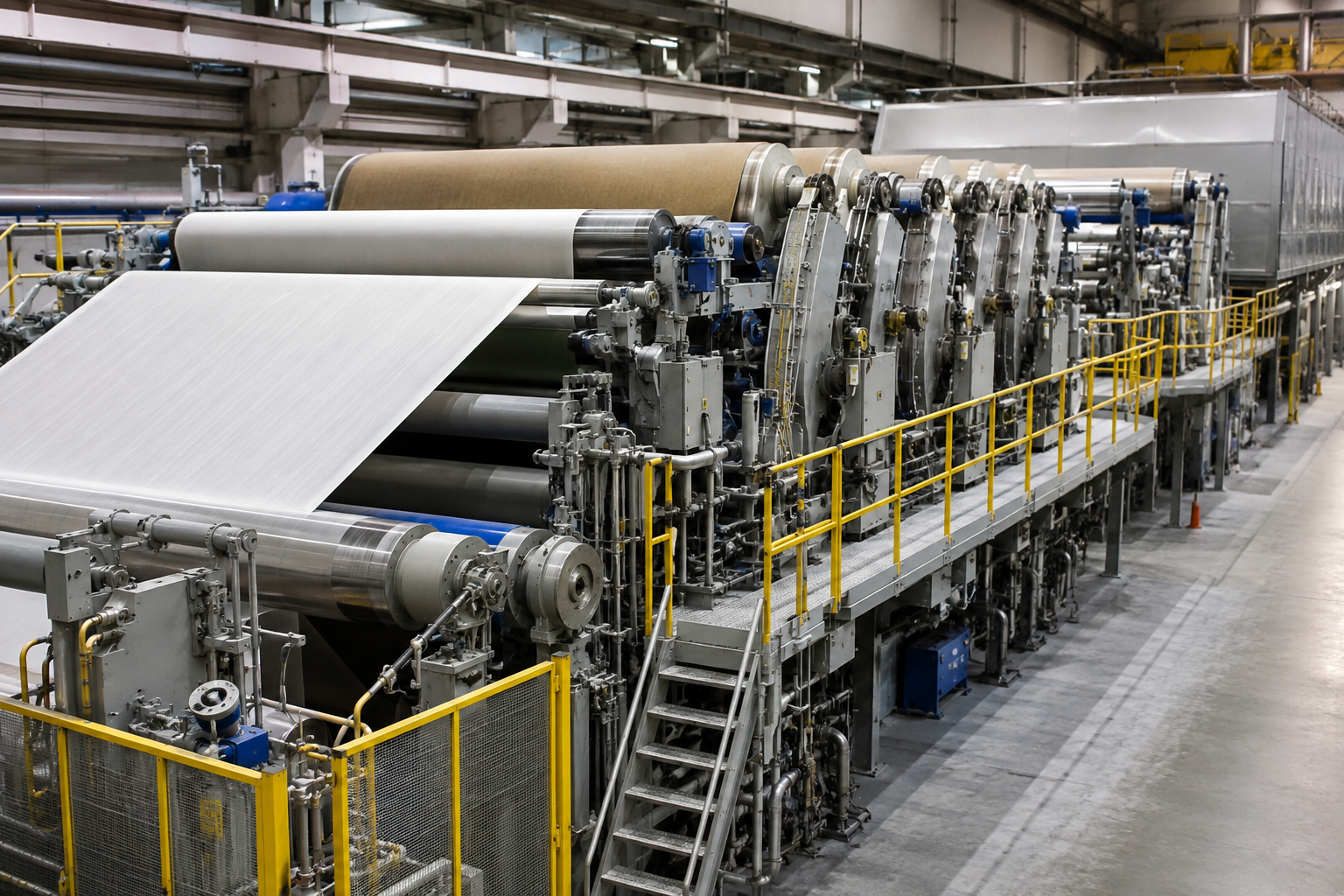
Zejiang’s ability to gain speed and increase rebuild output generally begins in the forming and press sections because engineering literature tends to report the greatest potential from those stages: extended-nip pressing alone may offer as much as a 25% capacity gain on lines where the press is limited; combined gains in both sections may be significant, with one engineering journal describing improvements of up to 30% (for one type of technology) on certain upgrades relative to existing conditions. On a wet sheet entering the press, the proper implementation of a press-section rebuild could easily yield 5% additional dry solids, equivalent to 30-40% increased drying capacity. For a mill weighing a paper machine capacity increase against the cost and downtime of a new line, a press-section rebuild is usually the deciding factor – it closes most of the capacity gap for a fraction of a new line’s price and schedule – so cross-check the figure against your own proposals rather than taking it as industry truth.
And those same sections that constrain your throughput are also the sections that generate your steam and power costs; therefore a capacity rebuild and an energy-efficiency rebuild will normally be a single project. A U.S. DOE/EPA ENERGY STAR energy guide for pulp and paper plants shows steam savings potential (on an overall basis) that span a wide spectrum of technologies from around 2% to as high as 15%. Our engineering group will size against your actual lines and controls before we would invite a quotation or scope.
Section Modernization & Automation Upgrades
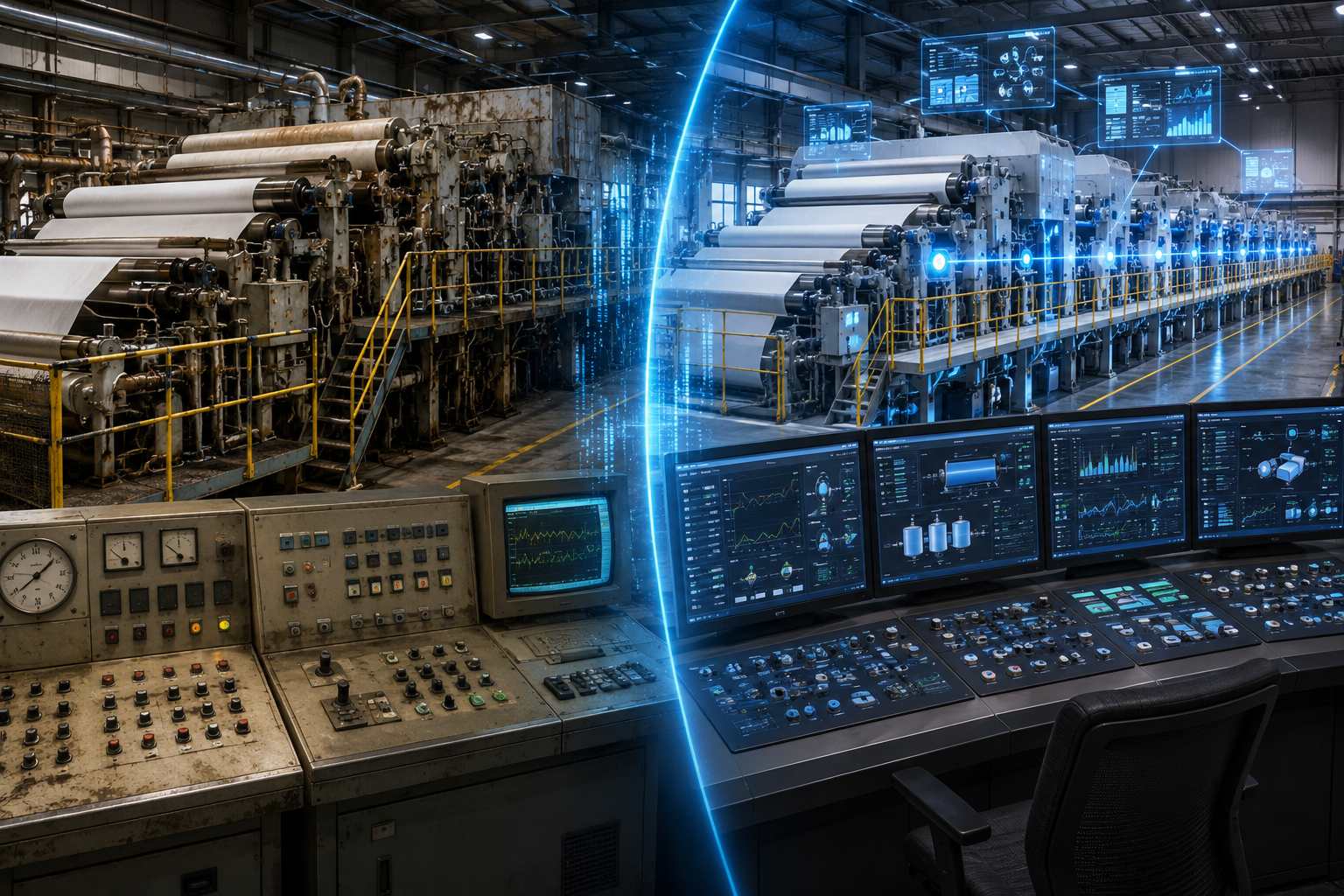
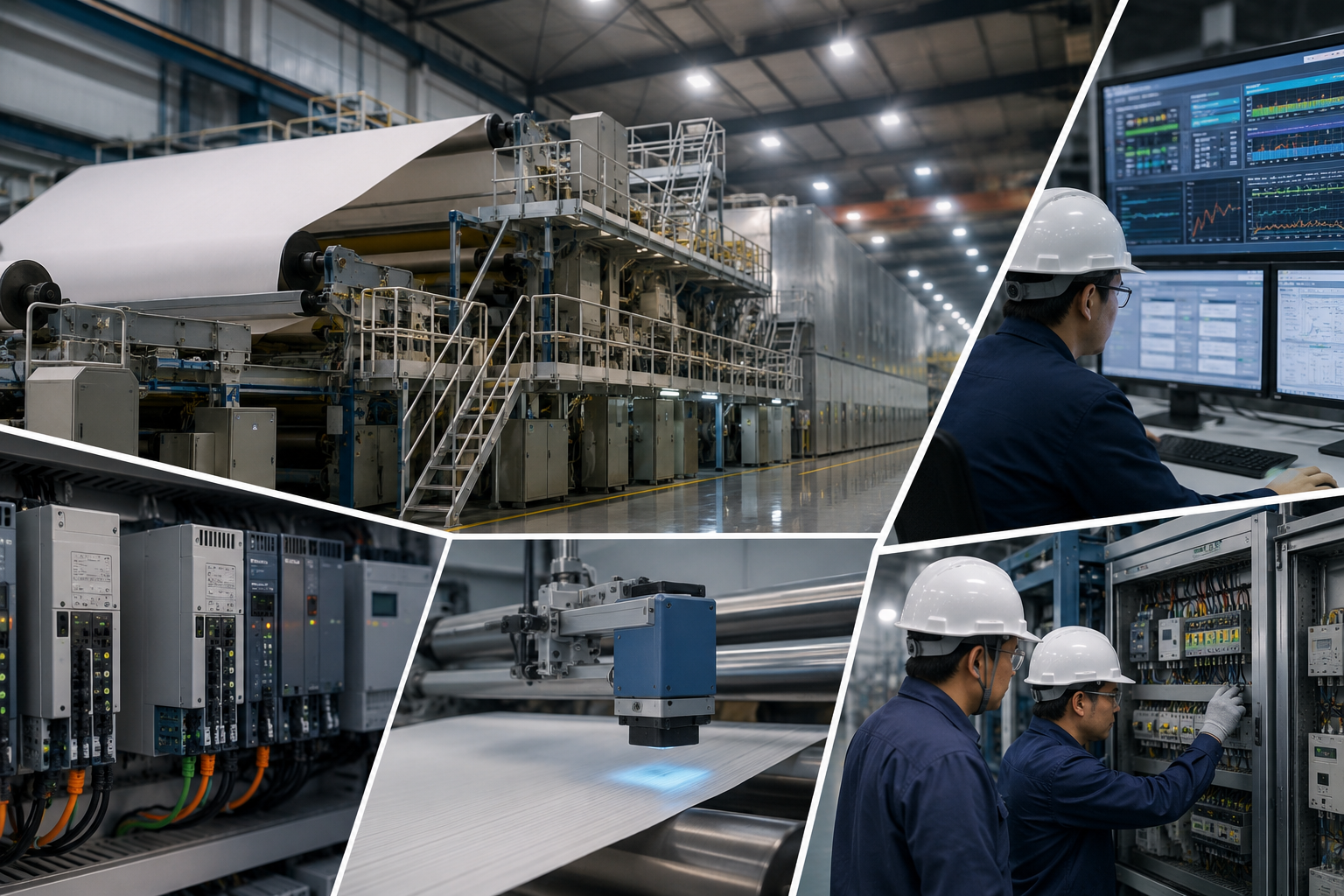
Speed and capacity rebuilds solve mechanical constraints. Section modernization addresses a completely different constraint – the control, drive, and instrumentation technologies in your system falling at least one technology generation behind your product specifications. Mechanical capacity alone won’t fix this – your paper machine may have all the capacity you can imagine, but you’ll still waste production every shift to quality excursions, slow grade transitions, and manual troubleshooting which an upgraded system would catch automatically – often an expense hidden far from your maintenance department budget.
Zejiang’s automation upgrade scope covers PLC & drive replacement, QCS installation for basis weight and moisture profiling, headbox or press instrumentation retrofits – engineered and commissioned section by section by our internal team – thus keeping your paper machine operational and running between upgrade stages instead of being shut down during one long period. Each automation and drive upgrade within our paper mill equipment upgrade scope comes with a machine-guarding-standard-aligned safety interlock review and a full re-commissioning test prior to handover; this isn’t simply a software replacement. One automation supplier’s sponsored case study – rather than a broader industry survey – cites a 5-10% gain in throughput and a maximum of 5-percentage-point improvement in yield due solely to digitalization of a single mill – a single data point to validate against your own existing figures, not a guarantee. This is, nevertheless, the direction of gain that a solely mechanical rebuild would ignore.
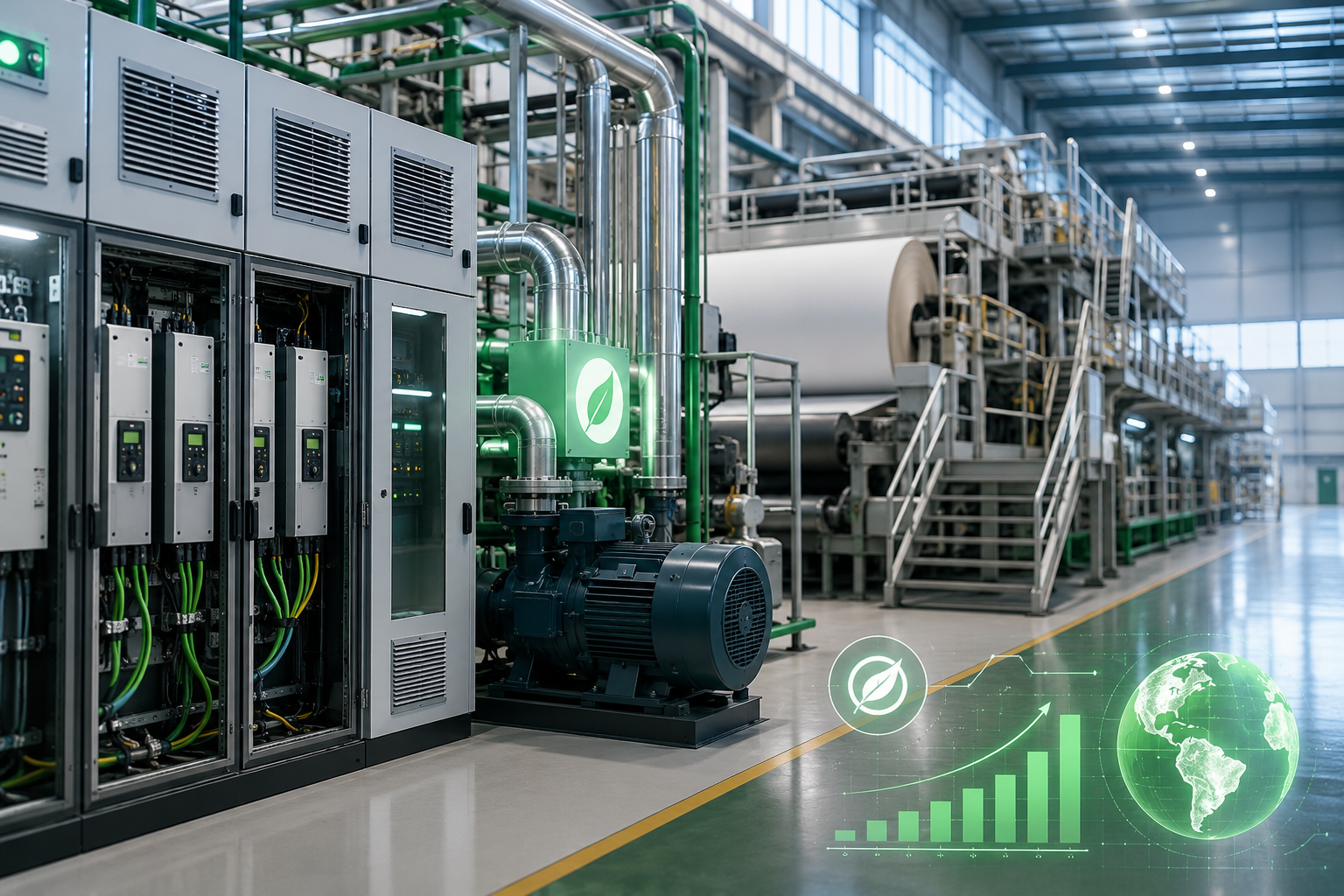
Section modernization and energy efficiency overlap here too: variable-speed drives and heat-recovery retrofits both appear as standard, not experimental, line items in European Union best-available-technique guidance for paper mill upgrades, and both reduce production costs on their own before you touch a single mechanical section. Unlike a one-off retrofit from a third party unfamiliar with your line, a phased upgrade planned alongside a future section rebuild avoids re-commissioning the same control cabinet twice – and it supports the same sustainability reporting your customers are increasingly asking mills to provide.
Rebuild Case
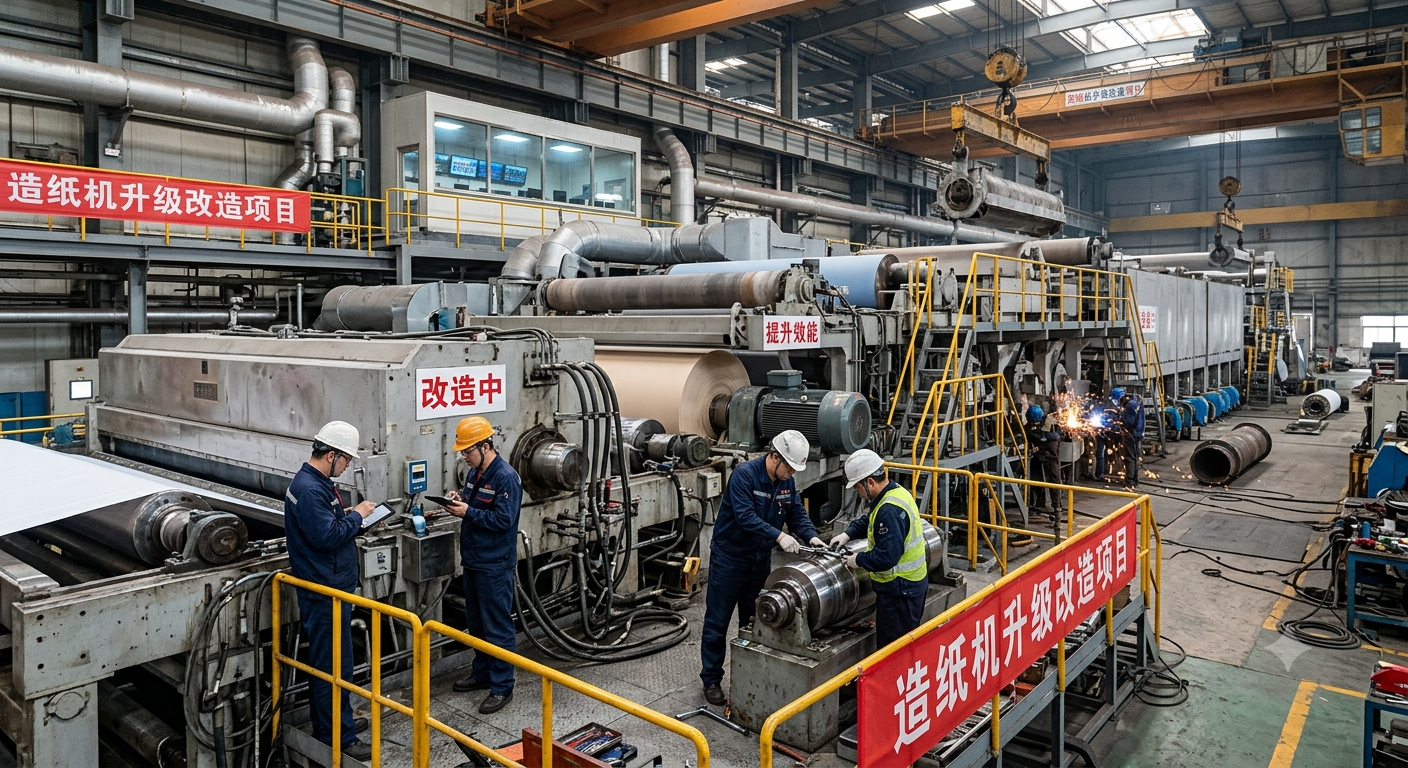
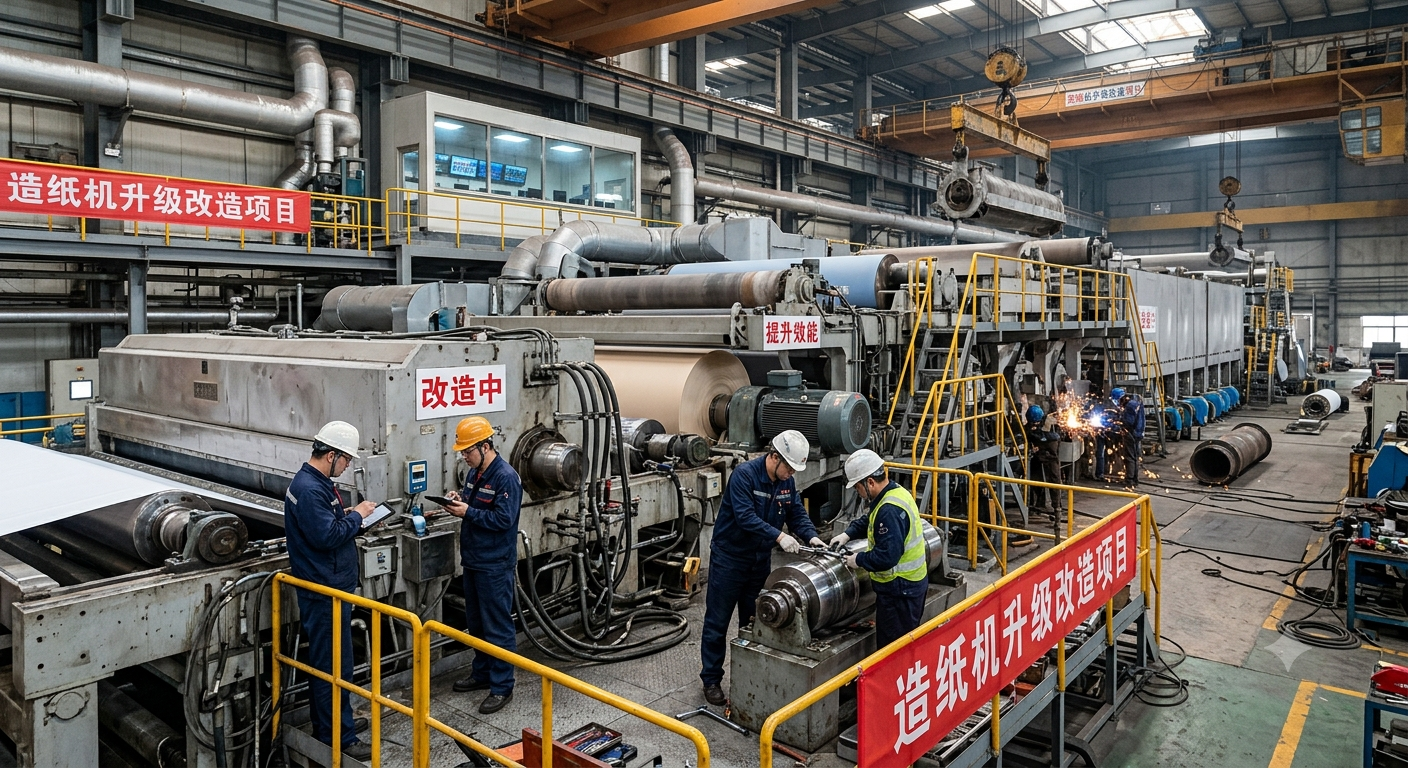
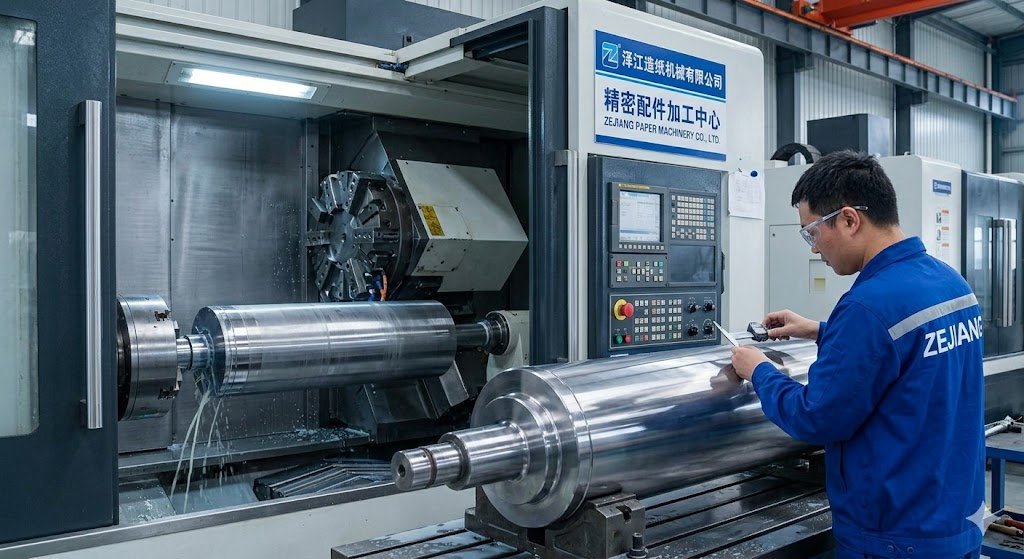
Photos below show an active section rebuild and control-room commissioning on a Zejiang-engineered paper line – machining and welding work on a replacement roll assembly, and an operator commissioning the new control panels after installation.
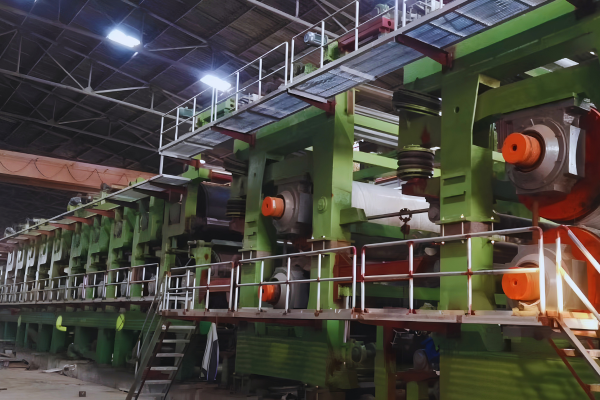
factory floor with machining work in progress
Operator commissioning new control panels
Welding and machining a replacement roll assembly
What a Rebuild Typically Delivers
We don’t publish one generic before/after number for every rebuild, because gains genuinely depend on which sections change and the condition of what’s already installed. The honest version of that answer means we won’t compromise it by inventing a precise figure that doesn’t apply to your machine — the same reason independent rebuild engineering literature avoids universal formulas (see “When to Rebuild vs Replace” above). What that published data does support: section rebuilds of this type are documented industry-wide to add double-digit percentage gains in capacity or drying performance, and control-system upgrades add throughput without touching a single mechanical part. Your engineering assessment will size these figures against your specific machine.
Source: independent engineering literature (see References below) — not a Zejiang-specific case metric.
Want the engineering behind these figures?
Request a Rebuild Assessment →Factory & Manufacturing Excellence
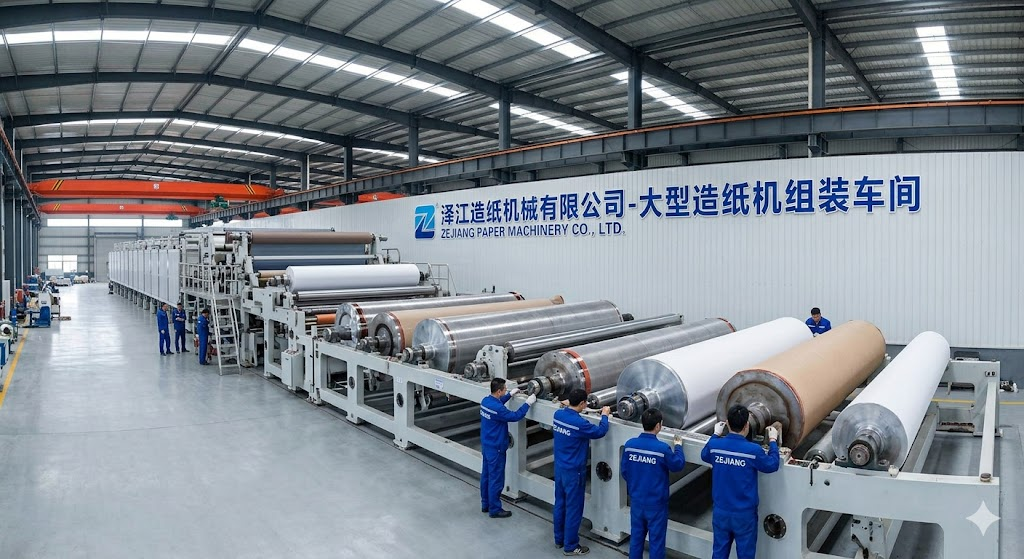
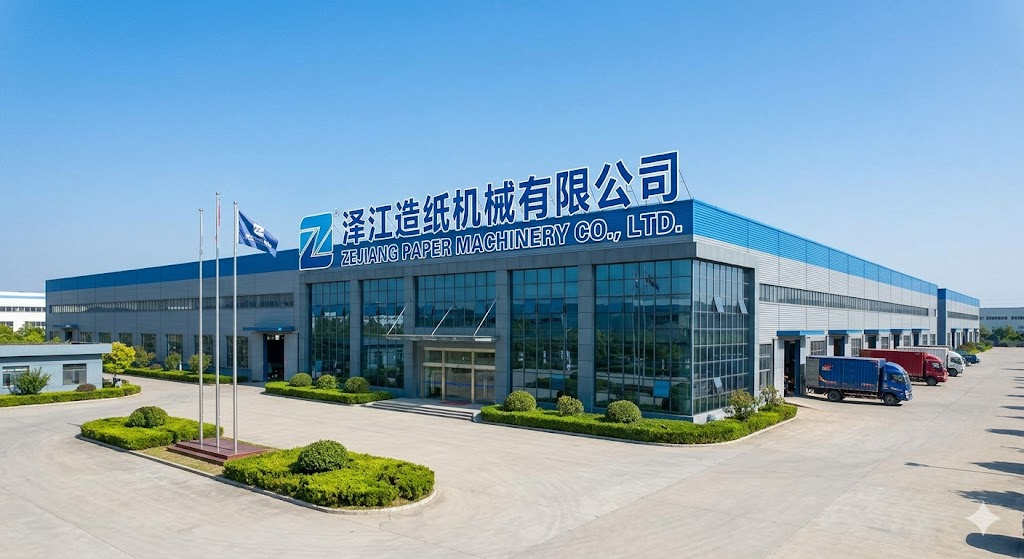
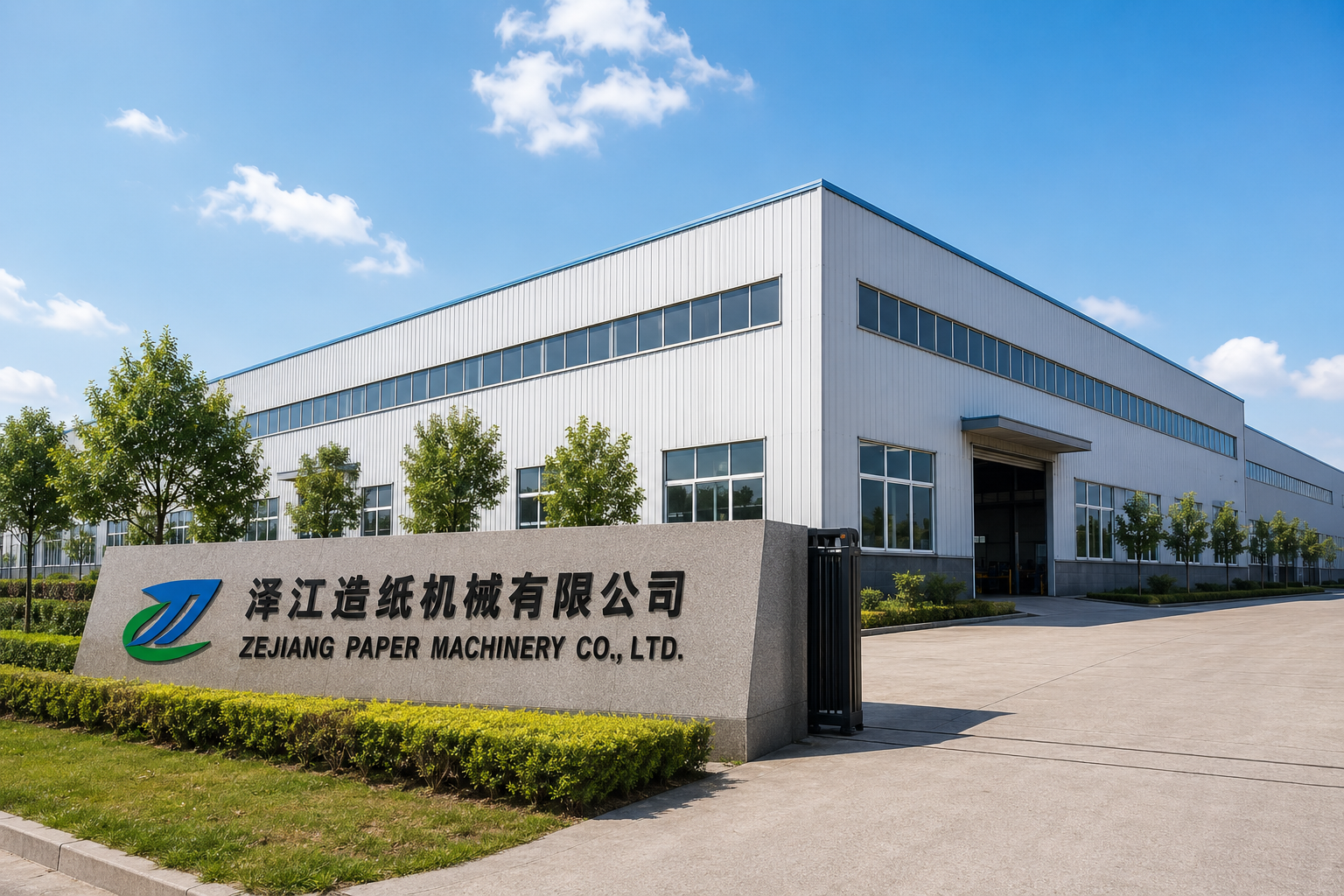
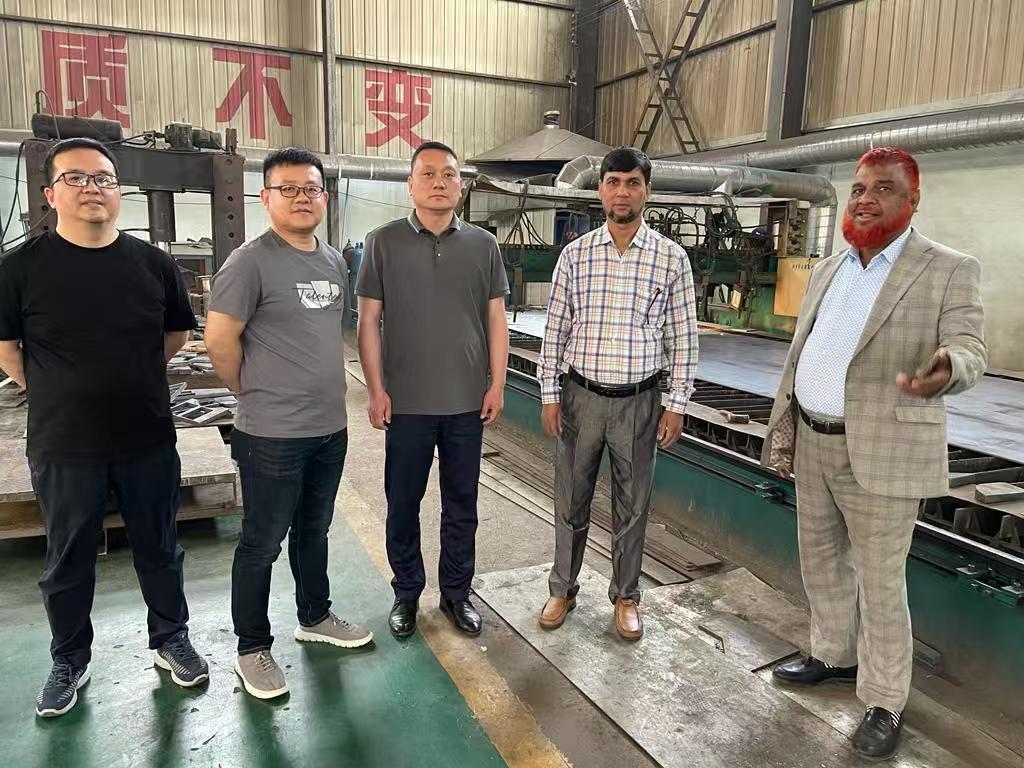
DRAG
SCAN
Engineering & Assessment Tools
Rebuild Readiness Assessment
Launch ToolBottleneck Finder
Launch ToolDowntime Window Estimator
Launch ToolKNOWLEDGE BASE
Frequently Asked Questions
A paper machine upgrade or rebuild replaces specific sections or components - a headbox, press section, dryer group, or automation system - while keeping the rest of the machine's frame and drive train in place. Full-line replacement swaps everything at once. Most capacity, quality, and efficiency problems on an operating mill can be solved with a targeted rebuild at a fraction of the cost and schedule of a new machine.
![Refiner Plates & Screen Baskets [Complete Guide]](https://zjpapermachine.com/wp-content/uploads/2026/07/refiner-plates-screen-baskets-guide-featured-150x150.png)
![Doctor Blade: Types, Materials & How It Works [Guide]](https://zjpapermachine.com/wp-content/uploads/2026/07/doctor-blade-guide-featured-1-150x150.png)
![Pulping Equipment: How Paper Pulping Works [Guide]](https://zjpapermachine.com/wp-content/uploads/2026/07/pulping-equipment-guide-featured-150x150.png)