Get in touch with Zejiang Paper Machinery Company

Pope Reel vs Slitter Rewinder: How to Choose the Right Roll-Handling Stage

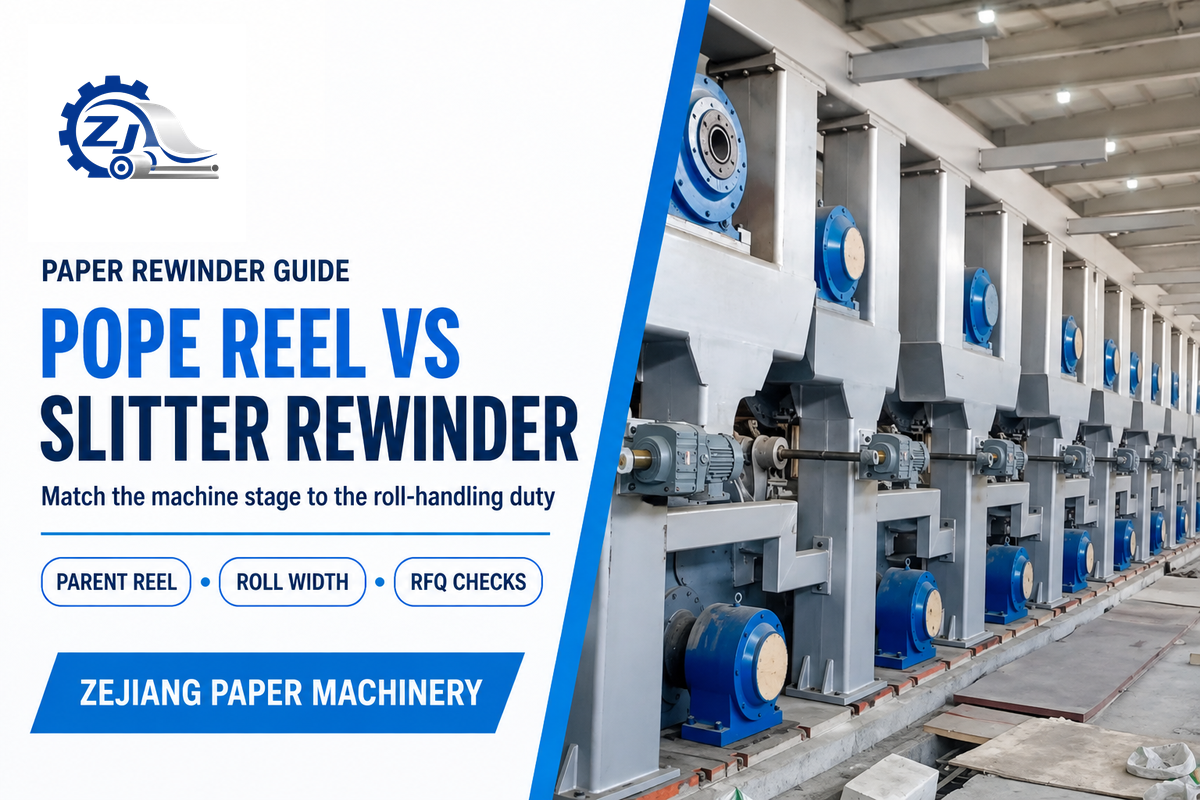
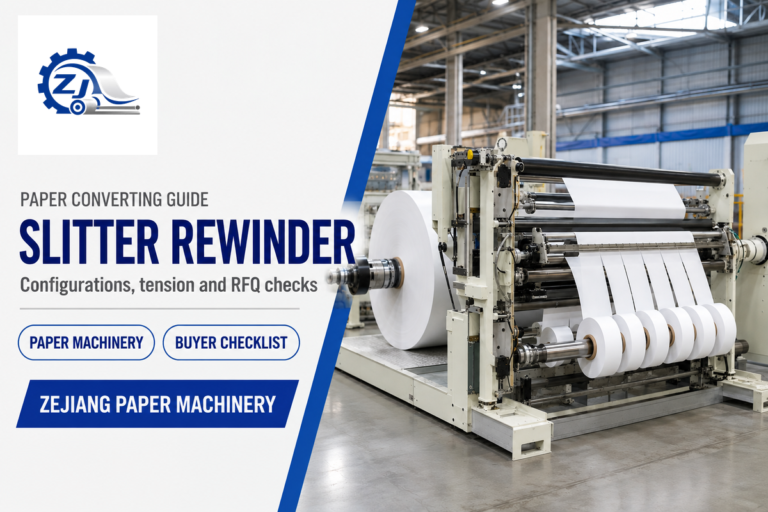
This article distinguishes the two process stages rather than comparing identical machines. A Pope reel winds the full-width web at the dry end of a paper machine and reels it onto a parent reel; the same finishing equipment handles paperboard or paper and film in lines configured for those materials. A slitter rewinder operates downstream, converting the web to the customer’s required width and rewinding it into narrow rolls; related descriptions call this a slitting rewinder or a paper roll slitter rewinder machine, while film roll slitting rewinding belongs to a different material context. If the project description treats a Pope reel and slitter rewinder as the same, the answer can be brief but irrelevant to the handoff.
This resource gives buyers a way to articulate the functional difference and make a specification comparison to provide a supply brief. Examples herein use available and publicly-accessible references and official publications of Zejiang Paper Machinery. They’re decision aids and not a universal assessment of capacity or price.
By Cherry · Paper Rewinder & Pope Reel Blogs
Pope Reel vs Slitter Rewinder: The Short Answer
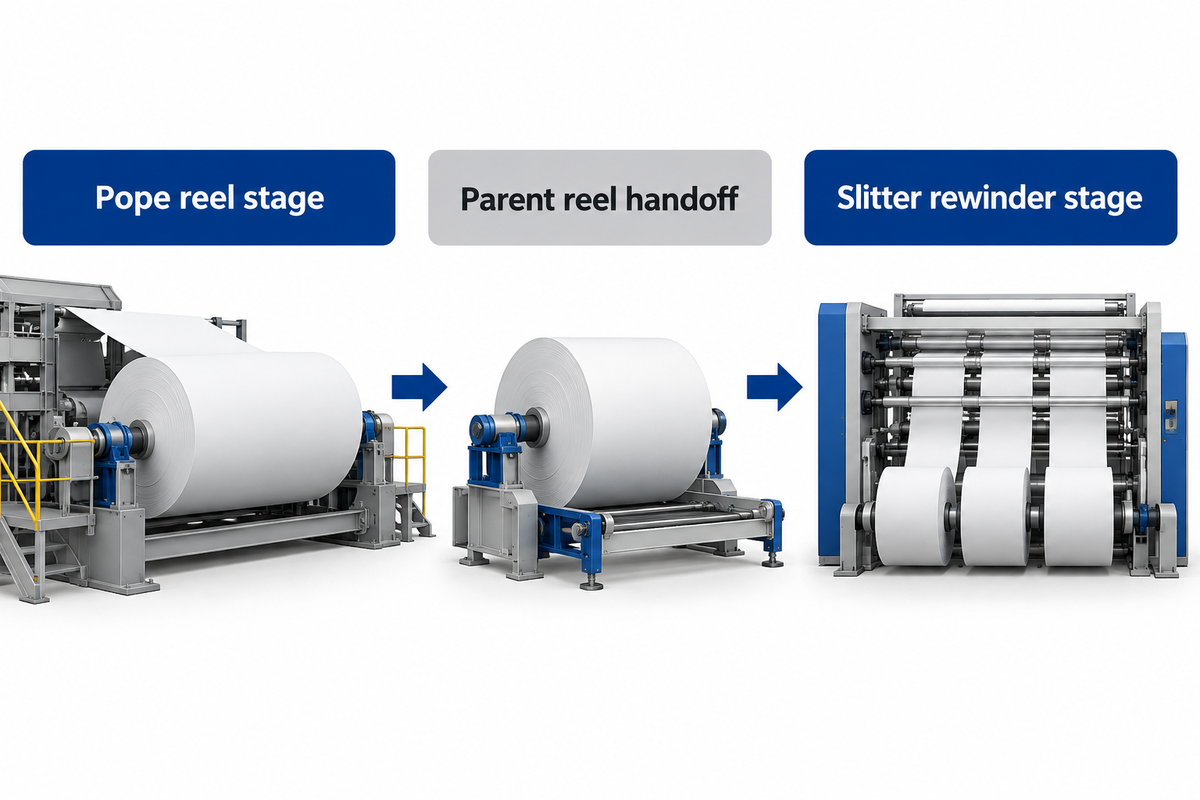
A Pope reel is the last stage in a paper machine and reels a full width web to a stable parent reel; a paper jumbo from the main machine includes coated paper grades. A slitter rewinder is a downstream machine that unwinds a parent reel, separates the web into multiple narrower rolls with knives or a score system, and rewinds those rolls; roll slitting machines, a roll slitting and rewinding machine, and a slitting rewinding machine are broader labels for related equipment, including a rewinding machine. See the Pope-reel patent record for the source context.
| Question | Pope reel | Slitter rewinder |
|---|---|---|
| Position | Paper-machine dry end | Downstream paper-converting line |
| Typical input | Running full-width paper web | Parent reel or jumbo roll |
| Typical output | One parent reel on a winding drum | Multiple narrower daughter rolls |
| Primary job | Continuous winding and reel change | Slitting, tension control and rewinding |
| Main handoff risk | Winding quality and reel geometry | Width plan, core fit, roll hardness and edge quality |
A Pope-reel patent describes a device with a continuously moving winding drum and a guideway that supports and moves a full-width roll. The winding drum and moving guideway influence nip conditions and therefore the turnup. A buyer should look for “full-width winding” and shouldn’t consider a Pope reel as a wider version of a slitter rewinder.
How They Work Together from Paper Machine to Finished Rolls
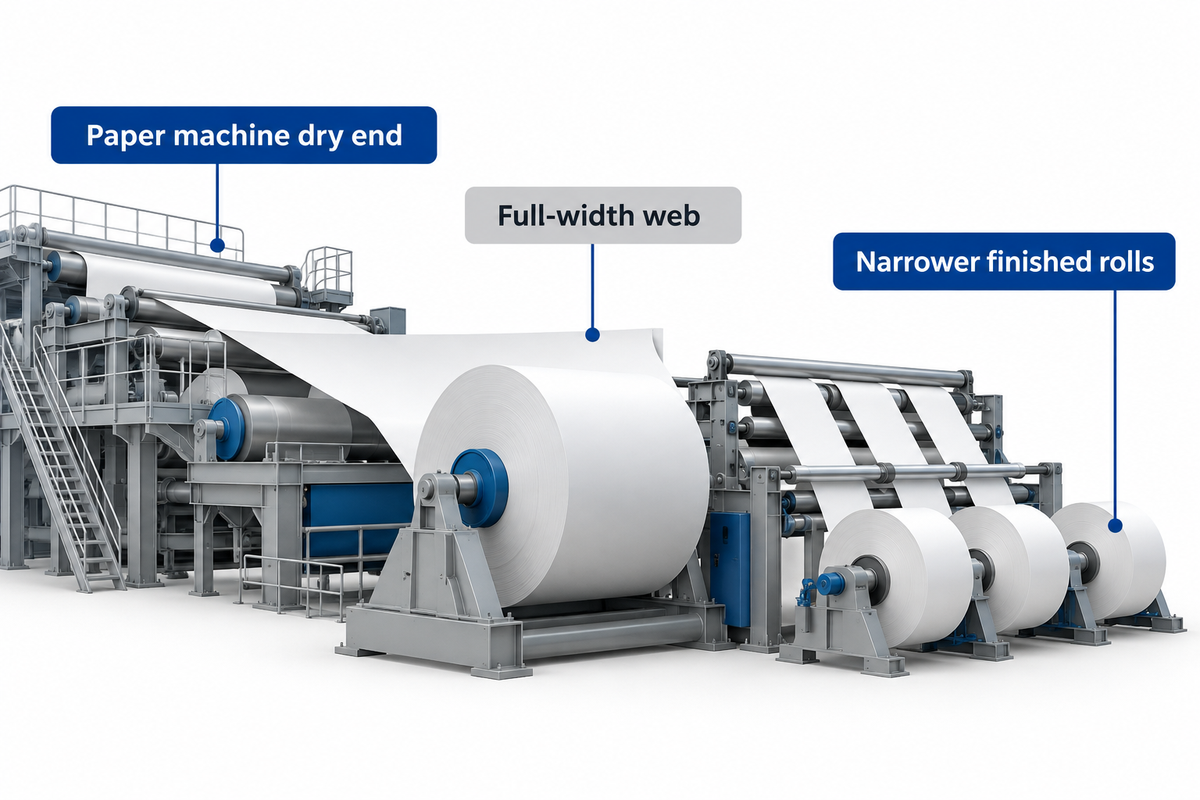
The two machines can be part of one production route:
- Forming and drying: the paper machine produces a continuous web at the specified basis weight and moisture profile.
- Parent-reel winding: the Pope reel winds the web at full machine width and completes a reel change without losing the required winding profile.
- Storage or transfer: the parent reel is identified, protected, and moved with equipment that can handle its diameter, mass and surface condition.
- Slitting and rewinding: the slitter rewinder unwinds the parent reel, follows the width plan, controls web tension, and builds daughter rolls on the requested cores.
A defect that appears at the slitter rewinder may have started earlier. A soft edge, telescoping tendency, or uneven hardness may have come from the parent reel. On the other hand, a clean parent reel may produce poor daughter rolls if the knife setup, core fit, or tension recipe aren’t correct. Treat the handoff as a measured interface rather than assigning every defect to the downstream machine.
North Carolina State University offers public paper machine troubleshooting guidance. The information addresses mechanical issues, dry-end web breaks, and process-control variability. Use this guidance as a simple commissioning rule: record the parent-reel condition at handoff, then separate incoming roll defects during slitter-rewinder trials. See North Carolina State University troubleshooting guide for the source context.
Which Machine Fits Full-Width Parent Reels or Narrower Customer Rolls?
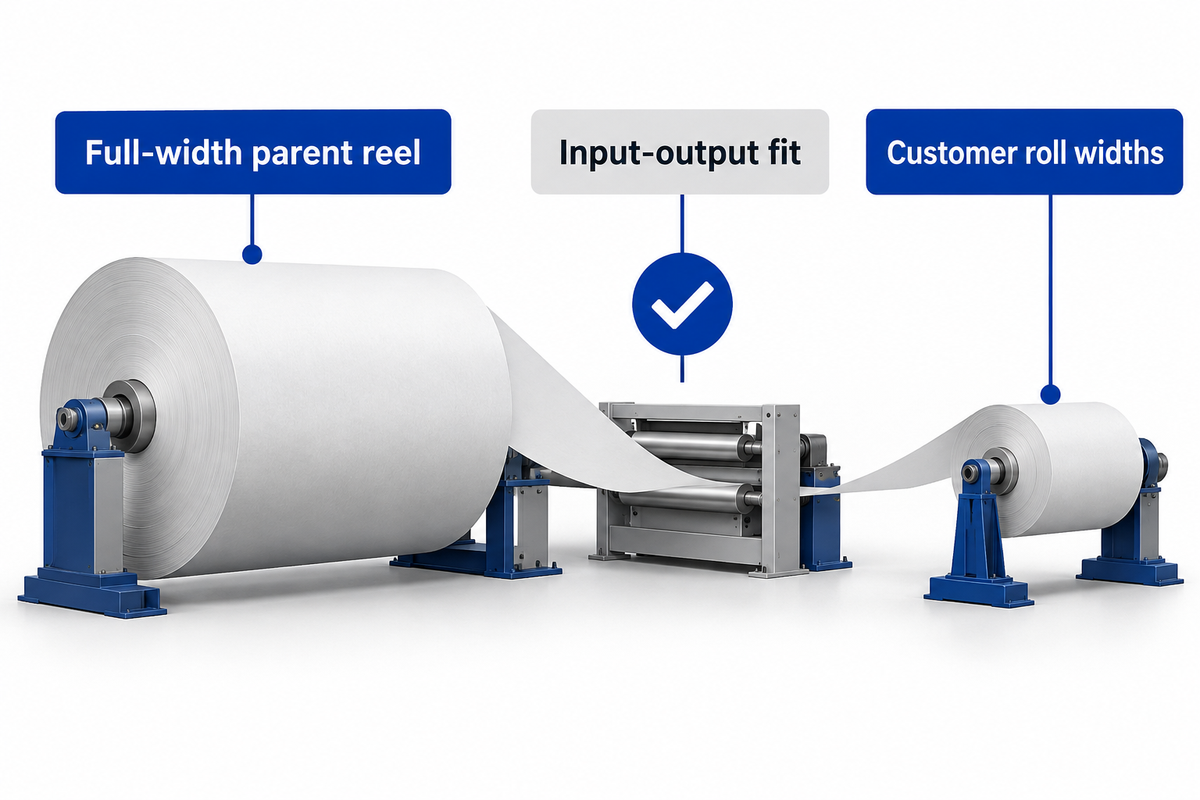
Pick the stage from the required input and output format. If the project is to wind the web directly from a new paper machine, the Pope reel is at the dry end, while search results may use adjacent terms such as a slitting machine, slitter rewinder machine, paper roll slitter, roll slitter, paper slitting, roll slitting, a cutting machine, foil, adhesive, BOPP, laminate, plastic film, sheeting and a high-speed production line. If the project makes saleable widths from purchased or stored jumbo rolls, the slitter rewinder is in the converting line. A mill may need both, but this article stays focused on paper web, parent reels and paper customer rolls.
Single width and speed cutoffs shouldn’t be used to make decisions, and the two stages run at different speeds: winder speeds are generally two times faster than the paper machine. A “wide” product may still require several customer widths, and a “narrow” product may require special cores, low-tension handling, or multiple finished-roll patterns. The important questions may be:
- What’s the maximum and minimum web width entering each stage?
- Is the input a running web, a parent reel, or several parent-reel grades?
- How many daughter rolls must be made in one set, and what widths can be mixed?
- What roll diameter, mass and core range must the handling system accept?
- Which quality measurements define an acceptable parent reel and an acceptable finished roll?
For product-intent readers, Zejiang’s Pope reel and rewinder product page is the natural next reference. It should be read as a product scope page; final selection depends on paper grade, web data and interface drawings.
Specifications Buyers Should Compare
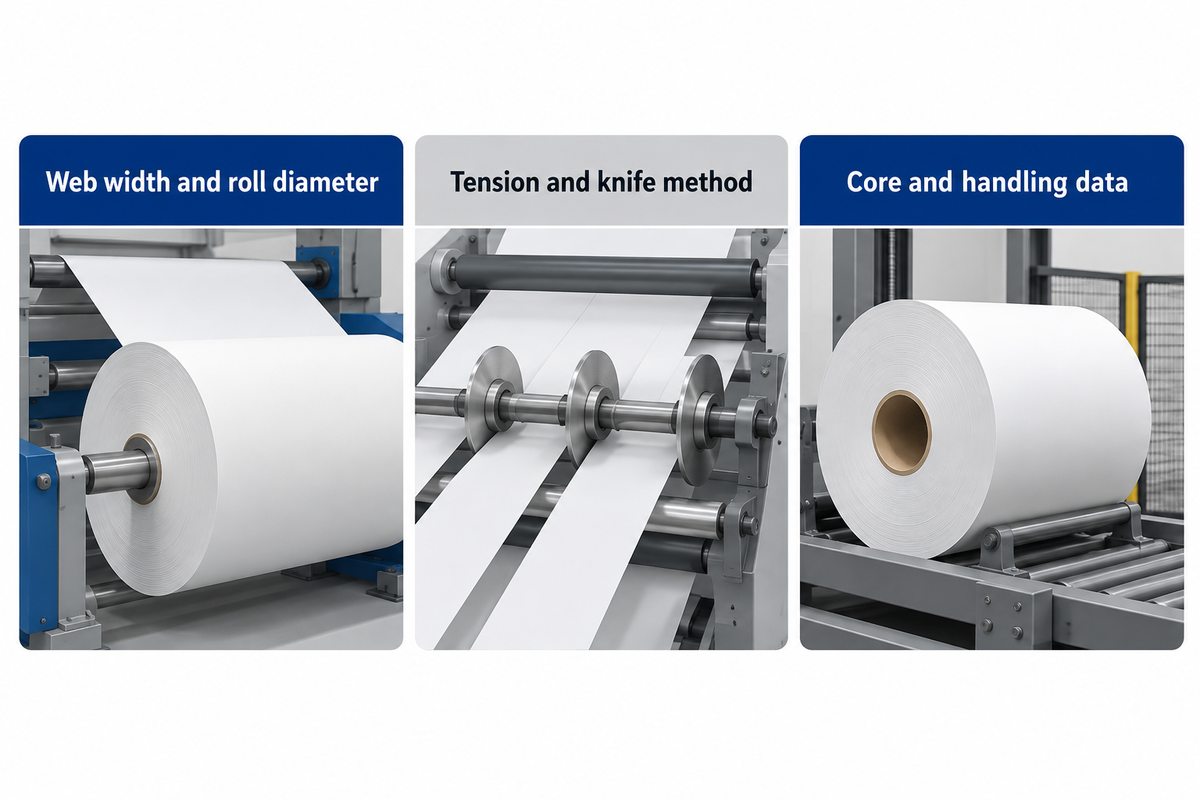
A quotation for both the Pope reel and the slitter rewinder should be placed in a defined process boundary. See the University of Maine paper-machinery archive for the source context.
| Field | Why it matters | Ask the supplier to state |
|---|---|---|
| Web width | Defines full-width and slit-width limits | Working width, trim allowance and usable range |
| Parent-reel diameter and mass | Sets unwinder, floor and transport duty | Maximum values, measurement method and handling limits |
| Finished-roll diameter | Affects winding time and dispatch format | Minimum, target and maximum by grade |
| Core range | Determines shaft, chucks and customer compatibility | Core inner diameter, length, material and tolerance |
| Tension method | Controls roll build and web stability | Sensor locations, control zones and recipe variables |
| Knife arrangement | Determines edge quality and width flexibility | Knife type, minimum slit width and changeover method |
| Drive and automation | Links speed, torque, tension and diagnostics | Drive architecture, HMI, alarms and data interface |
| Utilities | Prevents late infrastructure additions | Electrical, pneumatic, dust extraction and cooling needs |
| Acceptance test | Defines what “ready” means | Paper grade, trial recipe, roll limits and inspection method |
In the case of Roll Diameter, it isn’t cosmetic. In a Slitter-Rewinder article, it’s stated that varying the diameter of the roll alters braking force and winding tension and the control system uses motor and sensor information; precise tension control matters across the slitting area. That’s why a quotation that merely states a nominal machine width is incomplete. Roll diameter and winding tension should be tied to the paper grade and the specification of the finished rolls.
What Drives Project Cost and Quotation Scope?
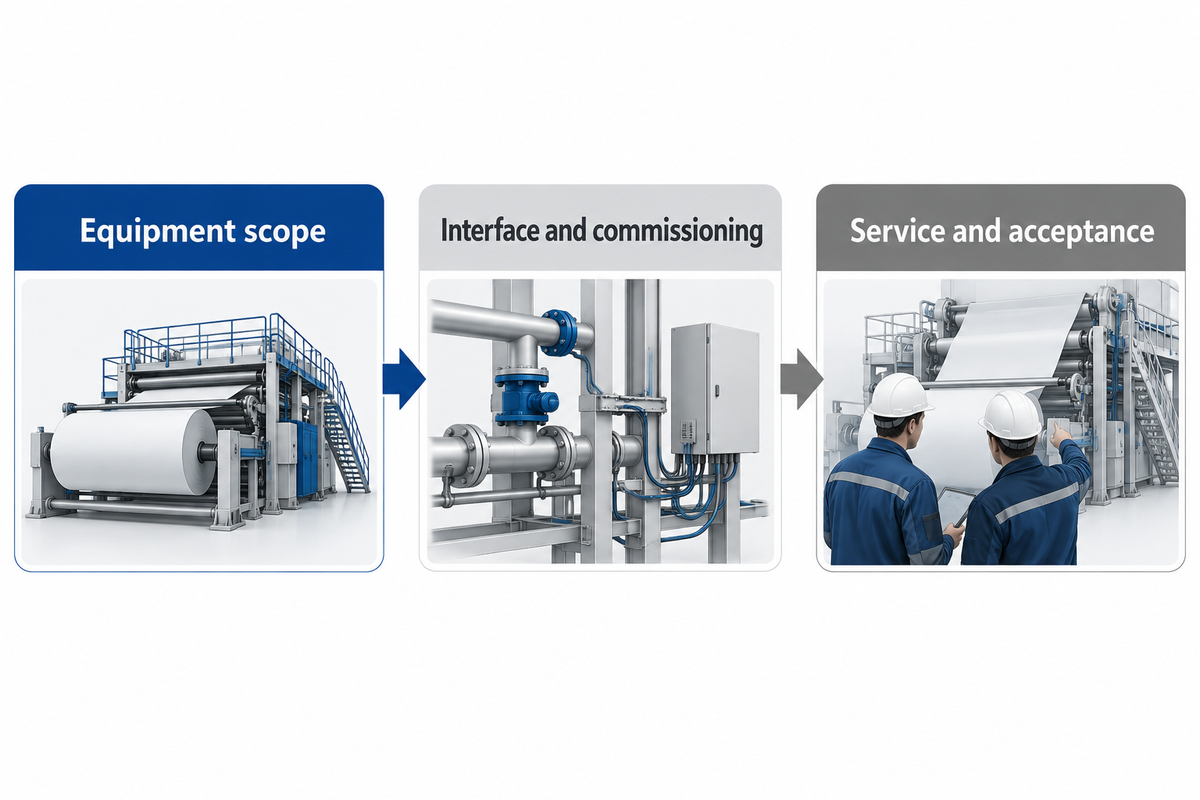
Price differences usually reflect interface configuration, commissioning, and service scope rather than the labels “Pope reel” or “slitter rewinder”; a Pope-reel project may include a reel body, winding drum, turn-up equipment, driving and control equipment, and interfaces with a pulper and paper machine. A slitter rewinder project may include an unwinder with a knife system and tension controls, along with shafts or chucks, core loading, roll discharge and finished-roll handling. See the historical Pope-reel patent context for the winding-drum interface.
Ask each supplier to provide a split of their offer between equipment, site interfaces and services. Price differences in equipment can mislead when the wide range of materials changes production efficiency across production environments. The practical budget can change with differences in installation supervision, commissioning support, operator training, wear parts, control integration and performance acceptance, even when two equipment prices look close. A market forecast or project quotation isn’t the same as a machine performance benchmark.
For similar comparisons, be sure to provide comparable paper grades, roll data, operating hours, target output, utilities, layout limits and acceptance criteria to all bidders. Be sure to ask for written exclusions. If one offer assumes existing drives, crane capacity or control cabinets, and the other includes them, the total costs aren’t comparable.
Questions to Ask a Paper Machinery Supplier Before Ordering
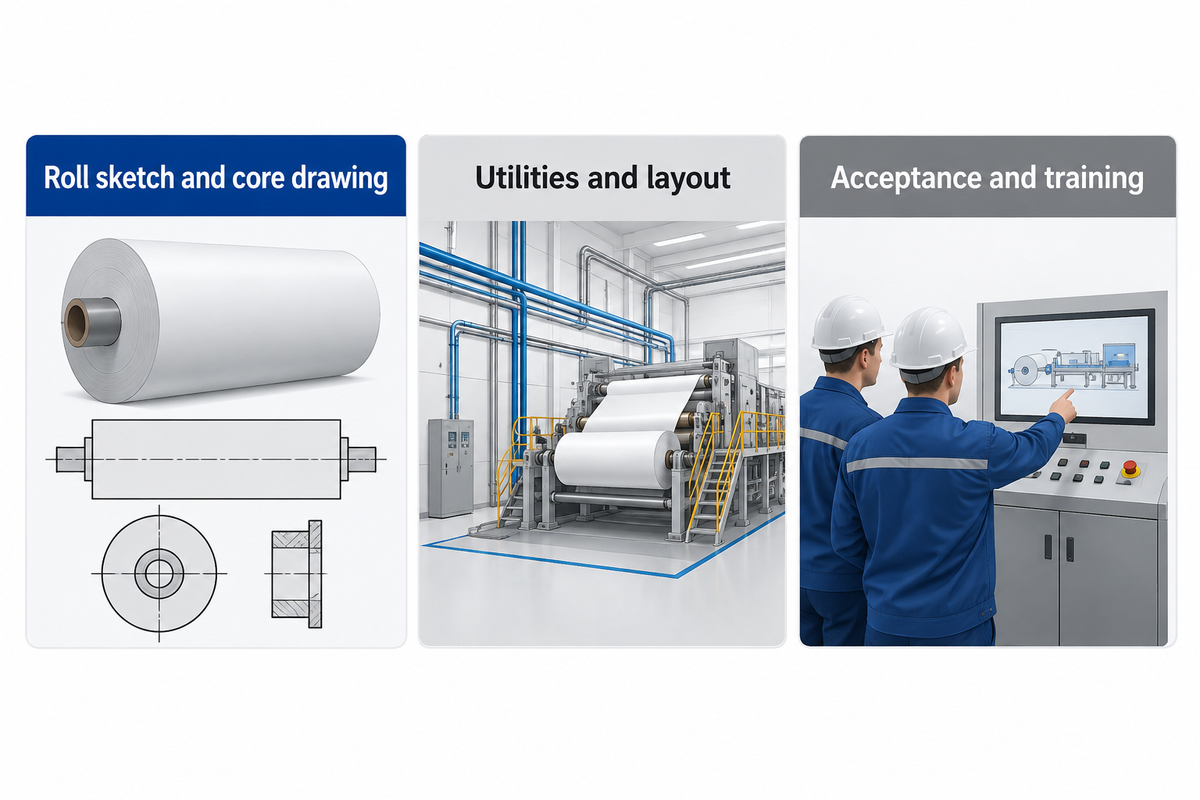
- Which stage is included: paper-machine Pope reel, downstream rewinder, or both?
- What parent-reel width, diameter, mass and surface condition does the design assume?
- Which paper grades and basis-weight range are included in the trial plan?
- What daughter-roll widths, cores, diameters and set patterns are required?
- How are web tension, nip load, torque and roll hardness measured?
- Which knife system is proposed, and how are knife changes and edge quality checked?
- What are the electrical, pneumatic, dust-control and building-interface requirements?
- Which controls, data tags, alarms and remote-service functions are included?
- What’s included in installation supervision, commissioning and operator training?
- What exact paper, roll and quality conditions define the factory and site acceptance tests?
Send the supplier a short inquiry before requesting a price. The inquiry should include a roll sketch, core drawing, width plan, anticipated daily schedule, available utilities, layout constraints, handling route, inspection method, and documents required for handover; include the cutting method and desired width in that brief. This makes complete proposals easier to compare. See the NCSU troubleshooting reference for the source context.
The Parent-Reel Handoff Check: A Practical Decision Matrix
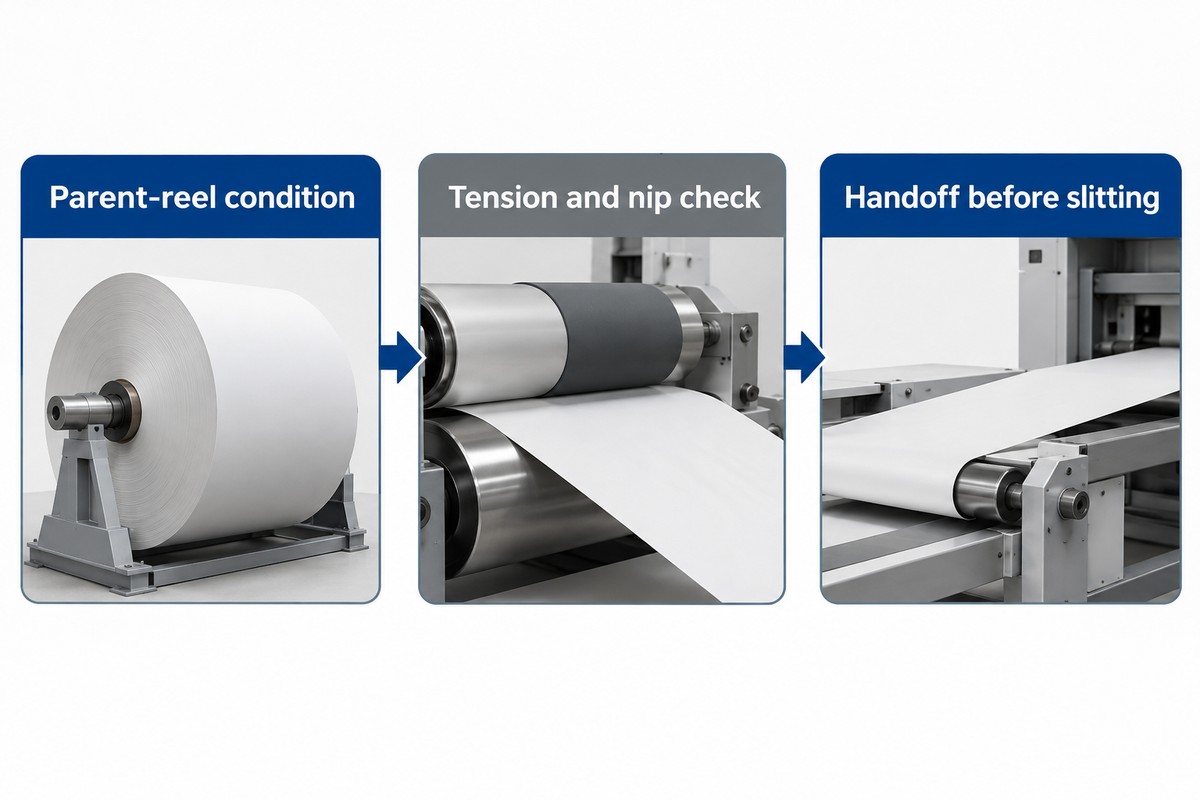
Use the following checklist as a guide before the first parent reel enters the slitter rewinder. See the Pope-reel patent record for the source context.
| Check | Pass question | If it fails |
|---|---|---|
| Width | Does the parent reel cover the slit pattern with the planned trim? | Revise the width plan or confirm usable machine width. |
| Diameter and mass | Can the unwinder, floor, crane and transport route accept the reel? | Resolve handling and safety limits before commissioning. |
| Winding quality | Is hardness and profile consistent enough for stable unwinding? | Quarantine, recondition or adjust the incoming reel process. |
| Core and handling | Do the core, shaft, chuck and finished-roll route match? | Change tooling or confirm a different core specification. |
Valmet’s reel-turnup guidance is a useful reminder that a rule of thumb isn’t always enough: equipment type, spool speed, and nip load affect the outcome. Use the same discipline in the downstream handoff. Treat a convenient diameter or width as a starting point, not acceptance criteria.
Common Integration Risks and Quality Signals
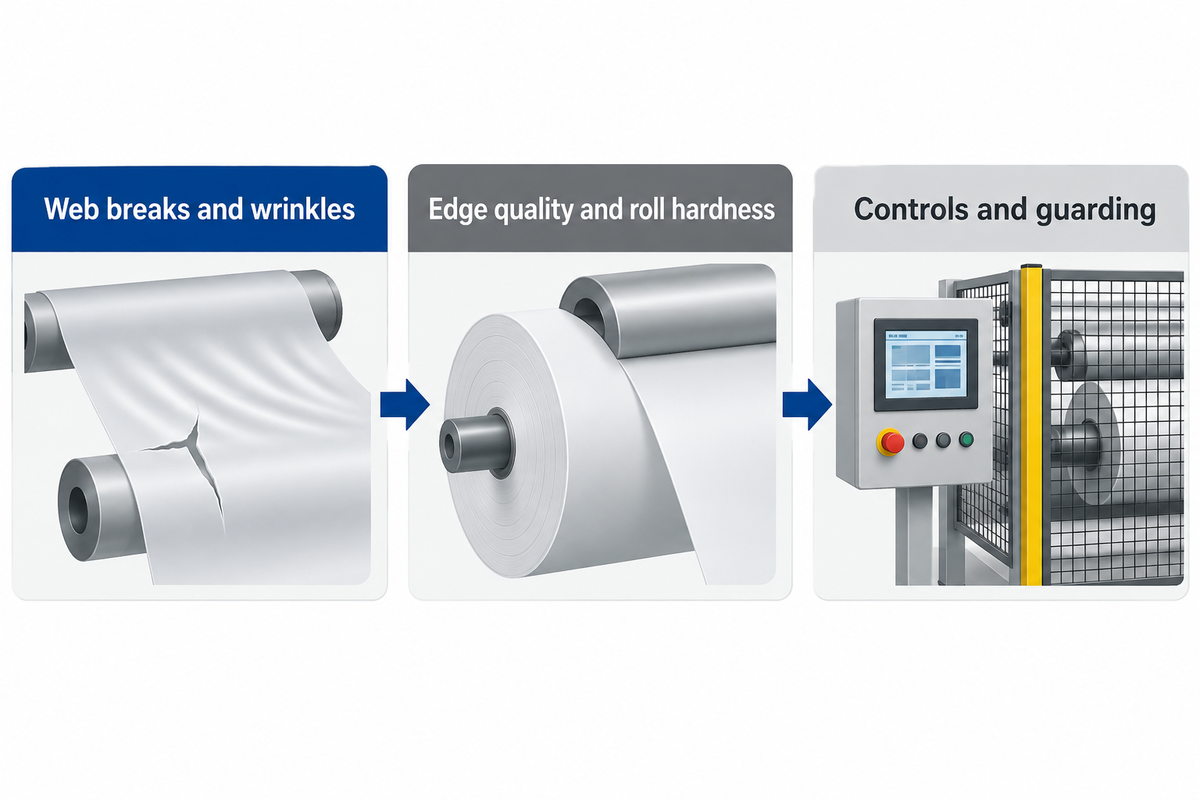
The most common planning mistake is assuming that a machine interface has been defined before purchasing the equipment. Other planning mistakes include setting a finished roll diameter that can’t be handled by the transport route, specifying a core that doesn’t fit the chuck, and assuming that one tension recipe will be acceptable across all paper grades; paper core cutting, kraft paper, and thicker materials require separate checks. See the NCSU troubleshooting reference for the source context.
- Telescoping or loose rolls: check incoming parent-reel profile, tension, nip and core fit before changing the knife setup.
- Uneven slit edges: check knife condition, overlap, web alignment, dust and paper properties together.
- Unplanned downtime: check changeover steps, spare tooling, access, alarms and operator training.
- Scope gaps: check who supplies handling, control integration, dust extraction, guarding and acceptance instruments.
Troubleshooting material lists recurring problems such as edge issues, uneven winding, and tension issues. Use these problems to create a commissioning checklist, and verify the results on the specified paper and roll format.
How Zejiang Paper Machinery Can Support a Rewinding Project
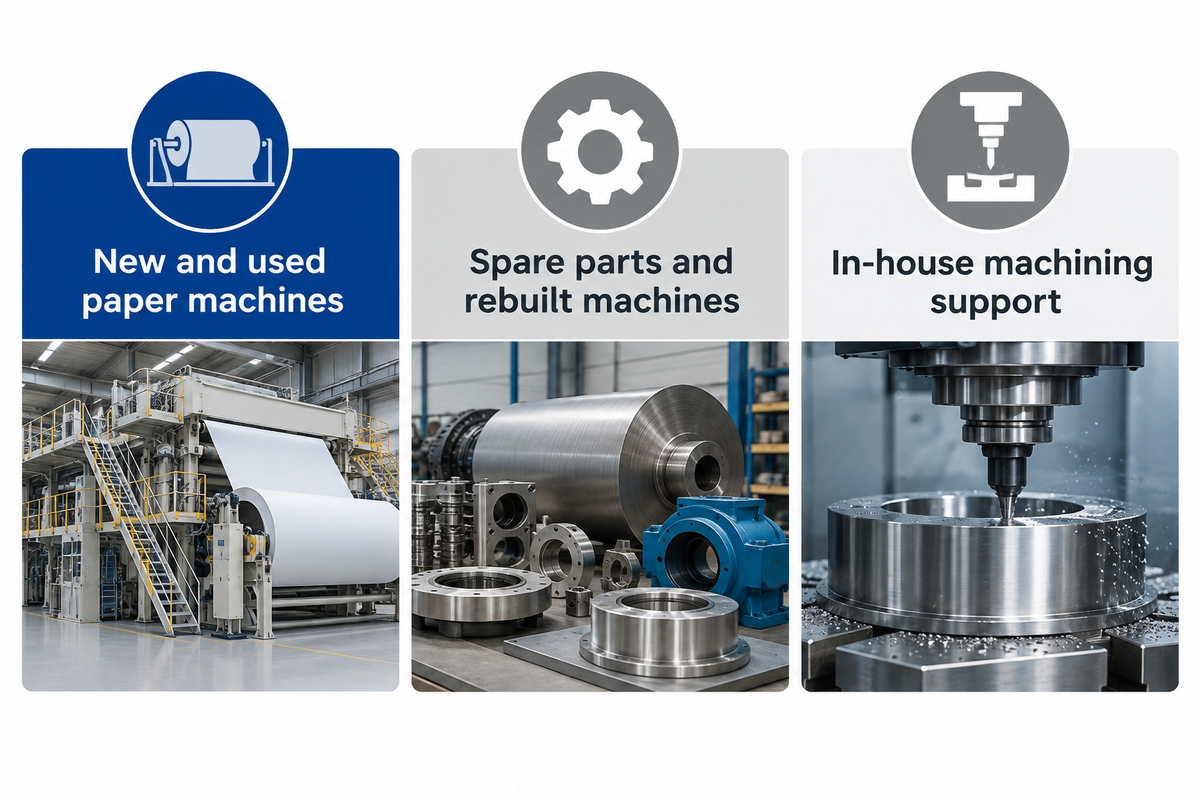
Henan Zejiang Paper Machinery Co., Ltd. has its offices in Qinyang, Henan and was established in 2014, according to its About page. According to its official About page, Henan Zejiang Paper Machinery Co., Ltd. mentions new and used paper machines, spare parts, rebuilt machines and in-house machining as part of its services. This information is from the company and doesn’t reflect proof of a particular project’s capacity, certification or acceptance; the supplied rewinder Pope reel page is the internal-link destination for product-intent readers, and the Zejiang Paper Machinery homepage provides company context. See the Pope-reel patent record for the source context.
For a new line or a replacement stage, the parent-reel handoff data provided in this article serves as a basis. In addition to this data, share the paper grade, full-width web, dimensions of parent and daughter rolls, a daughter roll plan, core drawings, utilities, layout and the acceptance method. Zejiang will then decide if the scope is doable in the Pope-reel stage or if it extends to the slitter-rewinder stage.
Discuss a Pope Reel or Slitter Rewinder Scope
Send your roll data, width plan, core requirements and site constraints. A clear inquiry helps the engineering and purchasing teams compare a complete, buildable proposal.
Frequently Asked Questions
Is a Pope reel the same as a slitter rewinder?
No. A Pope reel winds a running, full-width paper web into a parent reel at the end of a paper machine. A slitter rewinder works downstream: it unwinds a parent reel, cuts the web into narrower widths, and rewinds the daughter rolls. They can belong to the same production route, but their input, output, controls and acceptance checks are different.
Can a slitter rewinder replace a Pope reel?
Usually not when the requirement is continuous winding directly from a paper machine. A slitter rewinder is designed around an incoming roll and a converting width plan; it doesn’t automatically provide the paper-machine turnup, winding-drum movement and full-width reel-change functions of a Pope reel. A project that removes the Pope-reel stage needs a different process design and a clear alternative for handling the running web.
What information should I send for a slitter-rewinder quotation?
Send the parent-reel width, diameter, mass, paper grade, basis-weight range, moisture condition, core size, finished-roll widths and diameters, slit pattern, production schedule and required roll quality. Add the available electrical and pneumatic services, layout and handling limits, control-interface expectations, commissioning location, spare-parts needs and acceptance-test method. These details let suppliers quote comparable scope instead of guessing.
Why does parent-reel quality affect daughter rolls?
The parent reel is the incoming roll that the slitter rewinder must unwind smoothly. Variations in hardness, profile, edge condition, diameter or core fit can change web tension and roll build before the knife system has a chance to correct anything. Record the parent-reel condition at handoff and test the same paper grade and width pattern during commissioning so incoming defects and downstream settings aren’t mixed together.
Which is better for a paper mill, a Pope reel or a slitter rewinder?
Neither is better in general: they do different jobs at different stages of the same production route. A paper mill making a continuous full-width web needs a suitable Pope-reel stage. A mill or converter making customer-width rolls from parent reels needs a slitter rewinder. Many operations need both. Compare the process boundary, roll data, handling route, quality checks, utilities and service scope before choosing equipment.
References & Sources
- Zejiang Paper Machinery, About Us
- Zejiang Paper Machinery, Rewinder Pope Reel
- Google Patents, Pope reel for a paper machine, US5690298A
- Valmet, Improving reel turnups for low downtime and high paper yield
- North Carolina State University, Paper-machine troubleshooting guide
- SlitterChina, Common paper slitter-rewinder problems and solutions
- Binbao, How roll diameter affects a slitter rewinder