Get in touch with Zejiang Paper Machinery Company


Before you compare suppliers, review our paper rewinder and Pope reel solutions and company scope for equipment and service context.
References & Sources
- Henan Zejiang Paper Machinery — About Us (company scope and service context).
- Paper Rewinder and Pope Reel Solutions (product context).
- Valmet: Winding Principles (tension, nip and torque concepts).
- Dienes: Shear vs. Crush Slitting (slitting method comparison).
- PPSA: Safe Use of Reel and Slitting Machines (guarding and safe-work considerations).
- UK HSE: Paper and Board Safety Guidance (workplace safety context).
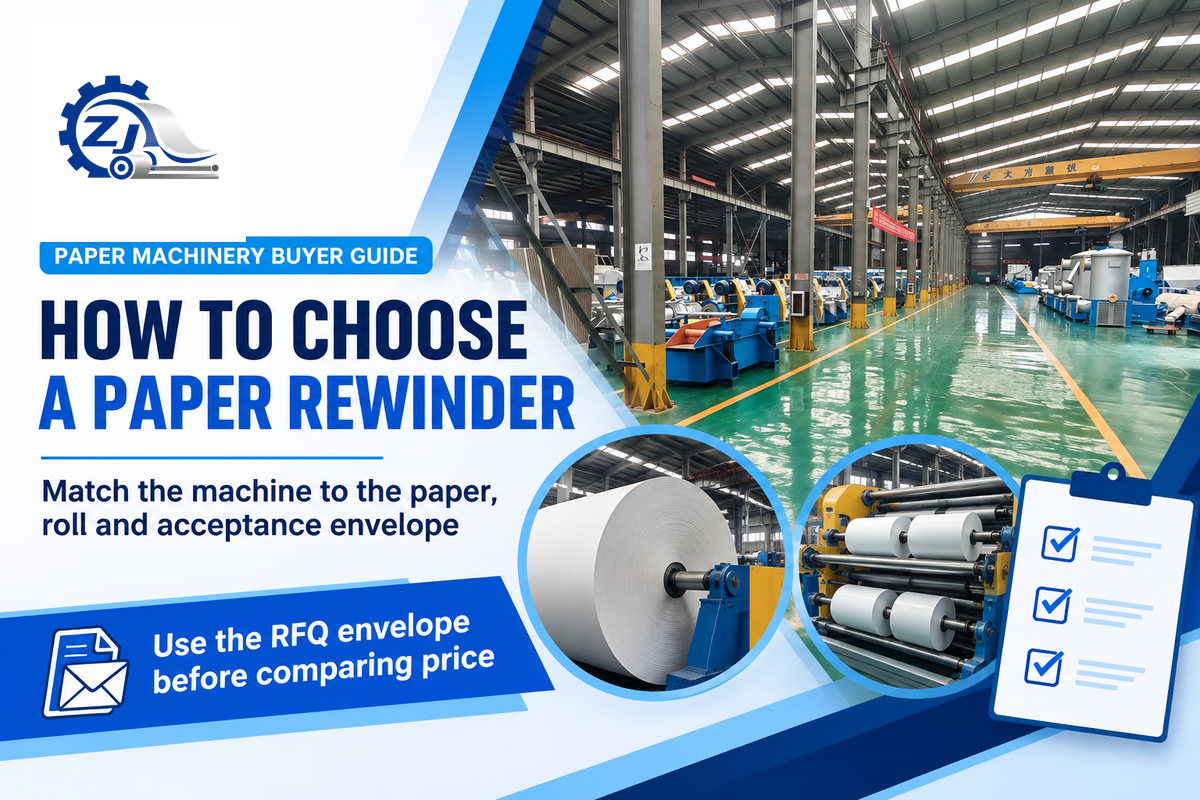
Choosing a paper rewinder is more of a process decision than a product decision. It’s really a judgment call based on a number of factors including the location where the roll is produced, the paper grades you run, how the parent roll must be converted, and what evidence you require before you’ll accept the line.
The purpose of this document is to provide a means of evaluating a paper rewinder, slitter rewinder, or Pope reel in a practical way, and outline the questions a supplier should be asked to help define the requirements.
Start with the process stage: Pope reel, rewinder or slitter rewinder
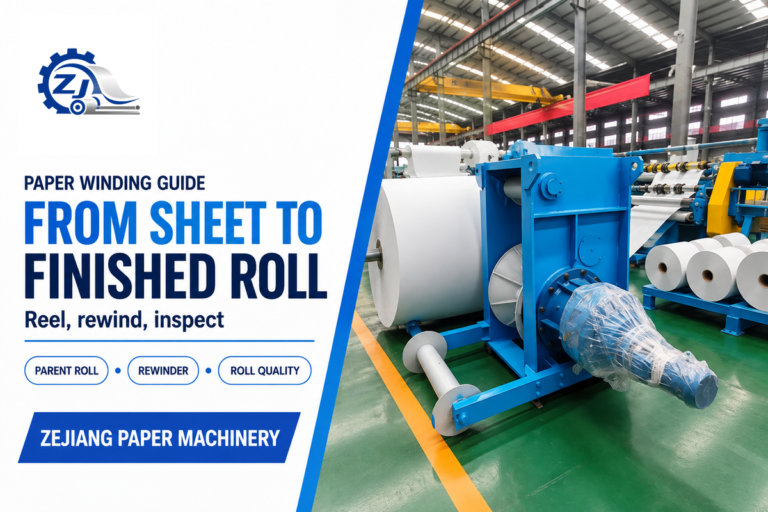
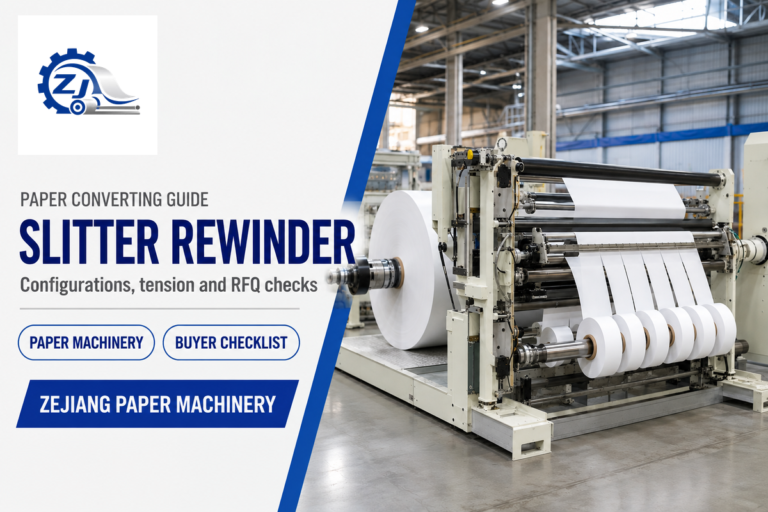
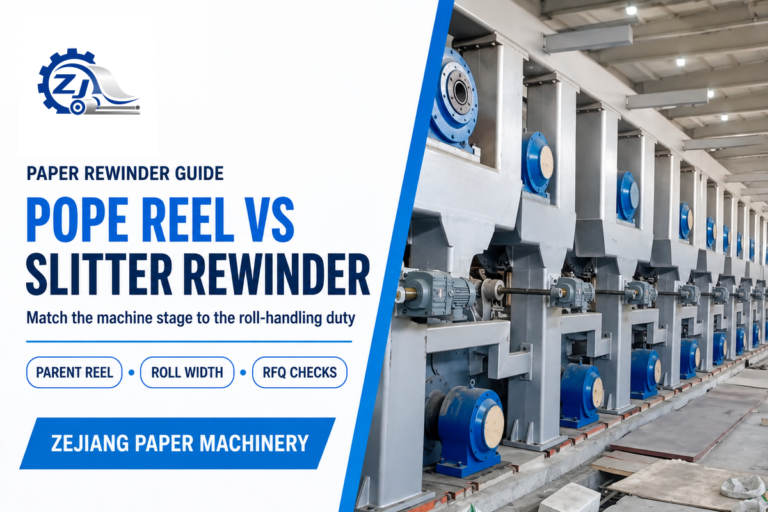
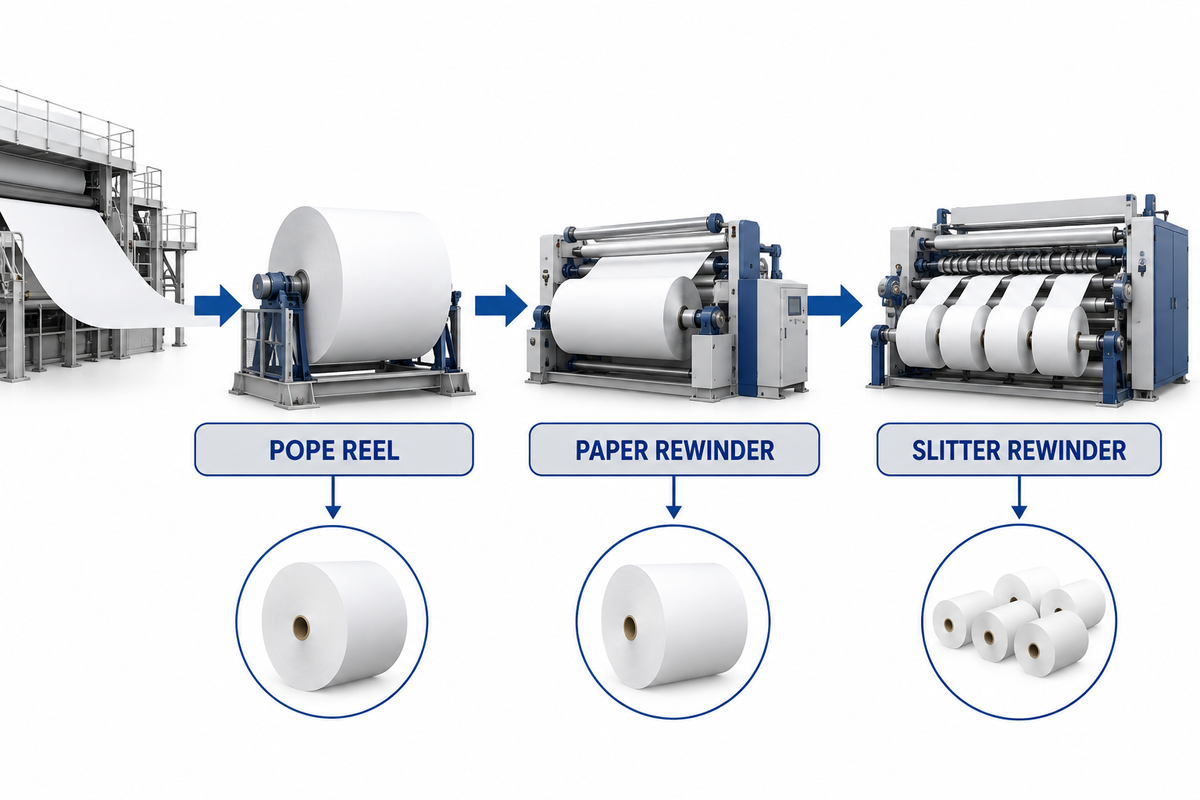
A Pope reel winds the full width paper web into a parent reel at the end of the paper machine. A Pope reel winds the full width paper web into a parent reel at the end of the paper machine. HSE rewinding guidance. A slitter rewinder takes a parent roll or a jumbo roll, cuts it to the desired width and rewinds it to a finished roll. Though they’re linked stages, they address different issues. If you’re seeking a parent reel from a paper machine, you should first evaluate your reel-up and turn-up requirements. If you require saleable narrow rolls, you need to incorporate a slitting and rewinding unit along with the right unwind and finishes roll handling.
Before you compare models, picture the material flow from unwind to finished roll. Identify points where the web is full width, where the web is slit, and where cores are loaded and unloaded. This simple sketch typically prevents the most common buying mistake of specifying a Pope reel when the constraint is downstream converting, or asking a slitter rewinder to do a Pope reel job.
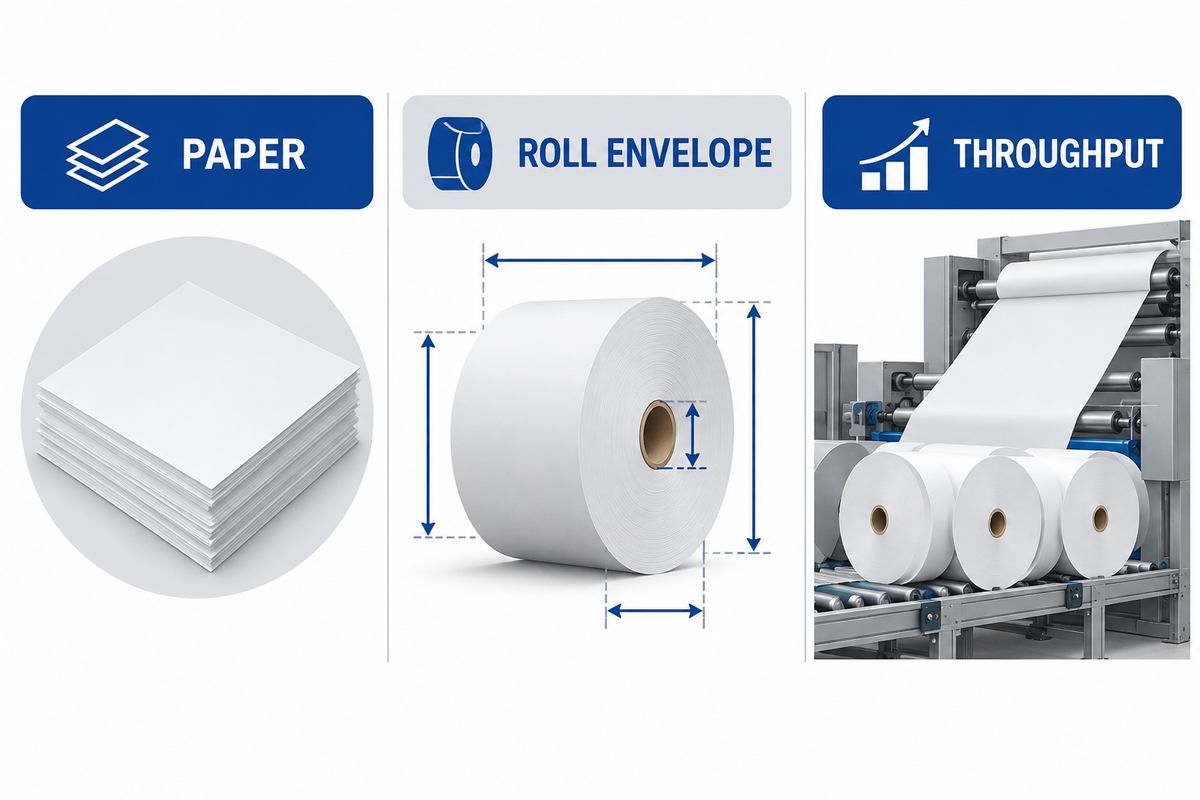
The RFQ Envelope Check: define the paper, parent roll and finished-roll envelope
The RFQ Envelope Check outlines the minimum information you should include when you request a quotation. The RFQ Envelope Check outlines the minimum information you should include when you request a quotation. Zejiang rewinder and Pope reel scope. Specify the operating envelope. Include paper grades, basis-weight range, moisture range, coating or laminate, web width, min slit width, parent roll diameter, finished roll diameter, core ID, maximum roll weight, and target throughput. If paper grades change, state the changeover frequency and the smallest batch.
A representative acceptance plan may use 3 grades with 2 trial runs each and 1 inspection sheet per supplier. Don’t use the maximum speed of a machine as the sole criteria for selection. Speed must be evaluated along with strength of the paper, diameters of the rolls, the desired web tension, and the limits of quality for the roll. The supplier should disclose the reasons for each of the speed limits and which of the limits are guaranteed at acceptance.
RFQ checkpoint: Send a representative paper specification, a drawing of the parent roll and a table of finished-roll sizes. A supplier cannot size the unwind, shafts, knives or drive system reliably from the word “paper” alone.
Match winding method and tension-control architecture
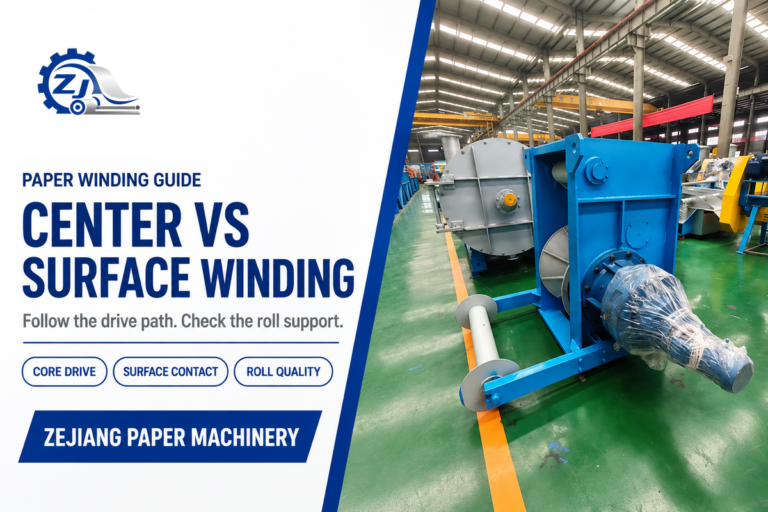
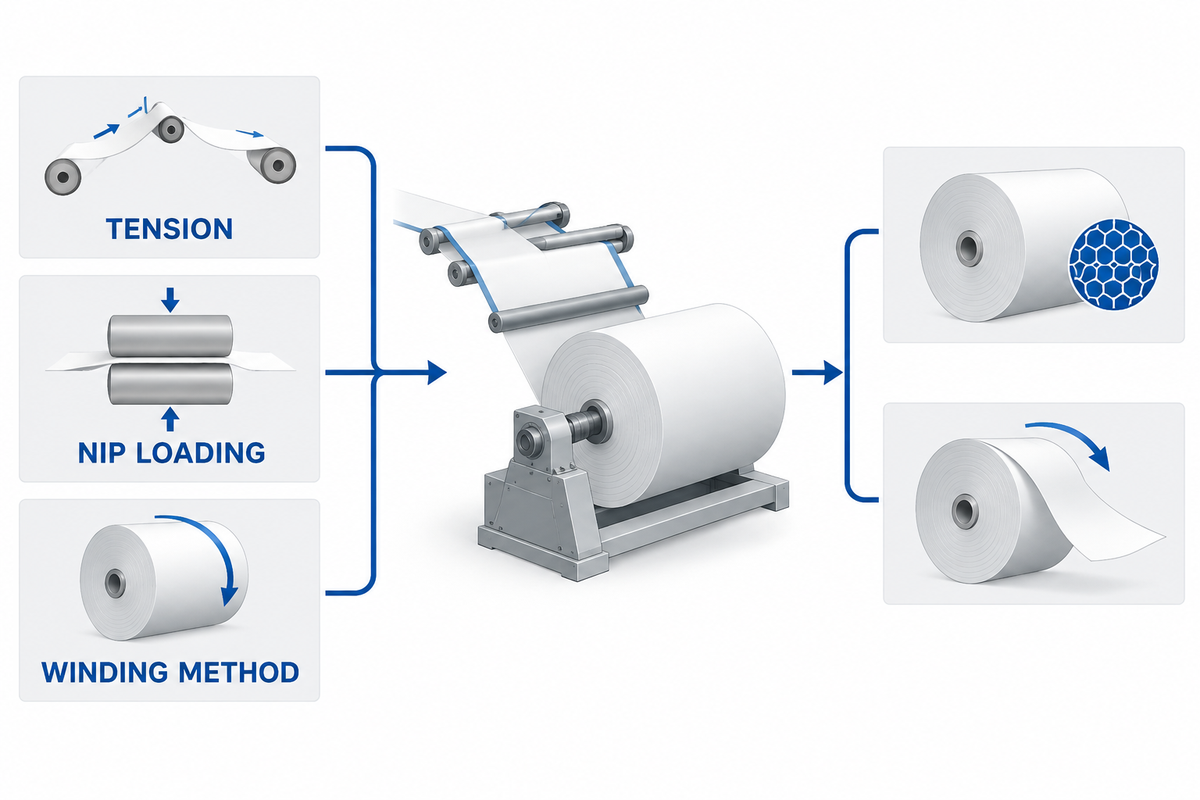
Winding quality is the interaction of tension, nip loading, web path, and the characteristics of the paper. Winding quality is the interaction of tension, nip loading, web path, and the characteristics of the paper. Winding quality is the interaction of tension, nip loading, web path, and the characteristics of the paper. Patent example of a winding and nip-related apparatus. Valmet winding principles. There are multiple ways of controlling torque and nip during a winding process, including winding to center and to the outside.
Ask for a control narrative rather than a feature list to describe how the machine controls web tension, nip pressure and determines a broken web.
For a parent reel, clarify the turn-up method and transfer from the empty spool to the growing reel. For a slitter rewinder, clarify how the machine handles the first few wraps and the taper tension and final roll. The supplier has to combine each control loop with a measurable effect on roll quality. It can be wrinkles or edge damage.
Specify slitting, core handling and roll-quality requirements
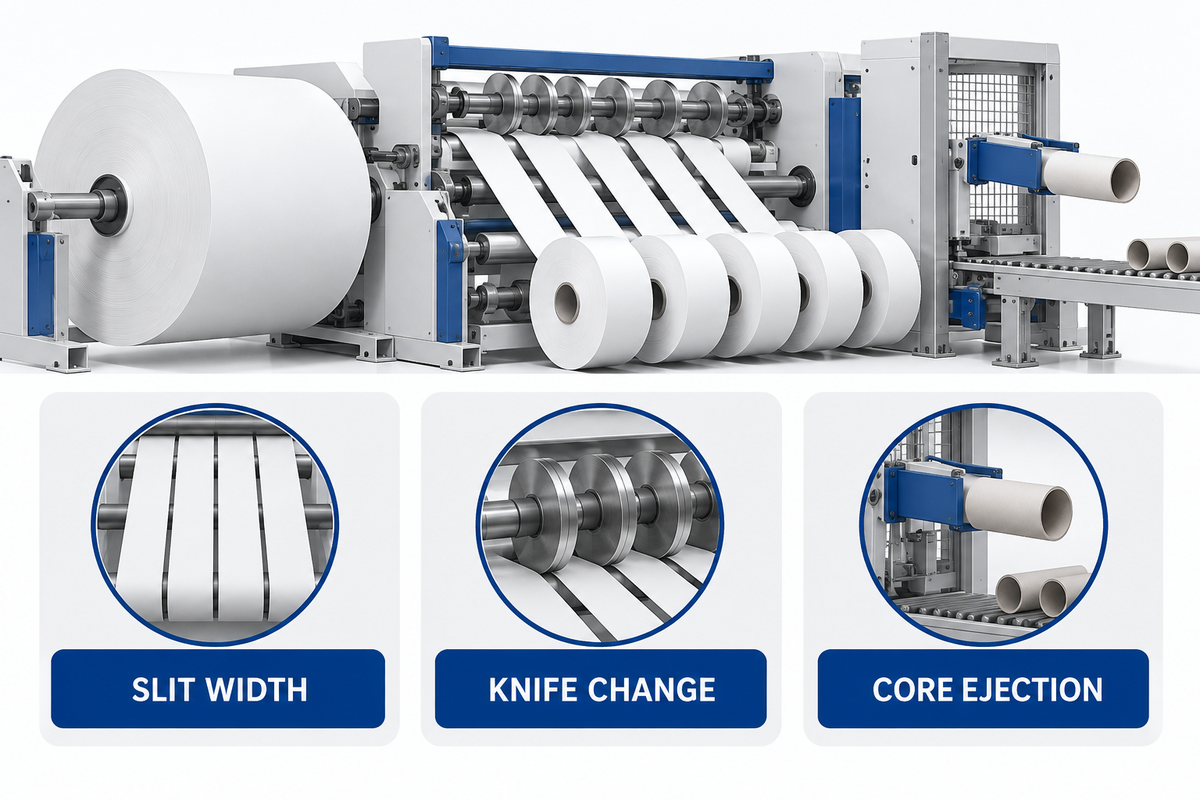
Slitting and rewinding are quality tasks, and the selection of a knife system is specific to the paper grade and the edge quality required. Slitting and rewinding are quality tasks, and the selection of a knife system is specific to the paper grade and the edge quality required. Dienes slitting comparison. Shear slitting is a good option when edge quality and dust are important; crush slitting is good for other materials, like kraft paper and production conditions. The right choice is dependent upon trials; it isn’t necessarily true that a “best knife” always applies.
Define the slit width, the full roll width, number of lanes, trim allowance, edge dust, knife change time and acceptable core ejection. The machine may meet specifications to target web width, but handle cores too slowly or too dangerously. The core handling issue may negate the web handling targets; hence, choice of machine must be linked to production efficiency and reducing waste during changeovers.
For packaging grades, name the exact slitting machine or paper slitter duty. If the line serves flexible packaging, include that in the paper and coating description; if it serves kraft paper, record the roll width and edge requirement. A supplier can then explain how the design should reduce waste and support production efficiency. During trials, record whether a 5-minute changeover target is realistic for your line and whether 2 kg handling increments or 3 mm edge readings are the right measurement granularity for your acceptance sheet. If your mill uses another scale, the same sheet can compare 1 mm, 2 mm and 3 mm edge readings, 10 kg, 20 kg, 50 kg and 100 kg roll-handling steps, and 5-minute, 8-minute, 10-minute and 12-minute changeovers as clearly labelled trial observations.
Keep the measurement units explicit: for example, a trial sheet may record 250 mm, 500 mm and 1,000 mm roll-width checks, 30 kg, 60 kg and 90 kg handling checks, and 15-minute or 30-minute service-response observations. These are labelled test fields for comparison, not promised machine limits.
| Requirement | What to specify | How to verify |
|---|---|---|
| Roll geometry | Finished width, diameter, core and weight | Dimensional check on trial rolls |
| Roll quality | Hardness profile, telescoping, wrinkles and edge condition | Agreed inspection method and sample plan |
| Slitting | Knife type, trim, lane count and changeover time | Trial on each representative grade |
| Handling | Spool, core, shaft and ejection method | Cycle-time and operator-safety observation |
| Web width | Parent width, slit-width range and trim | Measure 3 representative widths |
| Throughput | Target rate at each grade and roll size | Record rate during 2 trial runs |
| Changeover | Knife, core and recipe change steps | Time one complete changeover |
| Utilities | Electrical, air, vacuum and foundation loads | Check against the layout drawing |
| Safety and service | Guards, training, spares and response scope | Review the signed acceptance pack |
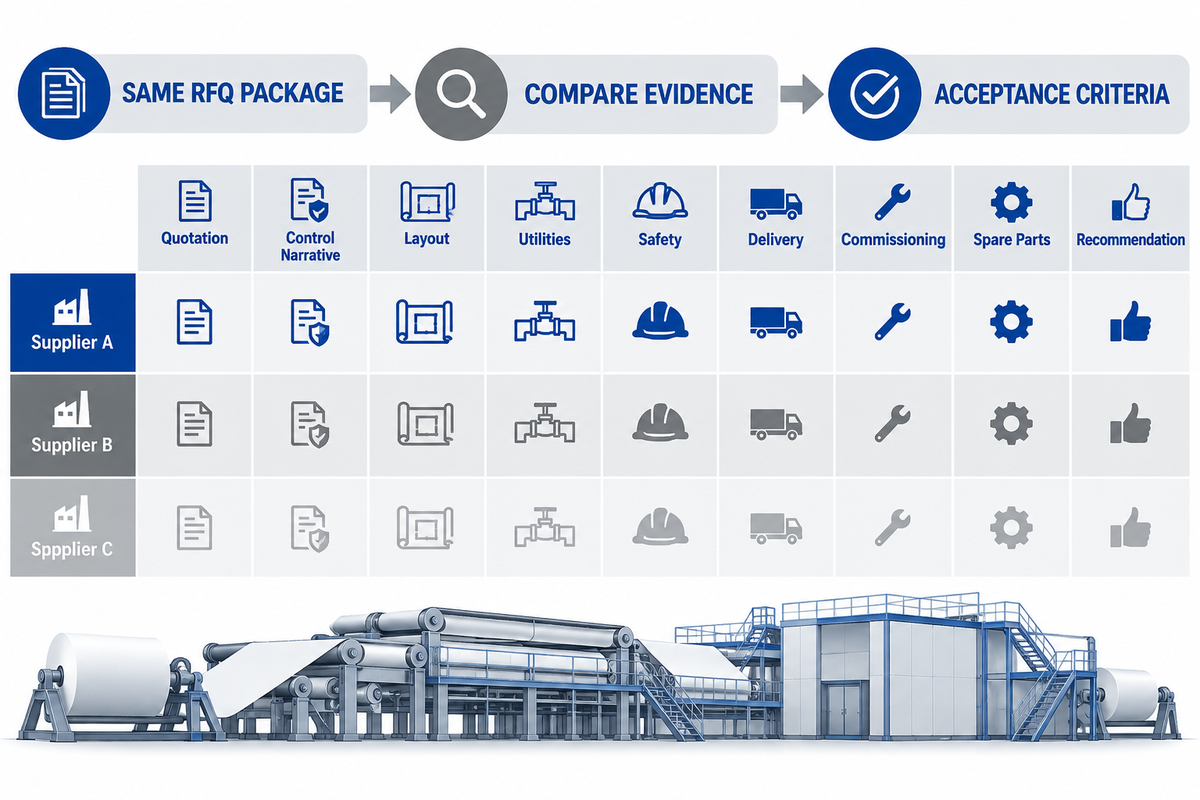
Supplier comparison matrix: Use the same evidence trail to score each quotation for comparability.
| Comparison category | Supplier evidence | Buyer decision |
|---|---|---|
| Paper grade | Trial records | Accept / clarify |
| Roll width | Dimensional report | Accept / clarify |
| Roll diameter | Drawing and test roll | Accept / clarify |
| Core handling | Cycle observation | Accept / clarify |
| Tension control | Control narrative | Accept / clarify |
| Knife system | Grade trial | Accept / clarify |
| Safety scope | Guarding file | Accept / clarify |
| Service scope | Commissioning plan | Accept / clarify |
| Acceptance test | Signed protocol | Accept / clarify |
Check automation, safety, layout and service support
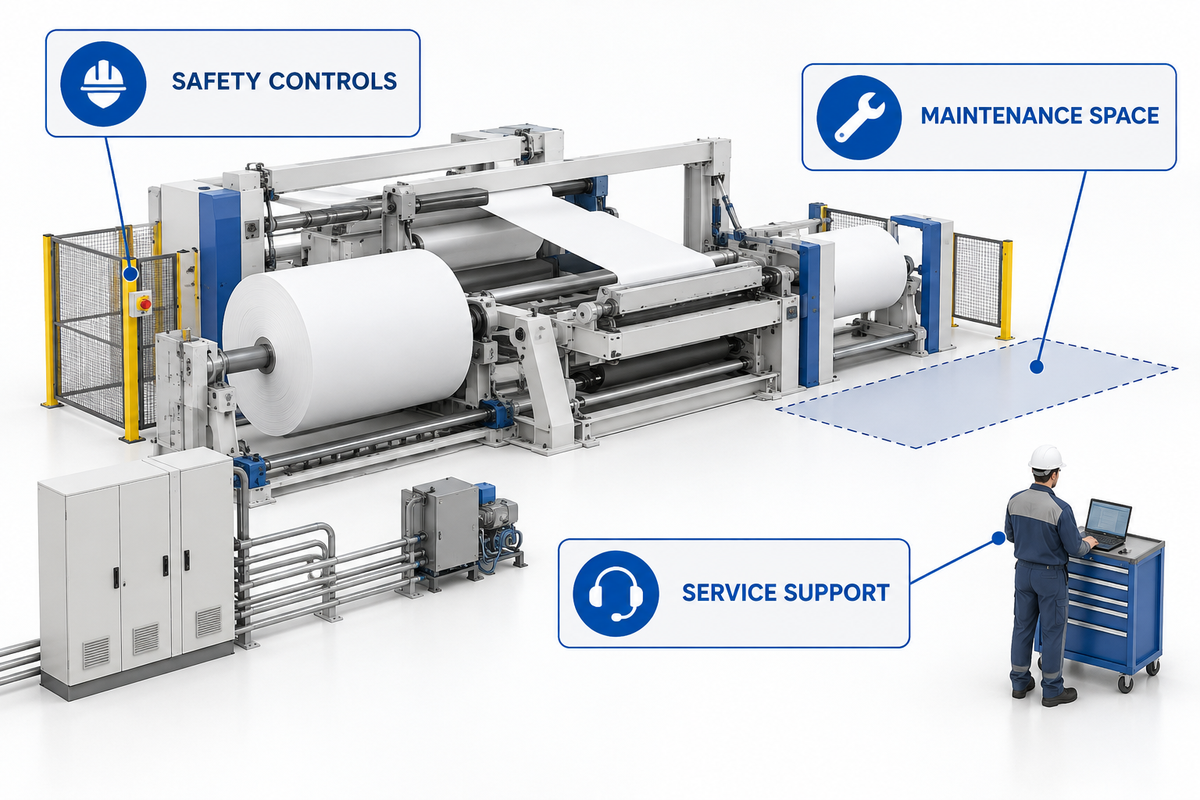
Automation should eliminate variation that’s significant to your process. Automation should eliminate variation that’s significant to your process. Automation should eliminate variation that’s significant to your process. OSHA paper and pulp machine-guarding standard. PPSA machine-safety guidance. Verify which settings are recipe based, which measurements are recorded, and which alarms stop the machine. Be aware of the control system brand, remote support method, spare parts, and life-cycle support plan for drives, sensors and operator panels.
Any controls related to safety need to be in the technical specification. You need information on the safe access and safe work points, emergency stop coverage, equipment for nip-point controls, risk assessment, and information for your site. Paper rolls store significant energy; guards and controls need to be provided for the actual size and weight of the rolls.
The machine needs to be designed for the largest roll to be processed, not the empty machine. Leave sufficient space for threading, knife changes, maintenance and removal of the rolls. The supplier needs to show utilities and interference with the foundation, compressed air, and electrical on the mechanical layout.
Service support is part of the machine. Clarify installation scope, commissioning responsibilities, operator training, response times, recommended spares, process for drawing revisions and man-hours. Henan Zejiang Paper Machinery considers its scope to be paper machines, spare parts, rebuilds, in-house machining and installation support. Consider these capabilities as company-attributed and ask for the project-specific deliverables in your quotation.
Compare suppliers with a quotation and acceptance checklist
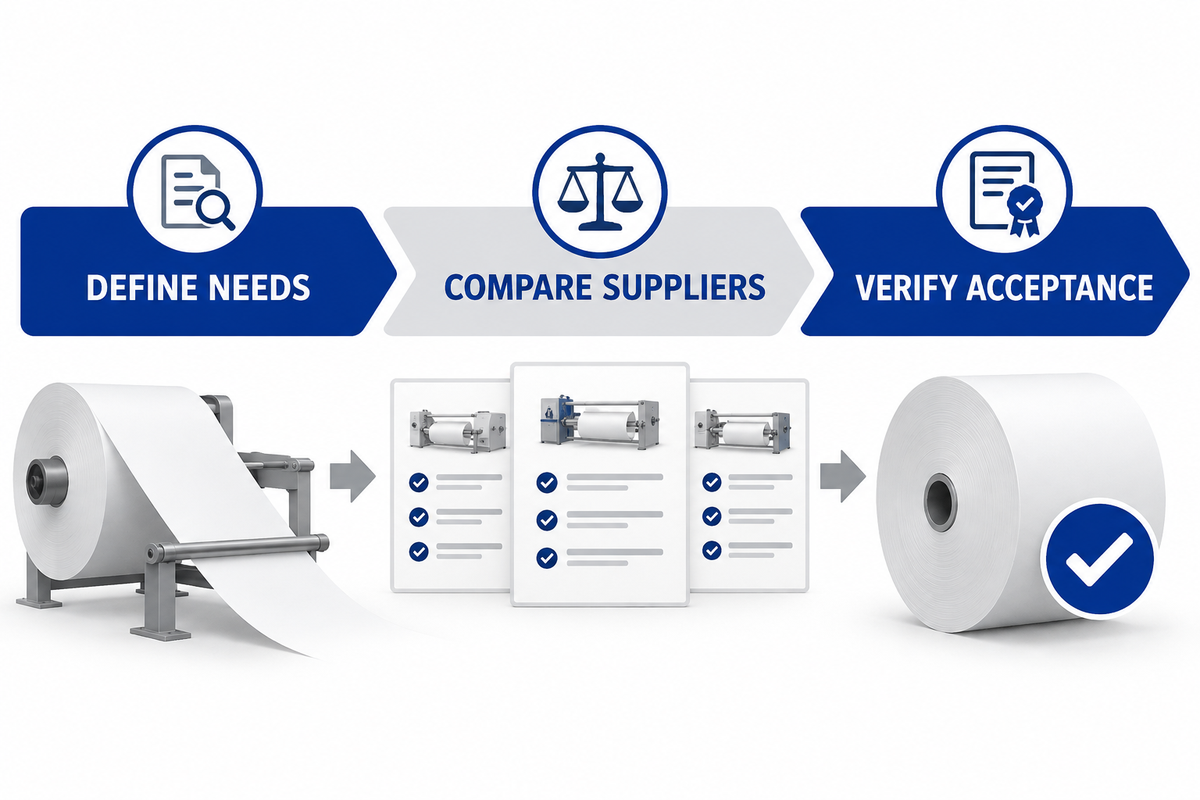
Use the same RFQ package for every supplier. Compare paper and roll envelopes, control narrative, layout, utility list, safety documents, delivery schedule, commissioning plan, spare parts, recommendation and acceptance criteria. Separate included and optional scope to distinguish between a low first price and missing equipment.
Before you sign, ask one question:
- What paper grades and roll sizes were used for the reference trial?
- Which values are guaranteed, and under what test conditions?
- How are tension, nip pressure and roll quality measured?
- What happens to sensors, drives, and knife systems when they reach end of life?
- Who performs installation, training, and documentation and conducts the first production run?
For Zejiang’s product-level offerings of the equipment path, see Paper rewinder and Pope reel solutions.
FAQ
What is the difference between a Pope reel and a paper rewinder?
A Pope reel takes the paper machine web and forms a full width parent roll. A paper rewinder or slitter rewinder converts an existing parent roll to finished, narrower rolls.
How important is tension control?
It plays an essential role in roll quality, but the return on investment depends on the paper grade, roll diameter and geometry. The supplier should be able to show the control range and measurement of roll quality during acceptance.
What should I send with a rewinder RFQ?
Send in your paper grades, basis-weight range, web and slit widths, parent and finished roll diameters, cores, roll weights, throughput, expected changeover times, utilities, limitations of your layout, acceptance tests and your opinions on any gaps in the data.
How can I compare roll quality before purchase?
Determine representative grades, sample sizes, measurement methods and pass/fail limits prior to a trial. For comparison, verify hardness profiles, telescoping, wrinkles, edge condition, dust and dimensional accuracy using the same method for each supplier.
Should I buy new, used or rebuild a rewinder?
Weigh the duty, documentation and support risk when deciding on the best route. A used or rebuilt machine may work out to be a practical option if the frame, drives, controls and critical wear parts are inspected against your roll envelope and acceptance plan. Request inspection reports, part replacement lists, and control backups. Specify the commissioning limits and compare the price only after.
Final takeaway
Evaluate your paper rewinding needs, and define an envelope of requirements. Evaluate your paper rewinding needs, and define an envelope of requirements. Zejiang company scope. Compare how each paper rewinding supplier manages and verifies your envelope. State your requirements for paper, parent rolls, finished rolls, controls, narratives and acceptance plans. If the requirements are justified, the equipment choice becomes easier, and so does operation.