Get in touch with Zejiang Paper Machinery Company


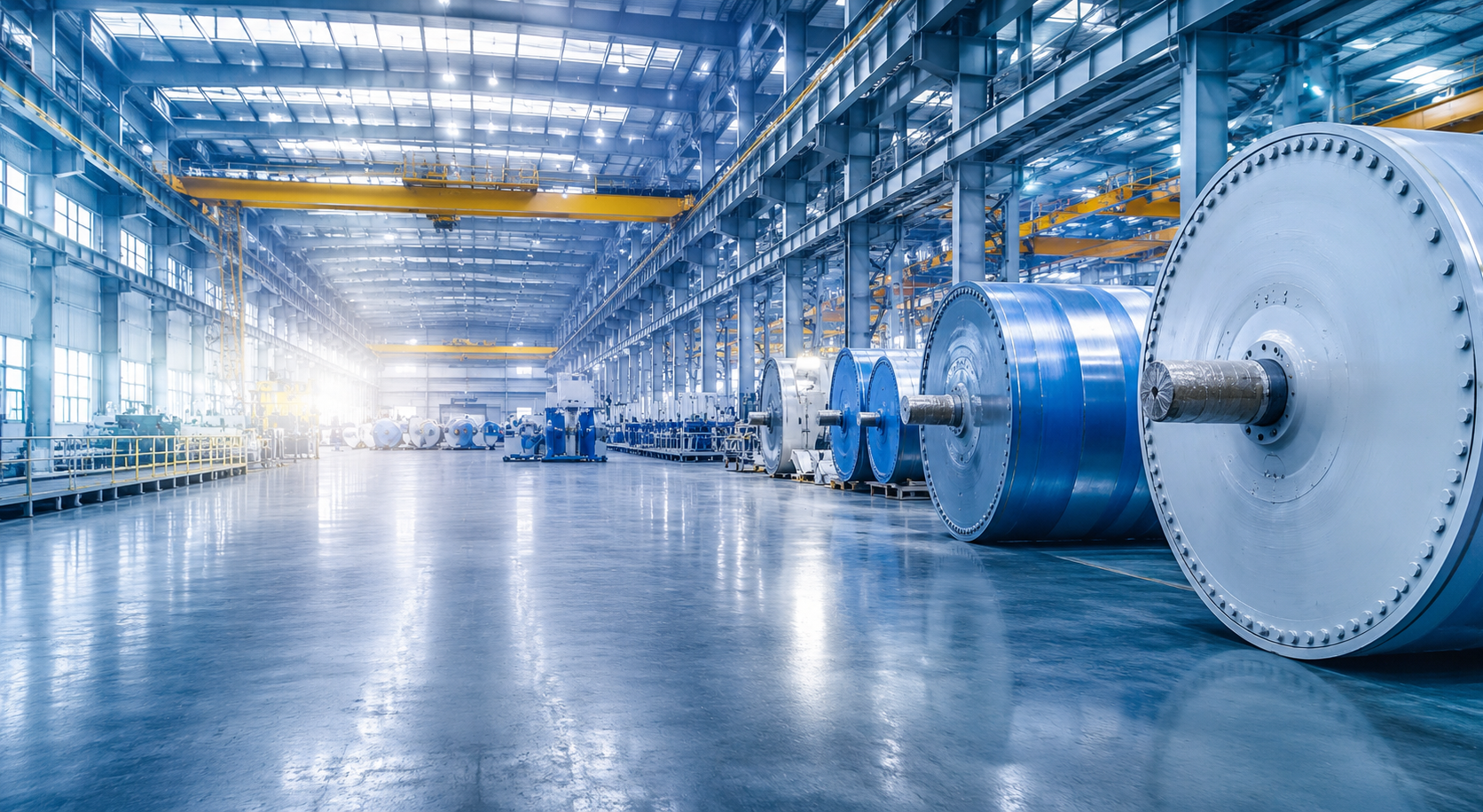
Dryer Cylinders & Yankee Cylinders for Paper Machines — Cast Iron & Steel, OEM Replacement
Designed and built by Henan Zejiang Paper Machinery for paper, board, and tissue mills that need reliable drying capacity — sized to match your existing machine, certified as a pressure vessel, and shipped worldwide.
Request a Quote (RFQ)
Dryer + Yankee
Two cylinder families
HT200 / HT250
Cast iron grades
Carbon Steel
Alternative material
ASME · PED · CUTR
Pressure vessel certified
ISO 1940
Dynamic balancing
OEM / Retrofit
Built to your drawings
The Drying Section Decides Your Machine's Speed — and the Cylinder Decides the Drying Section EN · PROC · MGR
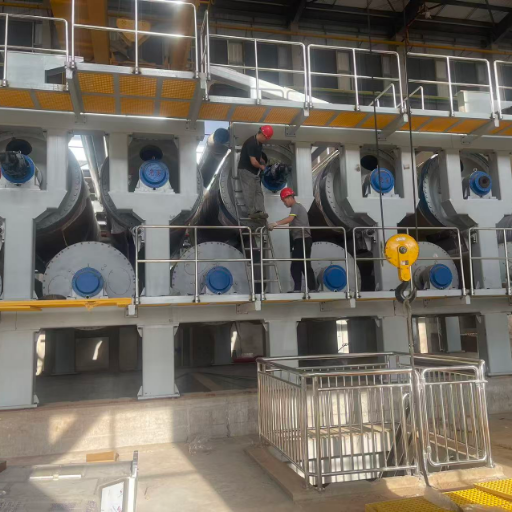
A dryer cylinder is a steam-heated, rotating pressure vessel that carries the wet sheet on its outer shell and evaporates water through the shell wall; a Yankee cylinder is a single, much larger version of the same idea that also creps and glazes tissue. Most paper machines run 30 to 60 of these cans in series, and on a tissue machine the Yankee alone can supply 50-60% of the total drying effect, with the hood covering the rest. That concentration is exactly why the cylinder is where drying problems - and drying gains - live.
Here is the trap most maintenance teams hit. Because drying is usually the speed-limiting section of a paper machine, the instinct is to add steam pressure. Yet heat flow through the shell depends on shell thickness, material conductivity and how cleanly condensate is removed - not on steam pressure alone. Published Valmet data shows a 10% increase in shell thickness lowers final dryness by about 1.5% and cuts heat flow by roughly 4%, which on a drying-limited machine means a speed reduction and lost tonnes. A worn, out-of-round, or poorly drained cylinder quietly caps your production long before anyone blames the dryer.
This is the problem we build against. Whether you need one replacement can for the drying section or a complete Yankee for a new tissue line, the goal is the same: a cylinder with the right wall thickness, a clean condensate path, a balanced and true-running shell, and a pressure-vessel pedigree you can hand to an inspector. From here, the page walks through our range, the cast-iron-versus-steel decision, the Yankee specifics, our compliance stack, and how we match a replacement to your machine.
System Insight
Counter-intuitive, worth knowing: turbulence bars (spoiler bars) are often sold as an automatic heat-transfer upgrade. In practice they only help at low and medium speeds — at high machine speed the condensate film stops oscillating and their effect becomes negligible, and combined with an outrigger siphon system they can even hurt uniformity. Which condensate strategy fits depends on your speed — that is a conversation, not a catalogue add-on.
Our Dryer Cylinder & Yankee Cylinder Range — Cast Iron (HT200 / HT250) & Carbon Steel EN · PROC
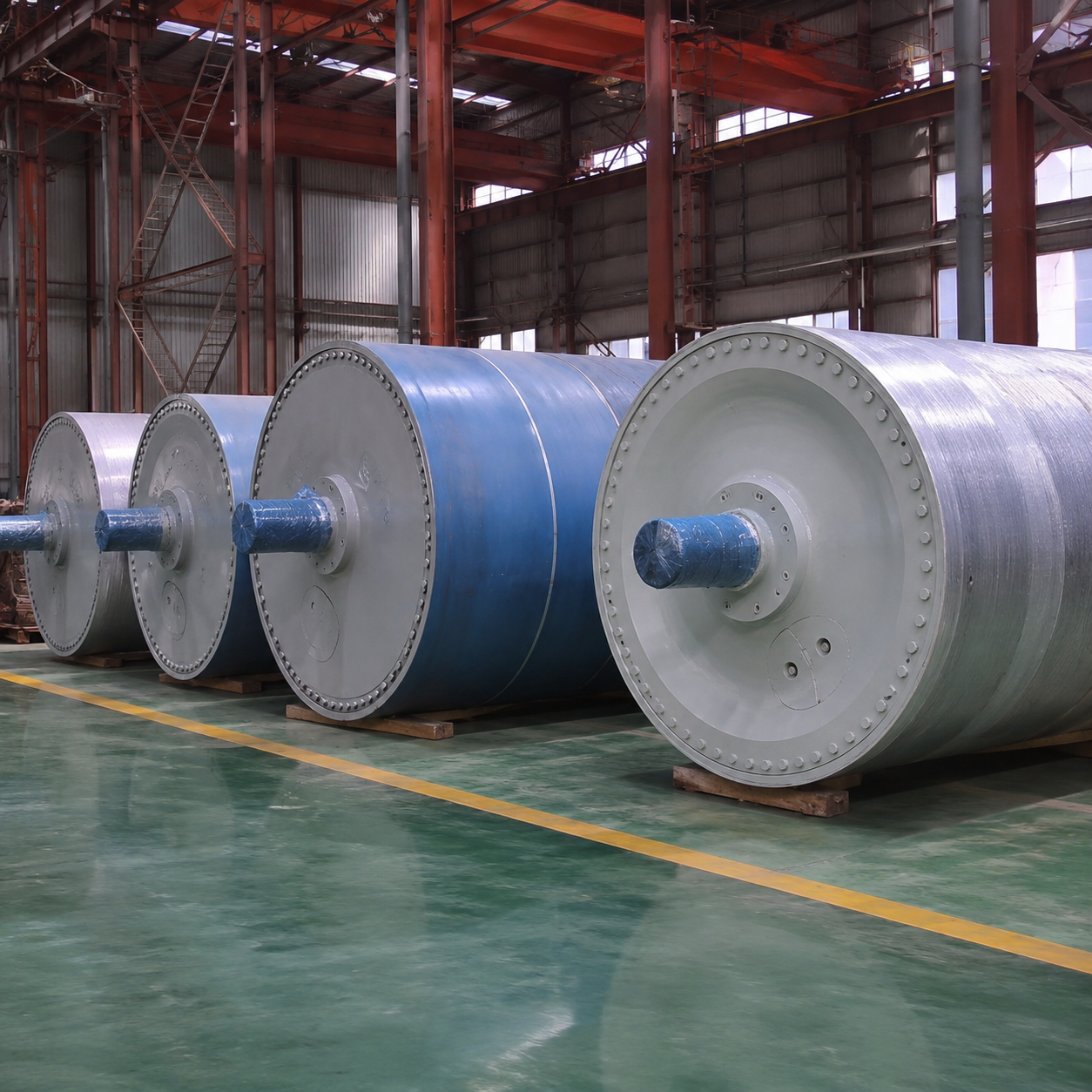
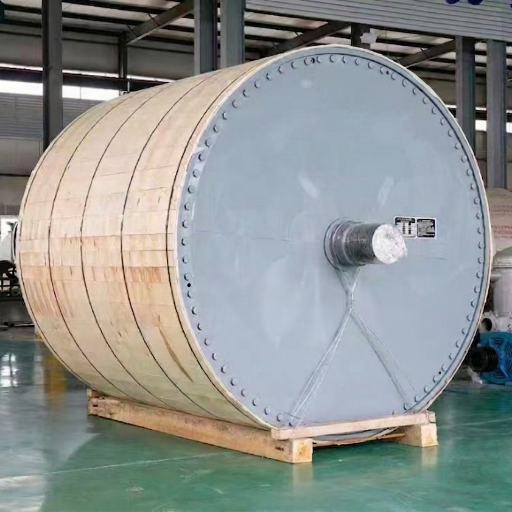
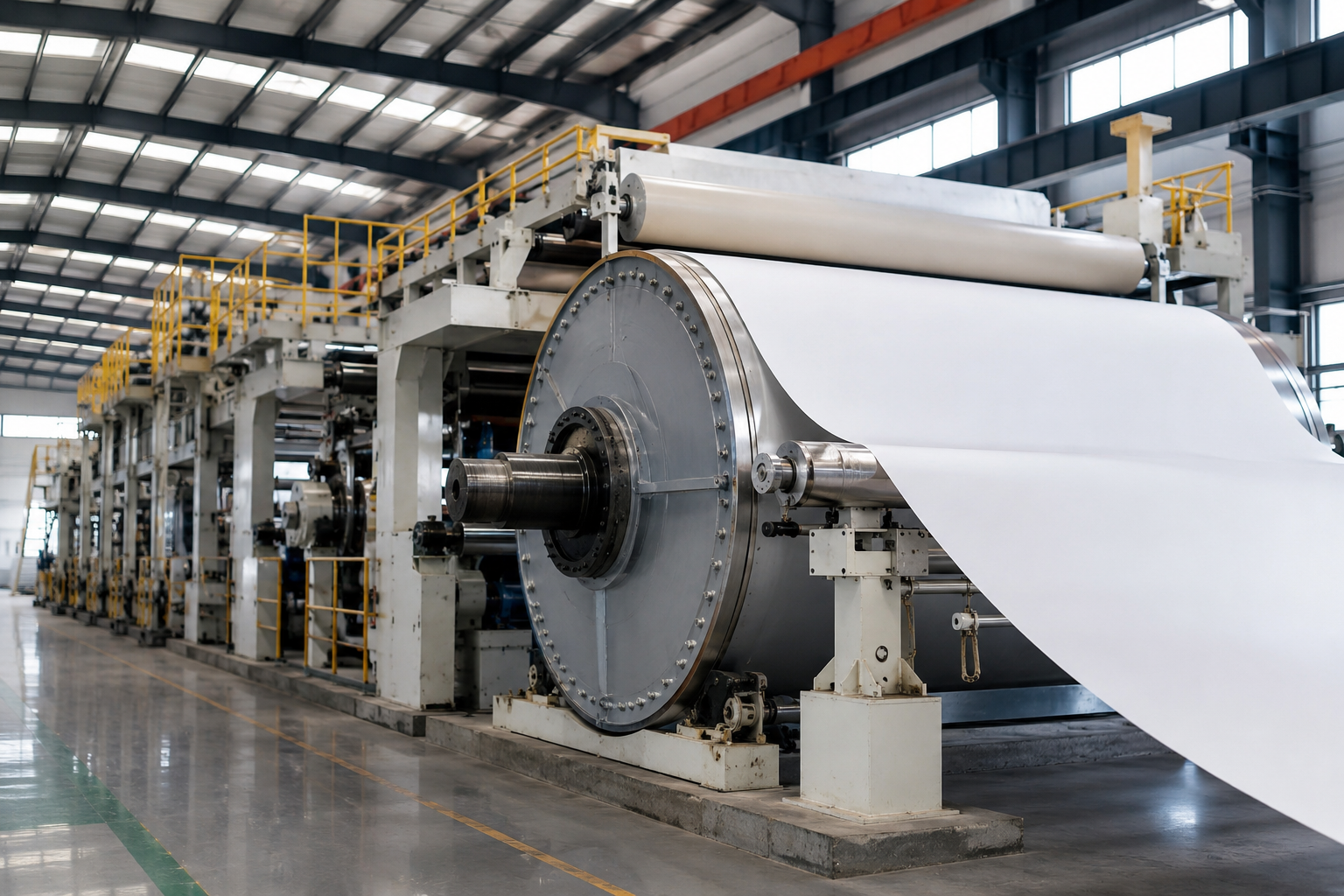
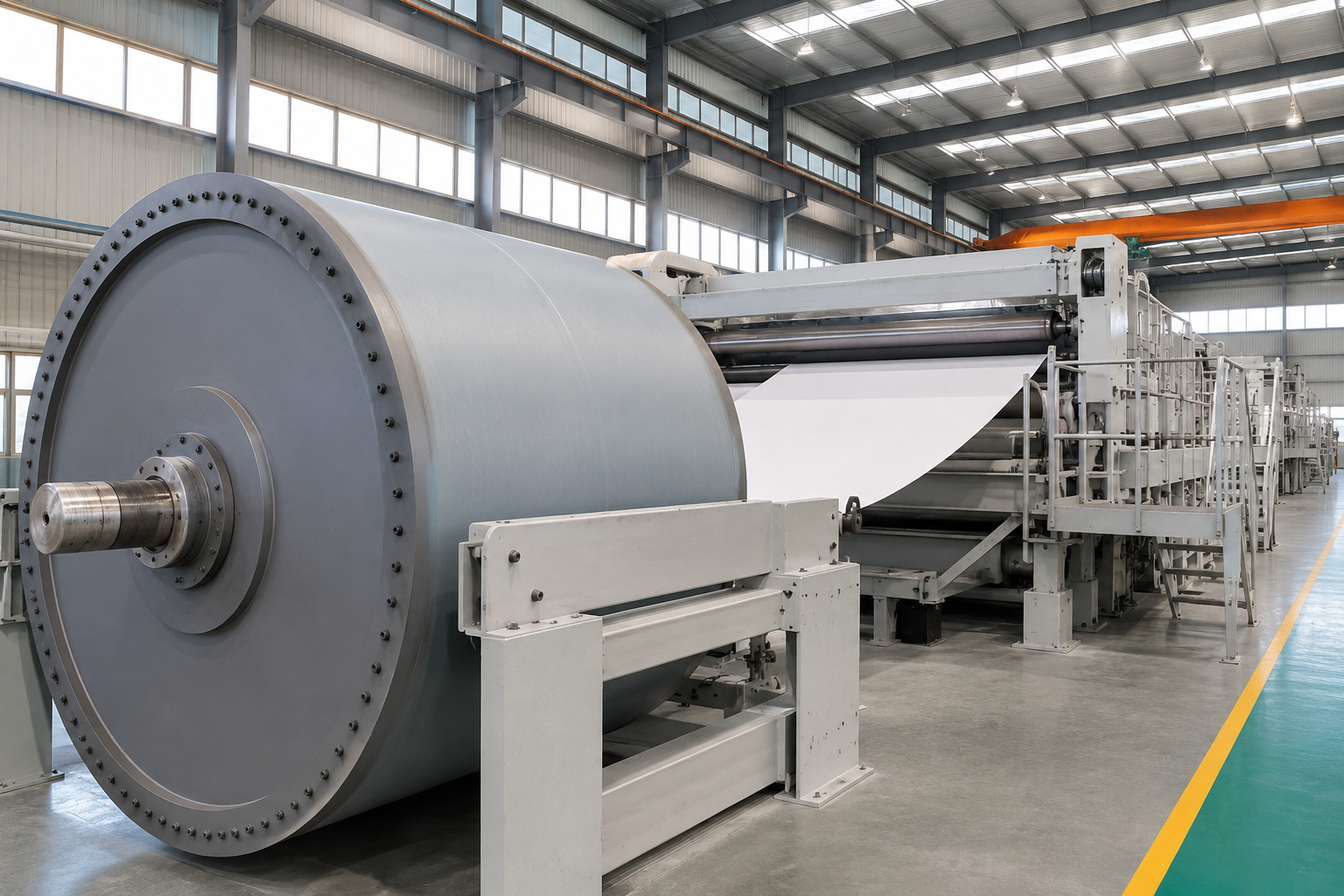
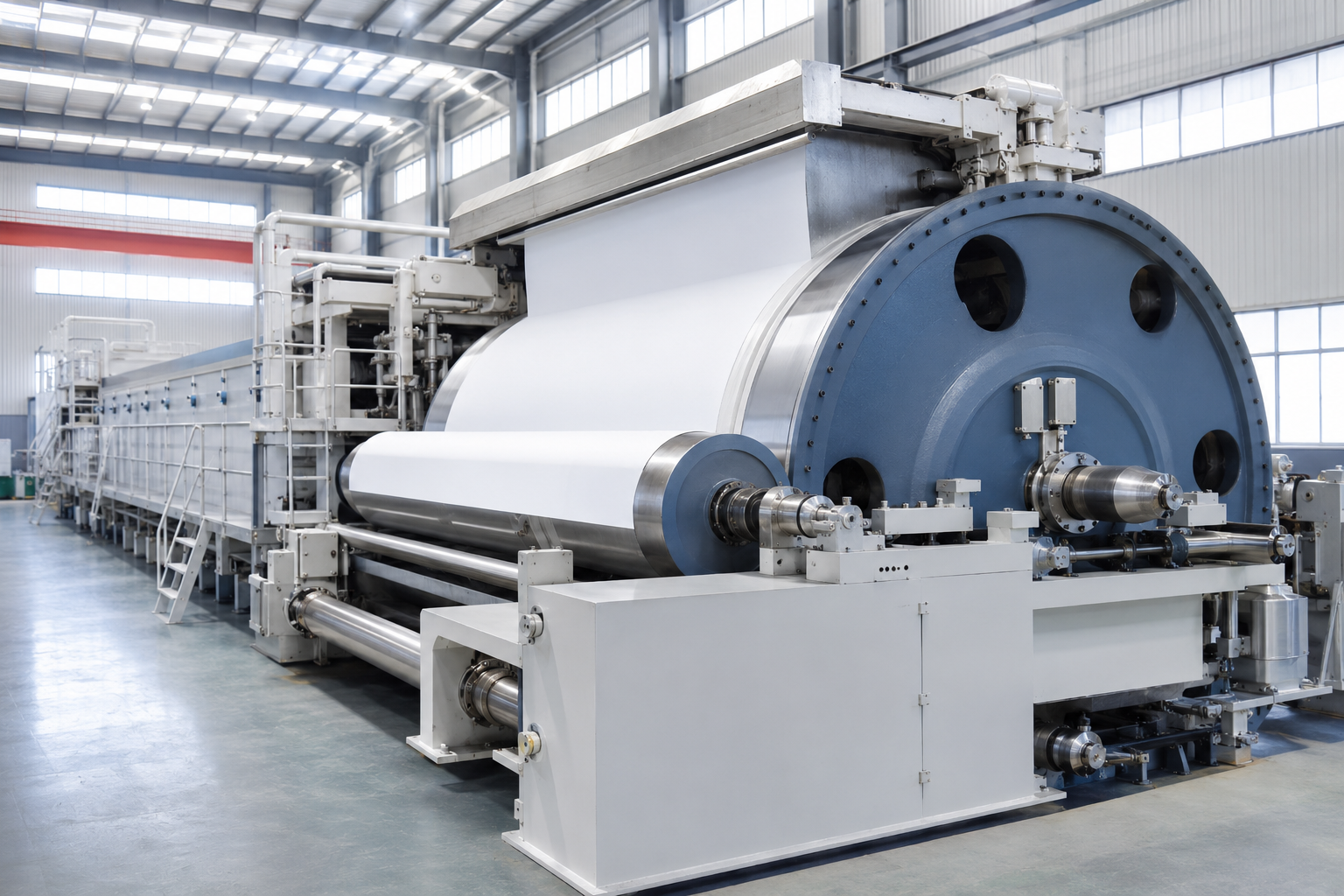
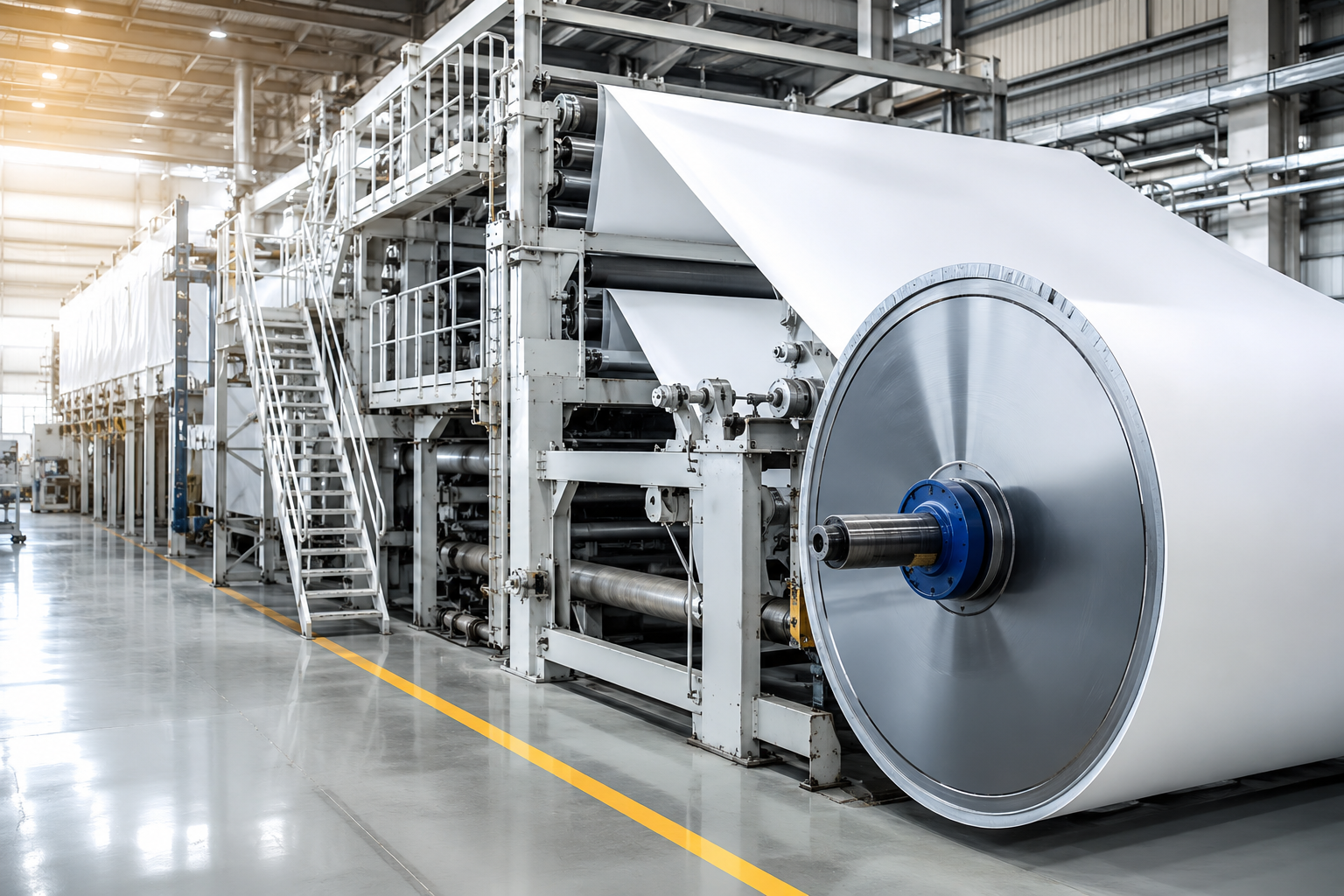
We produce two similar, but different, families of products. Standard dryer cylinders are the cans that occupy the drying section of fourdrinier, kraft, corrugated, testliner, duplex board, and cultural paper machines. Yankee cylinders are the single, large drum at the heart of tissue and machine-glazed (MG) lines. We build them both as Class I pressure vessels; in a working paper mill, your two-thirds of all the pressure vessels on the plant floor are dryer cylinders, so they’re the things the inspector examines first.
Standard dryer cylinders — cast iron and carbon steel
Cast-iron dryer cylinders are made by pouring our standard HT200, HT250, or HT250-300 gray irons-all to a HB 190-240 shell hardness-then machining them to a consistent inner and outer wall thickness, ensuring uniform heat transfer and balance across the face. Carbon-steel dryer cylinders start from rolled-and-welded plate, which has higher ductility and permits a thinner shell to improve heat transfer for a given pressure rating. Here's our standard, configurable envelope, although every cylinder is built to your machine’s face width and journals.
| Type | Shell Ø (mm) | Design pressure | Material | Shell hardness / thickness | Max face width (mm) | Working speed (m/min) |
|---|---|---|---|---|---|---|
| Cast-iron dryer cylinder | 1500 – 3680 | 0.3 – 0.8 MPa (3 – 8 bar) | HT200 / HT250 / HT250-300 grey iron | HB 190–240 / 23–65 mm wall | up to 5000 | 200 – 1200 |
| Carbon-steel dryer cylinder | 1000 – 2500 | up to 1.0 – 1.4 MPa (10 – 14 bar) | Boiler-quality carbon steel plate | ~30% thinner root wall vs cast iron | up to 10000+ | 200 – 2000 |
| Yankee cylinder (tissue / MG) | 2500 – 6700 (up to 22 ft) | per grade & speed | Alloyed cast iron or metalized steel | ribbed shell, ground < 0.05 mm run-out | up to 7400 | up to 2000 |
The numbers in our envelope reflect typical industry parameters and our customizable builds. Limits on diameter/pressure for steel are according to pressure-vessel codes for the selected plate and material grade. The final spec is based on your drawings.
What sits on every cylinder we ship
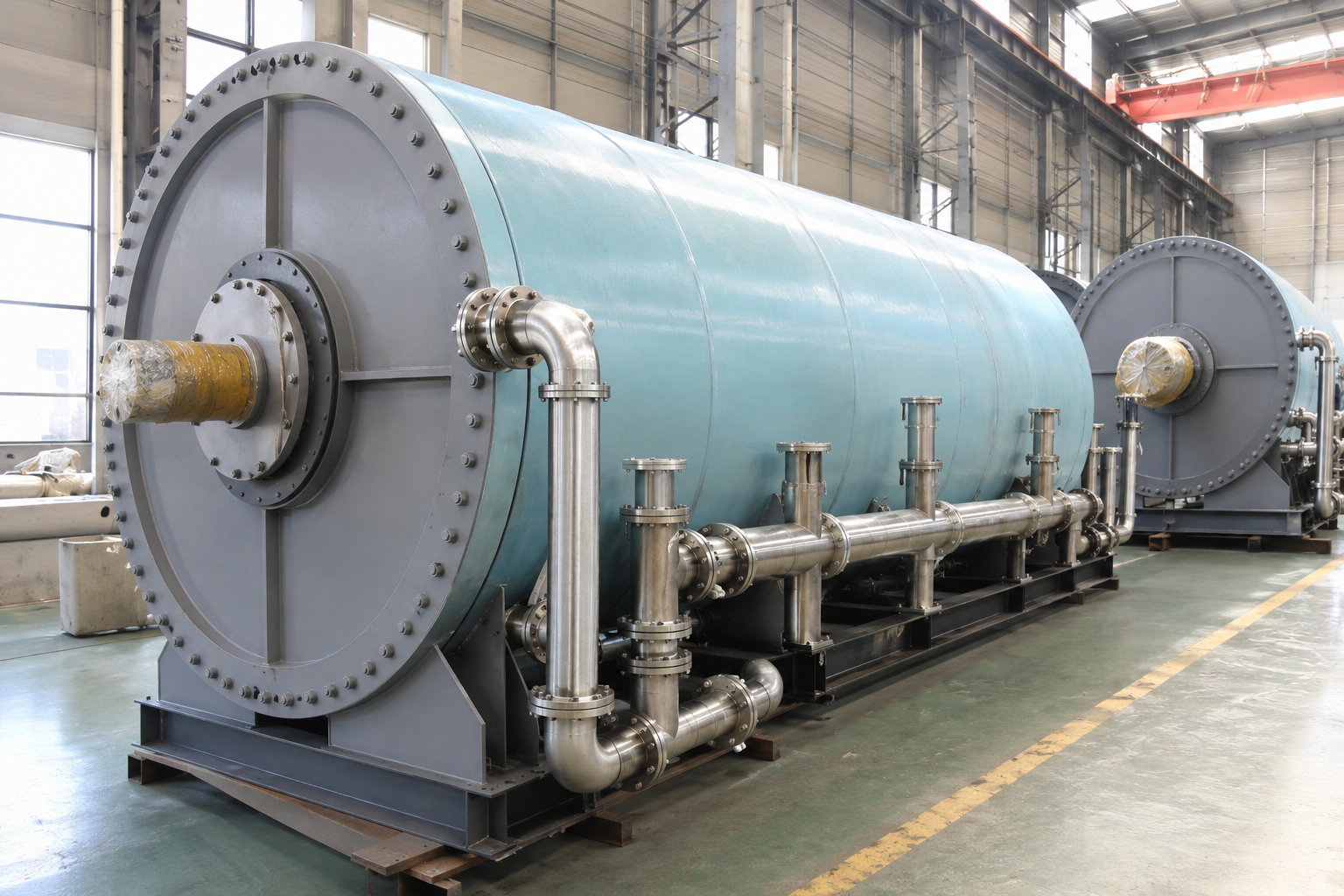
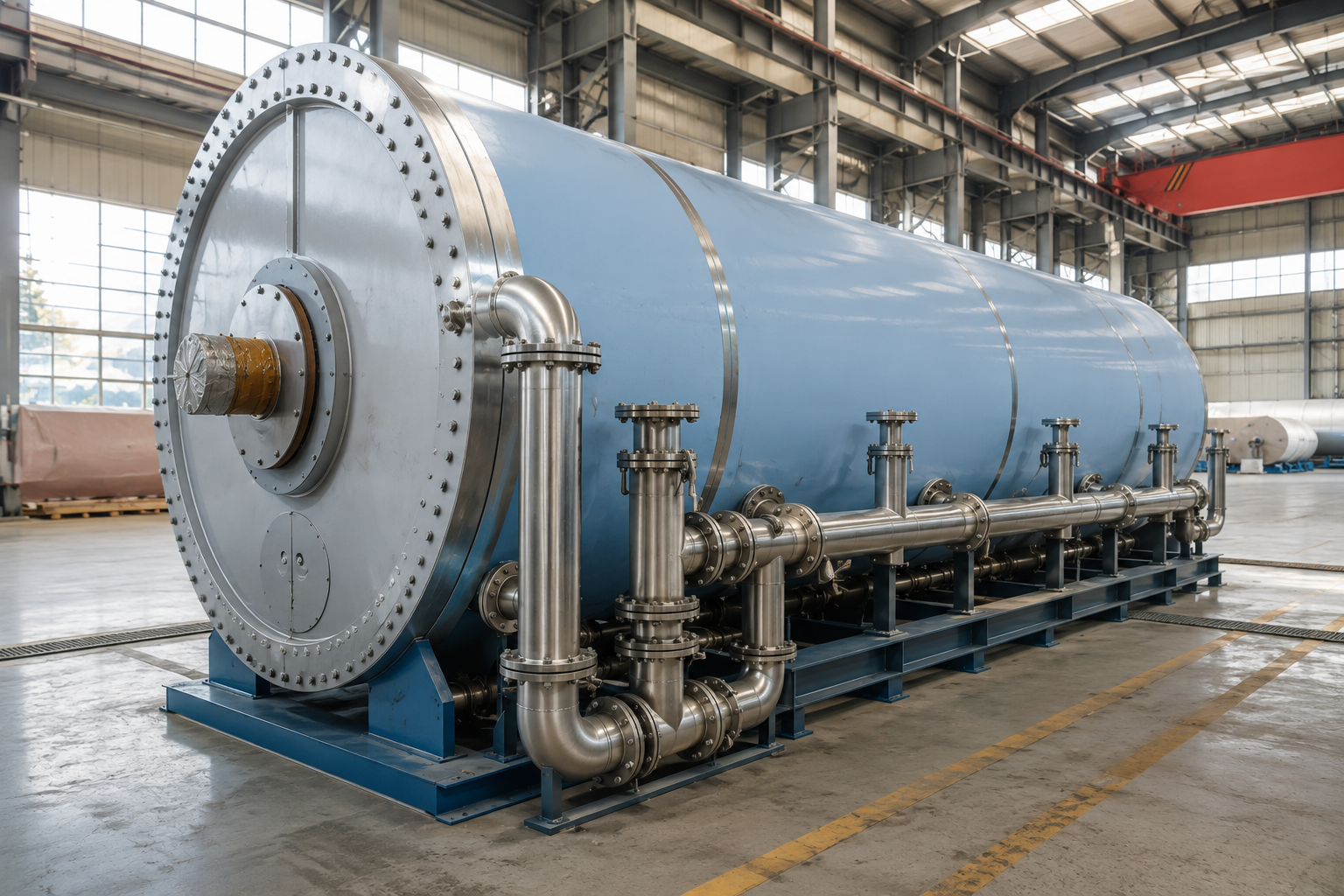
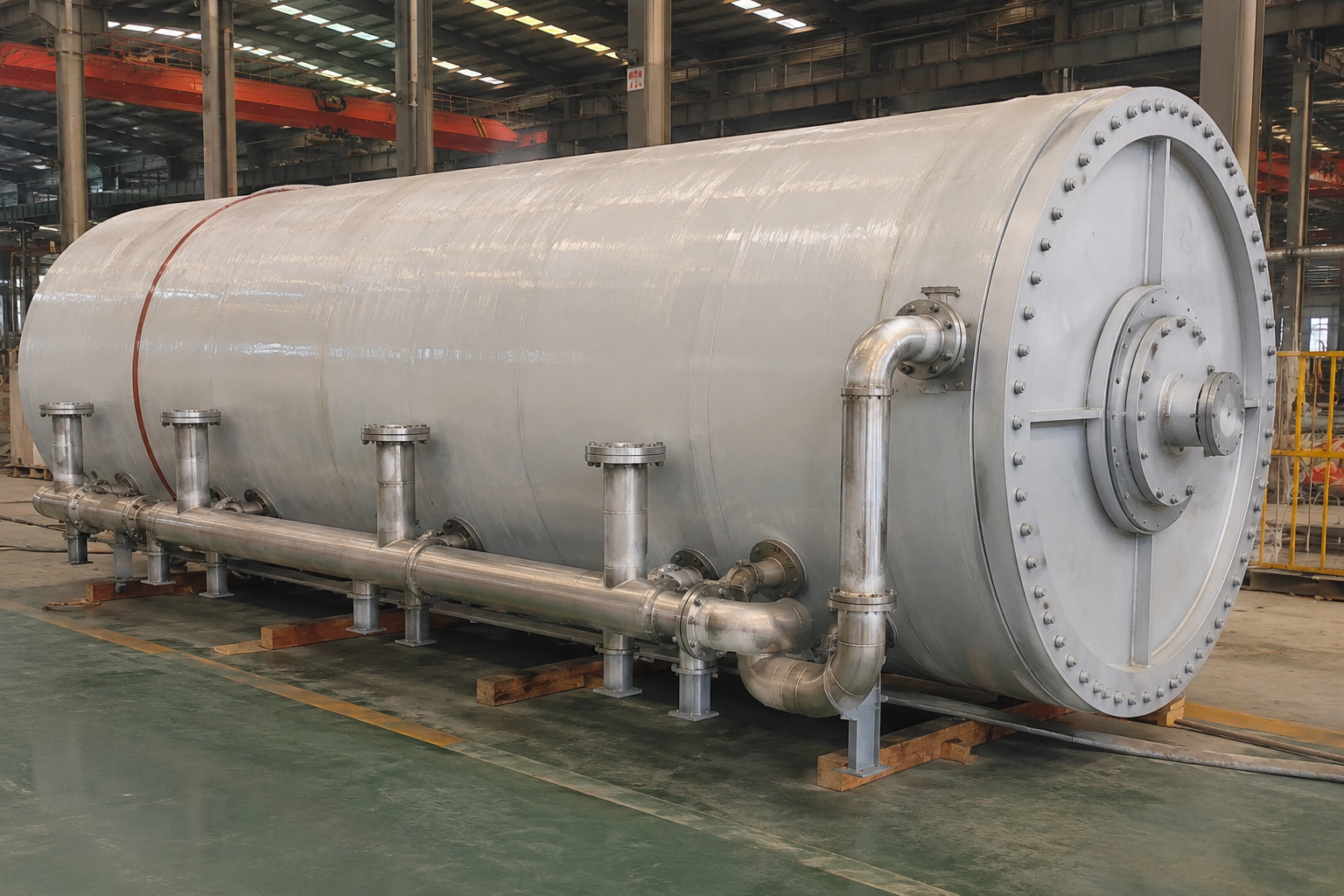
Cast Iron vs Carbon Steel Drying Cylinders — Which Is Right for Your Mill? EN · MGR · PROC
The costliest mistake in this category is choosing the material by name rather than by duty. Just because “European steel is better” is not always the truth: for high creping-doctor loading in hybrid and TAD tissue applications, we still specify cast iron because of the greater hardness and inherent structure for the papermaking surface. You’ll know what material works best based on your grade, speed, steam system and budget, not by name. This is a guide to making a data-driven choice, not an emotional one.
Consider the underlying physics: the thermal conductivity for cast iron and carbon steel are remarkably close. But steel’s key mechanical characteristic, the modulus of elasticity, is over 2.1 times greater than cast iron, which means pressure-vessel codes allow for a thinner steel shell to accommodate a given pressure. The thinner the shell, the less thermal resistance and the greater the heat flow. That is what leads to improved efficiency numbers.
MATERIAL COMPARISON
| Decision factor | Cast iron (HT200 / HT250) | Carbon steel |
|---|---|---|
| Shell wall at equal pressure | Baseline (23–65 mm by Ø) | ~30% thinner root wall |
| Heat transfer / drying capacity | Baseline | Thinner shell → higher heat flow; on Yankees ~15–20% higher evaporation → ~8–10% better machine performance |
| Energy | Baseline | Up to ~20% drying-energy saving possible on a steel Yankee line |
| Safety failure mode | Brittle — can rupture if over-pressurised or overloaded | Ductile — higher margin against thermal shock & overload |
| Surface for creping | Hard alloyed surface, good as-cast; preferred for high doctor loads (TAD/hybrid) | Too soft as-is — must be metalized (thermal spray coating) |
| Weight | Baseline | ~25–30% lighter |
| Typical fit | Standard & medium-speed machines, retrofit of existing cast-iron sections, tight budgets, high-doctor-load tissue | New high-speed lines, energy-cost-driven mills, safety-critical Yankees |
FLOW CHART / DECISION
Look at the table as a flow chart. Are you replacing a few cans in a board or kraft line that is already made of cast iron? Run at medium speeds? Stay with cast iron (HT250 or HT250-300) and you will not unbalance your section and will stick to your budget. Starting a new tissue machine that is to operate at top efficiency where every increment of evaporation directly contributes to tons and steam cost? Then the metallic-surfaced steel Yankee usually shows payback through its increased capacity and reduced steam consumption. Most paper mills that we supply end up with a mixture of cast iron and carbon steel cans. That is the advantage of buying from a manufacturer that both casts iron and welds steel.
ENGINEERING PHILOSOPHY
We don’t lead with what we want to sell. We’ll ask for the grade, machine speed and steam pressure first-because on a drying-limited machine, the wrong shell thickness costs more quietly every day than the cylinder did once.
Yankee Cylinders for Tissue & MG Paper — Creping, Coating & Shell Design EN · MGR
OEM Replacement & Retrofit — Matched to Your Existing Machine PROC · EN · MGR
Buying an in-house replacement cylinder - the biggest concern isn’t the price; it’s the thought that it comes and doesn’t fit your dryer and transforms your planned cylinder change out into a shutdown you never intended to take. That cylinder you’ve been having fabricated must conform to your journal diameter and bearing seats, the arrangement of your steam joint and siphon, your face width, and the drive and felt geometry of the machine section you intend to drop it into. One of those measurements even off by one and the can’s nothing more than expensive scrap metal on its way back.
And so we engineer for your machine, not a general part number. Our process for replacement and retrofit has been carefully designed to reduce the risk involved.
REPLACEMENT PROCESS
Dryer & Yankee Cylinder Engineering Tools
FAQ — Dryer Cylinders & Yankee Cylinders
What does a dryer cylinder do?
It removes moisture from the paper web pressed against its heated cylinder surface. Saturated steam condenses on the inner surface, releases its latent heat through the shell wall, and drives the paper drying; condensate is drawn off by a siphon so it cannot form a heat-blocking water ring at speed. Each can does only part of the heating, which is why a paper machine dryer section chains 30 to 60 of them before the reel — together the workhorse of paper making.
What is a Yankee cylinder, and how is it different from a normal dryer cylinder?
A Yankee is a single, very large drying cylinder — up to about 6.7 m (22 ft) in diameter — used on tissue and machine-glazed lines. Besides drying, it presses, carries and creps the sheet against a doctor blade, which ordinary multi-cylinder dryer cans do not do. Its through-going journal and ribbed shell are its defining features.
Cast iron or steel — which should I order?
Match your duty. Cast iron (HT250 / HT250-300) suits standard and mid-speed machines, retrofits of existing cast-iron sections, tight budgets, and high creping-doctor-load tissue. Carbon or metalized steel suits new high-speed lines and energy- or safety-driven projects, thanks to a ~30% thinner shell and higher evaporation. Send us your grade, speed and steam pressure and we will recommend the material.
Can you make a cylinder to replace one on our existing machine?
Yes — that is most of what we do. Send a drawing, the old cylinder's dimensions, or photos plus the machine make and vintage, and we build to match your journal, steam joint, siphon and face width so it drops into your section.
Are your dryer cylinders certified pressure vessels?
Yes. They are built and documented as Class I pressure vessels to ASME, PED 2014/68/EU or CUTR 032 as your market requires, ultrasonically inspected on shell and welds, hydrostatically tested, stress-relieved and dynamically balanced to ISO 1940 class G2.5.
What are common problems with dryer cylinders?
The usual culprits are poor condensate removal (water ring blocking heat transfer at high speed), shell-thickness variation causing uneven drying and doctor chatter, worn surfaces, and out-of-round running. Correct siphon and condensate design, a true-ground balanced shell, and — on steel — controlled welding and metallization address them at the source.
![Refiner Plates & Screen Baskets [Complete Guide]](https://zjpapermachine.com/wp-content/uploads/2026/07/refiner-plates-screen-baskets-guide-featured-150x150.png)
![Doctor Blade: Types, Materials & How It Works [Guide]](https://zjpapermachine.com/wp-content/uploads/2026/07/doctor-blade-guide-featured-1-150x150.png)
![Pulping Equipment: How Paper Pulping Works [Guide]](https://zjpapermachine.com/wp-content/uploads/2026/07/pulping-equipment-guide-featured-150x150.png)