Get in touch with Zejiang Paper Machinery Company

Paper Machine Parts
Paper Machine Parts, Spare & Replacement Parts for All Machine Brands
Our 9 component lines are built to your machine, not to any supplier’s catalog: headboxes, forming fabrics, press and suction rolls, dryer and Yankee cylinders, felts, doctor blades, refiner plates, calender rolls, and reels.
Scope
9 part lines across the wet end, press, dryer, calender and reel
Routes
New-manufactured, refurbished, and replacement parts
Fit
Manufactured to your machine’s dimensions — not brand-locked
Grades
Kraft, corrugated, testliner, duplex board, tissue, cultural and specialty
Reach
Asia, the Middle East, Africa, South America and beyond
In-House
Design, manufacture, refurbishment, installation, technical support
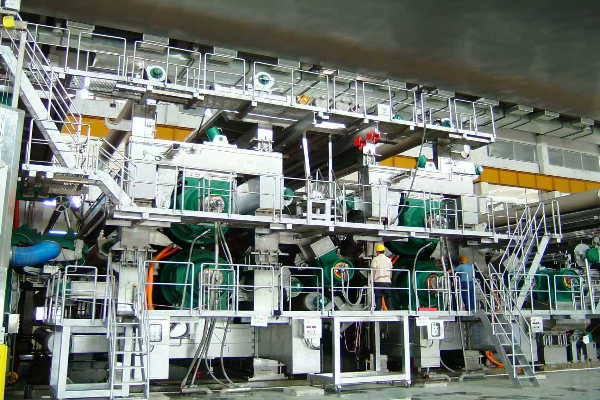
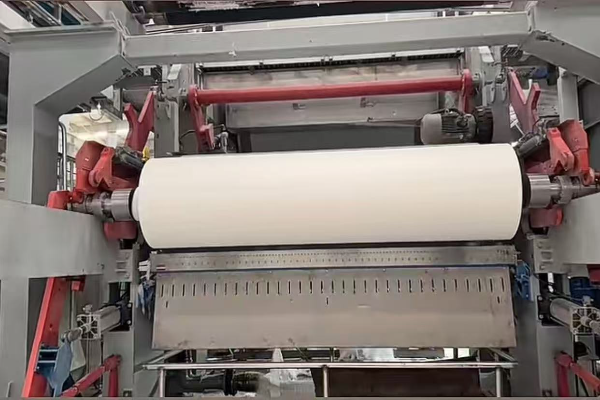
Engineered for Precision & Performance
Paper machine parts are the vital, consumable components that drive the entire paper-making process—from forming and dewatering to pressing, drying, finishing, and winding. Whether operating a Fourdrinier, cylinder mould, or twin-wire former, the core demands remain the same: strict tolerances, reliable running, and clean removal.
Because these components wear out over time, availability and precise fit matter far more than the original brand badge on the machine frame. A replacement must flawlessly match your machine’s exact face width, bearing centers, diameter, drilling specs, and cover hardness. There is zero margin for error.
This is why we engineer and machine every component to your specific measurements and technical drawings, rather than relying on generic catalogs. Sending us a quick photo of your machine’s nameplate is the fastest way to guarantee a perfect fit.
Unplanned Downtime Starts With the Part You Don’t Have
Paper machine parts fail on their own schedule. A mill that’s damaged by a component doesn’t typically go down because the component was of the wrong brand. A mill that has suffered damage went down because nobody stocked a needed part. Maintenance people describe the pattern without much ceremony.
“
One writes: “We scramble during downtime because the one part we needed was missing — or buried in a drawer.” Another describes a plant full of equipment “and zero spare parts for repair. It never fails.” From our own industry, a mill technician put it bluntly: “I work in a paper mill, they have a SEVERE run to failure mentality, then when shit goes down” — the machine in that account had been stopped since the previous evening, waiting on a part.
The design is to blame, not the operators.
Paper machines, of course, are a system of interacting wear surfaces on which water, steam, and pressure are constantly acting. Tissue machines reach speeds of up to 2,000 m/min (about 6,560 ft/min). Dryer section steam pressures range up to 160 psig (roughly 11 bar). Uhle boxes pull vacuum on the press felt at normally −60 kPa. There’s nothing that will make any part in any paper machine stop wearing out because a purchase order hasn’t arrived yet.
Our answer is a machine shop that addresses your design, not a catalogue that only addresses our past design.
Henan Zejiang Paper Machinery designs, manufactures, reconditions and installs paper machine parts and complete paper machines. Since we’re an independent manufacturer, and not the manufacturer of just one family of machines, we aren’t asking you “does your machine wear our badge”; we’re asking “can we make this component to these dimensions, in this material, for this paper grade.” That’s a manufacturing question and that’s a manufacturing answer.
Every hour a breakdown keeps a line stopped is production you never recapture, and no control system predicts the wear on a part nobody inventoried. Keeping parts available for the components that actually wear is the cheapest way to minimize downtime — cheaper than the machine performance a mill gives up while it waits, at half capacity, for a shipment.
Unlike a stockist, Zejiang does not need your machine to be a model we already list. In-house engineering and manufacturing give us the liberty to ask the honest question, “What do the dimensions require,” as opposed to “Which badge is on the frame,” which is the stock supplier’s first inquiry. That is the trade-off we ask you to weigh: catalogue speed against a part engineered to the machine you actually run.
Not sure which wear parts on your line have no backup? Ask for a wear-part compatibility check for your machine brand →
Request Check
Equipment Overview
Paper Machine Parts by Section
These nine lines move from the headbox down through the machine to the reel — the path your material takes, and the order in which a maintenance planner organizes it. Each link below will take you to the page detailing all the paper machine components in that category.
Forming section
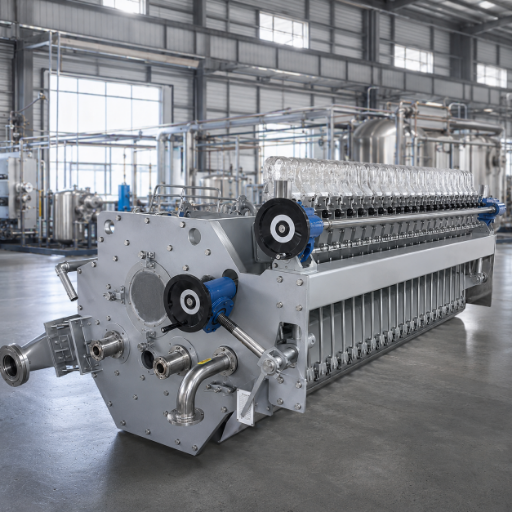
Paper Machine Headbox
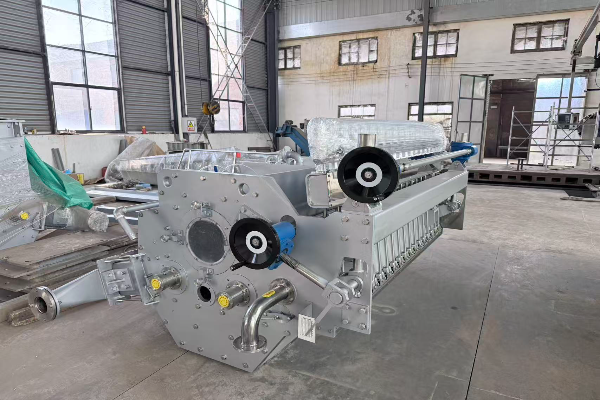
Hydraulic and open-type headbox. The headbox determines cross machine basis weight prior to the input of any other factor and any later adjustment is a reaction to the condition there.
Why it matters:
Most grades run headbox consistency under 0.4%; above about 0.5%, de-flocculation becomes very difficult.
Most grades run headbox consistency under 0.4%; above about 0.5%, de-flocculation becomes very difficult.
Forming section
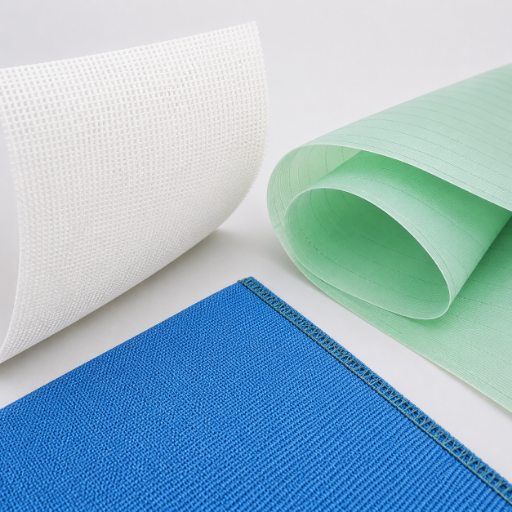
Forming Fabric & Forming Wire
The woven belt on to which the slurry is fed and then drained away as a sheet. Mesh geometry drives drainage rate, fibre support and sheet-side marking.
Why it matters:
The forming section fixes formation and two-sidedness; no press or dryer setting recovers a badly formed sheet.
The forming section fixes formation and two-sidedness; no press or dryer setting recovers a badly formed sheet.
Press section
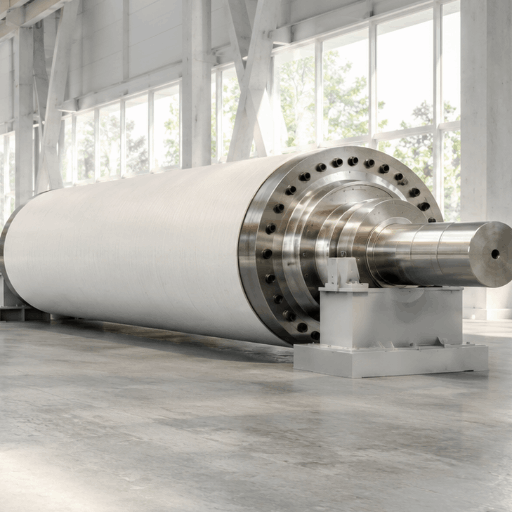
Press, Vacuum & Couch Rolls
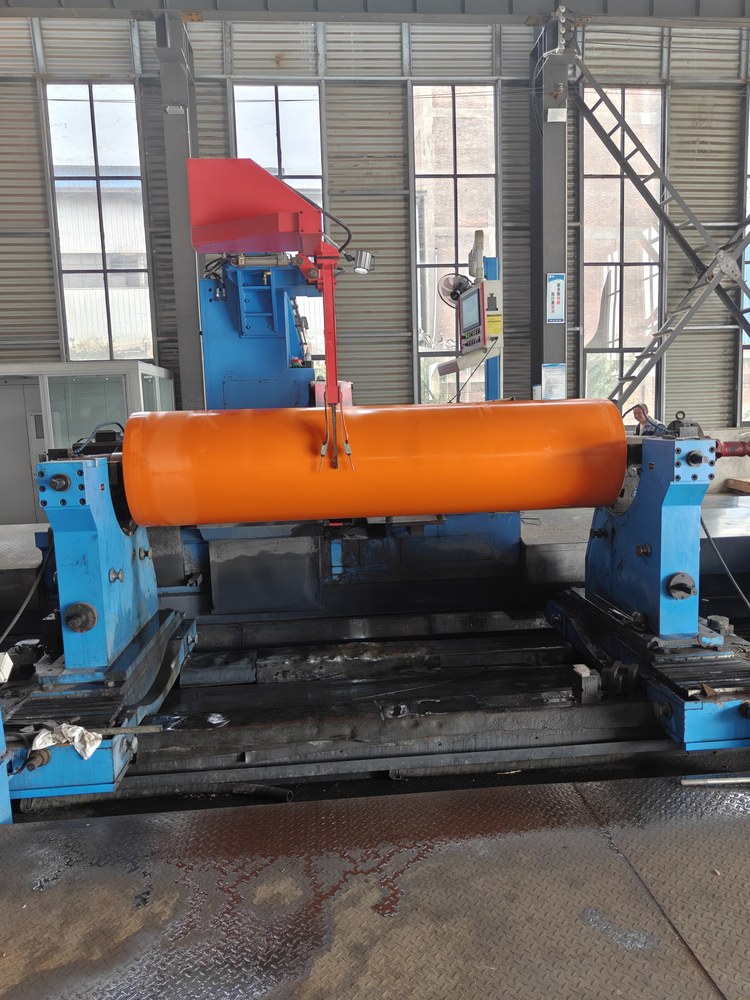
Press rolls, suction rolls and couch rolls, including shell drilling, journals and cover work — plus the suction boxes and plastic dewatering elements.
Why it matters:
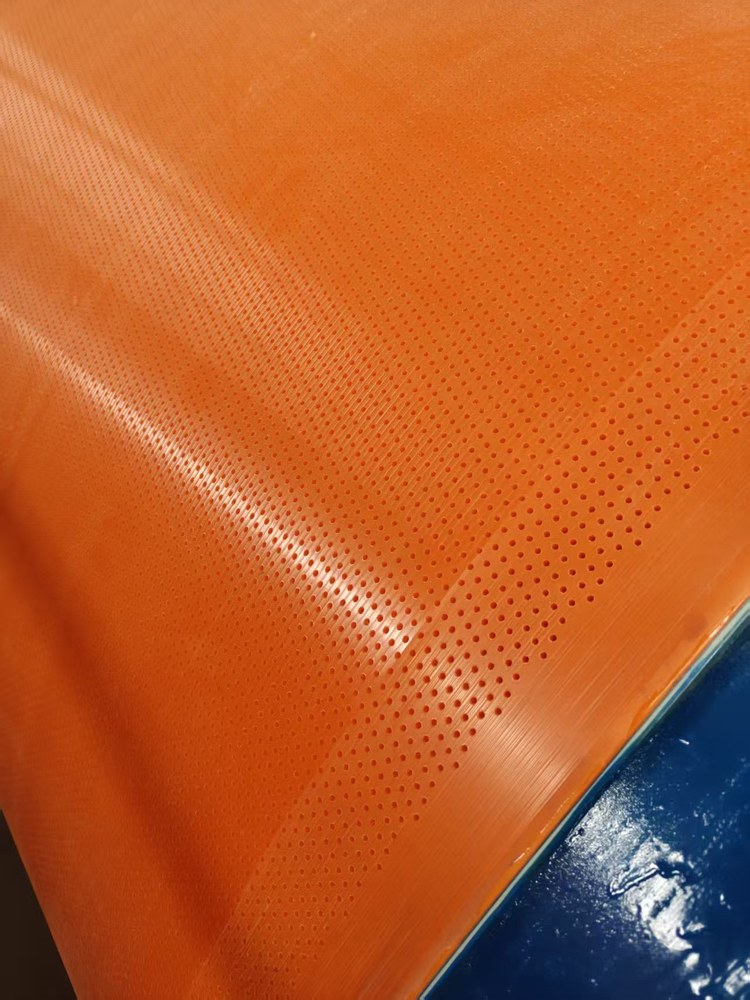
Suction and couch roll shells carry many thousands of precisely spaced holes, typically 4–5 mm (0.16–0.20 in) in diameter.
Suction and couch roll shells carry many thousands of precisely spaced holes, typically 4–5 mm (0.16–0.20 in) in diameter.
Press & dryer sections
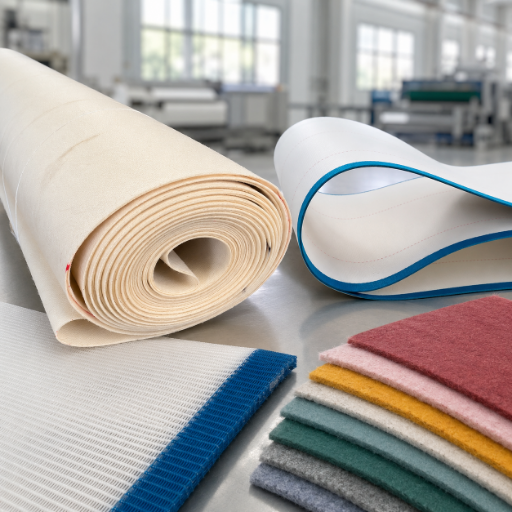
Press Felt & Dryer Felt
Needled Press Felts & Open-weave Dryer Fabrics – Endless or Seamed – per position/paper grade. The felt isn’t an accessory but is part of the dewatering function.
Why it matters:
Uhle box vacuum on the press felt is normally −60 kPa; batt fibre for press felts is produced in graded deniers.
Uhle box vacuum on the press felt is normally −60 kPa; batt fibre for press felts is produced in graded deniers.
Dryer section
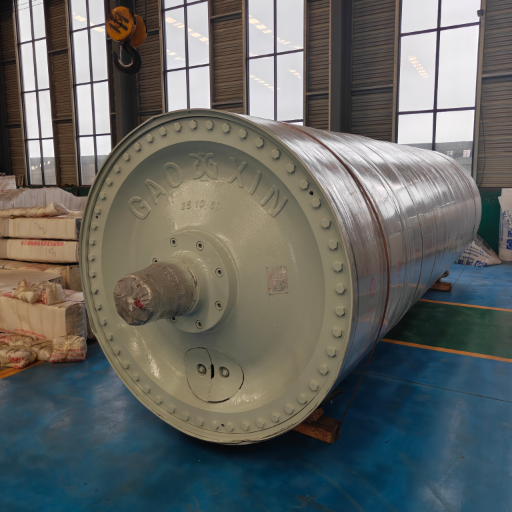
Dryer Cylinder & Yankee Cylinder
Steam Heated Drying Cylinders / Yankee cylinders for tissue paper large diameter. These are rotating cylinders, operating under steam pressure – pressure vessels.
Why it matters:
Dryer steam pressures range up to 160 psig (≈11 bar); TAPPI publishes dedicated inspection guidance (TIP 0402-16).
Dryer steam pressures range up to 160 psig (≈11 bar); TAPPI publishes dedicated inspection guidance (TIP 0402-16).
Dryer section
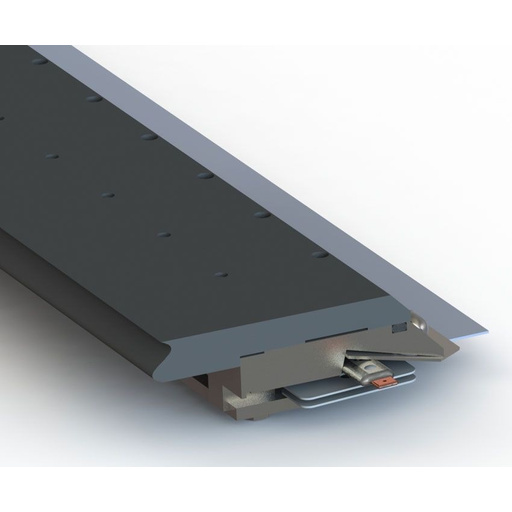
Doctor Blade
Blades and holders for cleaning, sheet control and creping. On a tissue machine the sheet sticks to the Yankee and is peeled off with a scraping blade.
Why it matters:
Blade material and bevel geometry drive both crepe quality and cylinder surface life — the blade is cheap; the cylinder is not.
Blade material and bevel geometry drive both crepe quality and cylinder surface life — the blade is cheap; the cylinder is not.
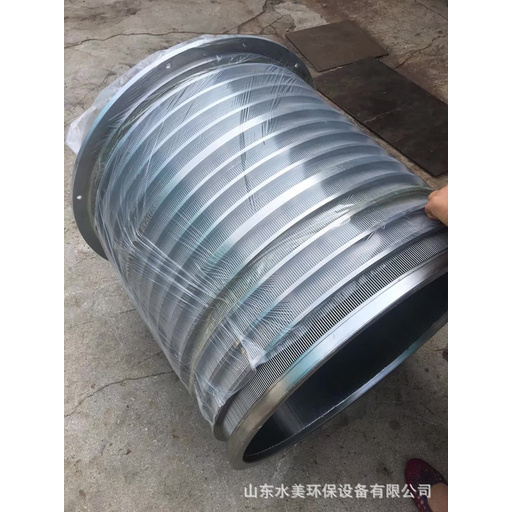
Stock preparation
Refiner Plates & Screen Baskets
Refiner plates & pressure screen baskets- wedge-wire & drilled. Refining develops fibre bonding; screening removes what should never reach the headbox.
Why it matters:
Refiner discs commonly run at 1,000 RPM (50 Hz) or 1,200 RPM; plate patterns are chosen against fibre length.
Refiner discs commonly run at 1,000 RPM (50 Hz) or 1,200 RPM; plate patterns are chosen against fibre length.
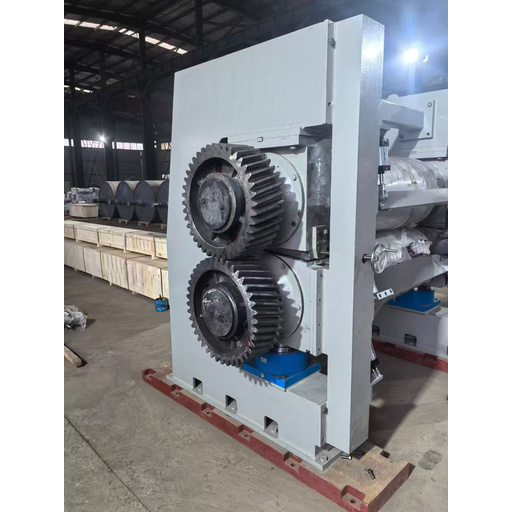
Calender
Calender Roll
Calender rolls deliver smoothness, gloss, caliper control and printability – the surface properties that decide whether finished paper meets a print buyer’s expectations.
Why it matters:
Only one nip is needed to hold the sheet; extra nips give more smoothing, but at some expense to paper strength.
Only one nip is needed to hold the sheet; extra nips give more smoothing, but at some expense to paper strength.
Reel & winder
Paper Rewinder & Pope Reel
Pope reels, reel spools and rewinders. Everything the machine did well upstream is still cancellable here — reel building and winding decide what the customer actually unrolls.
Why it matters:
Reel and winder faults surface as roll defects, not machine alarms — they are diagnosed in the finished roll.
Reel and winder faults surface as roll defects, not machine alarms — they are diagnosed in the finished roll.
Paper Machine Clothing, Forming Fabrics, Press Felts and Dryer Fabrics
Paper machine clothing (PMC) is the family of engineered fabrics and belts that carry the paper web through the machine. PMC consists of three fabric types, one per machine section, each serving a different function. They all go by the name “clothing,” but they really are different animals.
The common mistake is treating clothing as a commodity because it is soft. It fails like a machined part and it costs like one: A press felt ceases to dewater, not from wear, but because its void volume gets plugged and can no longer be stripped out by the Uhle box at −60 kPa between nips. That’s structural not a warranty defect – and is why buying a similar new felt often repeats the problem. Zejiang specifies clothing against position, grade and the observed failure mode, and supplies it alongside the rolls and doctors it runs against.
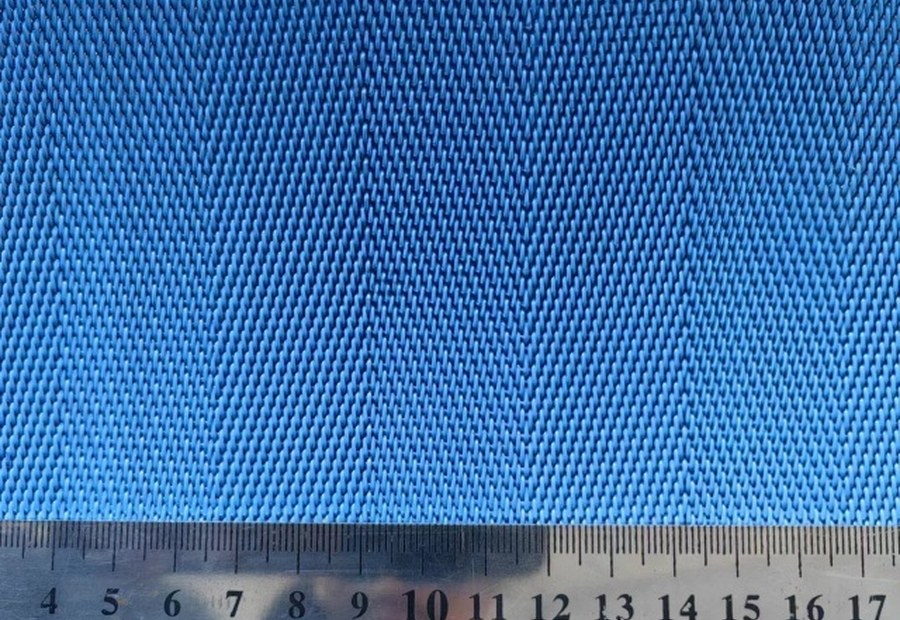
// Scan 01.
Forming fabric, the drainage decision
The forming fabric receives dilute stock from the headbox and drains it into a web. Its weave decides how fast water leaves, how well fibres are supported, and how much wire mark the sheet side carries.
+ Read More Specs – Collapse View
Single-layer constructions drain aggressively and cost less; multi-layer constructions add drainage channels and finer fibre support at the cost of complexity.
Specifying it:
Match the fabric to the grade, not to the machine’s age.
A high-speed tissue former and a slow board machine making corrugating medium aren’t solving the same drainage problem. We specify mesh and construction against your grade, speed and drainage element layout, then supply forming fabric and forming wire to the running dimensions your frame already has.
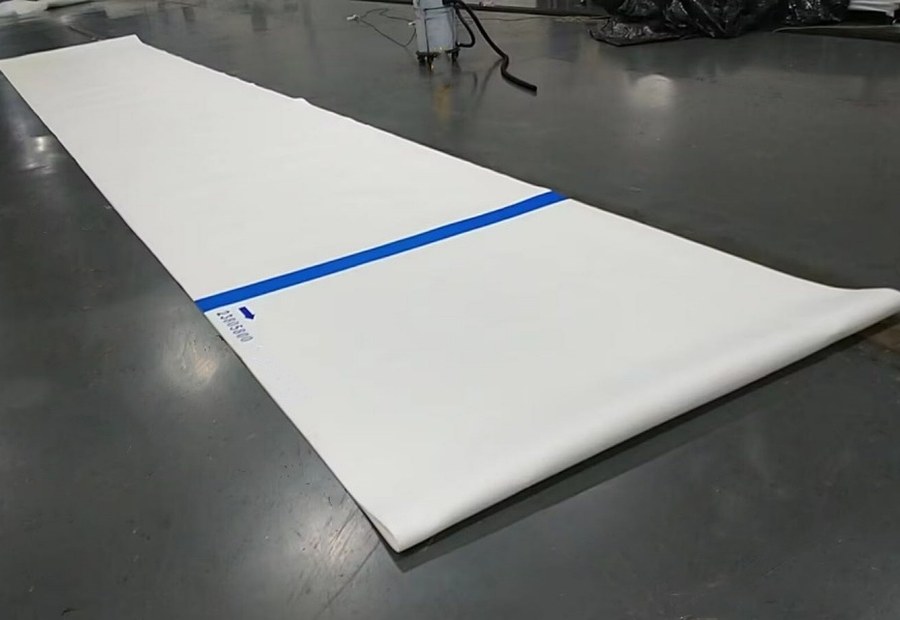
// Scan 02.
Press felt, a dewatering component under load
Press felt absorbs water squeezed from the web in the nip, then must give that water up to the Uhle box (normally −60 kPa) before returning to the nip.
+ Read More Specs – Collapse View
Any felt that won’t clean is a felt that no longer dewaters, whatever its condition looks like. Batt fibre is produced across a graded range, commonly quoted from 3 to 100 dtex, because fine surface fibres and coarse structural fibres do different jobs in the same felt.
Specifying it:
Seam or endless, decided by your shutdown.
Endless felts avoid a seam entirely; seamed felts install faster in a tight window. We supply press felt and dryer felt in both constructions and will tell you plainly which one your position and outage length argue for.
// Scan 03.
Dryer fabric, permeability against heat
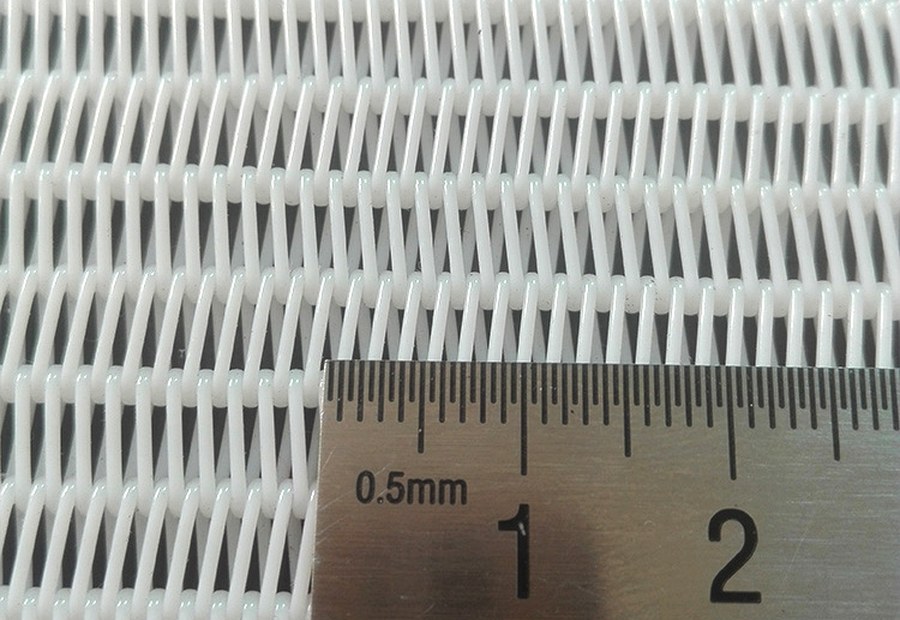
Dryer fabric holds the sheet against the dryer cylinders and must stay dimensionally stable while doing it. Dryer felts use a coarse thread and a very open weave.
+ Read More Specs – Collapse View
The weave is open enough to be almost see-through, because the fabric has to let evaporated water escape rather than trap it against the sheet.
Specifying it:
The belt is part of the dryer, not an add-on.
On faster machines, centrifugal force holds the condensate layer still against the cylinder shell, and turbulence-generating bars are typically used inside the cylinder to break it up. The dryer fabric, the cylinder and the doctor are one system, we quote them as one.
Repeating the same clothing failure every campaign?
Ask for a wear-part compatibility check for your machine brand → send the position, grade and how the current fabric fails.
Fundamentally, paper machine clothing fails as a system, not as a part. It’s application more than budget which determines the construction.
+ Read Deep Engineering Insight – Hide Insight Details
A press felt that plugs, a forming fabric that drains too slow, or a dryer fabric that seals too much moisture all arrive at the reel the same way: less dryness, less speed, more steam. Also, paper quality, not just a property to measure, is made at the machine fabric; the wire sets formation and nothing down the line can fix formation that wasn’t there in the first place. High-performance fabrics aren’t a luxury; they’re the difference between high-quality paper and a grade you have to sell down. That’s why we provide you with your fabric, belt, roll and doctor out of a single conversation rather than a trifecta of POs.
Designing forming fabric for paper machine service on a tissue former running to 2,000 m/min (≈6,560 ft/min) isn’t the same thing as designing forming fabrics, press felts and dryer fabrics for a board machine on testliner made from recycled furnish, nor for a cultural paper line – there are three totally different drainage problems, and their respective forming fabrics, press felts and dryer fabrics are not interchangeable even at identical running dimensions. The refiner and screen choices earlier in the stock prep system affect what sort of furnishes arrive at the wire, and the fabric has to accept what it gets.
How to Select Replacement Parts by Paper Grade and Machine Configuration
Selecting a replacement part is not shopping — it is matching an existing machine configuration. Both references below are ones our own engineers use when a mill sends a request with partial information.
Wear-Driver Register
Here’s what wears down what – and what you need in the way of equivalence when you replace it. Official service life published in tables do not exist; all life stated by a vendor is particular to the mill. We do not print a life table we cannot explicitly source.
| Part line | Primary wear / failure driver | Published interval? | Must match on replacement | Evidence |
|---|---|---|---|---|
| Paper machine headbox | Erosion and deposit build-up in the flow path; slice geometry drift | No published interval — mill-specific | Slice opening range, machine width, approach flow connection, design consistency (most grades run under 0.4%) | Industry range |
| Forming fabric & wire | Abrasion against drainage elements; fibre and filler plugging | No published interval — mill-specific | Running length and width, mesh/construction, seam type, guide and tension range | Industry practice |
| Press, vacuum & couch rolls | Cover wear, hole plugging, journal and bearing fatigue | No published interval — mill-specific | Face width, bearing centres, shell diameter and thickness, drilling pattern (commonly 4–5 mm holes), cover type and hardness | Wikipedia/TAPPI |
| Press felt | Compaction, filling/plugging, loss of void volume | No published interval — TAPPI: “typically a number of weeks” | Position, length/width, batt structure (3–100 dtex range), seam vs endless, Uhle box vacuum (normally −60 kPa) | TAPPI 21TAPL54 |
| Part line | Primary wear / failure driver | Published interval? | Must match on replacement | Evidence |
|---|---|---|---|---|
| Dryer felt / fabric | Heat ageing, edge wear, permeability loss | No published interval — mill-specific | Length/width, permeability, seam type, cylinder configuration | Industry practice |
| Dryer & Yankee cylinder | Shell wear and grinding loss; condensate behaviour; pressure-vessel fatigue | No — inspection-driven, not interval-driven | Shell diameter/length, journal design, steam joint, working pressure (industry range up to 160 psig ≈ 11 bar), ground run-out (Yankee practice cites <0.05 mm / 2 mils) | TAPPI TIP 0402-16 / 0420-14 |
| Doctor blade | Abrasive wear at the blade tip; loading and oscillation | No published interval — mill-specific | Blade length, thickness, bevel, material, holder type and loading | Industry practice |
| Refiner plates & screen baskets | Bar edge rounding; slot/hole wear and blinding | No published interval — mill-specific | Disc/basket diameter, pattern, slot or hole size, furnish and fibre length (≈1 mm hardwood, ≈4 mm softwood), disc speed (1,000/1,200 RPM at 50/60 Hz) | Wikipedia/TAPPI |
| Calender roll | Cover wear and barring; thermal and nip loading fatigue | No published interval — mill-specific | Face width, diameter, cover hardness (roll covers quoted in P&J — soft grades ≈20–45, hard ≈0–1), nip loading, heating arrangement | TAPPI PaperCon |
Part-Fit Selection Path
There are 4 questions that will be asked in this order and that every one of our quotes will answer. If we can’t answer any of them we’ll say so upfront prior to you buying.
Section STEP 01
Where in the machine does the part run, forming, press, dryer, calender, reel or stock preparation? This sets the physics: drainage, mechanical dewatering, evaporation, or finishing.
Paper grade STEP 02
Kraft, corrugated, testliner, duplex board, tissue, cultural or specialty. Grade drives furnish, speed and dryness targets, a tissue Yankee and a board dryer share almost nothing but a name.
Wear mode STEP 03
Is the part abrading, plugging, compacting, ageing or fatiguing? The failure mode, not the failure date, tells us whether to change material, geometry or both.
Configuration match STEP 04
The dimensional set: face width, bearing centres, diameter, shell thickness, drilling, cover, seam, mesh, connection. This is what we manufacture to, and what a nameplate photo or a sketch usually gets us most of the way toward.
When a mill sends a photo of a worn roll and asks for ‘the same again’, the honest first answer is a question: the same as the drawing, or the same as what has been ground down three times since? Those are different parts. We would rather measure than assume.
New-Manufactured vs OEM vs Used Surplus, Sourcing Routes Compared
There’s a story within this industry that purchasing any spare part other than the one from the OEM is a false economy. Notice who’s telling this story: A search of the phrase find only sellers of OEM parts making this argument. We found no mills making that case.
That’s the right framework, and we’ll argue within it, not against it. “Feel” is doing serious work in that sentence – this is an articulate practitioner naming a perception, not a measurement. Sort your parts by where failure is affordable, then choose a route for each part. Nobody should be buying all their parts from one route – including from us.
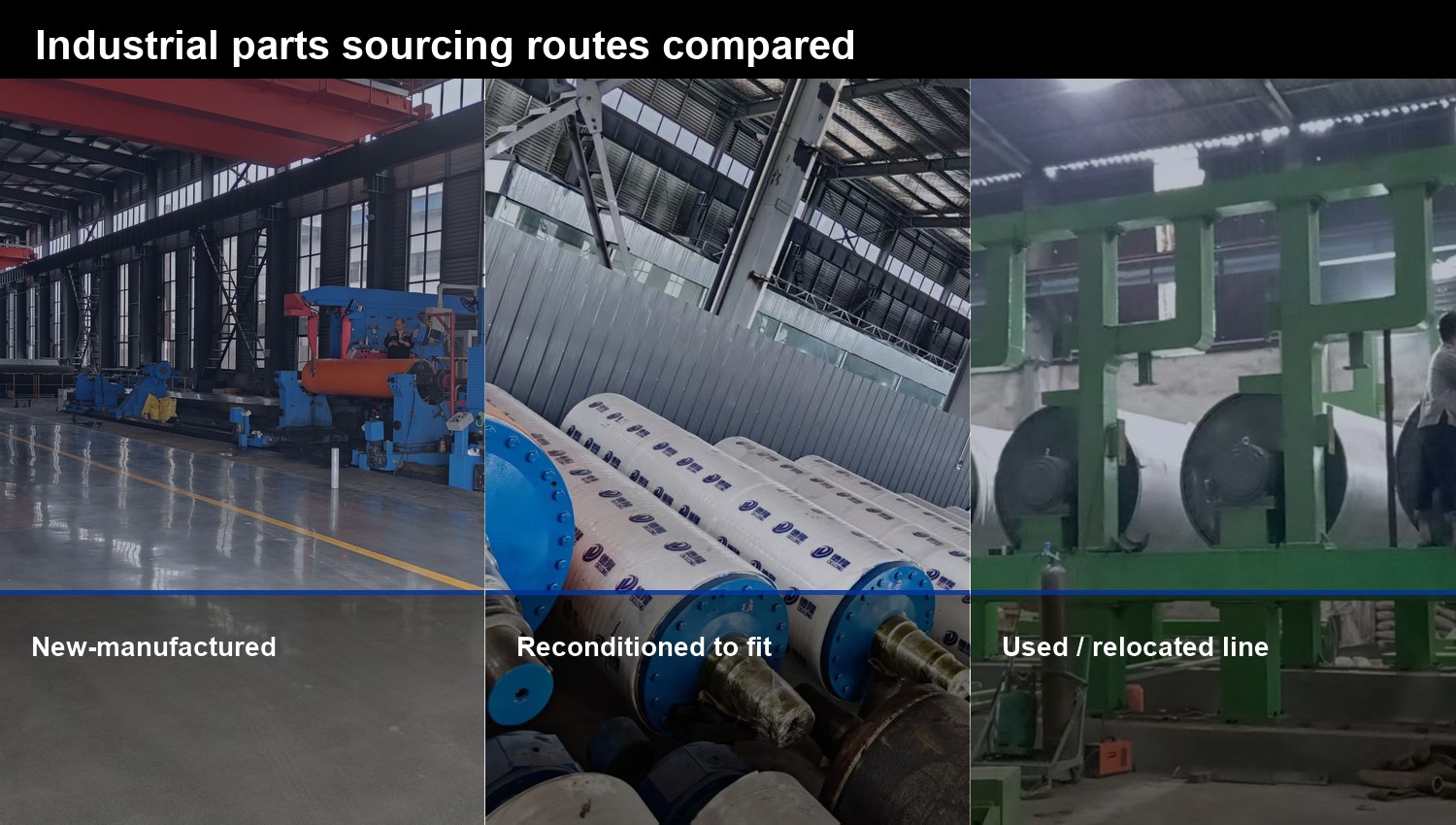
Sourcing-Route Scorecard
| Dimension | OEM parts | Used / surplus | Refurbishment | New-manufactured (independent) |
|---|---|---|---|---|
| Brand fit range | That machine family only | Whatever the yard happens to hold | Your existing part | Any brand — built to your dimensions |
| Dimensional certainty | High (original drawings) | Variable — the seller may not know its grind history | Highest — it is your part | High, if measurement is done properly (see the four-step path above) |
| Condition known? | New | Often not documented | Known after inspection | New |
| Warranty | Yes | Frequently as-is | On the work performed | Yes |
| Availability at failure | Depends on their stocking of your model | Depends on luck | Requires the part to be removable and salvageable | Depends on manufacturing lead time — quoted per part |
| Spec can be changed | No — you get the original | No | Sometimes (cover, material) | Yes — material and geometry can be revised against the wear mode |
| Honest weakness | Brand-locked; opaque pricing | Unknown history; no upgrade path | Machine must be down to remove the part | Cross-border freight and duty are real; we quote them, not hide them |
| Sensible use | Critical parts where you cannot afford any risk and the OEM stocks your model | Non-critical, when a used item is documented and inspected | When the part is sound underneath | Wear parts, obsolete machines, brand-orphaned lines, and where the original spec keeps failing the same way |
The “Copying” Debate
Back to the “copying” issue. One supplier’s conference paper rails against how “designs are copied and some machinery suppliers market identical third-party dryers under their own name.” That argument warrants a response. Independent manufacture isn’t copying someone’s drawing; it’s measuring a physical machine, engineering a component to fit the interface, selecting a material based on the failure mode, and taking responsibility for the outcome under our own name and warranty. Any mill running a 30-year-old machine, where the OEM is long gone (Beloit and Escher Wyss machines are still making paper across three continents) has no OEM route at all. Someone must make the part.
The Honest Version of Our Position
The honest version of our own position: Zejiang is the right call for wear parts, orphaned machinery, and components failing repeatedly in the same manner – where our own in-house machining, grinding and material expertise can actually change the outcome. We aren’t the right choice for a mill needing a part in 48 hours, from an OEM who has a warehouse right down the road. Whereas a brochure would claim both, that claim would not survive contact with your shutdown schedule.
Proven in the Field, Installations Across Asia, the Middle East, Africa and South America
We’d rather show you than tell you. Every picture below is an actual site where our teams have installed equipment – taken by our engineers in the field, not by CGI.
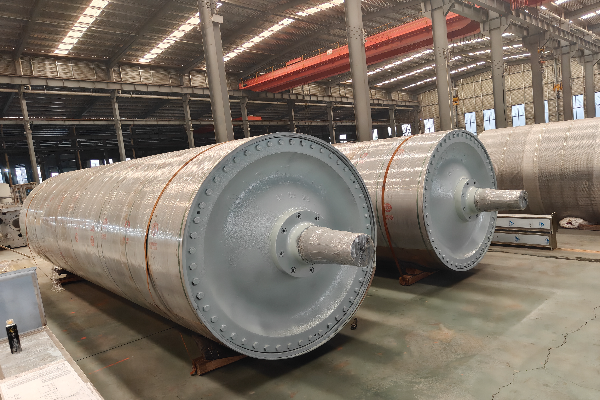
Multi-cylinder dryer section being set and aligned on site, with spare rolls staged alongside. Dryer sections are where the largest share of a paper machine’s parts population sits.
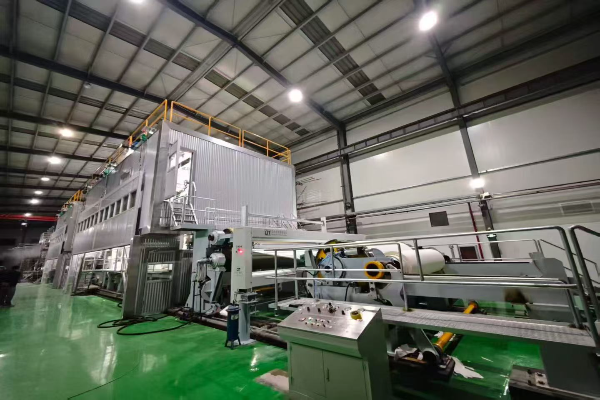
Coating and calendering section during commissioning. Finishing sections concentrate roll and cover work, the parts most often re-specified after the first production year.
A second-hand kraft machine reinstalled and returned to production. Relocations are the hardest test of parts capability: the drawings are usually gone, and the parts have to be made from the machine itself.
[ SYSTEM LOG: DEEP DIVE ANALYSIS ]
The Vietnam case is the one we should think hard about, because it’s one that OEM supply can’t do. A used machine that shows up at a new mill has no full parts list, a grind history no one has written down, and components that were altered by someone who owned the machine before you. Any replacement part for it becomes a measuring exercise; a shell is measured, not looked up, a journal is machined to what the bearing seat has become, not what the drawing said; a cover is ground to a hardness chosen for the furnish that the mill will actually run. That work can’t be done in an office – as a catalog lookup can – and it’s precisely the capability a running mill will need when a roll fails at 2 a.m. and the OEM’s reply is, that model is obsolete.
The honest limit of these photographs is worth stating: they show Zejiang machines being installed, which is evidence of manufacturing and commissioning capability. They don’t demonstrate how any specific spare part performs on your line in operation. To do that, the next useful step is smaller and more direct than a case study — send us a failed part and let’s quote it to your drawing.
[ SPECIFICATION: LINES & EQUIPMENT ]
Our capabilities span complete paper production lines for kraft, corrugated, testliner, duplex board, tissue, cultural and specialty paper, as well as the specific paper machine parts described on this page: dryer cylinders, press rolls, vacuum rolls, couch rolls, headboxes, pulpers, screen baskets, agitators, felt rolls, and other custom paper mill equipment.
The mills, tissue producers, packaging paper manufacturers, and recycling plants that rely on us across Asia, the Middle East, Africa, and South America employ deinking furnish, heavily recycled fibre, and abrasive fillers – not lab conditions.
[ PARAMETERS: MARKET GRADES ]
These markets also require our parts to withstand the full spectrum of the pulp and paper industry’s grade spread. A newsprint line, a writing paper machine and a printing paper former differ dramatically in how they attack their wear parts, and an industrial paper line making sack kraft is a different proposition still.
Furnishes range from virgin paper pulp made from wood chips all the way to a highly processed recycled furnish, and the manufacturing process for a grade that works on newsprint may decimate a component in a specialty paper former. Paper machinery designed to run on tissue paper runs in a vastly different environment than that on board. We’d rather find out which grade you’re making before we submit a quotation, than discover it during a warranty claim.
Quality Standards, Materials and Brand Compatibility
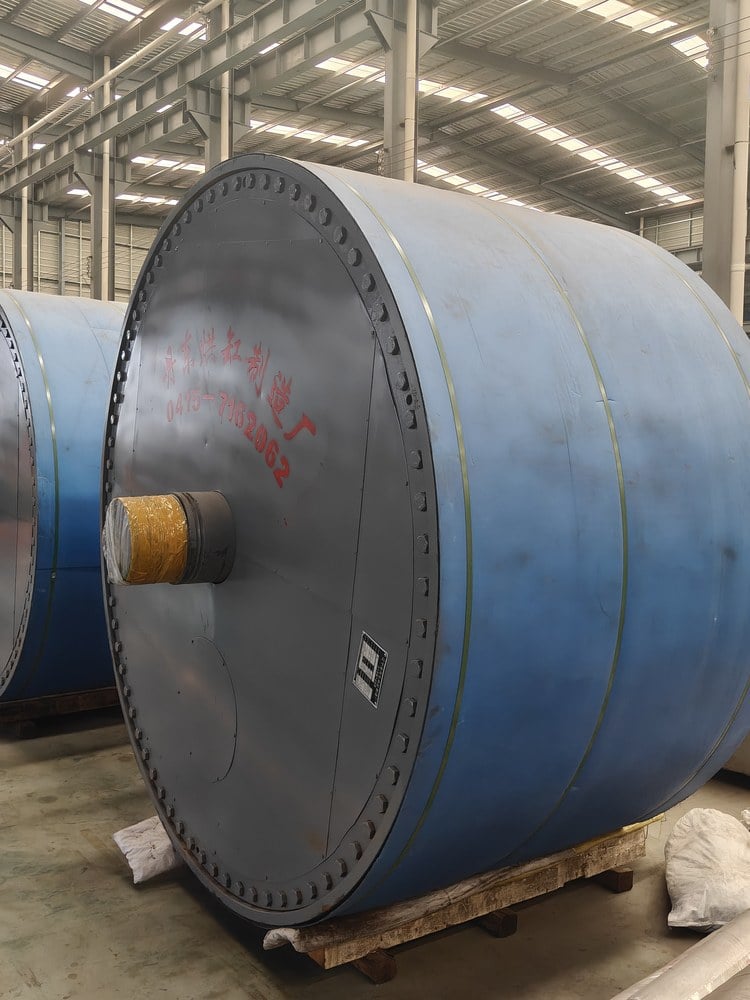
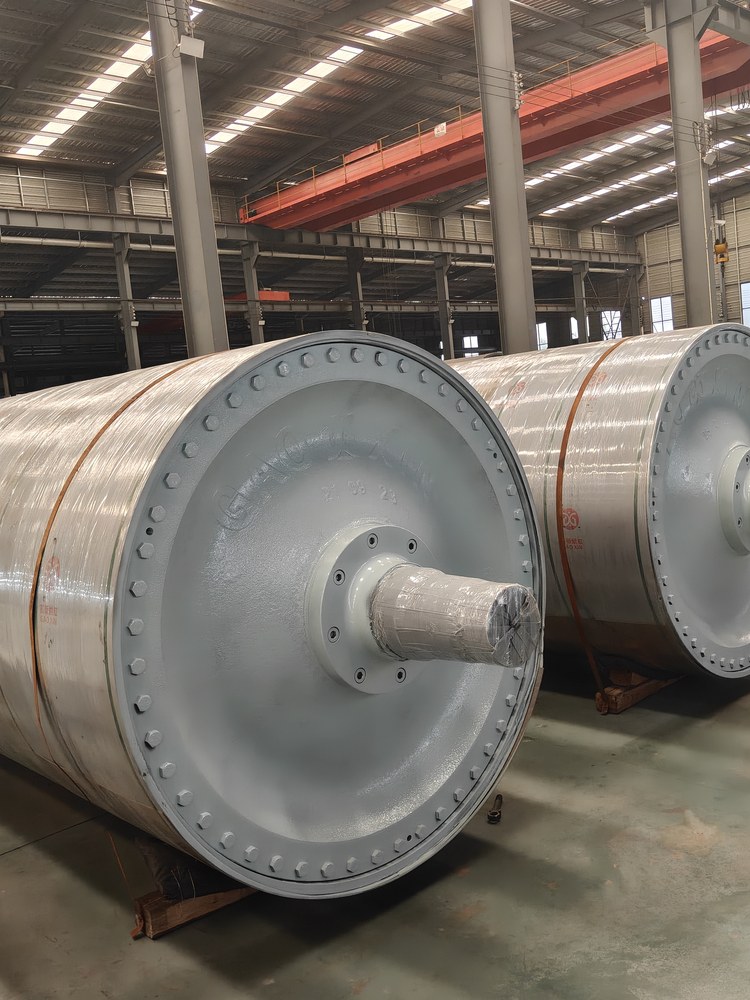
Not all paper machine parts are the same thing and not all parts should be treated as such. A forming fabric is a piece of textile. A calender roll is a cylinder that’s precision-ground to a tolerance. A dryer cylinder is a pressure vessel that rotates – and we aren’t using marketing language, we’re using technical terms according to the industry’s own professional organizations.
Brand compatibility
We manufacture to your machine’s dimensions. That includes machines from suppliers that no longer exist under their original names – the legacy brands that built much of the world’s installed base, Beloit and Escher Wyss among them, are still running. Zejiang’s engineering team works from your drawings where they exist, and from measurement where they don’t. The badge on the frame doesn’t constrain what we can make.
In practice that means the same component is quoted differently for different applications, because the duty is different. A couch roll on a recycled-fibre packaging line and a couch roll on a tissue former share a name, a drilling pattern of roughly 4-5 mm (0.16-0.20 in) and nothing else that matters: furnish, speed to 2,000 m/min, and vacuum load all differ. Unlike a catalogue part number, an in-house machined and ground component can be specified to that duty – hardened where it abrades, covered to a P&J range chosen for the nip it runs in, and dimensioned to the frame it bolts into.
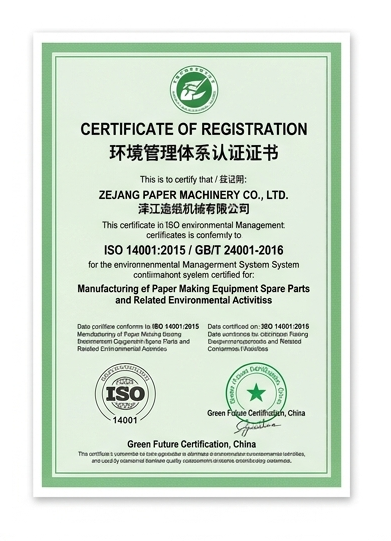
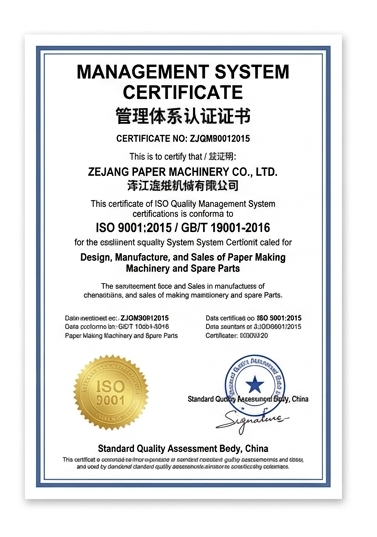
On certifications — a deliberate omission. This page makes no certification claims, and you will not find certificate images on it. We are reviewing our quality documentation and will publish certificates here only once each one can be verified by number against the issuing registrar’s public database. If your procurement process requires certification evidence before an order, ask us directly and we will address it in writing rather than with a badge graphic. We would rather show you an empty space here than a claim you cannot check.
Need to confirm a material or cover specification before you commit?
Ask for a wear-part compatibility check for your machine brand →×

What drives lead time
Four things set manufacturing lead time for paper machine parts, roughly in order of weight: (1) information completeness – a drawing set moves faster than a photograph, which moves faster than “the same as before”; (2) the manufacturing route – a fabric or blade isn’t a shell-drilled suction roll, and a refurbishment of your existing part isn’t a new build; (3) material availability for the specified grade; and (4) inspection and documentation requirements, which are heaviest on pressure-retaining components. We quote lead time per part against your actual configuration, because a range that covered every one of the nine lines on this page would be too wide to be useful to anyone.
What drives cost
Unit price is the smaller conversation. The cost factors that matter are dimensional complexity, material specification, cover or fabric construction, inspection scope, and – for a cross-border supply – freight and import duty, which we quote openly. Procurement guidance in industrial buying is consistent on this point: compare options on total landed cost rather than unit price. That standard cuts against a Chinese supplier as often as it favours one, and we would rather you apply it than not.
Minimum order and warranty
We supply single replacement parts as well as complete production lines – the nine lines on this page exist to serve running mills, not only new projects. Warranty terms are issued in writing with each quotation and depend on the part and route (new-manufactured versus refurbishment of your component). We don’t publish a blanket warranty figure, because a doctor blade and a dryer cylinder don’t deserve the same sentence.
After-sales and technical support
Our engineering team can assist with install and commission and we’ve had feet on site. What support mills usually neglect to access earliest on, is a critical-spares review. Mill crews often cite the same malfunction – not a part, but the absence of a part, or a part that couldn’t be located. A line that possesses wearable items with no contingency plan or readily available vendor that can fabricate, is an area well worth address.
It’s also at that stage where the purchase of increased machine productivity is less costly than appears at first. Paper producers favor the paper mill that will pull out its constraints sequentially – the one that prevents the line from running, the one that prevents the line from running fast, and then the one that costs quality. Performance improvements purchased sequentially build on each other. Purchased out of order they’re just dead time sitting in the shop or on the line behind the constraint that still dictates production. That is the mistake we see most often — a new cover ground to a tighter tolerance on a roll whose bearing seat was never the problem.
Zejiang has its in-house scope – design, machining, grinding, refurbishment, install – to allow the question ‘can this be built?’ be answered by engineering, not procurement channels. As opposed to a trading intermediary we’re quoting on our own machine hours and this is also why we would advise if your part can be refurbished.
Paper Machine Parts Diagnostics & Sourcing
Part-Fit Spec Checklist
Pick the part you need replaced. The checklist tells you exactly which dimensions to measure or photograph before asking anyone for a quote — including us.
Access Checklist
Wear-Driver Diagnostic
Tell us what you are seeing. This returns the likely wear driver and what to check — not a replacement date. No authoritative source publishes service-life intervals for these parts, so we do not invent one.
Run Diagnostic
Sourcing-Route Selector
Four questions, per part — not per mill. This tool recommends against us when your answers say it should.
Use Selector
Paper Machine Parts FAQ
Expert answers on technical specifications, replacements, and independent manufacturing for your paper machine components.
Can your parts fit machines from other brands, including discontinued ones?
Yes — that is the core of what we do. We manufacture to the dimensions of the machine you have, working from your drawings where they exist and from measurement where they do not. Machines from legacy suppliers such as Beloit and Escher Wyss are still in production worldwide, and they still need parts. Send a nameplate photo, a drawing or a sketch with key dimensions and we will tell you what we can confirm and what we would need to measure.
What are the parts of a paper machine?
In machine order: the headbox distributes stock; the forming section (forming fabric and forming wire) drains it into a web; the press section (press rolls, suction and couch rolls, press felt) removes water mechanically; the dryer section (dryer cylinders or a Yankee cylinder, dryer fabric, doctor blades) evaporates the rest, leaving roughly 6% residual water; the size press treats the surface; the calender smooths it; and the pope reel winds it. Stock preparation upstream adds pulpers, refiners and pressure screens.
What is paper machine clothing, and how do the fabric types differ?
Paper machine clothing covers the fabrics and belts that carry the web. Forming fabric drains the slurry and forms the sheet; press felt absorbs water in the press nip and releases it to the Uhle box vacuum (normally −60 kPa); dryer fabric holds the sheet against the dryer cylinders with an open weave that lets evaporated water escape. Same family name, three unrelated jobs.
New, refurbished, or used — which route fits my mill?
Decide per part, not per mill. Where you cannot afford failure and the original supplier stocks your model, OEM is a rational choice. Where the part is a wear item, the machine is old or brand-orphaned, or the original specification keeps failing the same way, new manufacture lets you change material or geometry rather than repeat the fault. Refurbishment fits when your part is sound underneath. Used surplus is the route with the least documented history — treat it accordingly.
Do you publish a paper machine parts list or a spare parts catalogue?
Not as a downloadable catalogue, and deliberately so — a paper machine parts list is only useful once it is your machine’s list. What we publish instead are the nine category pages linked above, each covering configuration options rather than fixed part numbers. If you want something closer to a paper machine parts diagram for your own line, send us the machine details and we will map the wear components section by section, including the ones we would not be supplying.
Can you help with used paper machine parts or a relocated machine?
Yes, and it is one of the cases where independent manufacture earns its place. Used paper machine parts arrive with no documented grind history, and a relocated line often has components a previous owner modified. Rather than sourcing another undocumented used item, we measure what is on the frame and manufacture to that — whether it is a dryer cylinder paper machine component, a headbox part, tissue machine parts, or general paper mill parts.
What information do you need to quote a replacement part?
At minimum: the part and its section, your paper grade and machine speed, and the dimensional set — for a roll, that is face width, bearing centres, diameter, shell thickness, drilling pattern and cover; for clothing, running length and width, mesh or construction and seam type. A nameplate photo plus a photo of the worn part usually gets us most of the way. If something cannot be determined from what you send, we will say so before quoting rather than after delivery.
How long do paper machine parts last?
There is no honest universal answer, and we will not invent one. Service life depends on furnish, speed, chemistry, loading and cleaning practice — the same press felt position can behave differently across two machines in the same mill. TAPPI describes press felt life only in general terms, as running typically a number of weeks. Any supplier quoting you a precise life figure for your machine without seeing your operation is quoting a marketing number. What we can do is discuss the wear driver on your specific position and what would change it.
What are common problems in paper machines?
By population, they cluster in the rotating and consumable components: rolls and their covers, drives, felts and fabrics, and screens — plus structural issues such as resonance and inadequate rigidity on older frames. That distribution is the reason a parts supplier is a maintenance relationship rather than a transaction.
Do you supply complete machines as well as parts?
Yes. We supply new paper machines, used machine relocation and rebuilds, mill upgrades and replacement spare parts across kraft, corrugated, testliner, duplex board, tissue, cultural and specialty grades. Many mills reach us first for one wear part and later for a line.
![Refiner Plates & Screen Baskets [Complete Guide]](https://zjpapermachine.com/wp-content/uploads/2026/07/refiner-plates-screen-baskets-guide-featured-150x150.png)
![Doctor Blade: Types, Materials & How It Works [Guide]](https://zjpapermachine.com/wp-content/uploads/2026/07/doctor-blade-guide-featured-1-150x150.png)
![Pulping Equipment: How Paper Pulping Works [Guide]](https://zjpapermachine.com/wp-content/uploads/2026/07/pulping-equipment-guide-featured-150x150.png)