Get in touch with Zejiang Paper Machinery Company

Used Paper Machinery
Used Paper Machinery — Refurbished Paper Machines, Sections & Spare Parts
Inspected, grade-rated and refurbished used paper machinery from voith, ANDRITZ, valmet, Kadant, Metso, Ksters and Kvaerner – complete Fourdrinier and crescent-former machines, calenders, headboxes, refiners, press rolls and pulp equipment, delivered, reinstalled and warranted worldwide.
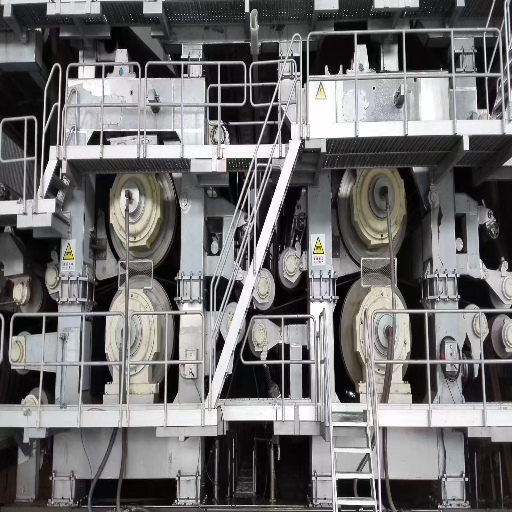
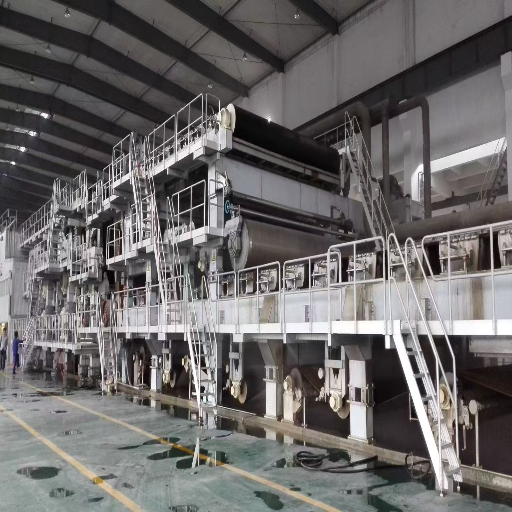
Voith · ANDRITZ
Kadant · Metso
Premium OEM brands in stock, refurbished
30–40 yr
Normal useful life of paper mill equipment [1]
4-tier
Refurbishment Grade Scale — As-Is to Rebuilt
In-house
CNC machining + roll recovering (not just a dealer)
Turnkey
Dismantle · ship · reinstall · commission
Worldwide
Delivered & installed (real Vietnam kraft line)
Why Used Paper Machinery Purchases Fail — and What De-Risks Them
Used paper machinery from Henan Zejiang means inspected, grade-rated, refurbished machines and sections from voith, ANDRITZ, Kadant, Metso, Ksters and Kvaerner – not an as-is gamble bought on a photo. That distinction is the whole game, because most buyers of second hand paper machinery do not lose money at the moment of purchase. They lose it afterward.
“Most companies don’t lose money when they buy a used machine. They lose it when they try to move it,” is how one machinery-relocation firm put it – a machine can look like a bargain, yet the real cost hides in its actual condition, the relocation, and the time to restart production. For a mill running at capacity, every month of downtime can mean $300,000-$600,000 in lost production, so a machine that arrives with a cracked frame, a worn press section, or spare parts you cannot source is not cheap at any price.
Gap 01
Condition you cannot verify
– hidden wear, welded repairs on structural members, “fresh paint over rust.” We answer this with a graded, documented refurbishment and a pre-shipment inspection report (see the Refurbishment Grade Scale and Inspection Protocol).
Gap 03
Orphan spare parts
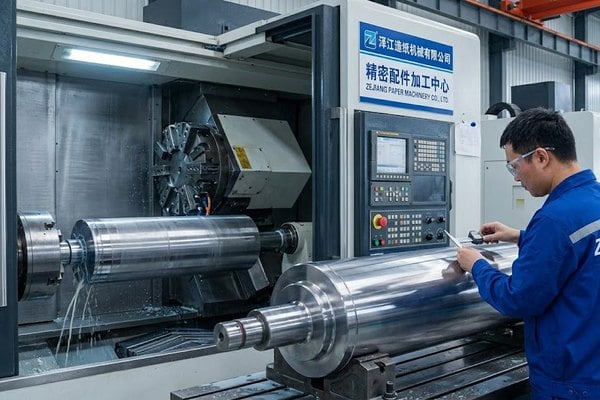
– many premium machines carry brands whose makers no longer exist (beloit, black clawson, Kvaerner). Our in-house CNC machining and roll-recovering shop reproduces the parts a pure dealer would send you to buy from a third-party machine shop.
Engineering Standard
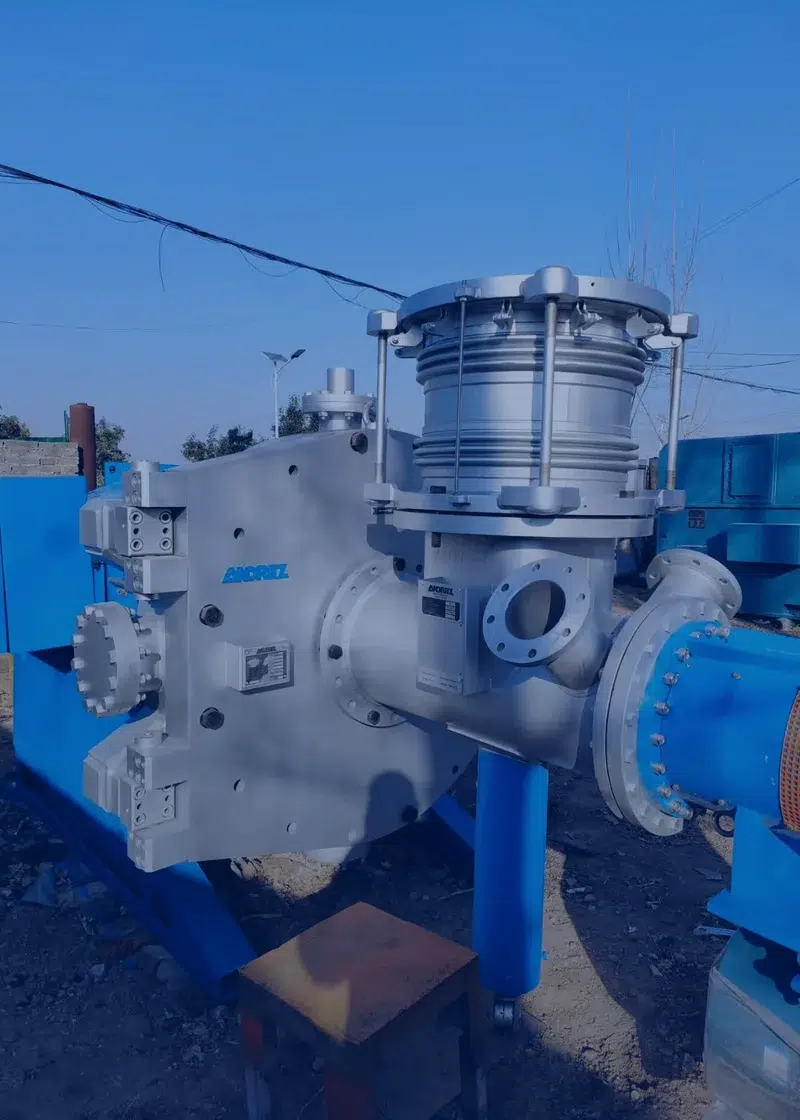
“We do not sell a machine off a photo. Before anything ships, our engineers strip the wear zones — press rolls, felts, doctor blades, drive gearing — and grade the machine on what we actually measured, not on what the previous mill told us. A used paper machine is only worth what its worst section can run.”— Senior Refurbishment Engineer, Henan Zejiang Paper Machinery
Gap 02
Fit you cannot change
– a refurbished machine still runs at its original design width, speed and grade envelope. Every enquiry starts by matching that envelope to your target production, not by selling you the machine on the floor.
Gap 04
Relocation and restart risk
– dismantling, shipping, reinstalling and commissioning a paper machine across borders is where budgets slip. We manage it as one scope, with the commissioning track record behind it.
Here is the part the discount sellers leave out. The real false economy is not buying used – it is buying “as-is” instead of tested and refurbished. An as-is machine bought direct from the previous owner typically runs about 25-35% of new-machine cost, with no warranty and all the condition risk on you. The dollars you “save” on that bargain are usually the exact dollars that break down after shipment. A machine that has been disassembled, inspected, re-parted, tested under load and warranted is a different asset – and that is what we build.
Used & Refurbished Paper Machinery In Stock — Machines, Sections, Pulp Equipment & Parts
Rebuilding a machine enhances reliability, but it doesn’t increase the original design limitations: A refurbished machine runs at the same speed, width and grade. That’s why Fit, not price, is the first gate. You must match your target paper grade, trim width and speed to the machine’s design envelopes or the purchase isn’t savable. We lead with those envelopes, not the price.
Our paper machinery for sale includes entire machines and individual sections from new-process and upgraded mills: used pulp and paper equipment, paper mill surplus and more. A tissue manufacturer might be searching for a used toilet paper machine or a crescent former, a packaging mill a Fourdrinier, or you may be looking for used paper mill machinery not carried by most individual mills. We’ve sourced all equipment from decommissioned and upgraded mills, all OEM mill brands.
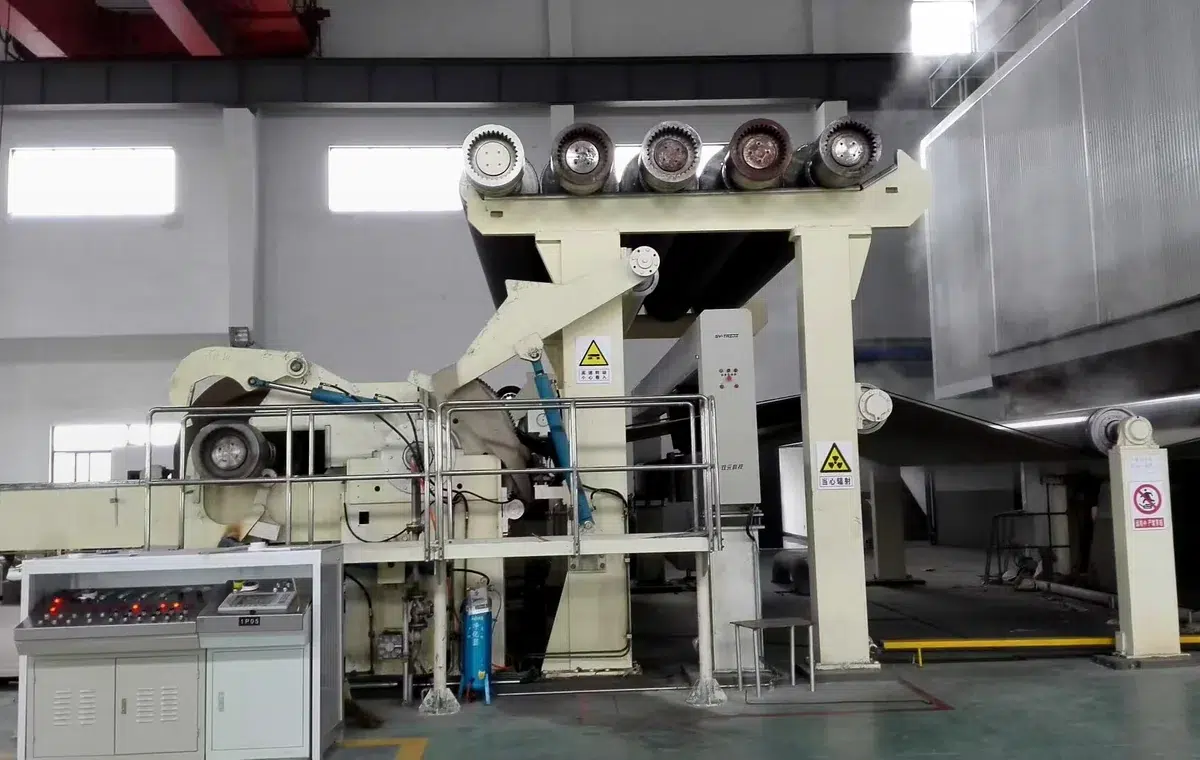
Complete paper machines
We inventory both multi-ply Fourdrinier machines (for testliner, fluting, and kraft packaging paper), crescent-former tissue machines, corrugated base paper machines and long-wire specialty and light-weight paper machines. Featured are a 5730mm multi-ply Fourdrinier and a 2850mm crescent-former tissue machine- both clearly within the real-world envelopes considered by buyers for those grades.
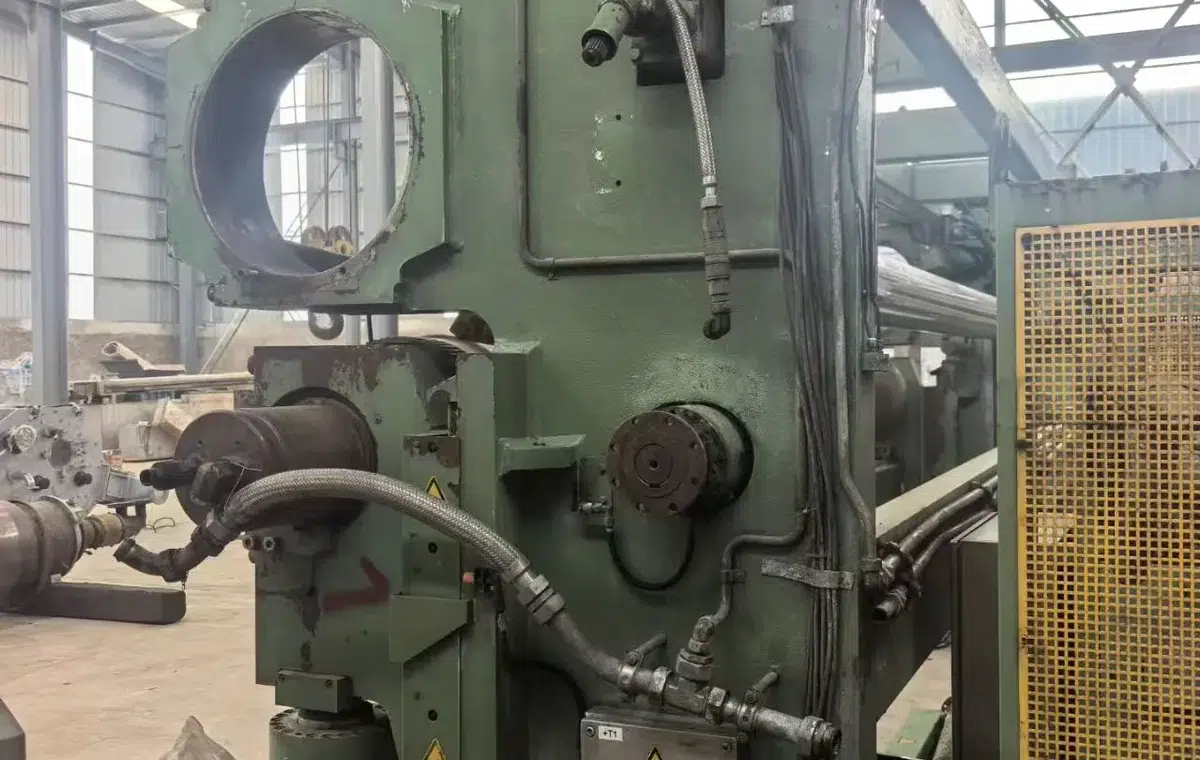
Finishing & forming sections
Hard and soft calenders (including a controllable-crown hard calender, Küsters 4300VC variable-crown soft calender, and a Voith 4-roll 2-nip soft calender); hydraulic headboxes (ANDRITZ, MCN, ABK); press rolls, shoe-press rolls, and polyurethane/rubber covered rolls.
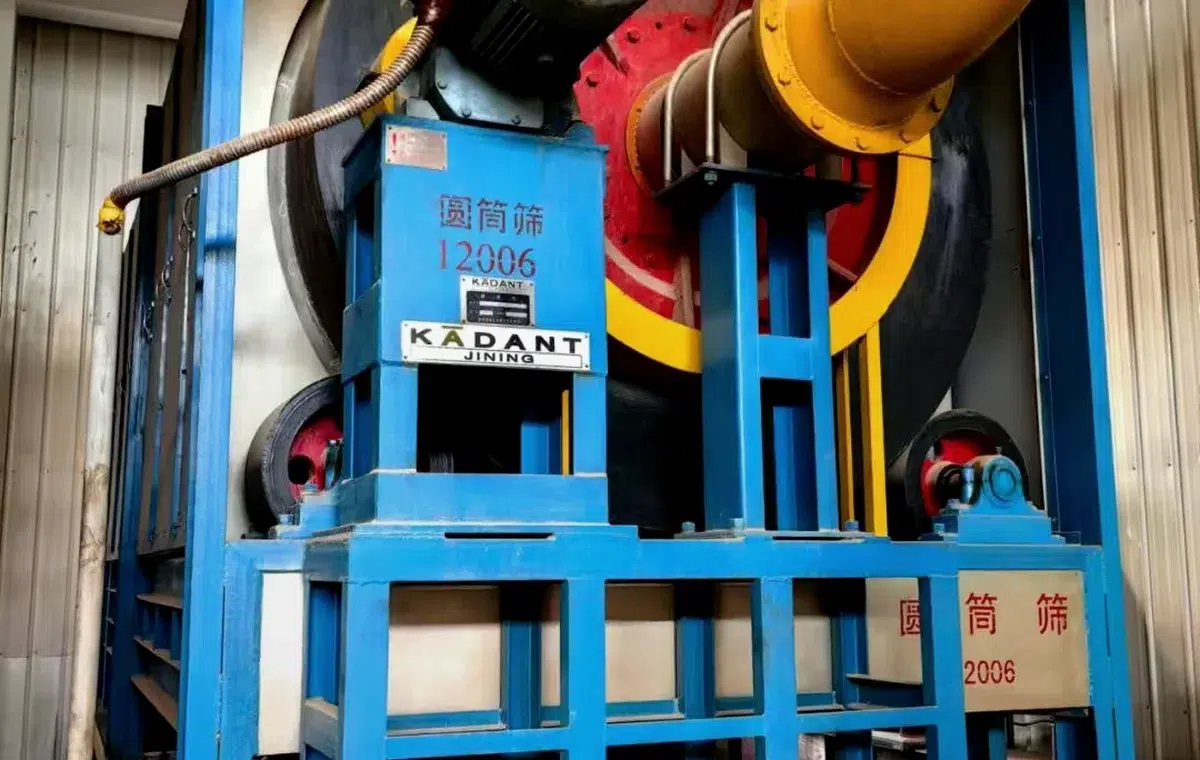
Stock preparation & pulp equipment
Hydrapulpers and drum pulpers (Kadant), high-consistency and disc refiners (ANDRITZ, Voith, Valmet, Kvaerner), pressure screens (Kadant), centrifugal cleaners, thermal dispersers (Metso), pulp pumps with drive motors and gearboxes, stock-chest agitators, vacuum filters and cast-iron digester spheres. Basically, the wet-end and stock prep train mills replace piece by piece, every pulper, refiner, screen and motor individually inspected prior to shipping.
Because two machines can look alike but be designed to run completely different furnishes and grades, each unit is individually assessed to meet your needs before it’s offered. The table below offers an outline of what each machine type will run; exact specs will be confirmed for the specific unit by nameplate and inspection report.
Machine-type fit envelope (representative — confirm per unit)
| Machine type | Typical trim width | Design speed | Capacity | Basis weight | Best-fit grades |
|---|---|---|---|---|---|
| Crescent-former tissue | 2,650–2,850 mm | 500–1,950 m/min | 30–100 TPD | 11–30 gsm | Toilet / facial / kitchen tissue, napkin |
| Fourdrinier — kraft / testliner / fluting | 1,800–6,600 mm | 250–1,000 m/min | 30–750 TPD | 70–220 gsm | Liner, fluting, sack kraft, packaging |
| Fourdrinier — specialty / lightweight | 2,000–3,600 mm | 400–800 m/min | 40–120 TPD | 25–120 gsm | Cultural, thin printing, specialty |
| Corrugated base-paper | 1,800–4,800 mm | 250–600 m/min | 50–300 TPD | 90–200 gsm | Corrugating medium, testliner |
Envelopes triangulated from real used-machine listings and tissue-forming physics. A shoe press on a packaging Fourdrinier typically runs line loads near 1,500 kN/m, versus 90-120 kN/m for a tissue Yankee – one reason press sections are inspected and re-shod, not assumed.
Capacity fit is not a preference – it is where the economics fail. An oversized machine underfed cannot build enough nip pressure and leaves fibre behind; an undersized one jams into costly downtime that can run $15,000-$20,000 a day on a mid-sized plant. Because two used machines can look identical yet be set up for different furnish, we machine every mating surface – dryer journals, press-roll necks, calender bearing housings – to tolerance in our own CNC shop, and re-cover Voith and ANDRITZ rolls before a Küsters or Kvaerner unit is offered. Unlike an inventory listing that shows you a photo and a trim width, our fit assessment measures the running envelope against your grade first, because a machine that cannot hit your basis weight at your speed is not a bargain at any price.
Not sure which machine matches your grade, width and speed?
Send your target specs for a fit assessment →Used vs New Paper Machinery — When Refurbished Wins
Refurbished isn’t always the bargain. It’s the smart call when the bottom-line price -machine, relocation, downtime and a reasonable contingency – is still significantly lower than new-machine costs, and when capacity bottlenecks are driven by condition, not a design limitation you’ve already outgrown. When your required grade or speed is out of the used machine’s scope, or the cost of downtime to undertake a significant rebuild approaches new cost, buying new is correct. We will inform you when that is so. When not, the value of a well-rebuilt used line is undeniable.
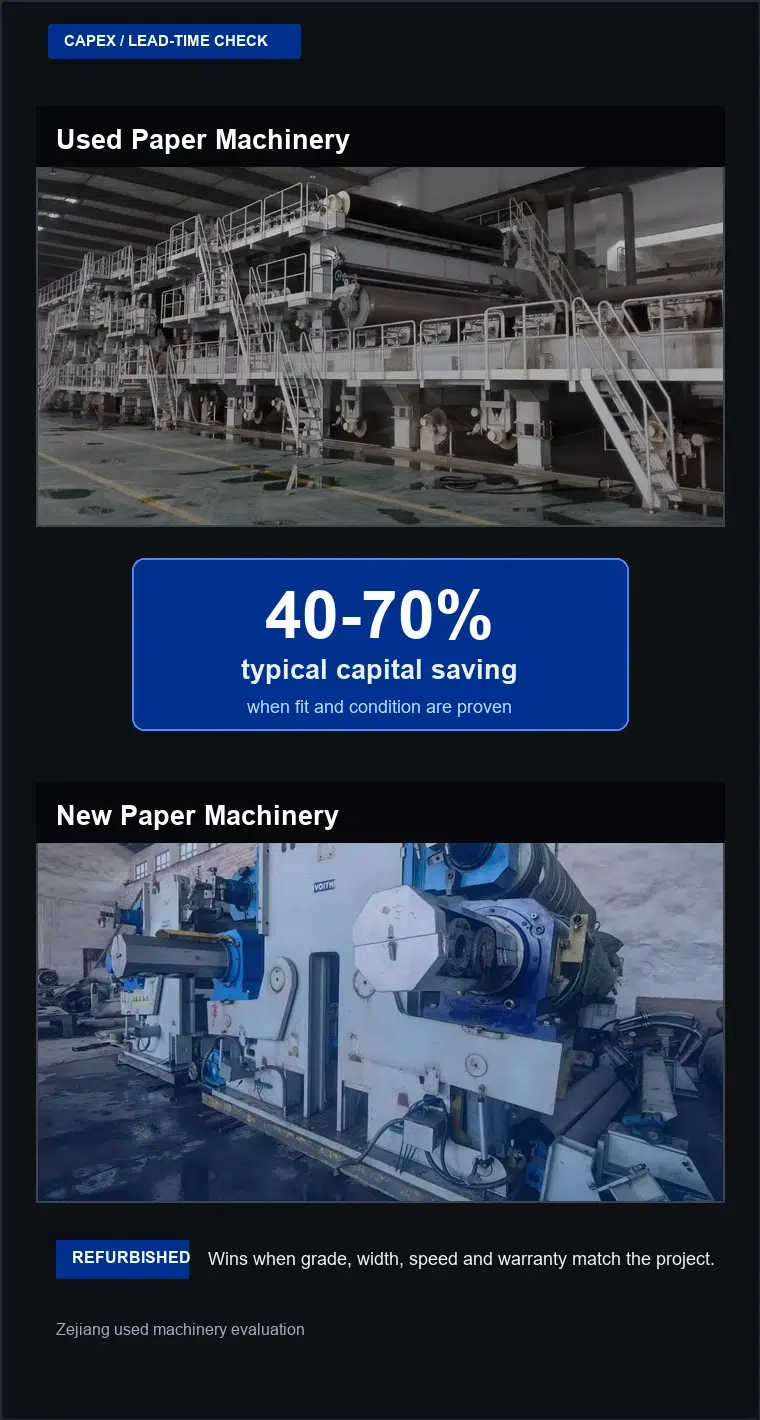
| Factor | Refurbished used machine | New machine |
|---|---|---|
| Capital cost | ~40–70% below new (industry est.) | Baseline (highest) |
| Lead time to production | Weeks to a few months | 3–6 months (stock) · 12–18+ months (custom OEM) |
| First-owner depreciation | Already absorbed by prior owner | 30–50% of value lost in years 1–5 |
| 10-year total cost of ownership | ~25–45% lower than new | Baseline |
| Latest automation / top speed | Original design generation (upgradable in rebuild) | Current generation |
| Warranty | 12–24 months (Tier 3/4) | 3–5 years OEM |
40–70%
typical capital saving of used vs new paper machinery, with roughly 25–45% lower 10-year total cost of ownership
Industry & dealer estimates (used vs new manufacturing equipment). Not a Zejiang quotation — request a project-specific analysis.
Capital and life-cycle cost data is from publicly published industry/dealer estimates for used vs. new equipment; our specific figures for pulp- and paper-, which can be sourced upon request, place used capital savings from 30% to 90% depending on the project’s scale and complexity. We list ranges, not absolute figures – your exact costs depend on the machine and your circumstances.
What makes these saving tangible, rather than a hollow economy?
The life cycle. By appraisal standards, a typical paper mill equipment can operate for 30-40 years; accordingly, a maintained or re-engineered machine realistically offers several decades more life – you are buying enduring utility, not scrap. Furthermore, a used equipment doesn’t require a limited budget. when Norwegian producer Norske Skog’s Skogn mill opted for a new thermo-mechanical pulp line, the machine’s used equipment comprised more than 70% of the value. Major industrial producers regularly make this decision.
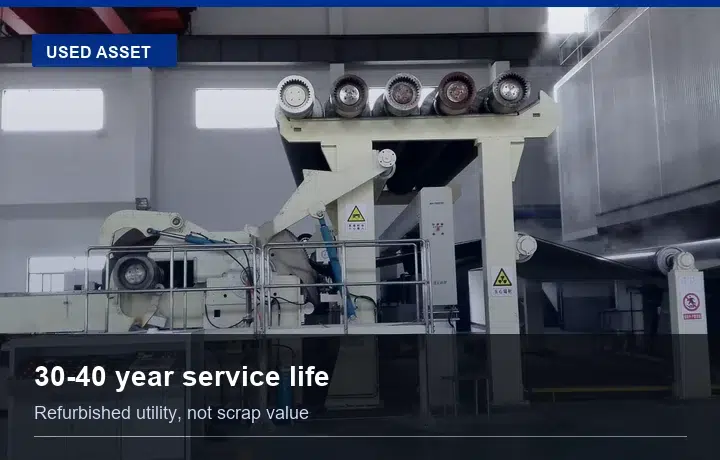
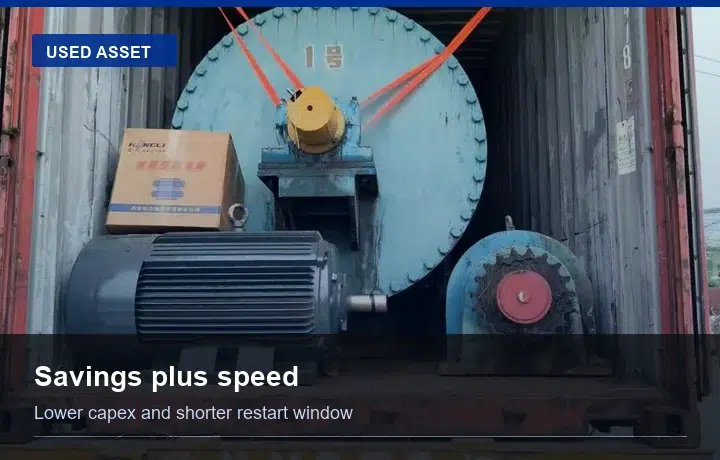
The Robust Savings Proposition
That savings proposition remains robust because a used machine avoids two unavoidable expenses for any new purchaser: depreciation-which can reach 30%-50% within the first five years-and a lead time of 12-18 months during which your capital lies idle while your custom OEM machine is built. Typically, a mill spends good money for the capacity they needed last quarter and then wait more than a year for the first reel. That’s precisely what they wanted — until it arrived, by which time it’s too late to matter. A grade-rated refurbished machine, machined to your specifications and up and running within weeks, effectively sidesteps that snare.
Weighing a specific machine against a new-build quote?
Get a used-vs-new cost comparison for your project →Delivered & Installed Worldwide — Used Paper Machinery Case Results
A used machine’s value is only confirmed once it is running in another mill. Here’s what our projects and the broader industry industry has taught us about successfully buying used equipment.
Vietnam — used kraft paper machine, dismantled, shipped and reinstalled on site
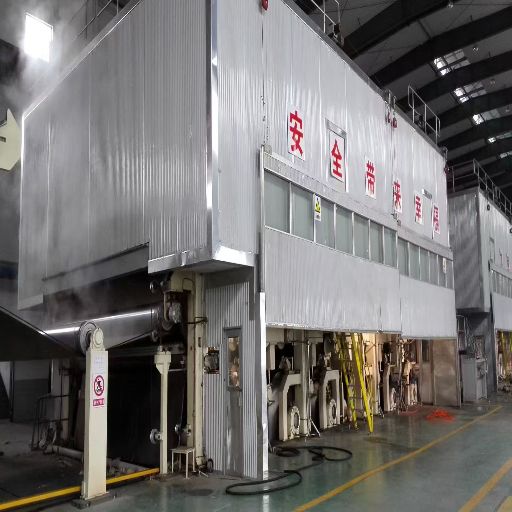
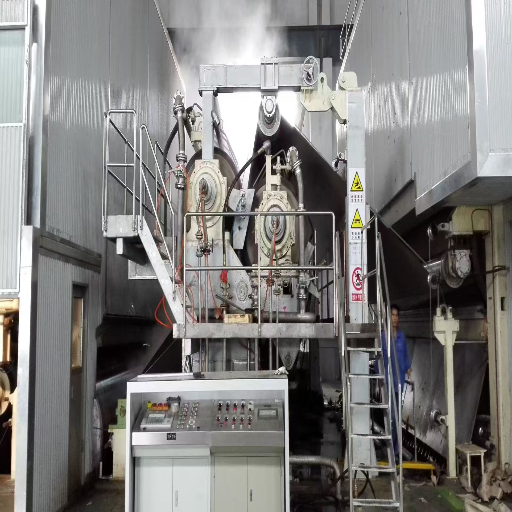
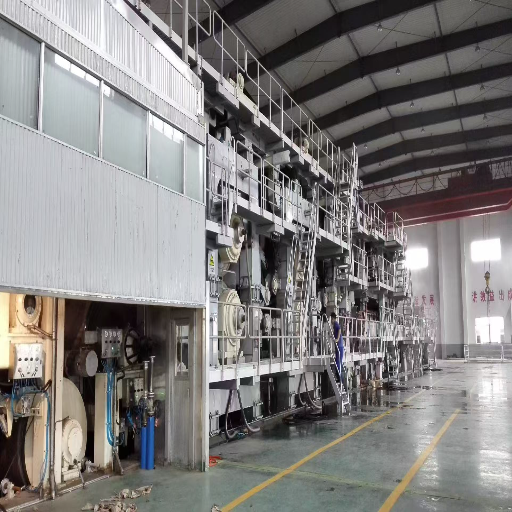
A used kraft paper machine we shipped and installed at our mill customer in Vietnam, we handled this project from the original departure from its prior location until our team was ready to commission on site. Those install pictures – the wet-end frame being placed, dryer section in line, team in the reel – directly respond to the ultimate customer anxiety; that a remote, second-hand machine simply will never operate. And it did, as the press section and drive gearing had been re-parted, and the machine load-tested prior to our dispatch. Because we ourselves produce these parts for this line and the rest of our existing machine population, when we shipped the line the worn-in parts had already been produced at our factory – a capacity that a re-seller simply can’t match since they would be subcontracting. That’s our own experience that supports this first-party description of our relocation services.
Industry proof — a rebuilt machine can restart to its guarantee values
The “will it break down after startup?” question has an answer in the field, and it’s recorded. When ANDRITZ rebuilt board machine BM1 at Kyiv Cardboard and paper mill – including the press move, and installing a new shoe press and hard calender on a 4.2m, 800m/min machine – “start-up went on schedule without issues and guaranteed values for dryness, bulk and smoothness were obtained immediately”. A rebuilt existing machine restart to contractual performance; that’s why you buy Tier 4 and not as-is.
Cross-border relocation is a standard service, not a gamble
Complete machines cross continents. A closed mill’s machine was sold, dismantled, and moved on a standard 3-4-month timeline; a paper machine was removed from Finland to Russia and reinstalled headbox-to-reel after an entire pre-installation overhaul; and turnkey global relocations of large machines have been performed under a 12-month performance guarantee on the relocated equipment. Each has delivered the same lesson: the machine is seldom the problem – the plan is.
Inspection, Testing, Warranty & Certifications — What You Get Before Shipment
A second-hand refurbished machine has to satisfy the current issue of the standard, not the one that applied when it was manufactured. A low-cost tender which avoids recertification just transfers the risk to you instead of to them. machinery safety performance is checked against ISO 12100, both over its entire life cycle – a refurbished and re-sited machine as well as the new build – and any second-hand equipment equipment must also be safe according to law. Our inspections are more than claims – you can see what’s happened.
The Pre-Shipment Inspection Protocol
Before anything that’s from us floor will go through this process and we get that for you in a report :
- Identity and Provenance – our serial number is OEM verified, you can check with the maker for the history. A serial number refused by a seller means the buyer should walk away, so we put ours upfront.
- Wear-zone teardown – press Hevanerms, felts, doctor blades, forming section, drive gearing and bearings measured, not eyeballed. No fresh paint over rust.
- Condition monitoring – vibration and mechanical checks on rotating equipment, the discipline codified in ISO 18436, which certifies the analysts who run it.
- Component-replacement list & calibration record – exactly what was replaced or repaired, for refurbished and rebuilt machines.
- Function & load testing – bench, partial-run or load test by grade; output acceptance referenced to TAPPI test methods so a “runs fine” claim means something measurable.
You are welcome to witness the run-off, in person or by video, before you pay – the same standard a reputable dealer offers with a return window. That is how the trust gap between “an unknown supplier” and “a supplier you can verify” actually closes: with an accredited, documented inspection, not with a nationality.
×
![Enlarged Certification]()
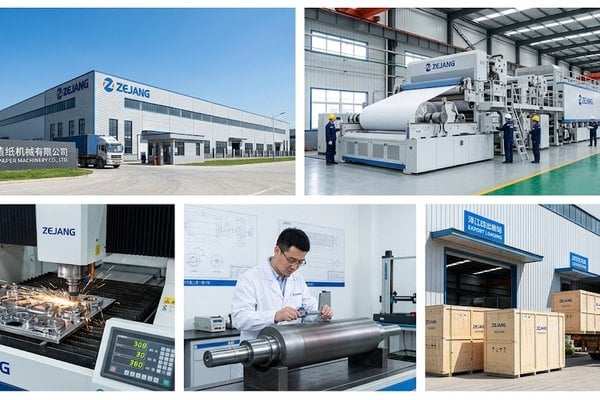
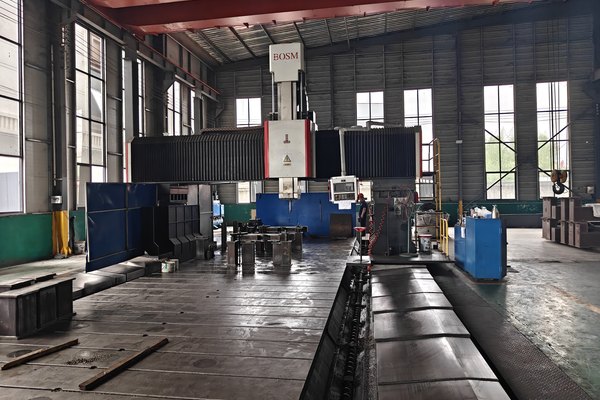
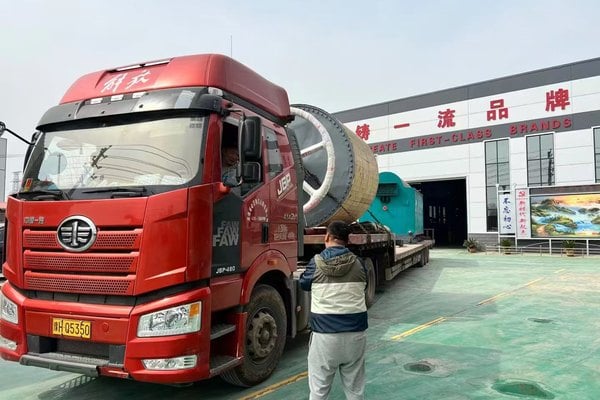
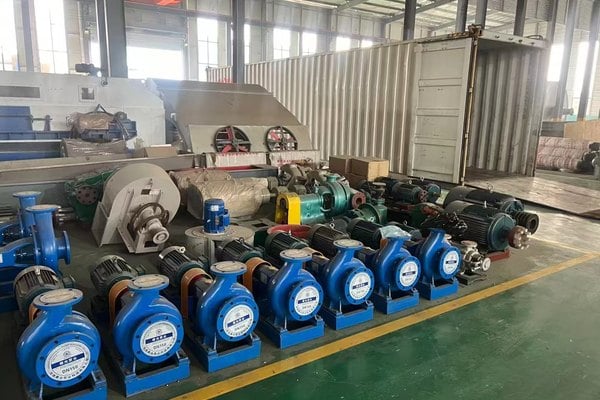
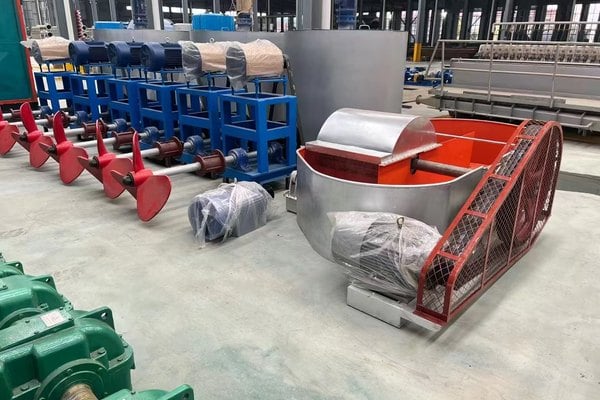
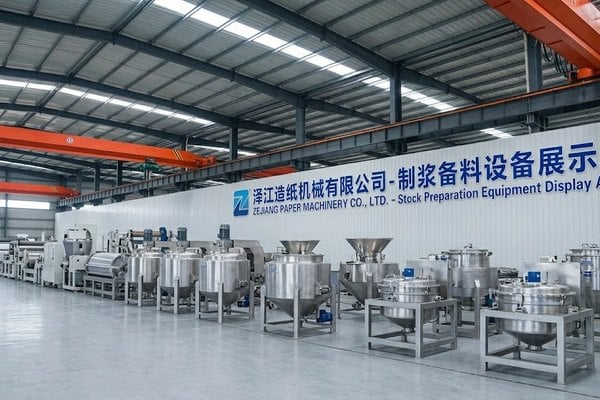
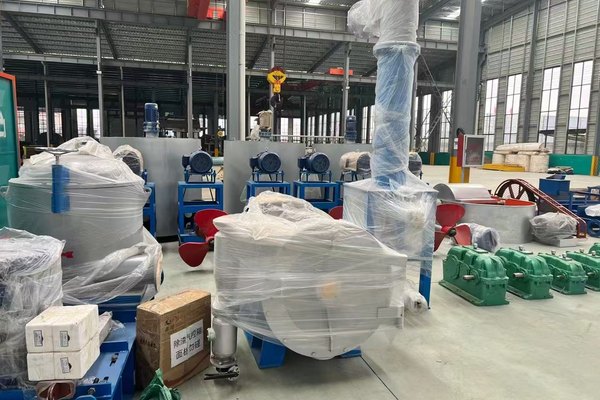
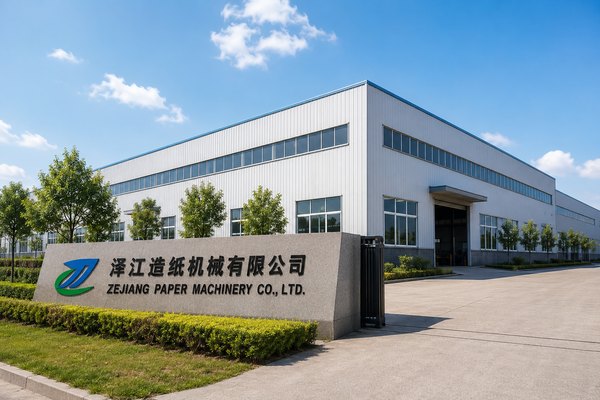
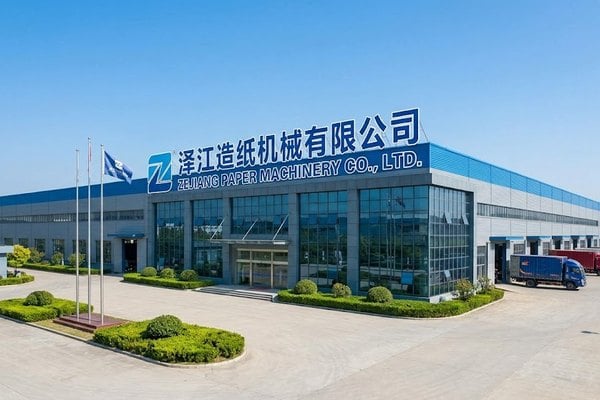
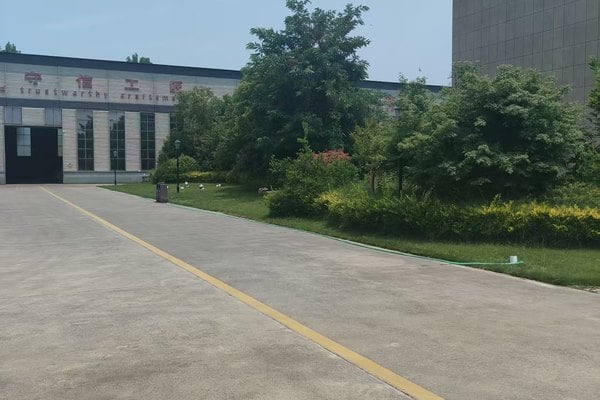
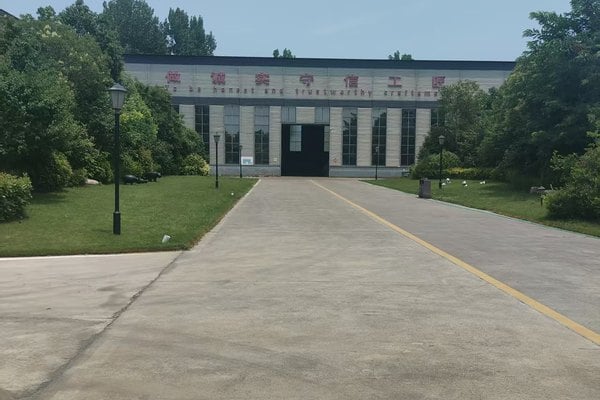
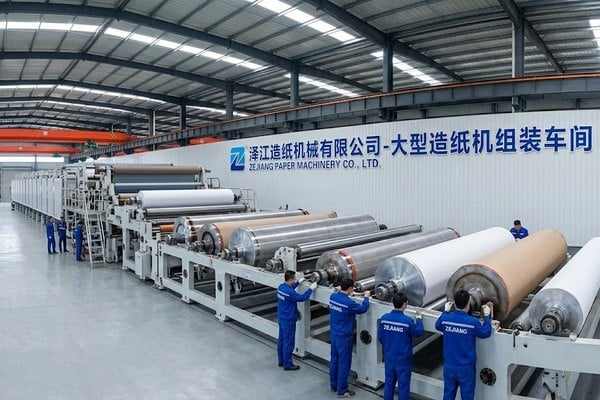
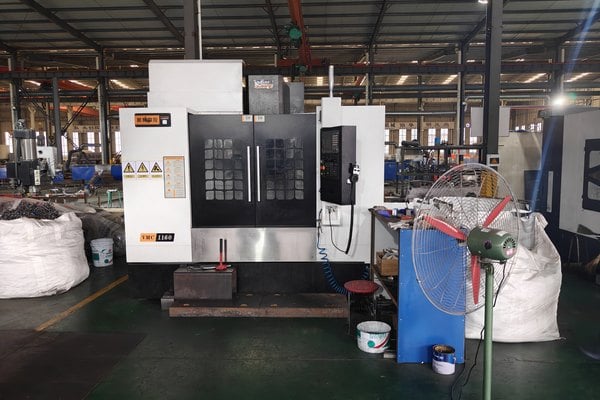
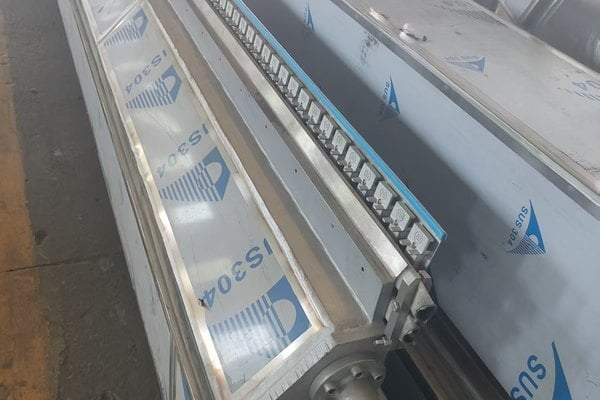
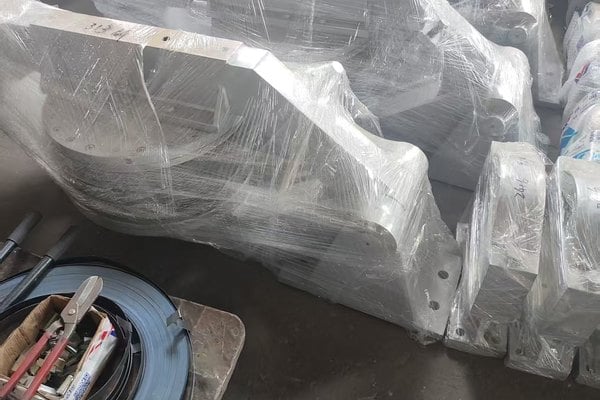
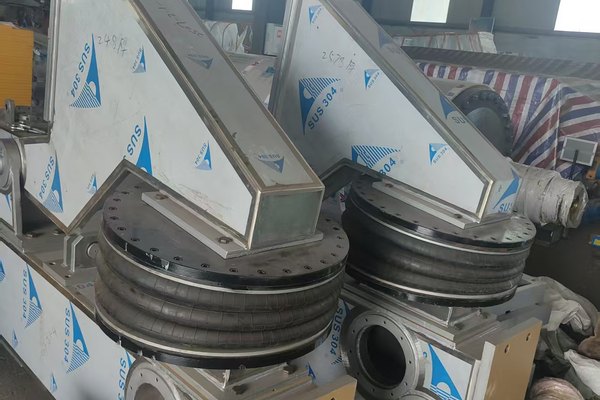
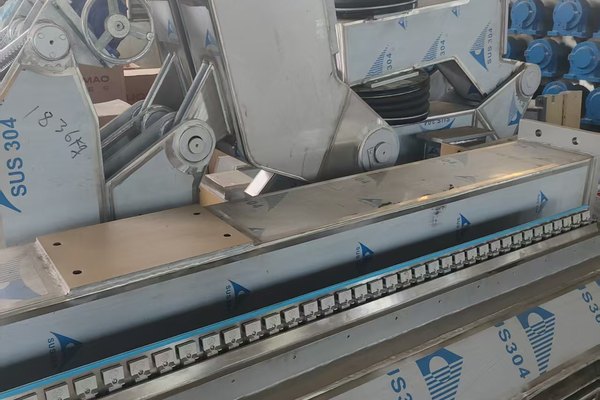
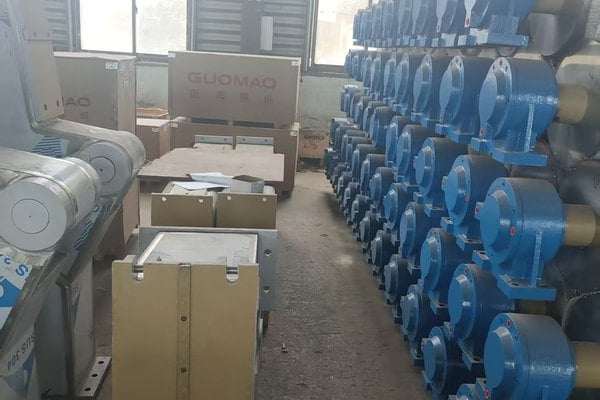
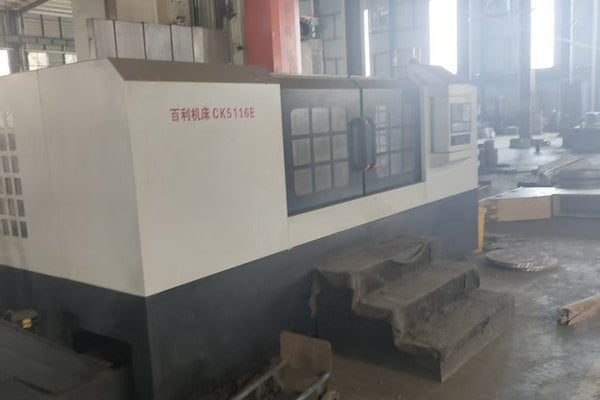
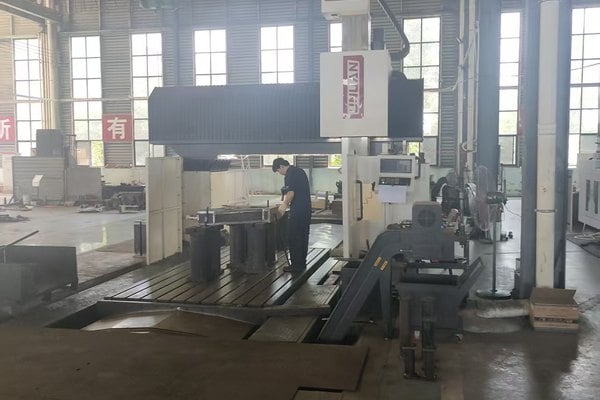
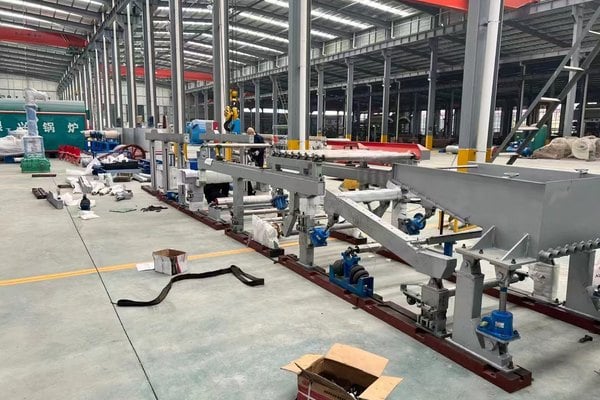
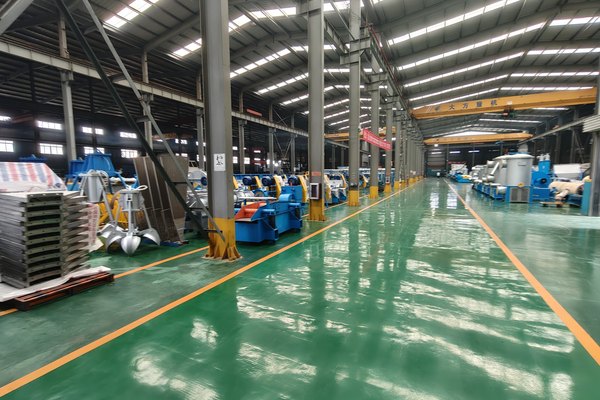
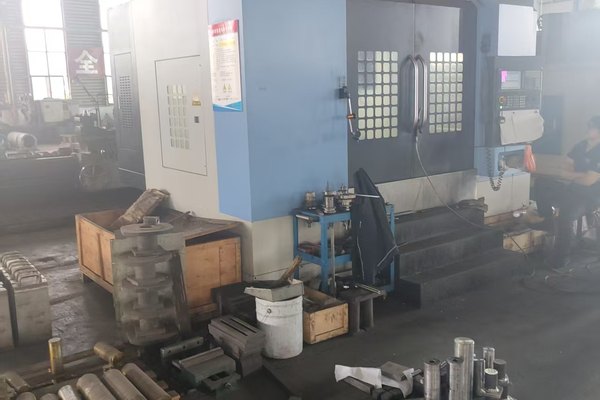
Advanced Used Paper Machinery & Paper Machinery Manufacturing Facilities
Precision Engineering, Assembly & Delivery Center


×
Buying Used Paper Machinery: Price Factors, Lead Time, Relocation & Spare Parts
Purchase price is the smallest part of a used-machine decision. What actually drives your total cost – and where projects slip – is the work around the machine. Here is how to budget it honestly.
01
Price Factors & Refurbishment
02
Relocation Budget & Lead Time
03
Reassembly Services & Spare Parts
Ready to price a specific machine or line, delivered and installed?
Request a delivered-and-installed quotation
→
01
What determines the price of a used paper machine
Rather than a headline number, price is set by a handful of factors you can reason about:
- Refurbishment grade – as-is, inspected, refurbished or rebuilt (see the Grade Scale): widely-cited route figures run from roughly 25-35% of new for as-is to about 75% for rebuilt.
- Brand, age and hours – a premium OEM machine with documented maintenance holds value; an orphan brand without parts support does not.
- Section scope – a complete line, a wet end, or a single calender or refiner changes the number entirely.
- Grade conversion – regrading a machine (for example newsprint to brown packaging) adds rebuild scope but is achievable; the industry does it routinely.
Budget the move, not just the machine
The most common way used-machine buyers overspend is treating relocation as an afterthought. Relocating a single machine can run from 100,000 to 400,000, and a complete line far more; on one project a licensing gap alone left an installation crew idle at a cost near $40,000. Dismantling, shipping, reinstallation, foundations and commissioning can rival or exceed the machine price on a complex line, and site readiness – not the machine – usually drives the timeline. As the relocation trade puts it, buy the result, not the machine: scope the full move before you sign, and downtime stops being the surprise that erases the saving. We quote the full delivered scope so there is nothing to discover after the deal.
Lead time
Often mills purchase used out of speed: A used equipment is available within a few weeks, a new bespoke machine from a European/Japanese OEM may take 12-18 months+. When a company wins an order and they have lost a machine they require capacity, “capacity now”, now.
Relocation, reinstallation & commissioning
From the current position to first production, our services cover: Decommissioning & Marking, Export Packing and Shipment Docs, Site reassembly, Headbox to reel, drive and automation hook-up, Start-up. Our Vietnamese Kraft – machine install shows that the service scope is in working action.
Spare parts & after-sales
There is real basis for the orphan-parts issue – abandoned machines have been abandoned due to part availability issues. Because we in house machine rebuild and cover the rolls, we are able to produce, supply or replace any rotating, wearing parts on any brand we stock or manufacture (whether still produced or not). And support the machine once installed, instead of simply passing over the operating manual and the shop’s telephone number.
Used Paper Machinery Evaluation Tools
01
Used vs New Machinery Savings Estimator
Enter a rough new-machine budget and pick a refurbishment grade to see the capital, lead-time and lifecycle range you could expect on a used machine. Figures are published estimate ranges.
Access Tool02
Machine Fit Finder — Match Your Production
A refurbished machine runs at its original design envelope, so fit comes first. Enter your target production and see which used machine type fits — and how tightly. Specs are confirmed per unit.
Access Tool03
Refurbishment Grade Selector Tier Fit
Four answers map you onto our Scale — As-Is, Inspected, Refurbished or Rebuilt — so you know what work, warranty and documentation to expect before asking for a price.
Access ToolUsed Paper Machinery:
Buyer Questions Answered
Proof not Promise for Reliable Use: A serial number and OEM provenance you can check out, wear-zone teardown with measurement-based condition report, component replacement log for refurbished gear, witness run-down or load test before payment. An industrial paper machinery designed to work 30-40 years makes a inspected, refurbished machine a several decades-of-use treasure if it has had proper inspection. Get a report. Refusal means No Sale.
A refurbished/rebuilt machine (tiers 3-4) comes with a 12-24 month warranty; in fact, on a rebuilt section, that warranty can be linked to the agreed upon performance guarantee values. In field operation, a well rebuilt machine starts to its contracted values rather than tripping out after being moved. As-is machines have no warranty which is the whole reason why we grade and explain them.
According to industry, and dealer estimates, used machinery cost can be somewhere in the region of 40-70% less than new. 10 years of use can come with an estimated overall cost of 25-45% less, despite accounting for additional maintenance. Specific pulp and paper research suggests anywhere from 30-90% capital saving depending on the extent of the relocation. Note these are ranges, and do not provide a specific cost, which will vary depending on the machine, the rating and the extent of relocation.
Yes. This is where a manufacturer owns a dealer. When there’s no OEM of a machine anymore, a full dealer refers you to the DBA-specific machine shop, our CNC automatic production workshop and the roll retrocovery shop re-makes these parts to a tolerance, and re-covers the press and calender rolls, so an orphan brand doesn’t imply an orphan machine.
It is suitable only if the desired grade, trim width and speed of your production fall within the design parameters of a machine – the speed limit of a machine can never be increased by a refurbishment. We profile your operations and their design parameters against the design window of a machine before supplying it and include in the refurbishment scope the necessary steps to accommodate your change of grade (e.g. from newsprint to packaging) if applicable.
Oui. Déconstruction, logistique, remontage sur site et mise en service comme un seul package, qui a déjà fait ses preuves on site in our vietnam kraft line.
“Used / as-is” refers to a machine sold in its original state without any modifications and no warranty. “Refurbished” indicates replacement of wear parts and tested to OEM specs with documentation and warranty. Our Grade Scale explicitly defines these differences, not with a word, but rather with specifics. Always clarify which components have been changed.
Consider purchasing new when the desired performance or quality is beyond the capabilities of any available used machine, or when modern-generation technology is an absolute requirement, or if the cost of an extended rebuild with significant downtime exceeds the cost of a new machine. We are honest when it is best to go new to ensure a future partnership.
![Refiner Plates & Screen Baskets [Complete Guide]](https://zjpapermachine.com/wp-content/uploads/2026/07/refiner-plates-screen-baskets-guide-featured-150x150.png)
![Doctor Blade: Types, Materials & How It Works [Guide]](https://zjpapermachine.com/wp-content/uploads/2026/07/doctor-blade-guide-featured-1-150x150.png)
![Pulping Equipment: How Paper Pulping Works [Guide]](https://zjpapermachine.com/wp-content/uploads/2026/07/pulping-equipment-guide-featured-150x150.png)