Get in touch with Zejiang Paper Machinery Company

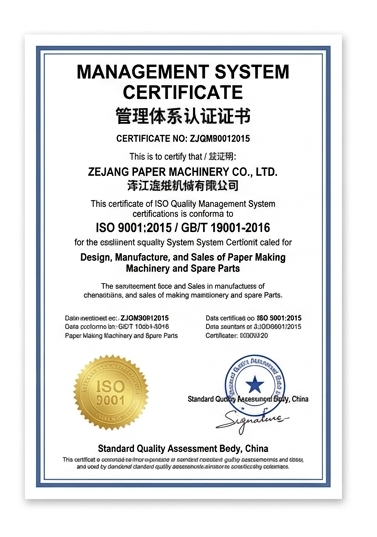
ISO 9001 Certified
Kraft & Corrugated Paper Machine
Kraft & Corrugated Paper Machine, Paper Mill Machinery by Zejiang
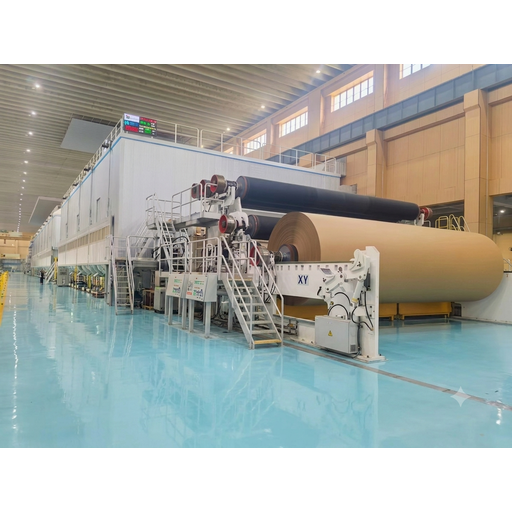
Zejiang manufactures and erects the paper machine which produces kraft, corrugated medium, testliner and fluting paper – four grades of which one (the “machine” grade) is for direct sale and the remaining three (the “process” grades) may or may not be salable depending on paper quality and market demand – from virgin pulp or waste paper. Zejiang is a Kraft & Corrugated Paper Machine Manufacturer located in Henan, China with a singular product offering: paper machines, pulp processing equipment, and the components which enable their reliable operation. There are no other products.
If you’re investing in new capacity, updating an aging paper line, or need to supplement existing Kraft output with corrugated-medium, you’ll find what you need on this page, from machine details and product capabilities to comparisons of our offers vs. local trading companies or older, Western OEM’s.
SYS.ACT_01
SYS.ACT_02
SYS.ACT_03
1600–5000mm
Typical trim width range
For this equipment class 30–380 m/minTypical working speed range
10–750 TPD
Typical capacity range
70–250 g/m²Basis weight range
Across all machine grades
4 grades
Primary Outputs
Kraft · Corrugated medium · Testliner · Fluting
4 regions
Global Delivery
Asia · Middle East · Africa · South America
The ranges provided above are typical of machines of this type based on industry literature and specifications; consult our engineers to ensure you’ve the most accurate specs for your facility’s output and grade mix – we’re unable to provide quotations prior to reviewing your fiber furnish and target paper specifications.
From Waste Paper to Kraft & Corrugated Paper, How Our Paper Machine Delivers
The majority of questions we receive focus on solutions to problems, not product specs: a client has outgrown its capacity, a corrugated box producer needs more corrugating-medium output but wants to avoid the capital expense of a second paper mill, or a client was victimized by a trading company that relabeled somebody else’s equipment as its own. Our kraft and corrugated paper machine will process prepared stock-from virgin pulp, reclaimed OCC or a mixture thereof-through a series of stages involving sheet formation on a wire section, dewatering through presses and then drying via steam on cylinders prior to the winding of the web into parent rolls. The section that follows describes each stage-forming, pressing, drying, and calendering, in order-of a standard paper machine.
When we speak to our mill clients, two specific, real-world costs almost invariably arise in discussions about paper-machine performance, both of which can become extremely expensive when the equipment doesn’t deliver the goods: one lost run of a paper machine will cost you between one to two hours to an entire shift in lost production, and this cost is amplified by the reality that a paper machine built for a limited fiber range will fail when handling varied recycled fiber quality. Why? Firstly, inconsistent raw material quality; the composition of recovered bales differs based on origin, seasonal availability and the presence of unwanted materials, so a paper machine only suited for clean virgin fiber is going to show those variables in web breaks. Secondly, a greater number of buyers now want one paper machine that can shift between Kraft, testliner, corrugating medium and fluting production without any change over because buying and operating four paper machines is an investment nobody want to repeat. Even academic papers analyzing paper machine production efficiency are unequivocal; machine downtime, not rated speed, determines the actual price of paper and breaks occurring during grade changes are a primary, and not uncommon, driver of it.
This is a machine designed and built by Zejiang and engineered and manufactured in-house. Our response to both is a line built around stock-preparation flexibility (OCC, mixed waste, virgin kraft, and blends) feeding a forming and press section sized for the grade range an industrial buyer actually plans to run – not the fastest number we could put on a brochure. Unlike a single-grade specialist line, ours is engineered to absorb furnish variability as a design input, not an exception to work around after commissioning.
Stock preparation upstream of the wire section typically includes a refiner to develop fiber bonding strength, and – depending on grade – a bleach stage where unbleached kraft or brighter grades need it, along with a size press further down the line to control surface absorbency and uniformity between reels. None of this is exotic; it’s the same equipment family used in paper production worldwide, sized to your furnish rather than a generic default.
Contamination is the part buyers underestimate most. OCC bales arrive with staples, tape, plastic film, and wet-strength contaminants that a pulper alone won’t remove. Screen basket selection and agitator configuration in the stock-prep stage determine whether that contamination show up later as a hole in your finished sheet or a stoppage on your line – which is why we treat pulping and screening as part of the machine specification, not an accessory you bolt on afterward. A line sized only for “clean pulp” throughput numbers will disappoint the first week it runs real recovered fiber. If your furnish mix is this variable, request a quote and describe your specific contamination profile – our engineers will give you an honest read on screening and cleaning scope before you commit to a spec.
PAPER MACHINE
Zejiang Kraft, Corrugated, Testliner & Fluting Paper Machine, Models & Grades
One point of confusion we address early: a “corrugated paper machine” isn’t always the machine you’re picturing. Buyers searching that term often mean a corrugator – the downstream line that glues fluting to linerboard to form finished corrugated board. That’s a different machine, made by a different set of manufacturers; corrugator machine manufacturers and paper machine manufacturers are largely two separate industries even though the products end up in the same box. What we build is the upstream stage of paper manufacturing – papermaking itself – the machine that produce the linerboard and fluting stock from pulp or recycled fiber (fibre), before a corrugator later converts it into finished corrugated packaging and board. If you already operate a corrugator and need base paper, or you’re supplying base paper to converters, this is the machine you want. That holds whether you’re specifying a small kraft paper machine for a modest regional recycling operation or a wider line built for full corrugating-medium output alongside kraft.
Grade-to-Machine Fit
Our production line is built to run kraft linerboard, semi-chemical/recycled fluting (corrugating medium) and testliner from the same base configuration simply by changing the furnish blend and the headbox and press configuration for the grades. Official European grade classification (found in recently-filed patent applications regarding fluting and liner manufacturing) lumps together brown kraft liner, brown testliner, semi-chemical fluting and recycled fluting/medium into the category of related grades run on similar forming, press and dryer structures. Hence a well-specified line can handle more than one grade without rebuilding.
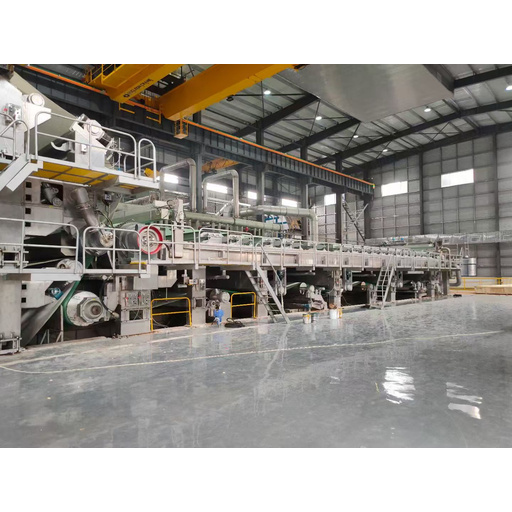
| Paper grade | Typical raw material | Typical basis weight | Best-fit trim width band |
|---|---|---|---|
| Kraft linerboard | Virgin kraft pulp, OCC blend | 90–250 g/m² | Mid-to-wide (2400–5000mm) |
| Corrugating medium (fluting) | Semi-chemical pulp, recycled fiber | 70–180 g/m² | Full range (1600–5000mm) |
| Testliner | 100% recycled fiber (OCC) | 90–180 g/m² | Mid range (2400–3800mm) |
| Duplex board (adjacent line) | Mixed virgin/recycled, multi-ply | 150–350 g/m² | Wide (3800–5000mm) |
01
Bands above are indicative based on published grade taxonomy and typical machine architectures (see References), rather than being an actual quotation. Your final trim width and machine speed are determined by your target capacity, your furnish availability, and your grade mix, confirmed after quoting.
02
Our kraft paper mill scope covers the full kraft paper making machine line, rather than being an individual stand-alone unit. This is a kraft paper manufacturing machine designed as a complete kraft paper manufacturing plant when a customer require one, or a discrete kraft paper machine addition to a customer’s existing kraft paper mill. The same base machine configuration, modified for furnish and final product quality, is what the industry once referred to as a craft paper mill line – craft paper production is synonymous with kraft paper production – although an old, less common, name which may still appear in searches and certain regional suppliers. Flexibility in raw material is broader than just OCC and virgin kraft pulp: wheat straw and bamboo pulp can be run in areas where wood fibre is at a premium or is unavailable, and both pulp the paper in the same way as wood fibre-based pulp with varying refiner energy requirements. This is important to customers marketing their products as biodegradable and recyclable packaging paper, as fibre source is one of the first questions asked by customers and system integrators further downstream.
03
kraft paper production: Kraft paper manufacturing plant capacity estimation follows the same methodology as any pulp and paper mills project, the kraft chemical process (pulp) itself is a known quantity and it’s our role to handle and pulp the resulting paper. Kraft paper packaging, paper for printing, and food grade paper products all share a base kraft paper production line, but differing additive and sizing programmes downstream.
04
Stock prep is part of the line quotation, not an add-on, as achieving the target grades above is contingent upon adequate pulping, screening and cleaning in the pulp-preparing section of the mill. A machine that can make 250gsm kraft linerboard will require a longer fibre furnish, and different pulping settings to a machine making 90gsm testliner and, unless the stock prep system can produce both types of fibre furnish, then machine performance becomes a secondary issue. We question the customer about their required grade mix before we choose the pulpers, screen baskets, agitators, etc., rather than afterwards.
05
Buyers who skip stock-prep specification at the quoting stage often hit a costly mistake in the paper making machine process: mismatched furnish causes web breaks, and retrofitting the pulping stage after commissioning often means a schedule slip of 30-60 days. Zejiang Paper Machinery engineers around that exact problem – the trade-off is a modest speed penalty when a line runs unusually broad furnish variety, and we say so before quoting rather than after commissioning reveals it. This is unlike a generic reseller quote, which often leaves that trade-off undisclosed. As an industrial paper machine manufacturer, our in-house engineering team, ISO 9001 certified with years of hands-on stock-prep experience, specifies pulping and screening to match your target grades before the machine is built, not after.
Wire-Forming Technology, Inside the Paper Machine
01
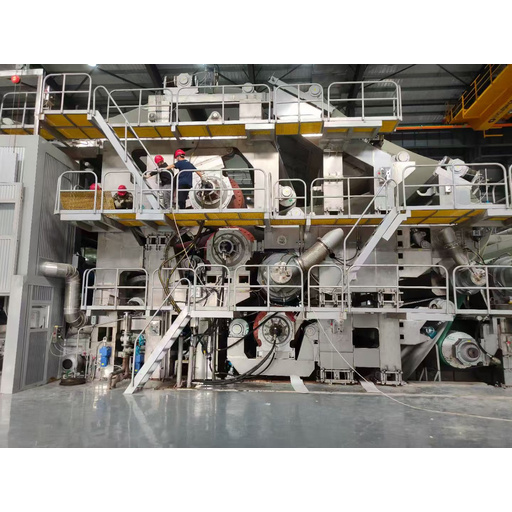
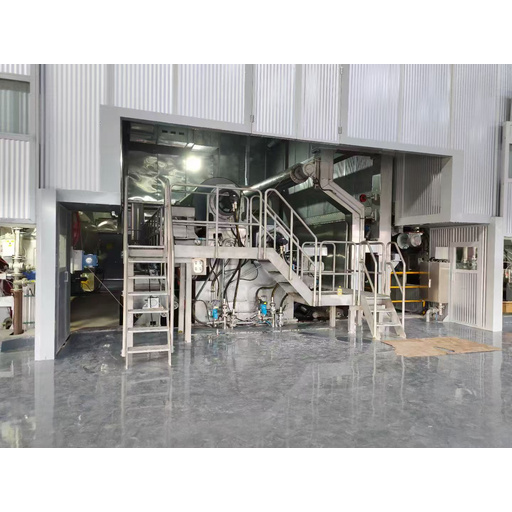
A paper machine machine of this design produce four sections in series: headbox and stock preparation, the wire-forming section, the press section, and the dryer section, before going to calender stack and winder. The headbox evenly deliver diluted stock onto the forming wire where it passes through the gravity drainage area and vacuum boxes that draw off the water, building up the fiber mat. Containerboard production patent literature views low, precisely maintained consistency in the headbox as a operating objective-attainment of uniform sheet formation -although exact consistency target will vary with furnish and grade; asking any supplier about their design, how it’s controlled, and the target consistency range will be a good indicator of a good system.
02
We term this industry-standard wire-forming technology, not some specific patented concept, because the real truth for any producer at this scale is that headbox/press/dryer designs converge among manufacturers. What distinguishes them is how good the build is, how well the control package is tuned, and how closely the upstream stock prep aligns to your furnish. Our forms and press sections are designed for standard paper terminology in containerboard applications across the range from 85-165 gsm – as reported in peer-reviewed containerboard research papers with actual case histories.
“Grade changes are where a line either earns its keep or costs you a shift. We size the press section nip loading and dryer steam zones around the widest grade spread a customer tells us they’ll actually run, not just the headline grade on the quote, because that’s where web breaks happen if you cut corners.”
03
The design of the press section also applies here: you’ve your nip load and your choice of felt selected for the wettest, most difficult-to-de-water grade you’re running in your product mix (usually recycled fluting). The press designed to only handle your best virgin kraft is now operating in a less-than-optimal way. Patent literature for controlling press-section dewatering actually describe exactly the difficulty of trying to control nip pressure and the resulting dewatering throughout the formation, press, and drying process – it’s a defining characteristic of modern paper machine engineering design.
04
There’s one honest concession to make: a machine setup for top grade flexibility across all four of the product types won’t win a race against a single-grade machine, dedicated to one grade only. If, say, 90% of the run time will be on a single grade, we’ll advise that clearly and design accordingly, since there’s a speed penalty for flexibility and we’d rather mention it up front. If we get it wrong it’s a costly affair, with the machine that’s slightly too weak for the task on the grade being rejected by break-up and quality issues within weeks, not as an early, visible gradual decay in quality or output.
05
On some lines, a shoe press replaces a traditional roll press at the wet end, increasing the dwell time at the nip and pushing the dryness level higher before the sheet even enters the dryers – essential if a grade is particularly difficult to dewater. While many engineering decisions go into the Dryer section, steam-heated cylinders efficiently bring the sheet from a wet, roughly 55-60% moisture state after pressing down to the low single-digit moisture range required for a stable finished reel – exact figures vary by grade, basis weight, and press configuration – and the number of cylinders, steam pressure staging, and felt/fabric choice all influence the heat transfer efficiency, and therefore energy cost, per ton of paper – a cost that accumulates every day the machine runs, as opposed to the one-off capital cost focused on by buyers. Zejiang’s wider product portfolio also incorporates tissue machine lines based on related dryer principles, plus kraft and corrugated grades that this page centers on – request if a hybrid or turnkey project scope matches your site requirements. Once dried, the final sheet smoothness and caliper are set at the calender prior to the finished parent roll winding; under specifying this stage is a common culprit for a otherwise well-constructed machine delivering paper with unacceptable smoothness or thickness variation.
06
Zejiang’s own engineering team defines the nip loading, dryer steam zones, and control tuning for each project, rather than shipping one fixed design for every customer – years of machine build experience with various grade combinations enable that level of customized tuning as opposed to guessing. If you want more detail on how your grade mix-specific tuning will be achieved, request a quote and our engineering team will review the wire form, press, and dryer section design relative to your capacity target.
07
Following the main paper machine technology outlined above, a slitter-rewinder perform the process of converting the parent roll into narrower finished rolls – a rewinder station is included on most of our lines, rather than separate purchase. Dewatering takes place earlier, in the pressing and drying, while the rewinder’s only job is to rewrap the dried parent roll into the rolls that your customers demand. Roller quality throughout the line, PLC control systems for level of automation, and a well-defined stock prep system collectively determine if a new mill achieves its target in the first quarter of operation or spends that quarter troubleshooting. None of this is dressed up as a new invention in paper making machinery – it’s just systematic, industry standard engineering that’s applied thoroughly throughout every stage from raw pulp to finished paper.
08
A quick note on terms buyers mix up: a “paper mill machine” and a “paper-making machine” are the same thing in our world – the wire, press and dryer sections described above, sometimes with the upstream stock preparation system bundled in and sometimes quoted separately. Pulp production and raw material pulping happen before any of this, in the pulping process that turns bales or virgin fiber into usable stock; what we build picks up from there. Paper strength on the finished sheet comes down to how well that stock is refined and how consistently the drying system removes water without over-drying, which is also what determines whether the finished paper sheets hold together well enough for whatever converting or making paper process happens next at your customer’s site. Downstream of the reel, slitting and rewinding is usually the last step before rolls ship, and it’s worth specifying alongside the main line rather than treating it as an afterthought.
Choosing a Paper Machine Partner, Specialist Manufacturer vs Trading Company vs Legacy OEM
Buyers looking at this type of machine are typically performing two different kinds of comparison concurrently and we think both deserve an answer – not a dodge. Buyers know they might buy the wrong machine, but what many don’t fully consider is the hidden cost that reveals itself down the road: a reseller that can’t deliver a replacement headbox for 60-90 days because they don’t manufacture the component, or a mega-OEM proposal designed for a machine scale you’ll never require. Zejiang addresses both by focusing narrowly as a single-product-line manufacturer, since a wider catalog inevitably spreads the engineering talent and depth across multiple product families.
Specialist manufacturer versus trading company.
You’ll find suppliers listing paper machinery equipment also selling tissue making machines, packaging machinery, or products outside the paper industry altogether. While that’s not inherently bad, it’s always worth asking the vendor directly if they’re a paper machine manufacturer or simply reselling another company’s machine under their own brand name. Zejiang specializes in paper making machines, pulp process machinery, and paper machine spare parts, and that’s it. When you talk to us about a dryer cylinder or a headbox, you’re talking directly with the engineers who built it. As paper machine manufacturers and kraft paper machine manufacturers go, our narrow focus is an uncommon business model-ask your commercial paper machine manufacturer direct about this if you’re uncertain.
Regional manufacturer versus legacy Western OEM.
The global pulp and paper industry has long included both a handful of large multinational equipment builders and a broader tier of regional manufacturers, and the largest, highest-speed paper machine projects effectively dominate the market for a small number of established European OEMs, and that’s not a space we participate in, nor would we claim to. But most mills shopping for mid-capacity kraft and corrugated-grade lines aren’t looking at that scale in the first place. Instead, these mills typically weigh the value provided by manufacturers who differentiate on engineering depth, regional installations, and delivered TCO – not simply by matching a mega-OEM nameplate sized for a project far larger than they need. If your mill fits this mid-capacity space, the correct comparison is regional engineering and delivered TCO. We openly say this because we would rather lose an order on the correct terms than win one on terms we can’t stand behind. (This reflects our own read of the market, not a numbered industry study – ask us directly for the reasoning behind where we’d place your specific project.)
| Factor | Zejiang (specialist manufacturer) | Generalist trading company | Mega-OEM (largest, highest-speed segment) |
|---|---|---|---|
| Core business | Paper machines + pulp equipment + spare parts only | Paper machines alongside unrelated equipment lines | Full-scope paper & board machinery, global scale |
| Typical capacity fit | 10–750 TPD, mid-capacity focus | Varies, often reselling third-party builds | High-capex projects far larger than mid-capacity mills need |
| Spare parts continuity | Direct — same manufacturer builds parts | Depends on original OEM relationship | Direct, at OEM pricing/lead time |
| Engineering responsiveness | Direct factory engineering contact | Passed through a reseller layer | Structured, often slower for smaller accounts |
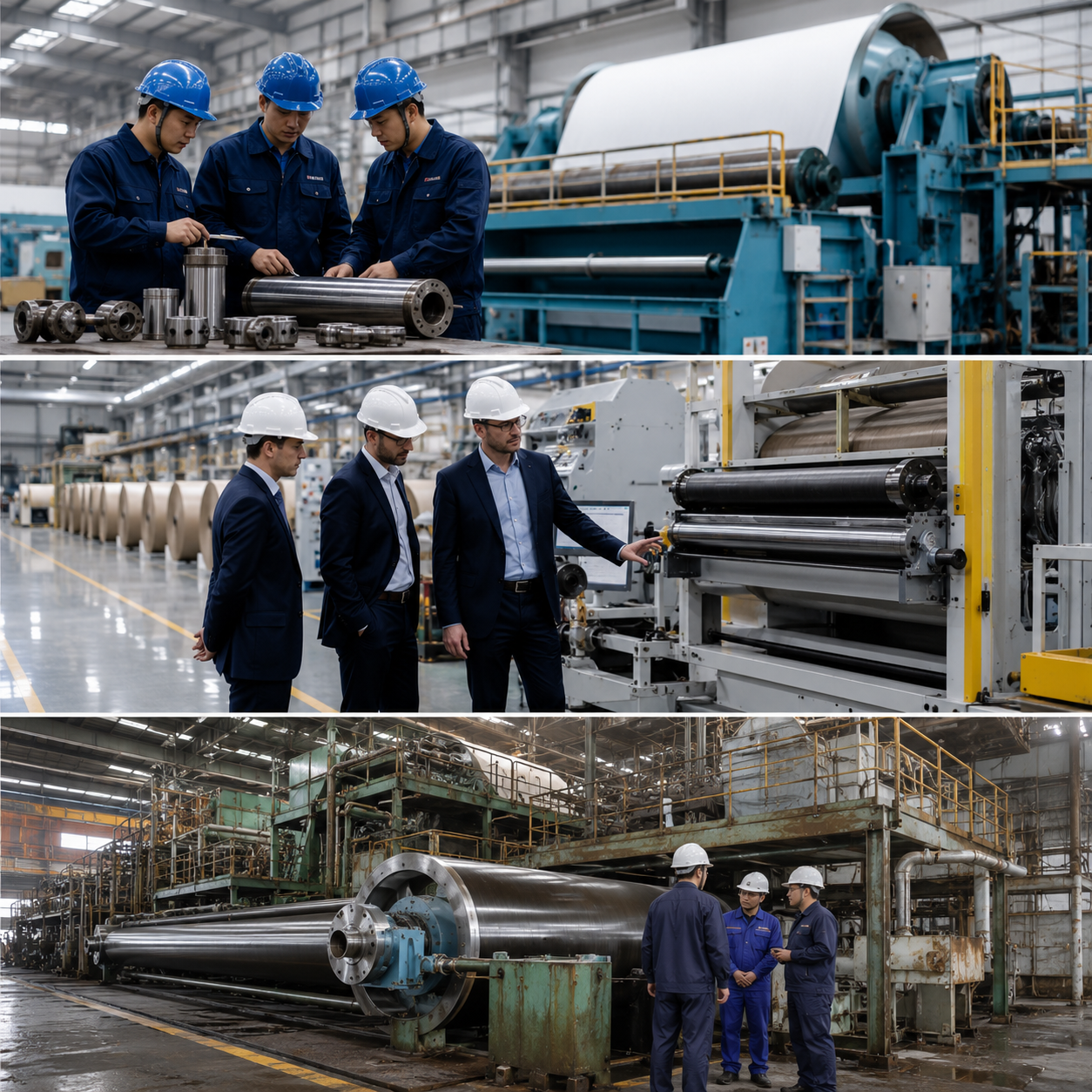
We’d rather lose a quote than win one based on an unsupported claim. When you see a competitive brochure highlighting a top speed or capacity number that appears a bit too high given the listed trim width and the grade, ask about the specific operating conditions behind that number – furnished type, basis weight and target moisture content are all variables that affect achieved speed and a headline number is meaningless without that supporting context.
TCO – That’s the figure worldpapermill.com recommends for comparison of our manufacturer. Here, a good specification go beyond the machine’s sticker price and may include; per-ton operating costs (energy in dryer section, felts/wires longevity) spare parts procurement turnaround in event of mechanical failure, the degree of engineering support available to assist your operators as they get up to speed during the initial 6 months of the machine start-up and beyond. An economical machine that fails to support its parts or offer minimal start-up expertise can result in a three-year total operating expense greater than purchasing a reasonably-priced machine that provides factory support, so, we can walk you through the specifics of the comparison.
Paper Mills & Recycling Plants We Serve
The machines that leave our doors and the spare parts we deliver reach four basic classes of customers. Those are new or expanded capacity paper mills; tissue manufacturers; packaging paper producers who need base kraft and corrugating medium grades; and recycling plants who convert recovered paper into marketable paper products rather than selling it in bale form. We’ve supplied new machines, used and refurbished lines, and parts and upgrade equipment to four continents and multiple Asian countries, the Middle East, Africa, and South America since our establishment.
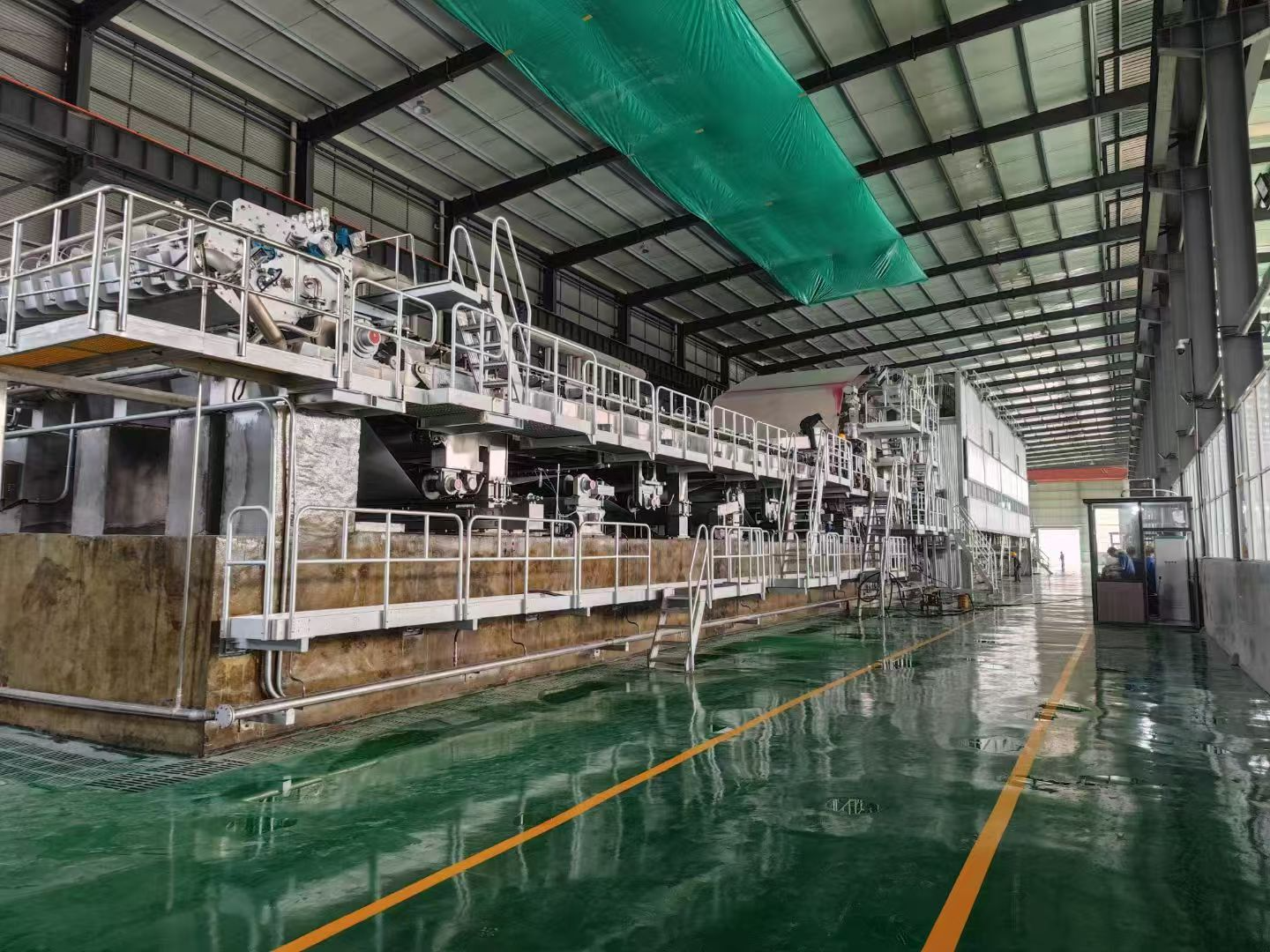
The most common form of machine or line application that we see involve a recycling or packaging operation that already receives OCC and wishes to process recovered fiber into a saleable grade of corrugating medium or testliner on their site instead of baling it and shipping to a non-integrated mill at reduced margin. Many published case studies on small and medium scale recycled-paper manufacturing demonstrate this precise type of machine use: processing recovered paper into saleable grades (rather than exporting it as baled material) via pulping, screening, and forming. It’s this same operational model we tailor our equipment for more frequently than any other.
TECHNICAL MIX
Outside of the kraft and corrugated grades this page centers on, our broader customer base also includes tissue paper converters and general industrial paper producers who need reliable paper recycling capability as part of their line, not as a bolt-on. Recycled pulp handling, screening to remove excess water and contaminants before the wire, and a control package with the degree of automation your operators actually want (fully manual through full PLC) are all things we configure per order rather than defaulting to one fixed setup. Finished paper rolls off the reel are the shared output regardless of which of these customer groups you fall into.
A second pattern we observe frequently: an existing single-grade mill (commonly a kraft paper producer) who seeks additional corrugating medium capacity without constructing an entire second facility (as discussed in grade-fit; the furnish and press section settings should accommodate your full range of desired grades); we deliberately engineer a path for this transformation. The alternative to purchasing a single, adaptable line of our machinery – i.e., purchasing two, non-flexible lines to accommodate two separate paper types – is an investment that few operators at this production capacity wish to absorb and it’s best solved by utilizing machine configurations whose parameters are fully defined in referenced grade tolerances to manage output flexibility and predictability.
Our machines use a standardized conversion process beginning with receipt of recovered old corrugated containers. These bales undergo pulping to produce slurry before screening removes contaminants prior to introduction to the forming or wire section. Machine operation from that point forward is identical whether you call the final product recycling, recycling paper, or a production line of recycled-fiber paper. Virgin furnishes for wood pulp are easily blended into these processes on our virgin fiber lines, and the basic pulp process is fundamentally the same, since the machine doesn’t care what type of fiber it forms – regardless of whether the operation is a pure recycling plant or a combined virgin/recycled-fiber facility, they all share the fundamental task of forming paper from either virgin or recycled fiber inputs; it’s an entirely upstream process, not a function of the paper machine itself.
A common, costly mistake we see: a mill assumes a single generic line can handle both virgin and heavy-OCC furnish without adjustment, then discovers the trade-off in wire life and web breaks within the first 30-60 days of operation. Zejiang Paper Machinery engineers stock-prep and forming-wire selection around your actual furnish mix from the start, rather than leaving that gap for you to discover after startup. This is unlike a generalist trading company’s approach, which quotes one configuration regardless of furnish variability. Our in-house, ISO 9001 certified engineering team has years of experience matching wire and press specification to recycled-fiber content before the order ships, not after the first unplanned stop.
While a typical generalist trading company will give you a quote for the machine they’ve on the floor, we’ll ask what your specific recovery stream and grade mix look like and then advise on the configuration. Request a quote with your feedstock specs, and we’ll tell you honestly whether a single, versatile line is going to be your better choice or if you need two dedicated machines for your capacity.
A third common situation which warrants calling out is mills that are replacing an aging line rather than adding to their capacity. In the case where you’re looking to replace an old machine that has become cost prohibitive to maintain (e.g. high number of web breaks, increasing energy cost per ton, obsolete replacement parts), the investment case differ. Your analysis is based on a current set of numbers you already have in your possession – uptime, downtime, cost per ton, energy use per ton – rather than a wholly new business case that might be associated with a greenfield project.
No specific, named customer case studies are featured on this page but if you want to hear more references for specific capacity range, feel free to ask us for some references when we do the consultation. We’re happy to provide what may be relevant and verified in your area.
Scroll for Specs
Certifications, Spare Parts & Long-Term Support
We fabricate the paper machine and its parts in our facility – this design advantage enable our team to integrate wear-resistant components with high certainty as standard parts – there’s no reason for us to consider these as optional add-ons. We maintain a parts inventory of paper machine replacement components as well as other general wire forming and pressing components commonly required: dryer cylinders, press rolls, vacuum rolls, couch rolls, headboxes, pulpers, refiner plates and screen baskets, agitators, felt rolls. For example, headbox air-removal engineering represents an example of a complex component in the paper machine and if these are manufactured and assembled to less precise tolerances than the intended original, your formation will suffer as a direct result.
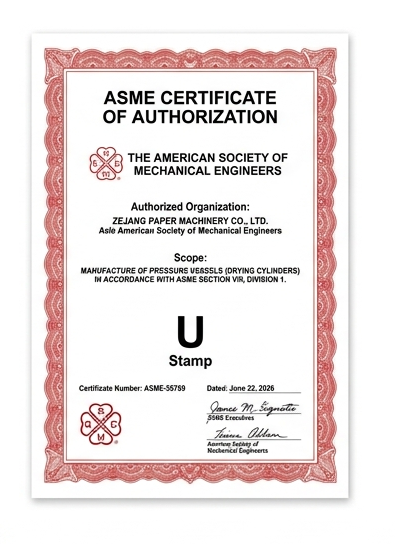
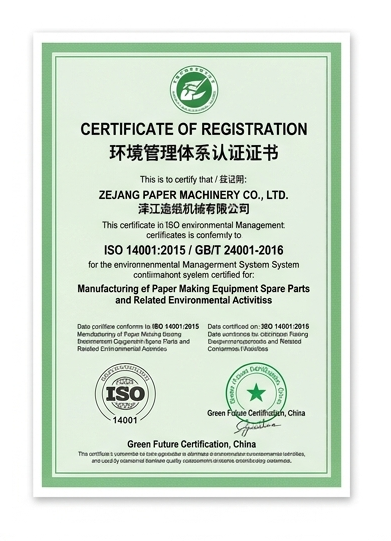
ISO 9001
Quality management (verify certificate scope with our team before order)
CE-compliant options
Available for EU-bound shipments, confirmed per contract
Direct factory support
Installation, commissioning, operator training
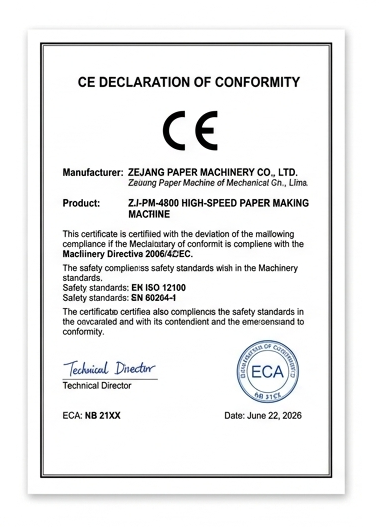
Depending on configuration and target market we also manufacture machines that carry a CE marking. Copies of current CE certifications will be provided on quotation.
It’s beneficial to pre-plan machine maintenance for before you turn the power on to your new line and not after your first unscheduled stop. Felts and wires will have to be changed out based on grade and usage cycles (recycled fiber will affect wire and felt life in comparison to virgin pulp), press rolls need their coverings inspected on a scheduled basis and your cylinders dryer bearings and rotary joints should be periodically checked for any indications of impending failure, lest they lead to unplanned stops. A customized maintenance schedule tailored to your production and grades will be included in your documentation set – not the generic schedule that accompanies all manuals.
Spare parts lead time is a practical question for buyers to ask when they don’t have to ask it. As Zejiang makes headboxes, press rolls, dryer cylinders, and vacuum rolls in-house, over years of manufacturing experience we’ve drawings and patterns for the machines we’ve supplied, making replacement parts availability much quicker than if the parts were coming from a manufacturer who never made the original machine. Just ask a vendor what lead time they’ve for a replacement dryer cylinder or headbox – their answer says volumes about how real a part of their business they think spare parts are.
×
![Enlarged Image]()
Kraft & Corrugated Paper Machine Engineering Tools
Paper Machine Capacity Calculator
Estimate daily production capacity (TPD) from trim width, machine speed, and target basis weight — the same formula paper mill engineers use to size a line: trim width (m) × speed (m/min) × basis weight (g/m²) × 1440 min/day ÷ 1,000,000, adjusted for realistic operating efficiency.
Access ToolMulti-Grade Fit Selector
Select every grade you need to run on one line. We’ll show the trim-width band that covers all of them without a rebuild — and flag it honestly if your combination needs a compromise.
Access ToolWhich Configuration Fits Your Mill?
Five questions about your furnish, grade mix, capacity target, automation preference, and project type — we’ll summarize the configuration profile our engineers would start from.
Access ToolSpecialist Manufacturer vs Trading Company vs Mega-OEM
Filter by what matters most to your decision — the highlighted column shows which supplier type tends to have the edge on that factor.
Access ToolFAQ
What are the two main types of paper machines?
There are two primary machine configurations available: a Fourdrinier machine (flat-wire) and cylinder mold. For higher speeds on linerboard and corrugating medium, fourdrinier (flat wire) is common; the cylinder mold configuration uses a stock-filled vat with rotating molds and is more often used for thicker boards and special ties. We’ll work with you to determine the best configuration based on your specified grades and speeds during the technical review process.
What’s the difference between testliner and kraft liner?
Kraft liner is primarily made from virgin kraft pulp fiber to provide superior strength for heavy-duty packaging. Testliner is usually made from OCC (recycled fiber) and is used when cost or a higher percentage of recycled content is more important than ultimate strength. Both types are produced on similar machine architecture, making it possible for one well-equipped machine to run either grade.
What’s the difference between fluting paper and kraft paper?
The wavy paper inside corrugated boxes (corrugating medium) is usually made from semi-chemical pulp or recycled fibers and is lighter in weight. kraft paper is the stronger paper more often used for outer liners or direct packaging applications and can be made from the same machine with slight adjustments to settings.
How much does a paper machine like this cost?
It varies based on the desired output, width grade, automation levels, flexibility of trim – no honest quote is possible without this data. Refer to the pricing-factors diagram above or request a custom quote with the desired capacity and grades.
Who actually manufactures paper machines vs. reselling them?
This is a valid question to pose directly to your potential suppliers. Many dealers who supply paper machinery also offer other, totally different lines and could potentially be a middleman for another company’s manufacturing facility. Ask your supplier if their organization manufactures its own machinery in that equipment sector — this is important for future spare parts and engineering after your sale.
Can this machine run on 50Hz or 60Hz power, and can the control system be in a different language?
Yes this is quite common and not a request for anything out of the ordinary. Just make sure you provide your site power specification and preferred language of the HMI when asking for a quote so that we incorporate this into the design as opposed to rectifying post commissioning.
Is this page describing a new machine or used equipment?
The page also addresses new-machine capability. Our Used and Refurbished paper machines, as well as a full range of mill upgrade options, are offered under separate product/service offerings. If you’re considering either, be sure to note it when inquiring, as lead times, prices and inspection procedure are significantly different.
What raw materials can this machine process?
Virgin kraft, pulp 100% recycled fibre (OCC), and combinations of the two depending on target grade – the same raw materials used at paper mills facilities throughout the world – not a unique, in-house furnish. High-quality Corrugating Medium and Testliner run a greater proportion of recycled fiber than the higher ratio of virgin fiber usually found in Kraft linerboard, the standard strength grade. Your stock-prep equipment is custom designed around the specific furnishes you use – no generalizations or average use cases.
How long does installation and commissioning take?
Varies with the trim width, as well as site-readiness (foundation, utilities, building), and also if any stock-prep machinery are in the scope – we’ll provide you with project-specific scheduling once we’re knowledgeable about the specific circumstances at your site – versus simply giving you a generalized number that doesn’t stand up when the container appears.
What happens if a part fails after the warranty period?
We make our own wear parts: dryer cylinders, press rolls, headboxes, etc. Our replacement parts are sourced from the same production line that built your original equipment – not from a replica of our original. We would much rather you call us directly to order a spare part than have your maintenance team scour the market for “good enough.”
![Refiner Plates & Screen Baskets [Complete Guide]](https://zjpapermachine.com/wp-content/uploads/2026/07/refiner-plates-screen-baskets-guide-featured-150x150.png)
![Doctor Blade: Types, Materials & How It Works [Guide]](https://zjpapermachine.com/wp-content/uploads/2026/07/doctor-blade-guide-featured-1-150x150.png)
![Pulping Equipment: How Paper Pulping Works [Guide]](https://zjpapermachine.com/wp-content/uploads/2026/07/pulping-equipment-guide-featured-150x150.png)