Get in touch with Zejiang Paper Machinery Company
Paper Machine Installation & Commissioning Service
A properly managed order at a paper machine installation site is either a ready, running line or a static field of crated components. We take our role as the erecting contractor seriously; on the site itself, our engineers manage the erection, alignment, and trial-run start-up – whether a brand-new machine, a machine line that’s being moved, or equipment from another supplier – and you sign over on the first sheets of paper that the machine produce, not on a stack of parts with a manual.
SYSTEM ONLINE // ALIGNMENT IN PROGRESS
3 Stages
Site Readiness → Alignment → Trial-Run Sign-Off
New + Relocated
Machine scope covered
On-Site
Engineer-supervised erection
Global
Deployment across Asia, Africa, Middle East, South America
Installation Service Scope
Unplanned Risk Exposure
Unplanned downtime may be the most costly line item in any mill budget today – widely-cited industry estimates put unplanned downtime in manufacturing at tens of billions of dollars per year, with outages at large facilities running past $100,000 per hour once lost production, idled labor, and scrap or rework are counted.[1][2] The vast majority of this risk is locked in or avoided in the field, before a machine ever cuts its first sheet.
We support installation on three ownership types, since a mill’s next new machine rarely exclusively fits one type. Each category leverages the same disciplined approach to on-site erection – building section by section from the formers, to the presses, to the dryer group and then the calender, reel and winder section, with checks at each stage against baseline specifications before moving to the next – no matter the installation type.
It’s standard best practice for pulp and paper equipment, and the very same sequence our engineers would follow in a brand-new install, a relocation or with equipment from another OEM.
| Scenario | What’s covered | Typical trigger |
|---|---|---|
| New machine, factory-supplied | Full erection, drive/roll alignment, utility tie-in support, commissioning — see our turnkey paper mill project service for full-line scope | New line or capacity expansion |
| Relocated / re-installed machine | Dismantling coordination, re-erection, re-alignment, re-commissioning at new site | Site consolidation, plant relocation, secondhand-machine purchase |
| Third-party / other-supplier machine | Installation and commissioning support scoped case by case, including any applicable local conformity requirements after relocation or substantial modification — often paired with our rebuild and upgrade service | Mixed-vendor lines, rebuild projects, machines bought used from another OEM |
Complete paper machines are commonly relocated across mill sites and even across country lines; we’ve seen multi-national relocations documented in the industry press, most recently a 2025 move of a containerboard machine from a shuttered German facility to Paraguay.[3] Still, moving and integrating a competitor machine isn’t a plug-and-play proposition – according to the UK Health & Safety Executive guidelines for complex machinery installation, whether the responsibility for a relocated or altered machine falls with the installing contractor, the OEM, or some shared arrangement, “depends on the particular case and on an assessment of the risks involved”. That’s why we scope relocation projects on a case-by-case basis rather than offering a packaged price.
Paper machine installation cost and paper mill equipment installation cost are both inextricably linked to machine size, site readiness, and whether it’s a new build or a relocation, which is why we quote each project individually rather than publishing a flat rate.
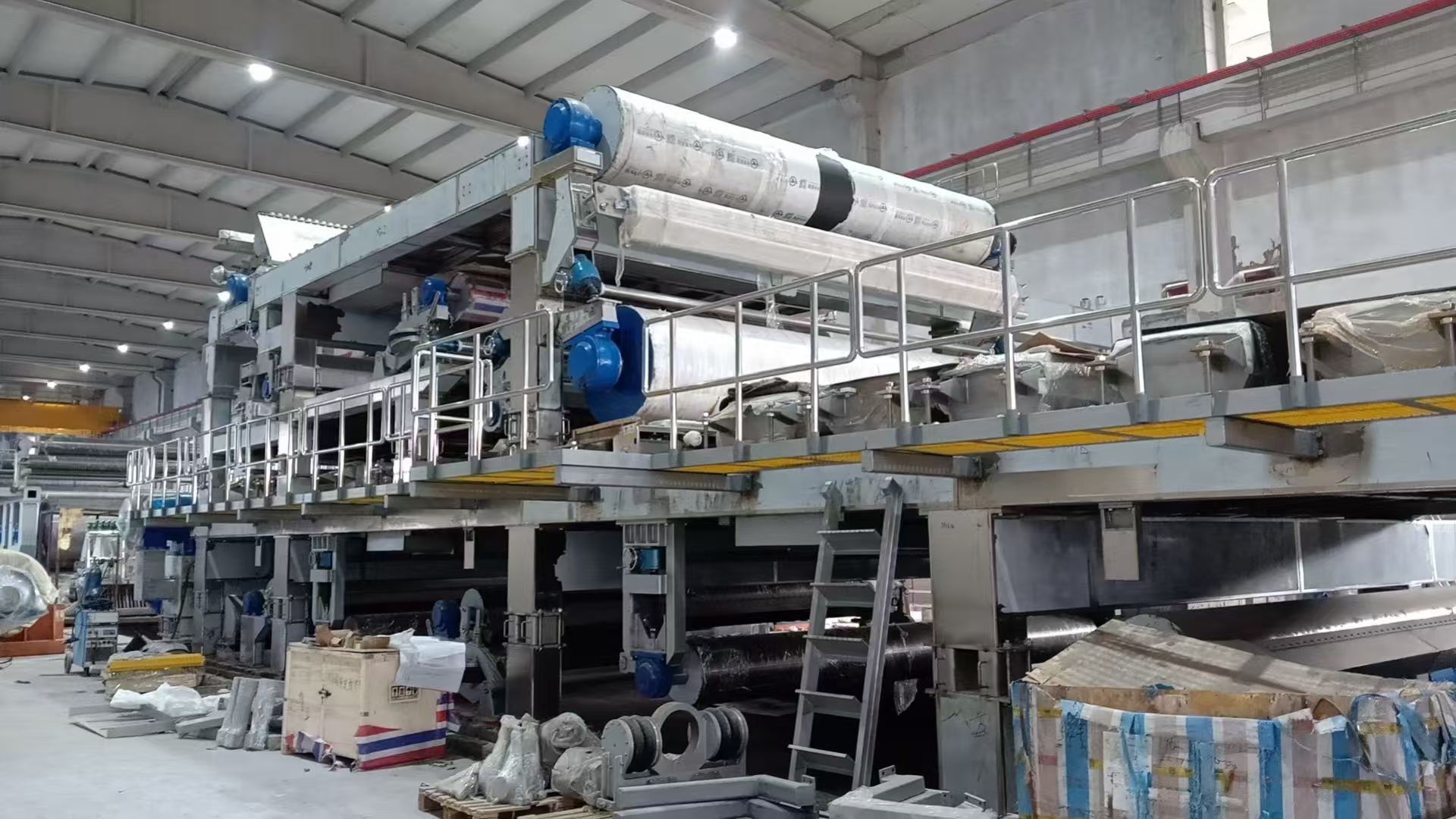
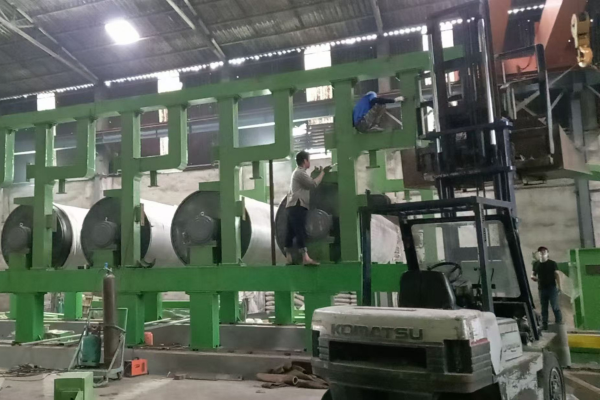
Used paper mill equipment installation and relocation projects follow the same assessment, scoped case by case rather than assumed to be routine.The pictures our field teams have collected at sites during recent coated white-board and kraft paper machine installations are all the same story – installation and alignment represent the largest chunks of the timeline, and by the time trial run begins, all of the hidden problems that were invisible at the factory begin to surface.
// Field Monitoring Feed
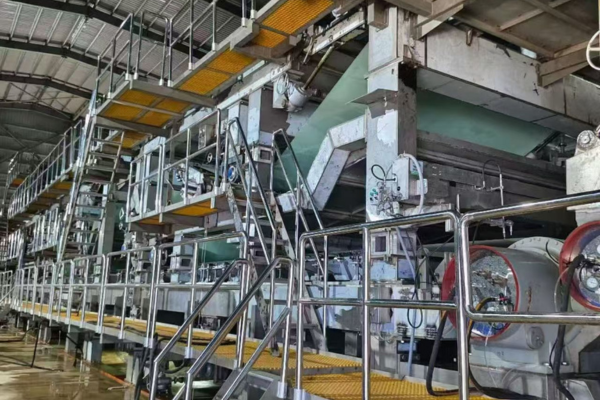
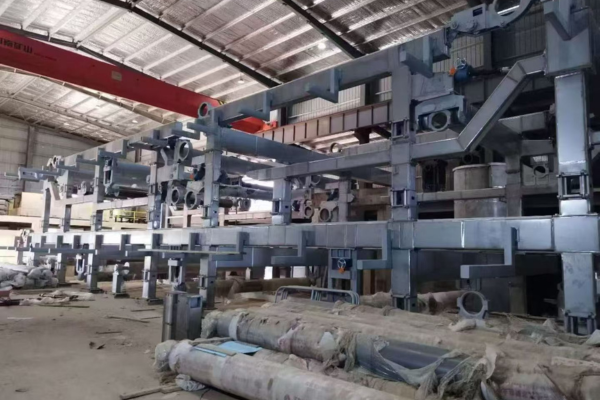
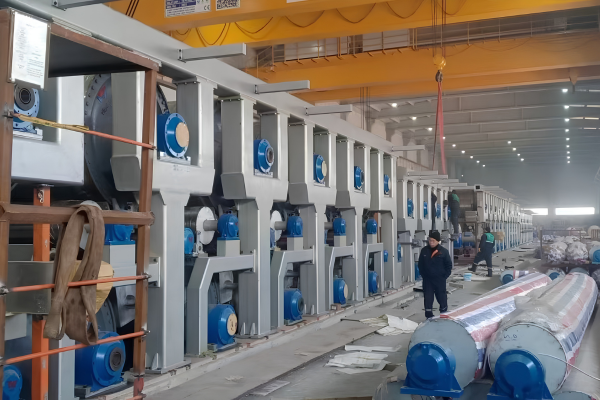
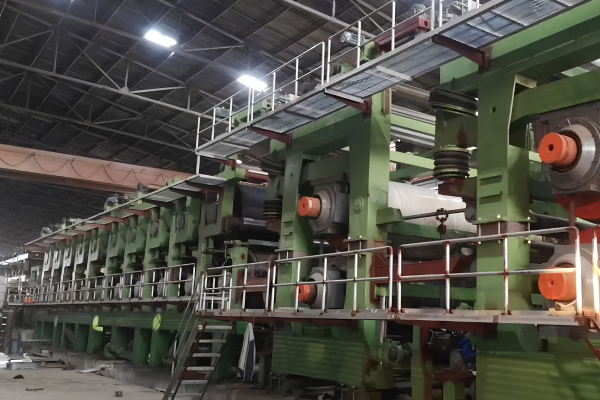
Coated white-board paper machine, field installation
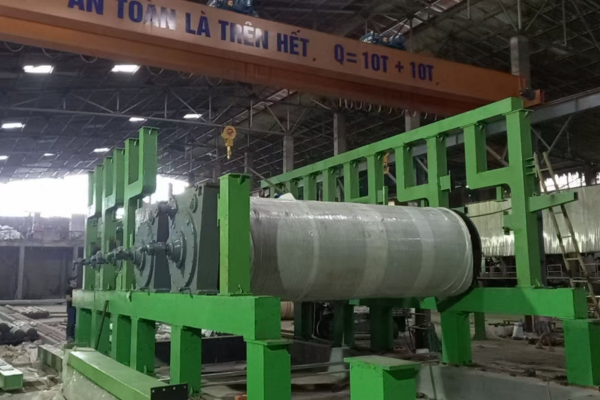
Kraft paper machine, section-by-section erection
On-site alignment work ahead of trial-run
Recent Field Projects
Scope-of-work tables are one thing; what the crew actually handles on a given week is another. Three recent projects from our field archive cover the three ownership types described above – a new-build coated white-board line, a new-build kraft line, and a used kraft machine relocated and reinstalled at a customer site in Vietnam.
Considering a relocated or secondhand machine for your next line?
Request Installation Support →
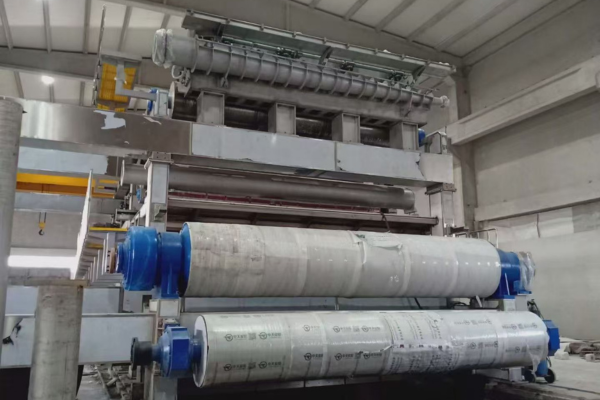
New-Build / Coated White-Board
Section-by-section erection on a new coated white-board line, from former through to the calender/reel section, ahead of trial-run start-up.
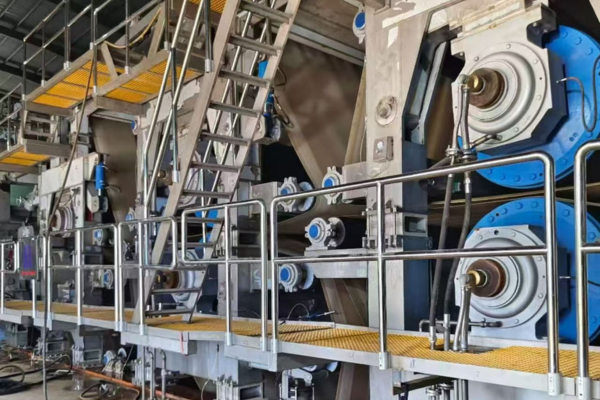
New-Build / Kraft
New kraft machine erection, engineer-supervised from foundation check through alignment and commissioning sign-off.
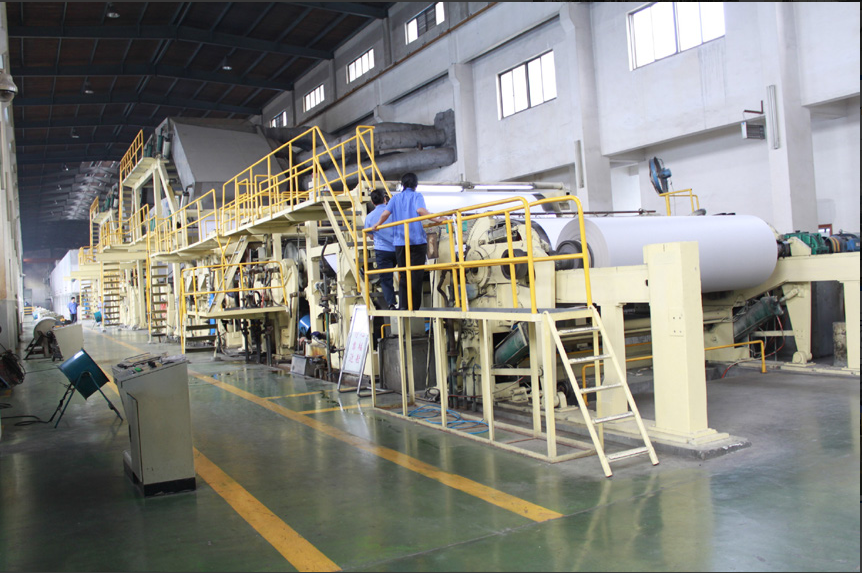
Relocation / Used Kraft Machine, Vietnam
A used kraft paper machine, relocated and reinstalled by our field team at a customer site in Vietnam – shown here running production after commissioning, the relocation scenario described in the table above.
Commissioning & Trial-Run Process, the 3-Stage Site-to-Startup Protocol
While in practice there are times where “commissioning” and “installation” become one in the minds of customers, they aren’t the same discipline, and thinking they’re leads to slipping schedules. Installation is the placement of mechanical and electrical components, whereas commissioning is the systematic process of integrating those components and testing them functionally before they start producing goods.[5] Here at Zejiang, the teams that execute both tasks are united under one accountable engineering leader, and they organize their work into three stages:
LOCKED & ALIGNED
01
Site Readiness & Erection
Focus Foundation/sole-plate check, machine unloading, section-by-section erection Sign-off before next stage Mechanical erection complete, structure square to baseline02
Alignment & Integration
Focus Drive, roll, and section alignment; utility and control-system tie-in Sign-off before next stage Alignment tolerances within spec, systems integrated03
Commissioning & Trial-Run
Focus Individual section trial runs, full-line trial run, defect resolution Sign-off before next stage Machine produces saleable sheet at target parameters
2.5 vs 4 shifts
Industry case data on planned alignment/relocation work shows well-planned projects compressing an estimated four-shift schedule into two and a half shifts, gaining roughly a full production day versus the original plan.
Source: OASIS Alignment Services project case study (third-party alignment provider, not a Zejiang project) — illustrative of what disciplined on-site planning delivers, not a Zejiang-specific guarantee.[8]
“A failure to correctly align the components at this stage will inevitably cause issues down the road. What is not problematic for the machinery at the test bench – like a coupling being a fraction of a degree out of alignment-will result in excessive bearing wear once the machine is operating around the clock.”
Modern paper machine erection increasingly relies on precision survey instruments rather than tape-and-string methods, a Chinese patent describing a total-station-measurement-based paper machine installation method (CN113373722B) sets out exactly this kind of instrument-led positioning workflow, which is the same principle behind Stage 2 alignment on Zejiang projects.[6] These steps of careful differentiation pay off in real-world conditions. The real cause of commissioning failures isn’t something easily spotted on a drawing; rather, mechanical, drive, and control system interdependencies are often not obvious in design and are impossible to test adequately at the factory floor level – they only surface when a full production line is operating as a complete system at the mill. Therefore, Stage 3 isn’t an add-on to the installation phase; it’s a critical, non-skippable stage.[7]
Paper machine commissioning methods differ by machine type, a coated board machine and a kraft linerboard machine don’t commission the same way, but our paper machine commissioning process always follows the same three-stage discipline, irrespective of product grade. The honest version of commissioning is that even the best factory test can’t truly guarantee an operational line. Hidden interactions among mechanical, drive, and control systems are only revealed when the entire process is up and running at the site, and rushing the trial-run stage to protect a deadline is a compromise, one of the biggest trade-offs mills find themselves regretting once their new machines enter production.
What to Check Before You Choose an Installation Contractor
LOGISTICS_EVAL
A quote that lists “erection, alignment, commissioning” as three line items doesn’t say who actually performs each task, or what happens when a delivery slips two weeks. Contractor-selection guidance published outside the paper industry – written for buyers in refining, chemical processing, and general industrial construction – converges on a short list of vetting points before a purchase order goes out, and none of them are specific to any one supplier, Zejiang included. They’re the questions a buyer should ask any installation contractor, on any machine, before signing.
Self-perform capability is one of the more concrete differentiators named in that guidance: a contractor who erects, aligns, and rigs with its own crew controls its own schedule and safety outcomes more directly than one assembling a project from a patchwork of local subcontractors handed off piece by piece. The follow-up question worth asking a prospective installation partner isn’t “do you have experience” – nearly every contractor answers yes – it’s which specific tasks their own engineers perform directly versus what gets subcontracted locally, and whether they’ll put names and crew counts against that answer before mobilization, not after.
01
Track record on comparable machinery
Verify: Named projects of a similar machine type and ownership scenario
Years in business doesn’t confirm capability on your specific machine type or scenario.
02
Self-perform vs. subcontracted labor
Verify: Which erection & rigging tasks engineers perform directly
Subcontracted patchwork adds coordination risk and diffuses accountability mid-erection.
03
Safety & energy-isolation program
Verify: Documented lockout/tagout procedures
Regulators specifically list pulp and paper mills under hazardous-energy control standards covering installation work.
04
Site logistics & contingency planning
Verify: Transportation sequence and contingency plan
Logistics gaps, not the mechanical work itself, are a recurring source of installation delays.
05
Post-startup support terms
Verify: Whether handover includes documented training
A machine producing saleable sheet on day one still needs a support path for month two.
Communication and accountability structure show up almost as often as safety record in contractor-selection guidance, and for good reason: a project with one accountable engineering lead across both installation and commissioning has one place responsibility can’t get lost, while a project split across separate install and commissioning vendors – or even separate internal teams at the same company – creates exactly the kind of gap where “that’s the other team’s problem” becomes an answer buyers hear mid-project.
It’s worth asking directly whether the same engineer or engineering lead is accountable from foundation check through trial-run sign-off, or whether responsibility changes hands partway through.
A parallel checklist aimed at industrial equipment buyers rather than contractors treats vendor credibility, regulatory compliance, and long-term support planning as three separate, discrete steps in a ten-step purchase decision, not details folded into a single line item at the end of a proposal.
Applied to an installation partner instead of the equipment itself, the same logic holds: what’s the contractor’s safety and compliance record, what’s the actual logistics plan for the erection window, and what happens after your operators sign the handover sheet. On Zejiang projects specifically, those three questions map to points already covered above rather than new claims made here for the first time – our own engineers direct erection and alignment rather than handing sections to local subcontractors, energy-isolation coordination on our equipment follows the OSHA framework referenced in the responsibility table above, and post-startup handover includes documented training and initial troubleshooting support, not a sign-off followed by silence.
Comparing more than one installation contractor for this project?
Request Installation Support & Walk Checklist >Installation & Commissioning Planning Tools
Installation Timeline Estimator
Project schedule estimation tool for paper machine erection and commissioning phases based on equipment scope.
Open Estimator →Site Readiness Checklist
Prerequisite verification tool for foundations, utilities, and civil site conditions prior to equipment arrival.
View Checklist →Responsibility Split Finder
Boundary clarification matrix defining mechanical, electrical, and civil work responsibilities between mill and supplier.
Access Finder →Frequently Asked Questions
What’s the difference between installation and commissioning?
[Pending project specific details…] Installation involves the physical placement and bolting down of equipment, while commissioning ensures the machine operates correctly and meets performance specs before production.
What is included in your installation and commissioning service scope?
[Pending project specific details…] Our scope typically covers foundation verification, equipment erection, alignment, safety protocol integration, trial runs, and operator handover training.
Do you provide on-site engineers, and how long do they stay?
[Pending project specific details…] Yes, Zejiang provides on-site engineering supervision. Duration varies by project scale, ranging from a few weeks for specific modules to several months for full mill setups.
Can you commission machines relocated from another site, or purchased used from another supplier?
[Pending project specific details…] Yes, our field team handles relocation scenarios, including the reinstallation and commissioning of used kraft machines.
How long does a typical installation and commissioning project take?
[Pending project specific details…] Timelines depend heavily on the machine scale (e.g., a single pump vs. a full coated white-board line) and site readiness. A detailed schedule is provided post-evaluation.
What do we need to prepare before your engineering team arrives on-site?
[Pending project specific details…] The customer team is responsible for civil foundation readiness, utility connections to the point of use, and providing necessary rigging labor as scoped.
Who is responsible for lockout/tagout and machine-guarding compliance during installation?
It’s coordinated jointly. Our engineers specify and verify energy-isolation points on the equipment we install; your site safety officer retains authority over the site-wide program and local regulatory compliance. We work inside your safety program, not around it.
![Refiner Plates & Screen Baskets [Complete Guide]](https://zjpapermachine.com/wp-content/uploads/2026/07/refiner-plates-screen-baskets-guide-featured-150x150.png)
![Doctor Blade: Types, Materials & How It Works [Guide]](https://zjpapermachine.com/wp-content/uploads/2026/07/doctor-blade-guide-featured-1-150x150.png)
![Pulping Equipment: How Paper Pulping Works [Guide]](https://zjpapermachine.com/wp-content/uploads/2026/07/pulping-equipment-guide-featured-150x150.png)