Get in touch with Zejiang Paper Machinery Company

Turnkey Paper Mill Project – Complete Production Line
A turnkey paper mill project takes one supplier responsible for the entire product line: feasibility numbers, machine selection, installation, and the first quality run of the reel. Zejiang takes this process through for kraft, corrugated, testliner, duplex board, tissue, cultural, and specialty paper mills, from a simple one dryer-cylinder replacement to a completely new line, engineered around your capacity and raw fiber source.
Request a Consultation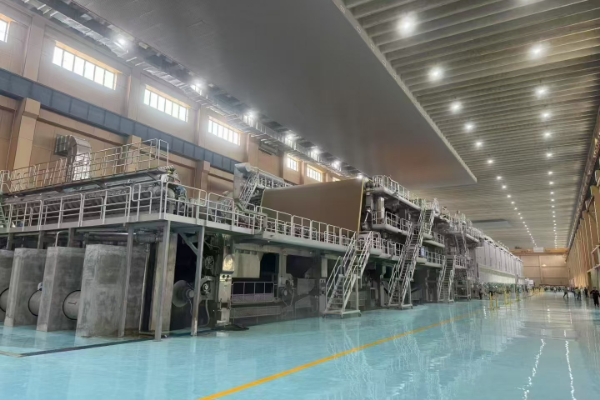
5–200 TPD
Capacity Range Covered
7 Grades
Kraft · Corrugated · Testliner · Duplex · Tissue · Cultural · Specialty
New or Used
Line Sourcing Options
4 Phases
Engineering → Supply → Install → Start-up
Turnkey Scope – What “Turnkey” Actually Covers
The word “turnkey” gets tossed around loosely in the paper industry, and for buyers, that looseness is an out-of-pocket expense – hidden costs almost always surface at installation, when civil works, spare parts, or commissioning support turn out to be more expensive than budgeted. Generally, this comes from a misunderstanding in project definition, not vendor deceit: installation and commissioning got quoted as a single lump item, not a defined scope. The Zejiang engineering process solves this by establishing scope upfront, through four clearly defined stages, so there’s nothing to renegotiate once equipment is on a ship.
The Four Stages of Project Definition
Engineering & Layout
Line configuration by grade and capacity, mass balance, plant layout drawings, utility and drainage tie-in points.
Equipment Supply
Pulping, forming, press, dryer, and finishing sections sourced to the agreed configuration, new or refurbished depending on the budget path.
Installation & Commissioning
On-site erection, alignment, electrical and control tie-in, automation programming, engineer-supervised start-up.
Trial Run & Start-up Support
Our engineers stay on-site until the line hold target basis weight and moisture spec through a full 24-hour cycle, not just a first good roll.
Feasibility & Budget Planning
You’ll find many market-research reports discussing the cost of a paper mill project, but you’ll be hard-pressed to find a supplier who’ll give you a number – ours included, since a 20 TPD kraft line is a different beast entirely than a 150 TPD operation. For first-time builders, the true risk isn’t the machine sticker price; it’s over-specifying equipment while underestimating the surrounding cost. Here’s the real framework for cost breakdown – derived from our own quoting experience – so the feasibility discussion start with actual data, not a guess.
Cost Drivers, Ranked by Impact
01
Capacity (TPD) the single biggest lever; doubling daily output rarely doubles cost, but it does change which equipment tier makes sense.
02
Paper grade kraft and testliner lines lean on stock-prep and pulping capacity; tissue lines put more of the budget into the Yankee cylinder and hood system.
03
New vs. refurbished equipment a rebuilt used line can bring a project in well under budget, with a different maintenance and lead-time profile.
04
Civil works & site utilities foundation work, steam and power tie-ins, water supply, and effluent treatment scope (regulated under 40 CFR Part 430 in the U.S. and comparable standards elsewhere) vary by site and are usually the line item first-time builders underestimate.
In kraft paper, operating costs break down as follows: raw material accounts for roughly 70-80% of costs, utilities about 15-20%, with gross margins landing in the 25-35% band (market-report data). The equipment purchase is just one line item in a much longer budget conversation.
If your firm needs a Detailed Project Report (DPR) for bank financing – common practice for paper mill projects in India – Zejiang’s in-house engineering team can supply the technical specifications and cost inputs your DPR template needs, a level of support not all equipment vendors offer.
Have a target capacity and grade in mind?
Request a detailed cost-driver estimate →Line Design by Grade & Capacity
Paper machine production lines come down to two key questions: what grade, and how much of it per day? A line’s stock-prep train, forming section, and dryer section all follow from those answers; a 200 TPD kraft line and a 20 TPD tissue machine share little beyond the phrase “paper making machine.” Picking the wrong stock-prep configuration for your fiber source is a costly, frequent error, the risk isn’t visible on a spec sheet, it shows up as premature wear within 1-2 years, once the wrong screens or cleaners have been running the wrong furnish.
| Paper Grade | Typical Capacity Band | Fiber Source | Stock-Prep & Dryer Emphasis |
|---|---|---|---|
| Kraft / Corrugated / Testliner (packaging paper grades) |
15–300 TPD | Waste paper / OCC / recovered fiber | Pulper + screening + multi-cylinder dryer section |
| Tissue machine (toilet, facial, napkin) |
5–200 TPD* | Virgin or recycled pulp / wood pulp | Yankee cylinder + hood system + winder |
| Duplex Board / Coated Board | 5–200 TPD* | Mixed virgin/recycled | Multi-layer headbox forming |
| Cultural, Newsprint & Specialty Paper | 5–200 TPD* | Virgin pulp, additive-heavy | Fine screening + sizing |
Delivered Turnkey Projects
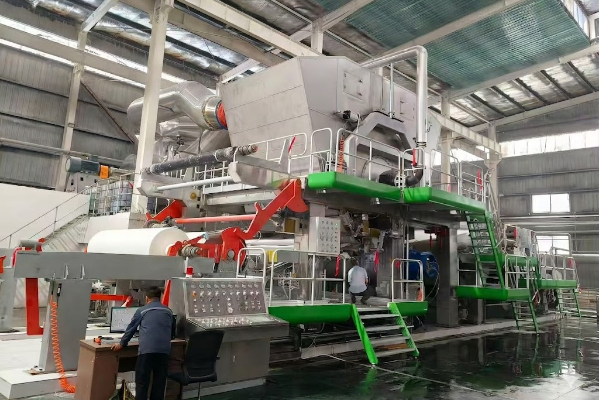
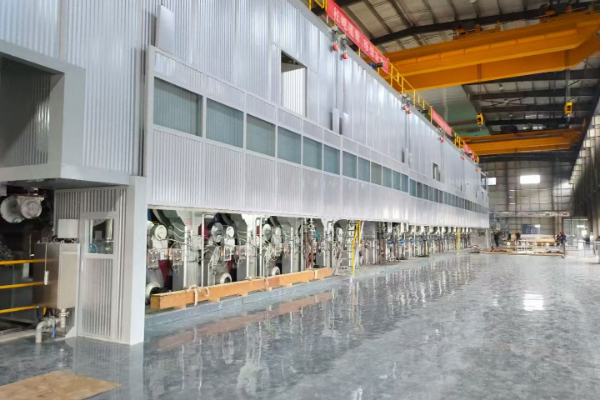
There’s a real gap between how Zejiang shows its work and how some competitors present long lists of named projects, a gap we’d rather be honest about than paper over. Turnkey deliveries are project-specific enough that a generic case study says little on its own; here’s what we can show: a kraft paper machinery line, a kraft packaging paper machine turnkey delivery, and a crescent-former tissue paper machine installation, documented in project photos rather than a marketing writeup.
Properly commissioned dryer and press sections consistently outlast equipment installed without engineer-supervised start-up – misalignment and rushed trial runs are common, well-documented causes of premature wear industry-wide
the reason installation and commissioning gets its own project phase, not an afterthought, in Turnkey Scope above
Qualified industry pattern
– request project-specific commissioning data for your line configuration
Zejiang provides photos rather than generalized country and tonnage figures, a fabricated case study is worse than an honest gap. Ask us directly about reference sites in production for 2+ years for your paper grade and capacity; we’ll tell you plainly what’s available for your region.
Ready to see how the delivery process works for your project?
Start the Conversation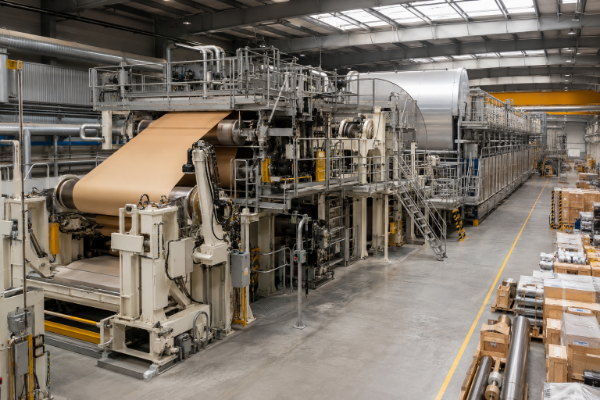
FAQ
How much does a turnkey paper mill project cost?
It’s almost impossible to put a general figure on paper line cost since it depends primarily on production capacity (TPD) and paper grade, then whether the equipment is new or refurbished and how much civil and utility work is needed. Generic numbers, almost without exception, will be inaccurate for any individual project. Consult the Feasibility & Budget Planning section, or ask us directly for a project-specific cost range.
How long does it take to set up a paper mill setup project?
Line delivery timeline corresponds directly to scope. A used-equipment refurbishment will be completed faster than a new-line installation, particularly if extensive civil/utility work is required on-site. Project management of the engineering and delivery schedule can add or save you months.
What is an example of a turnkey project?
That’s, the supplier does all line design, supply of machinery, installation and start-up in a single contract. So it isn’t the case where a mill is sourcing machinery from different suppliers and carrying out integration themselves. In the Turnkey Scope above we detail the various stages involved.
What do I need for a turnkey paper mill project report for bank financing?
The Indian banks require the capacity, grade, machine specification and price data in a specific DPR format. Zejiang provides the required inputs for your turnkey paper mill project report. We’ll only give you the cost of equipment; the balance cost for the financial model will usually be in the bank’s own template or their financial advisor’s own DPR format.
Can I buy used paper mill equipment instead of a new line?
Yes, a used refurbished line is a good option to reduce the turnkey budget. It represents a large percentage of our offerings. You’ll find current tested, inspected units in Used paper machinery.
Do you only supply equipment, or do you manage installation too?
Yes – the four-stage Turnkey Scope described above includes both. On-site installation and commissioning for machines already procured can also be ordered as an individual service – see Installation & Commissioning.
I’m evaluating a paper mill setup in India, where should I start?
Work through your capacity and grade, then the cost-driver framework in Feasibility & Budget Planning above, before sourcing a paper production line solution for sale, a company shopping solely on the initial cost of the paper mill machine itself is on the path to expensive mistakes once civil work and utility costs get added. Please Request a Consultation so we can assist you site specifically.
![Refiner Plates & Screen Baskets [Complete Guide]](https://zjpapermachine.com/wp-content/uploads/2026/07/refiner-plates-screen-baskets-guide-featured-150x150.png)
![Doctor Blade: Types, Materials & How It Works [Guide]](https://zjpapermachine.com/wp-content/uploads/2026/07/doctor-blade-guide-featured-1-150x150.png)
![Pulping Equipment: How Paper Pulping Works [Guide]](https://zjpapermachine.com/wp-content/uploads/2026/07/pulping-equipment-guide-featured-150x150.png)