Get in touch with Zejiang Paper Machinery Company

HYDRAPULPER
Paper Pulper Machine
Paper Pulper Machine & Hydrapulper Systems
Our Paper pulper machine is the #1 piece of equipment in the stock preparation section – defibering your waste paper baled stock or virgin pulp into a pumpable fiber slurry to feed the rest of the paper mill. Henan Zejiang makes all types of paper pulper machines; we have a complete family of vertical pulpers, high consistency pulpers, Type D pulpers, and drum pulpers with the size you need to meet your furnishes and tonnages. We report all of our published data: consistency bands, capacity ranges, energy/ton numbers that many of our competitors will only release in a quotation form.
Click to Scan
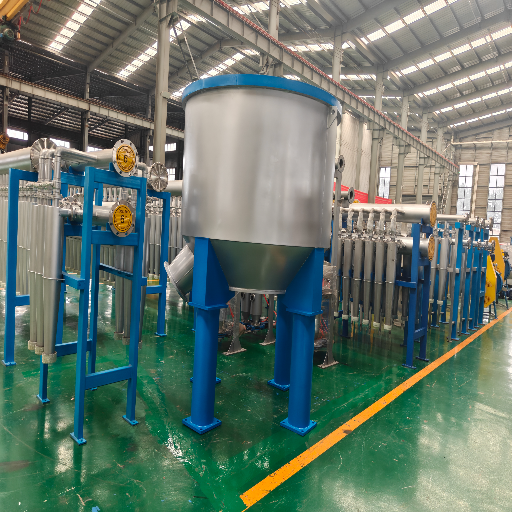
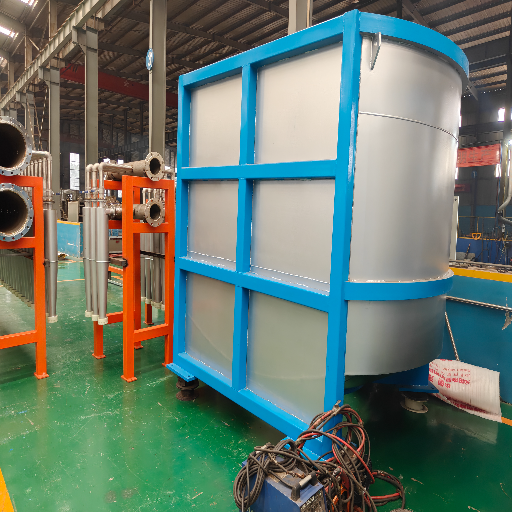
Henan Zejiang stainless-steel high consistency pulper with conical discharge and blue steel support legs on the factory floor, next to a cleaner cyclone array
3–18%
Operating consistency (LC to HC)
8–1,500 t/d
Capacity envelope by type
4 Types
Vertical / HC / Type D / Drum
CE · ISO
Built to EU Machinery Directive
~9–25 kWh/t
Typical stock-prep energy band
Direct Source
No distributor markup
Where Pulping Lines Lose Fiber, Energy and Uptime
The most expensive mistake in stock preparation is a pulper matched to the wrong furnish. Run the wrong rotor or consistency and you either burn power tearing fiber that is already free, or push half-defibered flakes downstream where they jam screens and send good fiber out with the rejects.
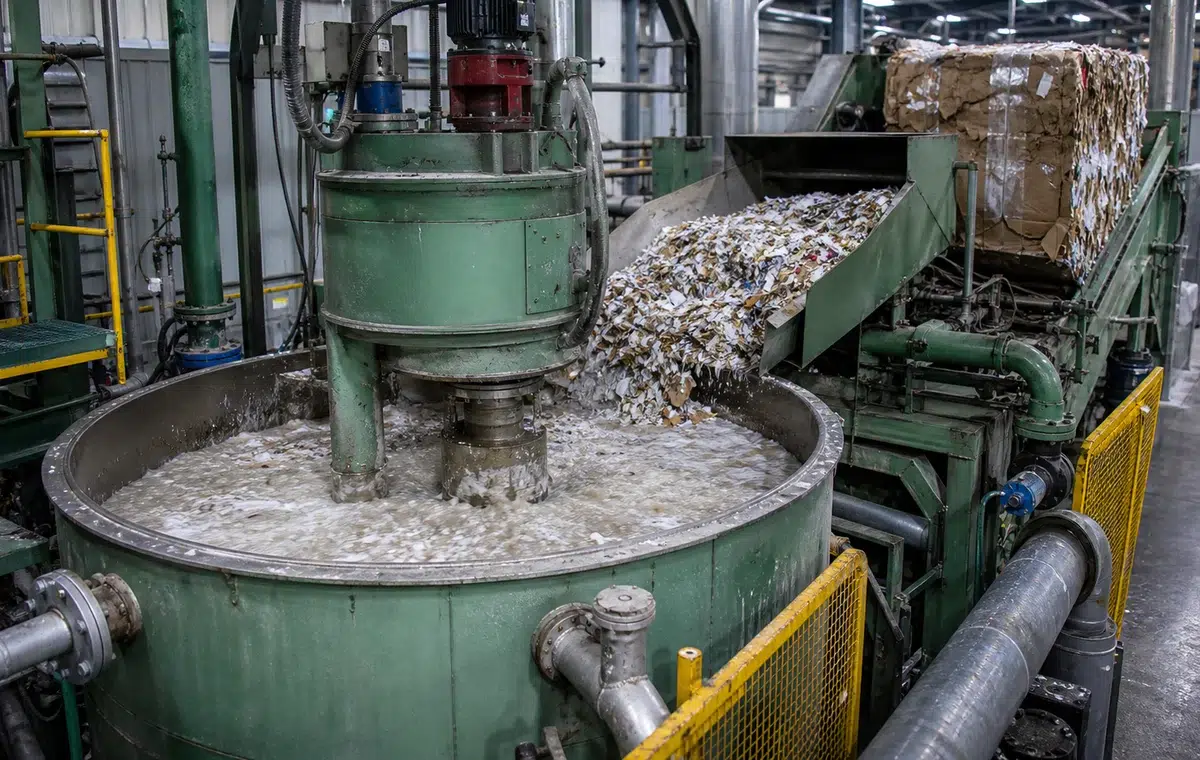
In most cases, the mills do not lose money on the cost of the pulper; they lose it down the line, and the problem nearly always comes from a mismatch between the furnish and the machine. A study done by Virginia Tech shows that one fine-paper mill had been dumping recovered fiber to the sewer at rates as high as 40 tons a day – with much of it being lost at the conical holes of the centrifugal cleaners due to inadequate pulping and screening. Normally cleaner rejects are about 10 to 20 percent; however, clean fiber may end up with the refuse if the pulper has failed to properly detach the fiber.
Two furnish problems cause most of the trouble in practice.
Large OCC and mixed-waste bales float and spin in a round tub taking far too long to wet out-the reason for the D-shaped tub. And liquid-packaging grades conceal wet-strength agents that are tough to repulp-these unpulped flakes seal over and plug the screen plates.
Unlike a supplier who ships the same tub geometry for every grade, Henan Zejiang engineers — building each pulper in-house to ISO 9001 — choose the vat geometry, rotor and consistency for the stock you’ll actually be using-a batch vertical tub for clean virgin pulp, for example, or a drum with 6 mm accept holes for your dirtiest OCC. This match, not a larger motor, is how you avoid degrading the fiber you’ve purchased. We design the entire process page around it.
The Zejiang Pulper Machine Range — Models and Selection
Henan Zejiang makes our four families of pulpers (plus their critical wear parts!) at our own facility. That’s because no pulper is the perfect choice for every mill, so each one is engineered to accommodate specific furnishes and tonnages. the specs below are approximate operating ranges for our pulper families – the precise unit size, tank volume, and motor will be determined based on your process and listed in your quote – not an estimate or substitute value.
Henan Zejiang is a paper pulping machine manufacturer that covers the full pulp making process: the pulper is one stage of a wider pulping equipment range running through the refiner and screens to the paper machine itself. Whether you order a single paper pulp making machine or a complete pulp production line, the machine manufacturer you choose has to understand the pulping process from bale to finished sheet.
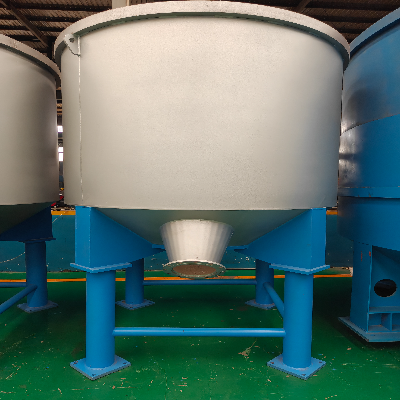
Zejiang vertical hydrapulper — large cylindrical stainless steel vat with conical bottom on blue steel legs for low-consistency batch pulping
Vertical Hydrapulper
3–6% consistency · 8–200 t/d · batch
Low-consistency vertical vat for virgin pulp bales and clean grades. Homogeneous slushing at low energy; the format of choice when 100% defibering or furnish flexibility matters.
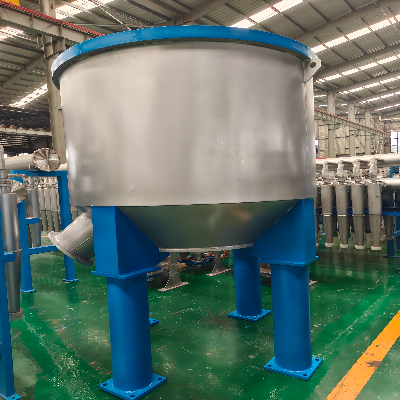
Zejiang high consistency pulper for waste paper deinking, operating at 12 to 18 percent stock consistency with a helical rotor
High-Consistency Pulper
12–18% consistency · 8–220 t/d
Helical-rotor pulper for OCC, mixed waste and deinking grades. Fiber-to-fiber defibering at high consistency lifts chemical efficiency in the deinking process while keeping fiber intact.
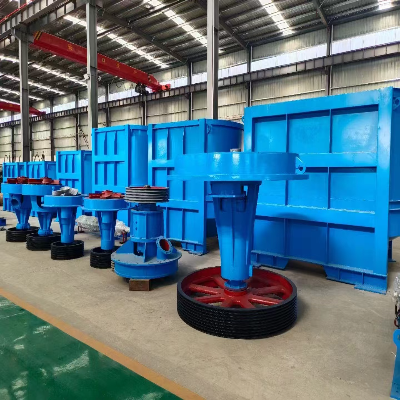
Zejiang Type D continuous hydrapulper — blue steel D-shaped tub bodies with bottom-mounted rotor drives and belt pulleys in the workshop
Type D Continuous Pulper
4–6% consistency · 25–410 t/d · continuous
D-tub geometry breaks the vortex to submerge OCC and mixed-waste bales fast, for high-tonnage continuous lines feeding testliner and fluting.
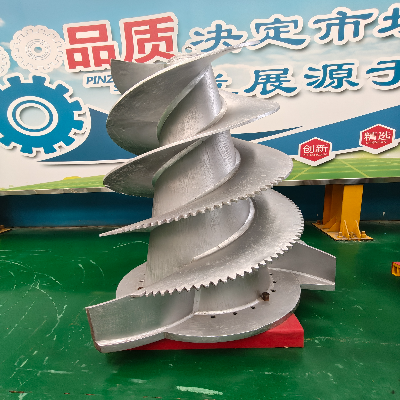
Zejiang hardfaced helical pulper rotor — spiral vane with serrated edge, a replaceable wear part for vat-type pulpers
Drum Pulper & Helical Rotor
Drum 14–18% · 150–1,500 t/d
Rotating-drum pulper for the highest volumes and gentlest contaminant handling, plus hardfaced helical rotors — the primary wear part — machined and stocked for fast replacement.
Pulping-Line Spec Index
| Pulper type | Consistency | Capacity (t/d) | Motor band (kW) | Best furnish |
|---|---|---|---|---|
| Vertical hydrapulper (LC batch) | 3–6% | 8–200 | 90–650 | virgin pulp bales, clean grades |
| High-consistency pulper | 12–18% | 8–220 | 110–650 | OCC, mixed waste, deinking |
| Type D continuous pulper | 4–6% | 25–410 | 132–710 | high-tonnage OCC / mixed waste |
| Drum pulper | 14–18% | 150–1,500 | 132–1,000 | high-volume OCC, contaminant-heavy |
Common operating envelopes of equipment for our industries. motor capacity grows as the capacity: e.g. a 8-15 t/d paper pulper may have a ~90 kW motor and a 200-220 t/d machine a ~650 kW motor. Values are fixed by contract on a case-to-case basis, as specified on your quote.
Pulper-to-Furnish Selection Matrix
Furnish type — not headline consistency — dictates which pulper you need. This is the tool that product pages don’t use. Pick the row corresponding to your furnish below.
| Your furnish | Recommended pulper | Consistency | Why this fit |
|---|---|---|---|
| OCC / mixed waste, high tonnage | Type D continuous or Drum | 4–6% / 14–18% | fast bale wet-out; drum keeps trash intact for downstream removal |
| Deinking grades (ONP / OMG) | High-consistency pulper | 12–18% | high-consistency pulping raises deinking chemical efficiency; gentle fiber-to-fiber action |
| Virgin pulp bales / clean grades | Vertical hydrapulper (LC batch) | 3–6% | homogeneous slushing at low energy consumption |
| Cup stock / cartons / wet-strength | HC pulper + oxidizer chemistry | 7–15% | breaks coatings and wet-strength bonds without shredding contaminants into the good fiber |
| Small mill / variable furnish | Vertical batch pulper | 3–6% | 100% defibering and the flexibility to switch grades between batches |
Source: USPTO / Google Patents EP4644605B1 — pulper rotor (rotor-vane service life)
High-Consistency vs Low-Consistency, Batch vs Continuous, Pulper vs Drum
A common assumption is that higher consistency and higher shear always mean better pulping. In a controlled study, pulp yield was statistically flat across low, medium and high consistency (60.6% / 60.3% / 58.2%) — high consistency was actually the lowest. The real driver is furnish and rotor regime, not consistency alone.
Here is where buyers get it backwards more often than not, and is contrary to how you may expect. The high-speed low-consistency rotor works rotor-to-fiber, cutting fiber and decreasing the quality of your pulp. The high-consistency rotor works fiber-to-fiber, slower, gentle process, and doesn’t cut fiber length. “High consistency” is actually the gentle approach; the compromise is production, not quality. Also, “stronger” is not always better. A drum pulper intentionally breaks trash gently and discharges contaminants intact at 14-18% consistency — cutting load and wear on your screens and cleaners — whereas a fast-moving rotor shreds plastics and staples into fragments that are far harder to remove downstream. For dirty furnish, the aggressive machine is the wrong call.
VS
HC-vs-LC-vs-Drum Crosswalk
| Parameter | Low-consistency (Vertical / Type D) | High-consistency | Drum pulper |
|---|---|---|---|
| Operating consistency | 3–6% | 12–18% | 14–18% |
| Fiber action | rotor-to-fiber (faster, some cutting) | fiber-to-fiber (gentle, preserves length) | tumbling (gentlest) |
| Contaminant handling | shreds impurities → more downstream load | keeps particles larger | discharges trash intact → least downstream burden |
| Net energy | higher (dilution + pumping water) | ~15–25 kWh/t | efficient at high volume |
| Capacity envelope | 8–410 t/d | 8–220 t/d | 150–1,500 t/d |
| Best furnish | virgin / clean, batch defibering | OCC / mixed / deinking | high-volume OCC, dirty furnish |
The same furnished considerations apply for batch versus continuous, and here too, the modern sounding machine isn’t necessarily the correct one. Batch is utilized for complete defibering, or for the dwelling time needed for heating, added chemicals for deinking, and mixed waste. Continuous is a function of high-volume steady flow, where you only need to defiber sufficiently to get past your bedplate holes. If a mill buys a continuous pulper, thinking it sounds more advanced, and feeds it a furnish requiring batch dwelling, then the machine they bought is incorrect. Because Henan Zejiang builds all four types in-house, our engineers will help identify the right match, not defend a single product line – an approach we believe provides unique value to customers when the right answer for their needs isn’t one we readily stock.
Source: NC State University — paper recycling & stock preparation
Pulping-Line Performance — Capacity, Fiber Yield and Energy per Ton
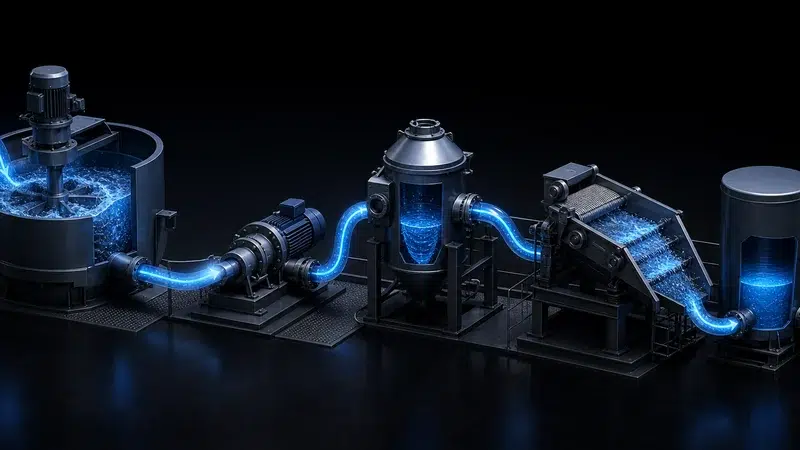
For a recycled-fiber mill, pulper economics reside in two critical variables: the percentage of fiber that is recovered, and the energy consumed per ton (kilowatt-hours). These variables are significant and recurrent-the invisible risk lies with a poorly matched pulper that quietly degrades both. Here, the correctly specified machine pays for itself.
Pulping-Line Cost-Per-Ton Ledger
20–30%
of a paper mill’s operating cost is energy (electricity + steam)
Renewable & Sustainable Energy Reviews, 2022
9.2 kWh/t
specific energy for an efficient waste-paper pulper at ~333 t/d (vs 30.4 kWh/t at ~24 t/d)
ACEEE Summer Study, 2003
~88%
achievable yield from recycled fiber — every point of yield lost is fiber paid for and thrown away
USDA Forest Products Laboratory, 2004
The real economic lever in a recycled-fiber mill is fiber recovery. In a documented project involving 100% recycled fibers, approximately 2,900 tons of fiber per year was recovered with an ROI exceeding 1,800% and a payback of less than six months-not because the equipment was cheap, but because valuable fiber was being prevented from entering the wastewater stream. In other examples, energy-saving measures at pulp and paper facilities have documented paybacks from 2.5 months to 4 years.
An honest word on payback
We won’t advertise headline payback of “18 months for a whole line,” which would be the honest version only if it were true: entire-line paybacks are highly dependent on your feedstock cost, energy pricing, and operating rate, and a recent deinked-pulp project failed when the wrong feedstock and operating parameters were used, yielding a cost of $636/t against a selling price of $600/t. Our engineers will analyze your situation with your actual figures. Recycled pulping is low in energy intensity relative to virgin production, but cost is driven by contamination and yield, not the initial price of the pulper -making an incorrect purchase, especially a cheaper one, a costly mistake.
Applications by grade
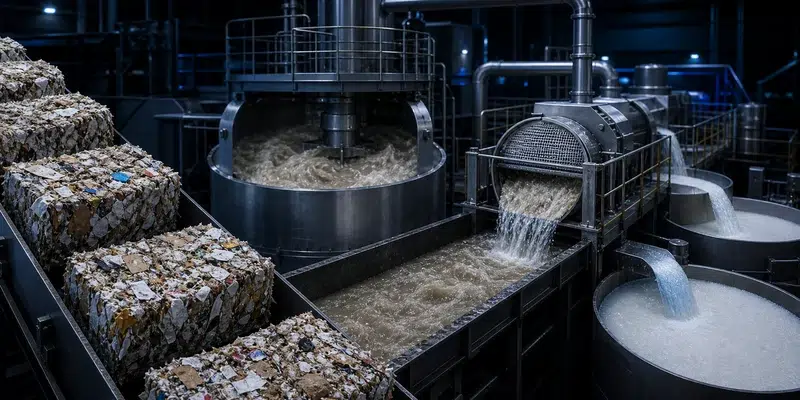
Zejiang pulpers form the front end of production lines across many grades, including kraft paper, corrugated and testliner board, duplex board, tissue, cultural, and specialty paper grades, along with molded pulp products like egg trays. In containerboard, testliner and recycled fluting are almost exclusively manufactured from recovered Old Corrugated Containers (OCC), making the pulper the gatekeeper of the entire recycled-fiber operation. Leading recycled-fiber installations today-such as a recently completed 100% recycled containerboard line centered around a stock preparation system with a hydrapulper at its core-replicate the basic architecture we offer.
Certifications, Quality and Standards
CE
EU Machinery Directive 2006/42/EC + EN 1034
ISO 9001
Quality management, third-party audited
ISO 14001
Environmental management
ISO 45001
Occupational health & safety
ISO 5263 / TAPPI
Pulp disintegration test methods
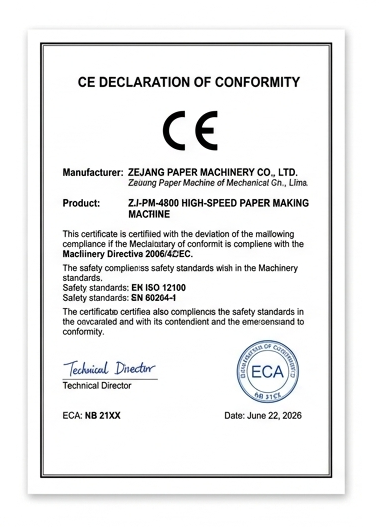
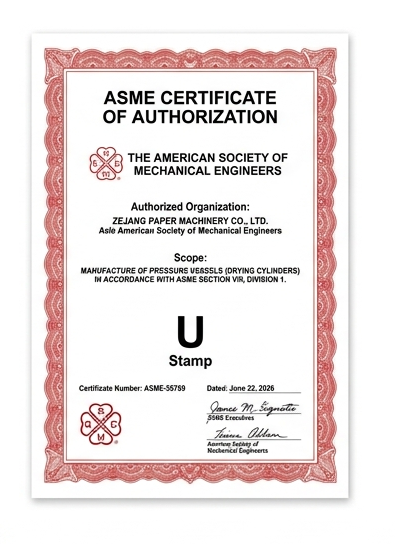
This is one distinction you need to know before comparing “certified” suppliers, as it is all too easy to misread and even to forge — a real risk on a capital purchase, and one Henan Zejiang machines are engineered to remove with verifiable paperwork. A CE mark is a declaration by the manufacturer that their machinery conforms to EU safety law under the Machinery Directive 2006/42/EC – for normal machinery, this is a self-declaration, not a government test, and a vague reference is a warning sign. The relevant paper machinery safety standard is the EN 1034 series. ISO 9001 is the other type of proof: verified by an accredited independent registrar, and unlike a self-declared badge, the currency of ISO 9001 is checked in the public IAF CertSearch register. We’d rather you check our ISO 9001 certificate and our Declaration of Conformity than simply trust a badge – you should check the exact directives quoted on our Declaration of Conformity and compare both against the ISO 9001 certificate issued by its registrar.
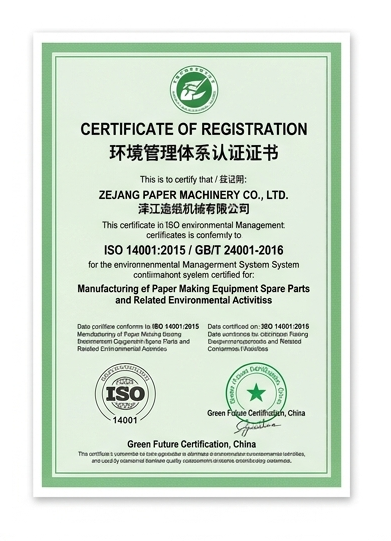
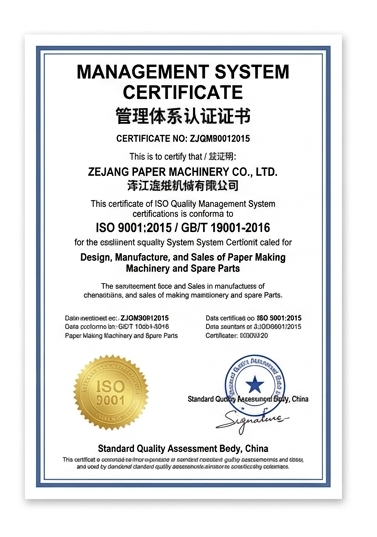
[ INTERACTIVE: CLICK TO ZOOM ]
What ISO 5263 has to do with your pulp
Pulp quality should be tested with actual, specific methods – like ISO 5263, the 49 rev/s three-bladed propeller in water at 20 °C (Part 1, chemical pulps, or Part 3, mechanical pulps at above 85 °C) or ISO 4119 (consistency). If your supplier verifies consistency and defibering according to these methods internally, that proves it can achieve your pulp spec, not just that it holds a management-system badge. On a capital machine you will run for 20 years, that distinction is significant.
Source: ISO 5263 — pulp laboratory wet disintegration (iso.org)
Request a Quotation
Tell us your five key details
Send us your target capacity, pulper type and any drawings — our engineers reply with a real, itemised quote, not a brochure price. Reach us on whichever channel suits you.
Paper Pulper Machine Assessment Tools
Paper Pulper Machine Selector & Capacity Sizer
Match your furnish and target output to the right pulper type, consistency band and motor size. Industry-typical envelopes — exact specs confirmed on quotation.
Pulping Energy & Fiber-Loss Cost Estimator
Two recurring costs decide pulper economics: energy per ton and fiber lost with the rejects. Estimate both — and what a better-matched pulper could recover.
![Refiner Plates & Screen Baskets [Complete Guide]](https://zjpapermachine.com/wp-content/uploads/2026/07/refiner-plates-screen-baskets-guide-featured-150x150.png)
![Doctor Blade: Types, Materials & How It Works [Guide]](https://zjpapermachine.com/wp-content/uploads/2026/07/doctor-blade-guide-featured-1-150x150.png)
![Pulping Equipment: How Paper Pulping Works [Guide]](https://zjpapermachine.com/wp-content/uploads/2026/07/pulping-equipment-guide-featured-150x150.png)